Jelly Run 2048
- 945.00
- 4.9
- Installs
- 10.00M
- Price
- Free
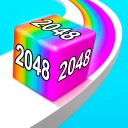
Screenshots
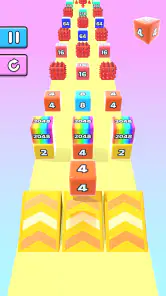
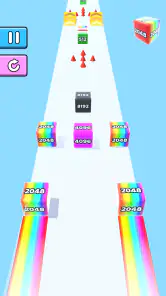
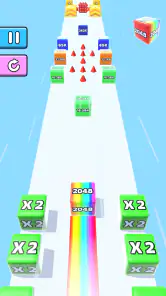
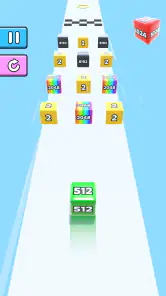
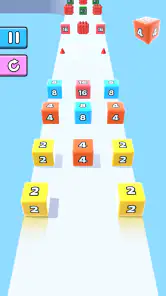
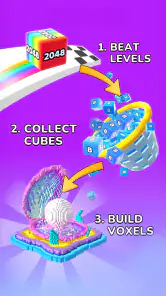

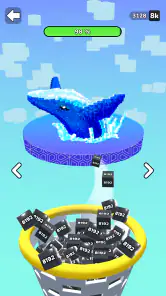
Analysis by Reviewed
What makes the first few moments of Jelly Run 2048 click for me is that I can start acting before I’ve learned a complicated rule set. I steer a jelly block along a course, watch for hazards, and look for matching blocks to bring together. The number-puzzle idea is still there, but now it has to fit around movement and timing. Instead of arranging a board at my own pace, I’m making choices while the track unfolds.
That distinction matters when choosing a game for a particular moment. If I have a short pause and want to pay attention to something without committing to a long, quiet puzzle, this format makes sense. If I’m trying to relax by thinking slowly, it can feel too active: I can see a promising merge, but still need to steer safely to it. The enjoyment comes from juggling the long-term goal with the next immediate move.
When a quick run fits the day
I can picture opening it while waiting for a takeaway order or sitting through a short gap between errands. I don’t need to remember a complicated board position from last time; I can focus on the course in front of me and make a fresh attempt. That makes the game easier to dip into than a puzzle whose appeal depends on preserving a long chain of careful calculations.
There is a small catch to that convenience. A run asks for enough attention that I wouldn’t treat it as a game to play while reading messages or listening closely to someone. If my eyes keep leaving the track, I’m more likely to miss a useful opening or react late to an obstacle. For a genuinely low-attention break, a simple idle game is a better match; this one earns its appeal by asking me to stay involved.
Getting into the Groove
From the moment I launched Jelly Run 2048, I was greeted with vibrant, colorful graphics that were both engaging and pleasing to the eyes. The premise of the game is deceptively simple: you guide a jelly block through a series of obstacles, aiming to merge with other blocks to reach the elusive 2048 tile. Now, if you’ve ever played the classic 2048 puzzle game, you’ll instantly recognize the mechanics, but this time, it's blended with a twisting, turning race track that adds a whole new level of excitement.
Gameplay and Mechanics
The controls are straightforward, with easy-to-learn swipe mechanics that allow you to navigate the jelly block seamlessly. But don’t let that fool you into thinking it’s easy. As I progressed, the tracks became increasingly challenging, requiring quick reflexes and strategic thinking to avoid obstacles while merging the right blocks. It’s a perfect blend of skill and strategy.
For me, the useful skill is not simply swiping quickly; it’s making the swipe for a reason. I try to notice where a matching block sits, judge whether the route toward it looks safe, and commit instead of flicking repeatedly because I feel rushed. That small pause to read the course helps keep the number goal in view without pretending I can plan the whole run like a grid puzzle. When I’m unsure, protecting the run is often a better immediate choice than chasing a merge at any cost.
More From Our News Desk

Clash of Clans Is Won Between the Battles

Android Auto Makes the Case for Quieter Car Software

MobiOffice: Transforming Mobile Productivity with Seamless Integration

EA SPORTS FC™ Mobile Soccer: Redefining Mobile Sports Gaming

How Microsoft OneDrive Became a Mobile Productivity Giant

How Google Translate Breaks Language Barriers Effortlessly
That approach also makes the game easier to learn from. After a poor attempt, I can ask whether I moved too late, focused on the number and neglected the path, or chose a line that made the next decision awkward. I don’t need to turn every miss into a lesson, but noticing one cause at a time keeps a restart from feeling like a completely random rerun.
One of the things I genuinely appreciated was the game’s ability to keep things fresh. With each level, the tracks and obstacles change, ensuring you’re always on your toes. Plus, the satisfaction of finally merging to create that 2048 block? Absolutely unbeatable!
Timing, mistakes, and the urge to restart
What makes a run engaging for me is the timing: I have to balance the 2048-style goal with the immediate job of staying clear of hazards. A sensible habit is to scan ahead before swiping, then make one deliberate move rather than trying to correct every decision at the last second. When I miss a merge or choose a poor route, the mistake feels easy to understand, which makes trying again tempting instead of frustrating. Still, the action leaves less room for careful calculation than the original grid puzzle, so players who prefer to map out every move may find the pace stressful.
That’s why I’d think of each run as a small experiment rather than a test of perfect play. On one attempt, I might prioritize avoiding trouble; on another, I can take a more ambitious line if a matching block is within reach. Changing just one part of my approach makes it easier to tell what helped. It also keeps the replay loop from becoming a string of impatient swipes where I repeat the same mistake without noticing.
What the feedback gets right
The visual language helps the action read quickly: the blocks are bright, the jelly look gives them a playful softness, and the movement makes the course feel different from a static number board. I like that the main reward is immediate and legible. A successful merge gives me a clear sense of progress, while a missed opportunity is easy to connect to a choice I just made. That quick feedback is a better fit for short sessions than a puzzle where the payoff may depend on many moves made earlier.
The soundtrack adds to the upbeat mood, but the visual action is what I’d pay attention to when playing. If I’m using the game in a place where I need to keep the sound low, the central challenge still comes from steering and reading the path rather than relying on music. The trade-off is that the bright, lively presentation may not be the calm atmosphere some people want from a casual puzzle. For me, that energy is part of the point, but it does make this a less natural choice for winding down in silence.
Visuals and Soundtrack
The game’s visuals are a treat. The jelly blocks are adorably squishy, and the animation is smooth and fluid. It’s clear the developers put a lot of thought into making the game visually appealing. And let’s not forget the soundtrack. It’s upbeat and catchy, providing the perfect backdrop as you glide through each level. It’s the kind of tune that gets stuck in your head—in the best way possible.
A good fit for a short break?
I can see this working well while waiting for a coffee or taking a short pause between other tasks: a run gives me a focused burst of play without asking me to settle in for a long puzzle session. The useful trade-off is that the same quick feedback that makes it easy to pick up can encourage one more attempt when I meant to stop. If I need a quiet game to play while concentrating on something else, I’d choose a slower option; reacting to a track is the point here, not background play.
To keep that “one more try” feeling from swallowing a longer break, I’d decide before starting whether I have time for one attempt or a few. That is a practical distinction with this kind of quick-reset game: the individual run may feel compact, but the desire to improve can stretch the session. It’s a good pick when I actually want a little active play, not when I’m using my phone to fill a moment that needs to stay brief.
Who will enjoy the format
This is a casual game from CASUAL AZUR GAMES, and its straightforward swipe controls make it approachable for someone who has never played a 2048-style game. The game is free, rated for Everyone, and has in-app purchases priced from $0.99 to $19.99 per item. It has a 4.9 average from around 137,000 ratings and over 10 million installs. Those figures suggest broad appeal, but they don’t guarantee that its fast, obstacle-focused twist will suit every puzzle fan. I’d recommend it to players who like quick decisions and visible progress; I’d skip it if the main pleasure you want is relaxed, turn-by-turn number planning.
The Everyone rating makes it broadly accessible by age, but the play style is still worth considering for the person who will actually hold the phone. Someone who enjoys bright visuals, simple gestures, and trying to improve a run may take to it quickly. A player who gets annoyed by time pressure, or who wants to stop after every move and calculate, may find the same design more tiring than fun. The familiar number-merge idea helps with the first step, but it doesn’t turn the game into a conventional, pause-and-plan puzzle.
Compared with the usual alternatives, it sits between classic 2048 and an action runner. The grid version gives me more control over the pace and lets me think through each move; a typical runner emphasizes movement and avoiding hazards without making number combinations the central objective. Here, I need both kinds of attention. That hybrid is the reason I’d choose it when I want an active twist on number play, but it is also why I would not recommend it as a direct substitute for either a deeply strategic puzzle or a pure reflex game.
Spending and expectations
Because it is free to start and includes optional purchases, I’d try a few sessions before deciding whether spending makes sense for me. The listed purchase range runs from $0.99 to $19.99 per item, so I would check the in-game purchase details carefully rather than assume every option has the same value. I wouldn’t treat a purchase as necessary just to find out whether the basic run-and-merge idea suits me; the decision should depend on what I actually want from the game, not on the urge to improve one frustrating attempt.
It is also useful to separate two questions: whether I enjoy the core loop, and whether any optional purchase would add something I personally value. If I’m only curious about the controls and the pace, starting without spending is the sensible test. If I already know I like the format, I can consider the available options on their own merits. The game’s appeal, as I see it, comes first from steering, spotting a chance to merge, and trying again with a better decision.
Why You Should Give It a Go
If you’re in the market for a game that offers both relaxation and a healthy dose of challenge, Jelly Run 2048 is definitely worth a download. It’s one of those games where you can easily lose track of time, and before you know it, you’ve been absorbed in its colorful world for hours. Whether you’re a casual gamer or someone who enjoys a bit of strategic thinking, there’s something here for everyone.
I’d make that recommendation more specific: give it a go if you enjoy making quick choices and can laugh off a run that doesn’t go your way. I’d pass if your favorite part of 2048 is the freedom to stop, reconsider, and calculate without a moving course asking for an immediate response. It is also not my first choice when I need a game that stays unobtrusive while I do something else. Knowing which mood I’m in makes the difference between enjoying the energy and finding it hectic.
One question a new player might have is whether experience with the original 2048 is necessary. I don’t think so: the swipe controls and recognizable idea of combining matching blocks give a newcomer a straightforward place to begin. Familiarity can help you understand why a merge matters, but the more useful early habit is reading the track and making deliberate moves. The game’s action layer changes the skill being tested, so knowing the grid puzzle does not automatically make every run easy.
Another practical question is whether it suits a very short session. In my experience, it is easy to start playing during a small pause, but I would not assume that I’ll stop after a single attempt. The desire to correct a bad route or make a better merge can keep me going. If I have only a moment, I set that limit before launching it; if I have a proper break, the quick-repeat structure feels much more rewarding.
The game was released on August 1, 2021, and its current version is 1.52.4; Android compatibility starts at 7.0. I’d treat the purchase options as something to review before spending rather than a reason to buy: the core attraction is the run-and-merge loop, while optional spending may not add value for everyone. If you’re unsure, starting free is the sensible way to see whether the timing feels satisfying or hectic.
My overall verdict is that this works best as an energetic alternative to ordinary number puzzles, not as a replacement for them. In a standard 2048 game, I can pause and calculate; here, I need to read the path and make a timely choice. The reward is the satisfying merge and the chance to do better on another attempt. For quick, active play, that loop is its strongest point. If I want calm planning or a game that can fade into the background, I’d pick something else.
Jelly Run 2048 Frequently Asked Questions
What is Jelly Run 2048, and what kind of game is it?
Jelly Run 2048 is a casual mobile game about guiding jelly blocks along a course and merging or splitting them as you try to reach the finish line. Its 2048-inspired block mechanic gives each run a simple puzzle element, while the running format keeps the action moving. It is suited to players who enjoy a light game built around quick decisions.
Can I play Jelly Run 2048 offline?
The core idea is easy to understand: move jelly blocks through a course, deal with obstacles, and aim for the finish line. Whether a game session works without an internet connection can depend on the particular version and device setup, so it is sensible to check after installing if offline access matters to you. The advertised focus is the block-running gameplay.
Is Jelly Run 2048 suitable for someone who wants a quick, casual game?
Yes. Jelly Run 2048 is a casual game built around short running sequences and simple merge-and-split puzzles, making it easy to pick up for a quick play session. You guide jelly blocks along a course, react to obstacles, and work toward the finish line. Its straightforward premise suits players looking for an accessible game rather than a lengthy strategy experience.
What is the main objective of Jelly Run 2048?
Jelly Run 2048 is a dynamic mobile game that combines the classic 2048 puzzle mechanics with fast-paced running action. The primary goal is to navigate through various obstacles while merging jelly cubes to reach the 2048 tile. Players must think quickly to combine cubes of the same number, all while avoiding collisions and maintaining a continuous run through increasingly challenging levels.
How do the controls work in Jelly Run 2048?
In Jelly Run 2048, the controls are designed to be intuitive and user-friendly, catering to both casual and experienced gamers. Players can swipe left or right to move their jelly cube across different lanes, swipe up to jump over obstacles, and swipe down to slide under barriers. Mastering these controls is crucial for successfully combining cubes and progressing through the game’s levels.
Pros
- Engaging gameplay with simple controls.
- Visually appealing graphics and animations.
- Regular updates with new challenges.
- Suitable for all ages
- including kids.
- Free to play with optional in-app purchases.
Cons
- Contains ads that can be intrusive.
- Requires internet connection to play.
- Limited levels can become repetitive.
- In-app purchases can be expensive.
- No offline mode available.
- Category
- Casual
- Version
- 1.52.4