Family Guy The Quest for Stuff
- 114.06K
- 3.6
- Installs
- 10.00M
- Price
- Free

Screenshots
Analysis by Reviewed
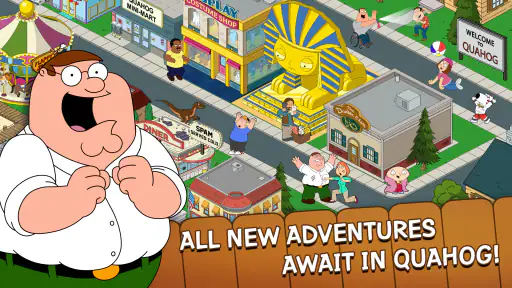
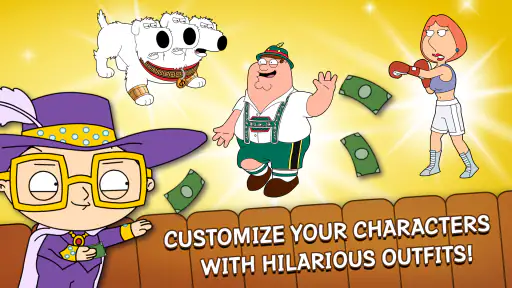
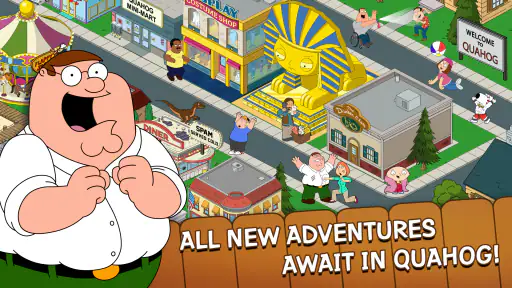
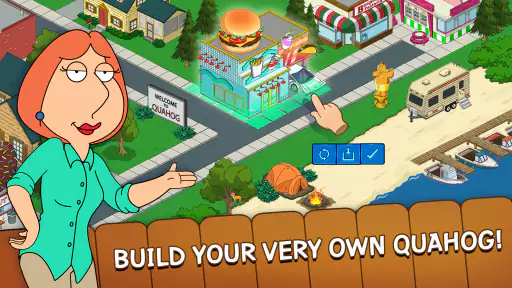
I spent time with Family Guy The Quest for Stuff as a casual adventure game built around restoring and expanding a cartoon-style town. Its appeal is easy to understand: you collect familiar characters, place buildings, complete tasks, and watch the setting grow into a playful version of Quahog. The humor and recognizable cast give it more personality than a typical city-building game, but the experience is still shaped by the slow, repeatable rhythm common to free-to-play mobile games.
That combination makes it a very specific kind of recommendation. If you enjoy checking in briefly, sending characters on jobs, unlocking decorations, and gradually improving a town, there is plenty here to explore without paying at the start. If you want a fast adventure with constant control, deep strategy, or a complete premium game with no purchase pressure, I would look elsewhere. My overall impression is that the game works best as a light daily routine rather than as a single long gaming session.
My experience with the town-building adventure
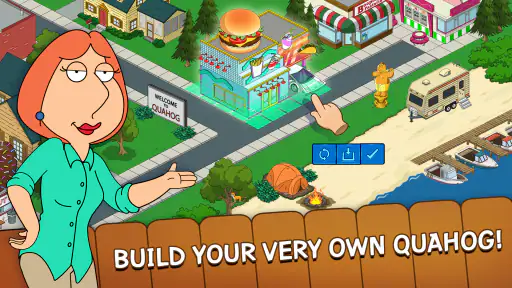
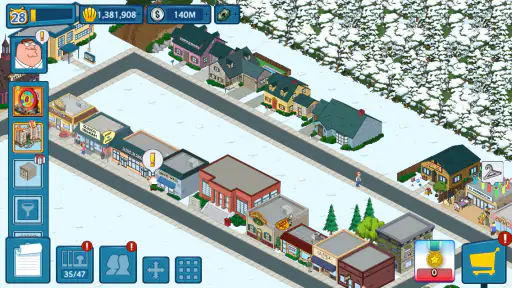
The basic loop is straightforward. I move through objectives, assign available characters to activities, collect the results, and use those rewards to open more of the town. Buildings and characters give the game its sense of progress, while the familiar Family Guy setting supplies the jokes and visual details that keep the process from feeling completely anonymous.
What makes the format approachable is that I never needed to understand a complicated strategy system before getting started. The early tasks explain the rhythm naturally, and the town gives me an obvious visual record of what I have achieved. A new building or character does more than add another item to a menu; it changes the appearance of the space and gives me another reason to return.
At the same time, the game is not really about exploring a large world in the traditional adventure-game sense. The adventure label fits the missions, cast, and progression, but the moment-to-moment activity is closer to a character-collection and sandbox-building routine. That distinction matters if you are choosing between this and a story-led game with direct movement, puzzles, or combat.
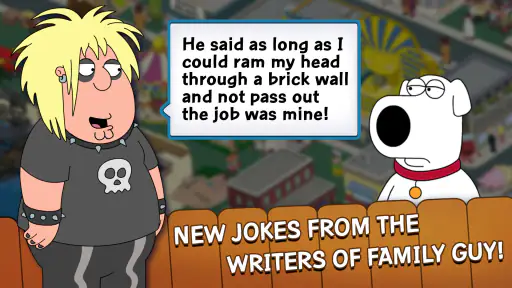
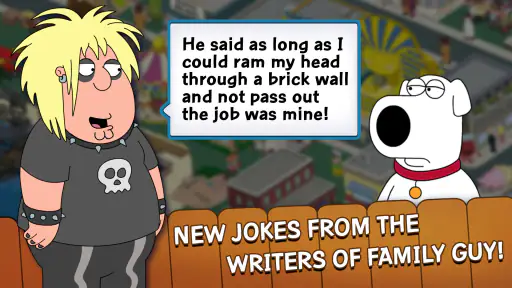
The tone is also important. Family Guy’s comedy is deliberately adult, irreverent, and sometimes crude, so the Mature 17+ rating is not a minor detail. I would not treat this as a family-friendly town builder simply because the presentation is colorful. The jokes, references, and character behavior are aimed at older players who already enjoy the show’s style.
How the free entry point affects the experience
The game is free to download, which makes trying it a low-commitment decision. I can see the appeal of playing for a while before deciding whether it deserves space on my phone. That is especially useful here because the setting is the main attraction, and the first-hand experience quickly tells me whether the humor and task cycle suit my taste.
Free access does not mean every form of progress has the same value. The game includes in-app purchases ranging from $0.99 to $99.99 per item. I therefore view the free route and the paid route as two different ways of using the same game: one asks for patience and regular check-ins, while the other can make selected progress more convenient. I would not call a purchase automatically good value just because it removes waiting; its worth depends on how often I play and how much I care about advancing faster.
I also prefer to decide on a spending limit before getting deeply involved. A town-builder can make small purchases feel harmless when considered one at a time, while repeated convenience spending changes the total cost of the hobby. Since the game can be played without an upfront purchase, I would begin with a strict free-play trial and only spend if the routine remains enjoyable after the initial novelty fades.
What the town gives me to do
The strongest part of the experience is the feeling of gradual accumulation. I start with a limited space and a small selection of recognizable faces, then work toward a busier, more personalized town. Even when an individual task is simple, the combined effect of new structures, characters, and visual changes gives my sessions a clear purpose.
That progression is particularly comfortable on a phone. I can open the game, collect completed activities, choose the next set of jobs, and leave again without needing a large block of uninterrupted time. A realistic use case is a short break during the day: I check what finished, spend the available rewards, assign a few new tasks, and close the app. The game supports that habit better than it supports intense, continuous play.
Another useful approach is to treat the town as a planning exercise rather than tapping through everything immediately. I found it more satisfying to look at which characters were available, decide which objective mattered most, and avoid wasting attention on low-priority actions. This does not turn the game into a complex strategy title, but it gives the routine a little more thought and prevents every session from feeling identical.
The collection element is also a major reason to continue. Players who enjoy seeing a familiar cast grow over time will get more out of the game than someone who only wants a single finished storyline. Collecting gives the long-term structure its emotional pull, while the sandbox presentation makes the results visible instead of hiding all progress behind menus.
Small habits that make the routine less frustrating
I recommend opening the game with a specific goal instead of simply tapping through every available prompt. For example, I might focus on advancing one building objective or preparing the resources needed for a character-related task. That approach keeps the town from becoming a collection of disconnected errands and makes each short visit feel more deliberate.
I also found it useful to separate “progress I need now” from “progress that can wait.” When several activities are available, the most attractive reward is not always the one that helps the current objective. Choosing based on the next unlock rather than the biggest immediate payout makes the limited session more efficient and reduces the temptation to spend just to repair a poorly planned queue.
A third practical tip is to judge purchases by saved frustration, not by the size of the virtual bundle. If I am only checking in occasionally, a faster route may not change my experience enough to justify spending. If I play every day and care about completing a particular collection, convenience may feel more meaningful. The same purchase can therefore be reasonable for one player and wasteful for another.
The tradeoffs behind the cartoon presentation
The biggest limitation is repetition. The town grows, the cast expands, and the jokes provide variety, but the underlying cycle remains familiar: select an activity, wait for its result, collect rewards, and use them to continue. I did not find that structure offensive, but I did notice that the game becomes less compelling when I expect every session to deliver a major event.
This is where it differs from many traditional adventure alternatives. A premium adventure game usually gives me a more directed sequence of challenges and a clearer ending. A conventional city-building game may offer deeper control over layout, resources, or optimization. This title sits between those ideas: it borrows the personality of a licensed comedy world and the long-term routine of a free sandbox builder, but it is not trying to replace either a story adventure or a serious management simulation.
The free-to-play structure is another tradeoff. I appreciate being able to start without paying, but patience becomes part of the design. Players who dislike waiting, repeated collection, or the feeling that progress can be accelerated through purchases may become irritated even if they enjoy the characters. For me, the right mindset is to accept a slower pace and avoid treating the game like a race.
There is also a storage and attention cost that is easy to overlook. A game built around regular returns can become another notification-driven habit, competing with the other apps on a phone. I would disable anything that makes the experience feel intrusive and play on my own schedule. The game is most enjoyable when I choose to visit the town, not when I feel obligated to keep its routines running.
Performance expectations and device fit
The current version is 8.2.0, and the game supports devices running Android 8.0 or later. That makes the operating-system requirement reasonably accessible for many Android users, although compatibility alone does not guarantee an equally smooth experience on every handset. A large, character-filled town can be more demanding than a simple puzzle game, so I would keep realistic expectations if using an older or entry-level device.
On iOS, the practical question is similar: the game is best suited to a phone or tablet that can handle a visually busy town without becoming an annoyance. I would also make sure there is enough free space for the installation and future updates before committing to regular play. These are ordinary precautions, but they matter more for a game intended to remain installed over a long period.
The mature content should influence the device decision too. If the phone or tablet is shared with younger family members, I would not install it casually just because the art looks bright and comic-like. The rating makes it a better fit for adults who understand and enjoy Family Guy’s humor than for children looking for a harmless building game.
Who will find real value here
I think the best audience is made up of Family Guy fans who enjoy collecting characters and seeing a familiar fictional location develop over time. The license is not merely decoration; it is the reason the simple tasks have a recognizable personality. If the cast means nothing to me, the game has to carry itself on its building loop alone, and that loop may not be strong enough to hold my attention indefinitely.
It also suits players who like low-pressure mobile routines. I can make progress in short visits, leave the game alone, and return later without needing to remember a complicated control scheme. That makes it a comfortable companion for commutes, waiting rooms, or a few minutes after work, provided I am happy with gradual progress rather than instant completion.
Collectors may appreciate it for a different reason. The motivation is not only to finish one mission but to expand the cast and make the town feel fuller. That long-term goal can be satisfying when I enjoy incremental unlocks. It is less appealing if I need a strong final objective or a clearly defined campaign to feel that my time was well spent.
I would skip it if I want a premium experience with a known total cost and no recurring temptation to buy convenience. I would also skip it if I dislike the show’s adult humor, if waiting mechanics make me impatient, or if I prefer direct action over assigning characters to tasks. In those cases, a paid adventure with a focused story or a deeper standalone city simulator would probably offer better value for my particular preferences.
How I would approach spending
My recommendation is to begin with the free version and treat the first phase as a test of the routine, not as a promise to become a long-term player. The absence of an upfront price lowers the risk, while the purchase range means I should be careful not to confuse a quick shortcut with lasting enjoyment. If the basic town-building loop already feels repetitive without spending, paying will not fix the underlying mismatch.
If I remain engaged, I would consider only a purchase that solves a specific annoyance I have actually experienced. I would not buy simply because an offer appears during a moment of impatience. That distinction protects the value of the free entry point and keeps the game from quietly turning a casual break into an expensive habit.
The game’s value is therefore personal rather than absolute. A dedicated fan may see the character collection and evolving town as worth many small visits. A casual player may get enough entertainment from the free route and never need to pay. Someone who wants a complete, self-contained adventure may reasonably decide that even a free download is not the best use of time.
My final recommendation
Family Guy The Quest for Stuff is a pleasant choice for adults who want a humorous, character-focused town-building game that can be played in short sessions. Jam City, Inc. has built the experience around recognizable personalities, gradual expansion, and a free starting point, and that combination remains easy to sample. Its average rating is 3.6 from around 990 thousand ratings, with over 10 million installs, so it has clearly reached a substantial mobile audience while also leaving room for mixed reactions.
I would recommend trying it if the show’s humor is already your kind of thing and you enjoy slow collection-based progress. I would not recommend paying immediately, because the free route is the best way to discover whether the waiting and repetition suit you. The game is available at no upfront cost, but its in-app purchase range makes spending discipline important rather than optional.
My buy-or-skip verdict is simple: play free first, spend only for a clearly justified convenience, and skip it if you want a finished premium adventure. For the right player, the evolving Quahog sandbox can become a relaxing daily check-in. For everyone else, the familiar characters may not be enough to overcome the limits of its free-to-play structure.
Pros
- Funny character animations capture the show’s irreverent humor.
- Frequent events add new goals and seasonal content.
- Simple controls make it accessible for casual players.
- Town customization lets you arrange buildings and decorations freely.
- Offline progress helps keep timers moving between play sessions.
Cons
- Energy limits can interrupt longer building and quest sessions.
- Many upgrades require waiting or spending premium currency.
- The large download may use considerable storage space.
- Dialogue and animations can become repetitive over time.
- Some events provide limited time to collect all exclusive rewards.

- Category
- Adventure
- Version
- 8.2.0