Eternium
- 137.97K
- 4.8
- Installs
- 10.00M
- Price
- Free

Screenshots
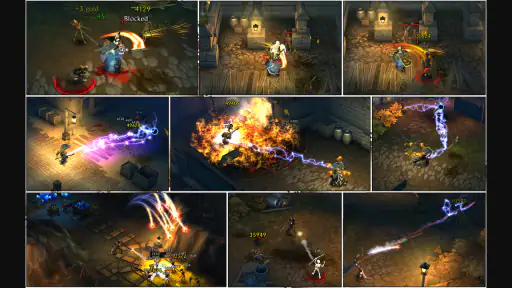
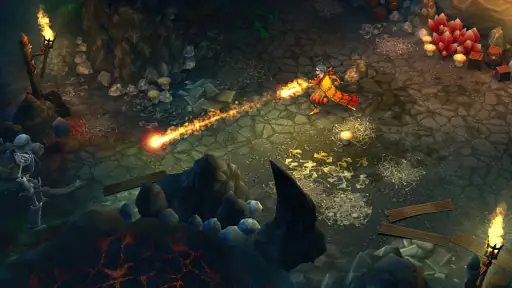
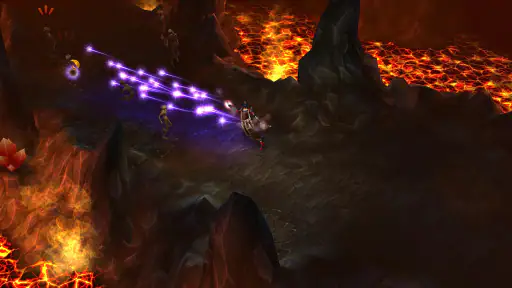
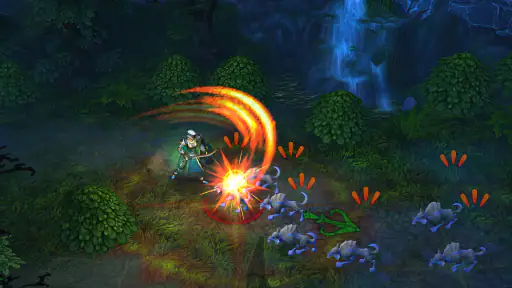
Analysis by Reviewed
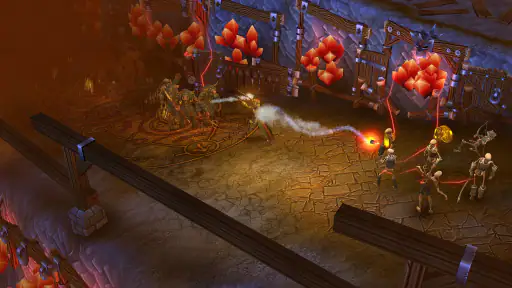
Eternium is the kind of role-playing game I open when I want familiar fantasy adventuring without committing to a long session. Its most distinctive capability is its gesture-based spell and ability casting: instead of relying entirely on a row of buttons, I draw symbols on the screen to trigger attacks. That small design choice changes the rhythm of play, making combat feel more active than the usual tap-and-wait routine.
After spending time with it, I understand why the game has built such a large audience. Developed by Making Fun, it presents itself as a tribute to classic RPGs, but it is not simply copying an old formula. The controls, quick encounters, loot hunting and straightforward progression make it approachable, while the later decisions about equipment and character development give experienced players reasons to keep experimenting. It is free to start, rated Teen, and available in current version 1.47.5 for devices running Android 7.1 or later.
My overall impression is positive, with an important qualification: this is best for someone who enjoys repeated combat, collecting upgrades and gradually improving a character. It is less suitable if you want a deeply conversational story, a slow tactical RPG or a completely frictionless free experience. The game’s strengths come from its immediacy, and its weaknesses come from that same streamlined design.
Why the gesture-based combat matters
The central idea is simple. During a fight, I can draw a recognizable shape to activate an ability rather than searching through a crowded interface. That makes the player part of the action. A basic attack may be easy to trigger, but stronger abilities require more attention, especially when enemies are moving or several threats appear together.
This feels noticeably different from many mobile role-playing games, where combat often becomes a sequence of tapping an enemy and waiting for cooldowns. Here, I have to watch the battlefield, remember the shapes and decide whether to use an ability immediately or hold it for a more dangerous target. The result is not a full action game, but it does create a useful middle ground between passive automation and demanding real-time controls.
The system also works well on a phone because it does not require a large number of tiny buttons. I can play with one hand during a short break, yet the encounters still ask me to pay attention. That balance is the feature I would explain first to a friend considering the download: the gestures make ordinary battles feel more hands-on without turning the game into a complicated control exercise.
There is a learning curve, though. At the beginning, I sometimes drew too quickly or made a shape poorly, particularly when I was also trying to move away from danger. The game becomes more comfortable once the gestures are familiar, but players who prefer precise button controls may initially find this less reliable than a conventional action bar.
More From Our News Desk

Clash of Clans Is Won Between the Battles

Android Auto Makes the Case for Quieter Car Software

MobiOffice: Transforming Mobile Productivity with Seamless Integration

EA SPORTS FC™ Mobile Soccer: Redefining Mobile Sports Gaming

How Microsoft OneDrive Became a Mobile Productivity Giant

How Google Translate Breaks Language Barriers Effortlessly
Learning the gestures instead of memorizing a menu
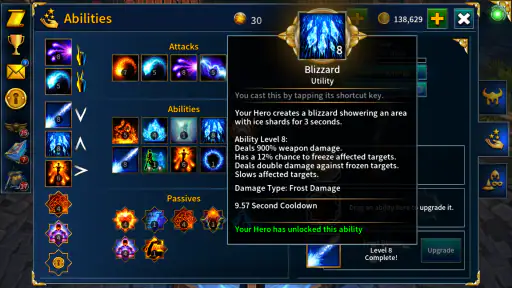
The most useful way to approach the system is to treat each gesture as part of a combat routine. I do not try to remember every option at once. I first become comfortable with the abilities I use most often, then add the less frequent ones as encounters become more demanding. This reduces the feeling of drawing symbols randomly and makes each fight easier to read.
That approach also reveals a subtle trade-off. Gesture casting saves interface space, but it shifts some of the mental work onto the player. A traditional RPG may show every skill in front of me, while Eternium asks me to remember what each movement does. For casual play, that can feel refreshingly clean. During a hectic fight, it can feel like an extra layer between intention and action.
I found that the system is most satisfying when I alternate movement and casting instead of standing still and repeating one attack. Even without treating every battle as a serious challenge, repositioning before drawing a spell makes the character feel more responsive. It also gives the combat a clearer rhythm: move, identify the threat, cast, collect the result and prepare for the next group.
What a normal session feels like
A typical session begins with a quick decision about how much time I have. If I only have a few minutes, I can enter a fight, work through a small stretch of adventure and stop without needing to reserve an entire evening. If I have longer, the same loop expands naturally into exploring, fighting, checking equipment and deciding how to improve the character.
The progression is easy to understand. Enemies provide the immediate reason to keep playing, while new equipment and character improvements give the battles a longer-term purpose. I rarely feel lost about what I should do next, which is useful on a phone where complicated quest logs can quickly become tiring.
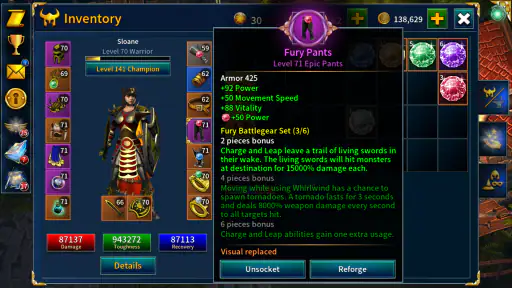
That accessibility does not mean every decision is shallow. Equipment choices matter because a stronger item is not automatically the best fit for the way I want to play. I pay attention to whether an upgrade supports my preferred balance of damage, survival and ability use rather than replacing everything without thought. This is one of the game’s better qualities: it lets a newcomer enjoy obvious improvements while leaving room for more deliberate comparisons.
One practical habit helps a lot: I avoid treating every new item as an immediate upgrade. I compare it with what I am already using and consider whether the change improves the whole setup or only one number. That prevents the inventory from becoming a stream of automatic decisions and makes the role-playing side more meaningful.
A realistic everyday use case
For me, the strongest everyday scenario is a short commute or a waiting period when I want something more engaging than a puzzle but less demanding than a full console session. I can play a few encounters, use the gesture controls to stay involved and put the phone away when my time ends. The game does not require me to reconstruct a complicated strategy after every interruption.
It also suits a player who likes the feeling of a classic fantasy adventure but has limited patience for long tutorials. The basic loop becomes understandable quickly: move through the adventure, fight enemies, gather rewards and improve the character. The gesture mechanic adds personality to that loop without forcing me to learn an entirely unfamiliar genre.
There is a downside to this convenience. Short sessions can encourage a repetitive pattern if I focus only on fighting the next group and collecting the next reward. The game is most enjoyable when I occasionally stop to think about equipment and ability use. If I play mechanically, the gestures become routine rather than interesting, and the experience loses some of its initial spark.
Where it differs from usual mobile RPGs
Compared with an auto-battle role-playing game, Eternium gives me more direct responsibility during combat. I cannot simply choose a character and watch every encounter resolve itself if I want to get the most from the gesture system. That makes it a better choice for players who want their input to matter, but a worse choice for anyone looking for a mostly passive progression tool.
Compared with a traditional menu-heavy RPG, it is faster to enter and easier to understand on a small screen. I spend less time navigating layers of commands and more time responding to what is happening. The cost is that the combat has less room for the slow, highly deliberate planning found in turn-based adventures.
It also occupies a different space from a large, story-first role-playing game. I enjoy the accessible adventure structure, but I would not choose it primarily for elaborate dialogue or a richly branching narrative. Players who want character relationships and long cinematic scenes may be happier with a game built around storytelling rather than repeated action encounters.
Against a dedicated action RPG, it is more approachable and easier to play in short bursts, though its gesture controls do not provide the same precision or physical depth as a game designed around a larger controller layout. That is not a flaw by itself. It simply shows who the design is for: people who want active mobile combat, not a complete substitute for a full-scale action game.
The free entry point and the real cost of convenience
The game can be downloaded and played for free, which makes it easy to test whether the combat suits me before spending anything. In-app purchases range from $0.99 to $99.99 per item. That wide range is worth keeping in mind, especially for anyone who wants a strictly controlled entertainment budget.
My advice is to begin without buying anything and pay attention to whether the normal progression already feels satisfying. If the main appeal is learning the gestures and improving through regular play, spending is not necessary to understand the game. If impatience with progression starts to replace enjoyment, a purchase may feel tempting, but that is also a sign to ask whether the game’s long-term loop is right for me.
The free-to-start model also affects how I judge the experience. I am more forgiving of a gradual progression system when I can explore it at no cost, but I still expect the core combat to remain enjoyable without constant pressure. For this game, the gesture mechanic does enough work to make the opening hours feel like a real game rather than a decorative introduction to a shop.
Small-screen strengths and practical limitations
The interface is strongest when I am holding the phone close and focusing on one encounter at a time. Gestures reduce the need for tiny controls, and the quick feedback makes the game comfortable during brief sessions. The same design can become less pleasant when the screen is crowded with enemies, effects and movement, because I have less visual room to separate urgent information from background activity.
I also would not recommend it to someone who dislikes repetition in any form. Its appeal depends on returning to the combat loop, improving a build and trying again with better decisions. Players who need every session to introduce a radically different mechanic may find the structure predictable.
Another limitation is that the gesture system rewards familiarity more than improvisation. Once I know the most useful shapes, I tend to rely on a small group of dependable actions. That is efficient, but it can narrow the variety of combat if I never deliberately experiment with other options or equipment combinations.
Who will enjoy it most
The best match is a player who remembers the feel of older fantasy RPGs but wants controls designed for a touchscreen. The store listing describes it as a tribute made by old-school gamers, and I can feel that intention in the focus on adventuring, loot and character improvement rather than on making every moment look spectacular. It has a familiar foundation, but the gestures give it a distinct mobile identity.
It is also a good fit for someone who wants a free role-playing game that can be played in short sessions without abandoning active combat. The audience response is strong: it holds a 4.8 average from around 2.7 million ratings, with over 10 million installs and roughly 138 thousand written reviews. Those figures do not guarantee that I will enjoy the design, but they do reflect how broadly the formula has connected with mobile players.
I would be more cautious about recommending it to a player who wants deep tactical turns, a premium game with no optional purchases or a story that consistently takes center stage. I would also suggest looking elsewhere if gesture recognition sounds irritating rather than interesting. The game’s defining feature is exactly what makes it appealing, so there is no point pretending it will suit someone who prefers conventional controls.
My recommendation after extended play
Making Fun has built a role-playing game around a clear idea and used it where it matters most: in the moment-to-moment fight. Drawing abilities makes me watch the screen, remember my tools and participate in each encounter instead of treating combat as background activity. That is a modest innovation, but it changes the feel of the whole game.
I recommend giving it a fair trial if you enjoy classic fantasy progression, quick mobile sessions and the satisfaction of improving through repeated battles. Start slowly with the gestures, compare equipment instead of accepting every replacement automatically and judge the game by how much you enjoy its central loop rather than by how quickly you advance.
Eternium is not the right answer for every role-playing fan, but it is an unusually approachable choice for players who want their touchscreen input to have a direct effect on combat. Its free entry point, Teen rating and long-standing presence make it easy to try, while version 1.47.5 keeps it current for compatible devices. I would keep it installed for those moments when I want a classic adventure feeling with a little more movement and attention than a standard tap-to-win RPG provides.
Eternium Frequently Asked Questions
Is Eternium a good choice for players who enjoy classic fantasy RPGs?
Eternium is a role-playing game built around a classic fantasy adventure, with combat, quests, monsters, equipment, and character progression. Its store description calls it a tribute to classic RPGs made with passion by old-school gamers, which gives a good sense of its focus. If you enjoy developing a hero and taking on fantasy challenges, its style may suit you.
Can I play Eternium on my phone or tablet?
Eternium is a mobile game available for Android and iOS. Before downloading, check that your device’s operating system meets the requirements shown in its app store; Android 7.1 is the minimum listed for Android. The game is free to download, though optional in-app purchases are available. Making sure you have enough storage and a compatible device can help avoid installation problems.
Is Eternium suitable for younger players?
Eternium is a fantasy role-playing game centered on combat, quests, monsters, and character progression. Its content rating is Teen, so parents and caregivers should consider that guidance before installing it for a younger player. The game also offers optional in-app purchases, making it sensible to review device purchase controls and discuss spending expectations before play.
How much storage space and data should I plan for?
Before downloading Eternium, make sure your device has enough free storage for the game and its updates. The initial download and later online activity use a network connection, so Wi-Fi can be a practical choice if you want to avoid using mobile data. Keeping some extra storage available can also make it easier to install future updates without removing other apps.
What is Eternium, and what kind of game is it?
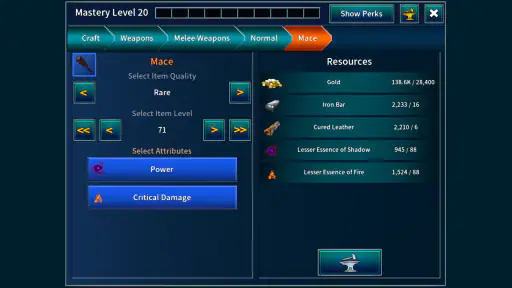
Eternium is a free-to-play action role-playing game for Android and iOS that combines fast real-time combat with classic fantasy adventure. You can choose from different character classes, explore varied worlds, complete quests, fight monsters, collect equipment, and improve your abilities. Its controls are especially accessible on mobile, using taps and gesture-drawn symbols to cast skills during battles.
Pros
- Fast-paced combat feels responsive and satisfying.
- Playable offline
- making it convenient for travel or limited connections.
- Large variety of gear
- abilities
- and character builds.
- Generous rewards allow progress without spending money.
- Regular events and updates add fresh goals for returning players.
Cons
- Inventory fills quickly
- making item management tedious.
- Higher-tier upgrades can require substantial grinding.
- Some abilities and controls feel awkward on smaller screens.
- Online features require an account and occasional server access.
- Visuals and animations may feel dated compared with newer RPGs.

- Category
- Role Playing
- Version
- 1.47.5