Eternal Empire: Warrior Eras
- 528.00
- 4.6
- Installs
- 1.00M
- Price
- Free

Screenshots
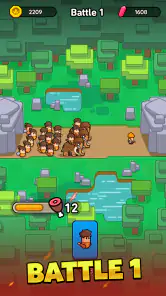

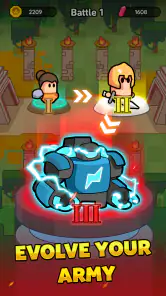
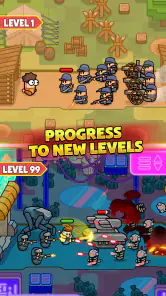
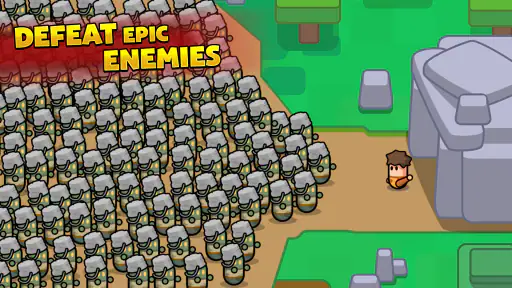
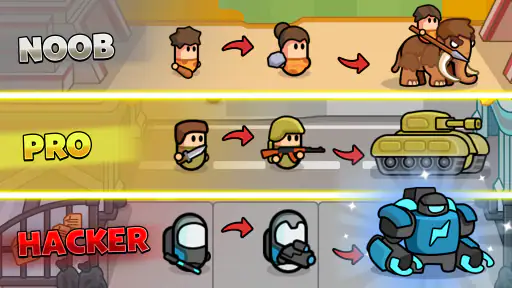

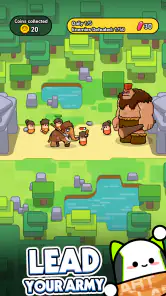
Analysis by Reviewed
I usually judge a mobile strategy adventure by what it asks of my attention after the first few minutes. Eternal Empire: Warrior Eras is built around a bigger commitment than a quick reflex challenge: its premise connects empire-building with conflicts across different eras and universes. That combination gives it a distinctive starting point, but it also means the game is most appealing when I’m in the mood to plan, weigh choices, and return to a developing campaign.
Embarking on Your Historical Journey
From the moment I launched the app, I was instantly transported to an era where warriors and empires reigned supreme. The graphics are nothing short of stunning, with meticulously designed landscapes and characters that make you feel as if you've stepped into a living, breathing world. The developers have done an exceptional job in ensuring that every detail, from the armor worn by the soldiers to the grand castles, is historically accurate and visually captivating.
How the empire-building loop feels in practice
As an adventure strategy game from Nature Games, Eternal Empire: Warrior Eras is best approached as a series of choices rather than a quick action title. I would pick it when I have time to think through a plan, not when I want a short burst of reflex-based combat. The store describes battles spanning different times and universes, which gives the premise a broader scope than a conventional historical campaign; the appeal is the contrast between building an empire and facing changing conflicts.
That contrast is worth considering before you install it. A focused historical strategy game tends to draw much of its appeal from one setting and the particular constraints of that period. Here, the imaginative reach across eras suggests a looser, more varied adventure. I find that more inviting if I want a world with room for surprising matchups than if I’m looking for a careful simulation of a single civilization. It’s a difference in taste, not a flaw: the game’s identity comes from mixing empire-scale thinking with a premise that is not limited to one historical moment.
Gameplay That Keeps You Hooked
Now, let's talk gameplay. The game is designed to keep you on your toes. As a player, you get to strategize and make decisions that will affect the outcome of your empire. Whether it's deciding which territories to conquer or whom to ally with, every choice is crucial. The battles are intense, requiring not just brawn but brains, too. And trust me, there's nothing more satisfying than watching your well-planned strategy unfold into a victorious battle.
One of the things I absolutely love about this game is its depth. It’s not just about fighting; you also need to manage resources, build and upgrade structures, and even engage in a bit of diplomacy. It’s like a giant chess game where every move counts. The AI opponents are challenging enough to keep things interesting, ensuring that you’re always engaged.
For me, the most useful mental shift is to treat each decision as part of a small plan rather than as an isolated button to press. When a game puts battles, development, resources, and diplomacy side by side, it is easy to focus on whichever option looks most rewarding in the moment. I’d instead ask what is holding back the next step: a stronger force, a more developed base, or a better position for a conflict. Even without knowing every system in advance, that question helps make the empire feel like a connected project.
More From Our News Desk

Weather by Xiaomi Review: Clear at a Glance, Less Clear Up Close

X Under Pressure: Can It Recover When Posting Goes Wrong?

Clash of Clans Is Won Between the Battles

Android Auto Makes the Case for Quieter Car Software

MobiOffice: Transforming Mobile Productivity with Seamless Integration

EA SPORTS FC™ Mobile Soccer: Redefining Mobile Sports Gaming
Making progress without rushing decisions
A useful way to play is to pause before spending resources on every available upgrade. I would first decide whether my immediate goal is to strengthen the army, develop the empire, or prepare for a particular battle, then commit to upgrades that support that plan. That small habit can make the strategy feel more deliberate and help avoid the familiar frustration of spreading resources too thinly.
This also makes the game a better fit for players who enjoy weighing trade-offs. If you prefer a clear path where the next mission is always obvious and decisions rarely have consequences, its empire-management side may feel like friction rather than depth. For a relaxed evening, I can see it working well in a few focused sessions: check the state of the empire, make one or two meaningful decisions, then return later when I have more attention for the next conflict.
A practical routine is to enter with one question in mind, such as whether the empire needs development before you commit to another battle. That keeps a short visit from turning into aimless tapping through every available choice. I’d also avoid spending simply because an upgrade is visible; first connect it to a concrete goal. The trade-off is that this measured approach may feel slow to someone who wants constant combat, but it gives planning-oriented players a clearer sense of why a decision matters.
Sound and Music That Immerses You in the Experience
The sound design is another aspect where this app shines. The background score complements the historical theme perfectly, with epic orchestral music that makes every battle feel monumental. The sound effects, from the clash of swords to the rallying cries of your troops, are incredibly realistic, enhancing the overall immersive experience.
Moreover, the game offers a rich narrative that's woven into the gameplay. As you progress, you encounter various historical figures and events, each adding layers to the story. It’s like playing through a captivating historical novel.
The combination of story and strategy affects how I’d recommend approaching a session. If I’m following the narrative, I’d avoid rushing through just to reach the next confrontation; the context gives the battles a sense of place. If I’m playing in a noisy setting or only have a brief break, I’d focus on the empire decisions I can make thoughtfully and save a story-heavy stretch for later. That way, the presentation supports the play instead of becoming background decoration.
Who will enjoy it, and who may prefer another style
I’d recommend it to players who like the planning side of adventure games as much as the clashes themselves, especially anyone who enjoys turning a growing collection of resources and structures into a stronger campaign. A practical everyday use is to open it during a quiet break, review what needs attention, and choose one goal for the session instead of trying to do everything at once. That makes the management feel purposeful rather than like a checklist.
Compared with a straightforward action adventure, this leans more heavily on long-term decisions and empire development. If you want immediate movement and combat with little planning, a more direct action game is likely a better match. Likewise, players who mainly want a historically grounded simulation may find the time-and-universe premise less conventional than a focused recreation of one period. The game’s appeal rests on that unusual blend, not on strict historical realism.
I’d also separate “adventure” from “fast-paced” when deciding whether it fits. The category can suggest exploration and excitement, but the empire side asks for patience and consideration. Someone who likes building toward a satisfying result may find that pace rewarding; someone who opens a game to fill two minutes between tasks may find the same decisions demanding. If you’re unsure, the free entry point makes it reasonable to try the style before deciding whether it belongs in your regular rotation.
What a normal play session can look like
Imagine opening the game during a calm evening break. Rather than trying to clear every task or make every possible improvement, I’d first check what is happening in the empire, pick a single priority, and use the session to support it. That might mean preparing for conflict instead of expanding, or improving the foundations of the empire before pursuing another objective. The point is not to follow a fixed recipe; it’s to make the session feel purposeful even when time is limited.
This approach also helps answer a common practical question: does it suit short visits or longer play? I’d say it can work for either, but for different reasons. A brief visit is best used to review the situation and make one considered choice. A longer session gives more room to follow the story and see how a plan plays out. If you only enjoy games that deliver a complete, self-contained challenge in a few minutes, the broader empire arc may not offer the kind of closure you want each time you open it.
Current state and what to keep in mind
The game is free to download and has optional in-app purchases priced from $1.99 to $19.99 per item. I’d go in expecting the free experience to be the starting point and treat purchases as optional rather than necessary; decide what you are comfortable spending before a tempting offer appears. Its Everyone age rating makes it broadly accessible, though the strategic choices will probably matter more to players who enjoy planning than to very young players seeking simple, immediate play.
It has a 4.6 average from around 19,000 ratings, and more than a million installs. Those figures suggest that it has found an audience, but they don’t tell me whether its particular mix of empire management and battles will suit you. The current version is 1.1.13, and the game was released on May 28, 2024. That gives existing players a concrete version to identify, while any future changes should be judged on what actually arrives rather than assumed from the version number alone. It runs on Android 6.0 or later.
For someone already playing, a version number is useful mainly as a reference point when checking whether an installation is current. I wouldn’t read a sequence of version numbers as proof of a particular new feature or balance change. What matters to a returning player is whether the experience they know still suits their routine and whether a later update, when available, changes something they personally care about. New players can focus first on learning the central rhythm rather than trying to predict how the game may develop.
The purchase range is another reason I’d make a personal spending decision in advance. Optional offers can be easy to assess when you know what you value, but less so when you’re caught up in a battle or eager to accelerate progress. I’d give the free experience enough time to show whether the strategic loop holds my attention, then consider spending only if I can name the specific benefit I want. If the appeal depends on buying before you know whether you enjoy the planning, I’d hold off.
What I would watch as the game evolves
For existing players, the most meaningful changes to watch are the ones that affect the balance between developing an empire and taking part in battles. A new version can matter a great deal if it changes a routine you rely on, but a version label alone is not an explanation of what changed. I’d look for clear notes when an update appears, then judge it by whether it improves the parts of the game I actually use rather than by the size of the number attached to it.
For anyone deciding whether to start now, the same principle applies: focus on the current experience rather than treating future additions as a promise. The core attraction is already clear enough to evaluate—an adventure strategy game from Nature Games that pairs empire decisions with battles set across a broad imaginative scope. If that mix sounds appealing today, it’s worth trying; if you need a specific feature or a tightly defined historical setting, I’d choose a game that demonstrably prioritizes that instead.
Final Thoughts
In conclusion, this game is more than just a game; it's an experience. Whether you're a history buff, a strategy enthusiast, or someone who just loves a good game, there’s something here for you. The combination of visuals, empire decisions, and immersive sound makes it a distinctive option among mobile adventures, although its planning-heavy rhythm will not suit every player.
If you're ready to take command of your own empire and lead it to glory, this app is worth checking out. I’d start with a free download, take time to learn which decisions matter to your play style, and only consider optional purchases if you decide the game has earned a place in your routine. If your ideal game is a fast, linear adventure, I’d choose something more direct; if you enjoy balancing development with battles, this is the more interesting bet.
Eternal Empire: Warrior Eras Frequently Asked Questions
What kind of game is Eternal Empire: Warrior Eras?
Eternal Empire: Warrior Eras is an adventure game built around empire building and battles that span different eras and universes. Its premise may appeal if you enjoy a setting that combines exploration with the growth of a civilization. The experience is framed around developing an empire, so it is worth considering whether that theme matches the kind of game you want to play.
Who developed Eternal Empire: Warrior Eras, and when was it released?
Eternal Empire: Warrior Eras was developed by Nature Games and released on May 28, 2024. The game is currently at version 1.1.13. If you are deciding whether to try it, these details can help you identify the title and its developer, while the version information is useful when checking that you are looking at the current release.
Is Eternal Empire: Warrior Eras suitable for younger players?
Eternal Empire: Warrior Eras is rated Everyone, so its content is intended to be suitable for a broad audience. It is an adventure game centered on empire building and battles across different eras and universes. Parents may still want to review the game themselves and consider whether its strategy and combat themes are a good fit for their child.
How much does Eternal Empire: Warrior Eras cost, and are there in-app purchases?
Eternal Empire: Warrior Eras is free to download and play, with optional in-app purchases priced from $1.99 to $19.99 per item. These purchases may appeal to players who want to buy extras, but they are not required to start playing. It is worth checking purchase settings on your device, especially if children will be using the game.
What is the main objective of Eternal Empire: Warrior Eras?
Eternal Empire: Warrior Eras is an immersive strategy game where players aim to build and expand their empire through various eras. The primary objective is to develop a powerful civilization by managing resources, building armies, and conquering territories. As players progress, they encounter different historical challenges and must strategically plan their actions to become the ultimate ruler of the Eternal Empire.
Pros
- Engaging storyline keeps players hooked
- Diverse character classes offer replayability
- Stunning graphics enhance the gaming experience
- Rich
- immersive world to explore
- Regular updates with new content
Cons
- In-app purchases can be expensive
- Requires a stable internet connection
- Occasional bugs disrupt gameplay
- Can be challenging for beginners
- Consumes a lot of battery life
- Category
- Adventure
- Version
- 1.1.13