Earn to Die
- 6.43K
- 4.8
- Installs
- 1.00M
- Price
- $1.49
Screenshots
Analysis by Reviewed
I first thought Earn to Die would be a straightforward zombie-driving game, and that is mostly what it is: take a car across dangerous terrain, see how far it gets, and use each attempt to improve the next one. What surprised me is how clearly that simple loop guides a first-time player. You do not need to learn a complicated racing format or follow a story before you can make progress. You can start driving, notice what went wrong, and make a practical choice for the next run.
What to expect from the first run
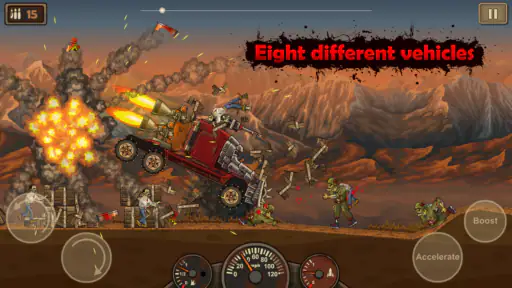
You begin with a basic vehicle and limited fuel, so the opening drive is more about learning the feel of the road than reaching the end. The car’s momentum, its balance in the air, obstacles, and the crowd of undead all affect how far you get. A run that ends early is not necessarily a failure; it gives you a chance to earn money and improve the vehicle for another attempt. That loop is the game’s main appeal, and it makes progress easy to read without asking you to master complicated racing controls first.
Not Doppler’s game suits quick sessions particularly well. I can imagine opening it during a short break, making one run, choosing an upgrade, and stopping there without needing to remember a complex plot or a long chain of objectives. The trade-off is that repetition is part of the design. If you want varied routes, deep simulation, or a campaign driven by character and narrative, a more conventional racer or story-focused zombie adventure may hold your attention better.
Who will enjoy this kind of driving
I’d recommend it most to players who like a visible before-and-after: an early attempt feels constrained, then a well-chosen improvement makes the next drive more capable. It is also a reasonable fit if you want a game that is easy to return to after putting your phone down. You can focus on a single run instead of recalling a long sequence of events or coordinating with other players.
It is less suited to someone who wants every session to introduce a new course, a rival to beat, or a fresh objective. The central pleasure is refining your vehicle and pushing farther, so the structure can feel familiar quickly if you are not interested in incremental progress. I would also steer away from it if realistic driving physics are the main attraction for you: this is an arcade-style survival drive, not a detailed simulation of road handling.
Gameplay that Keeps You on the Edge
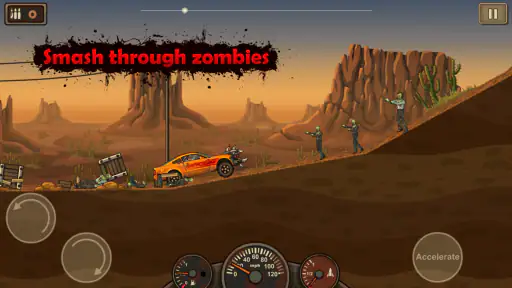
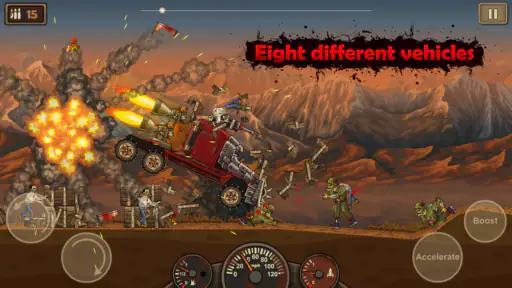
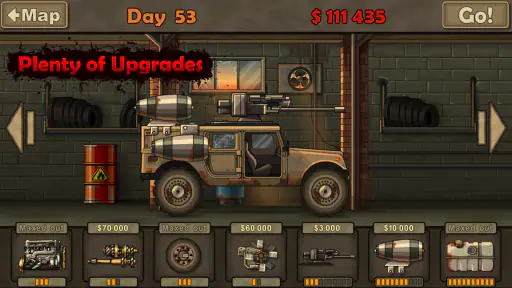
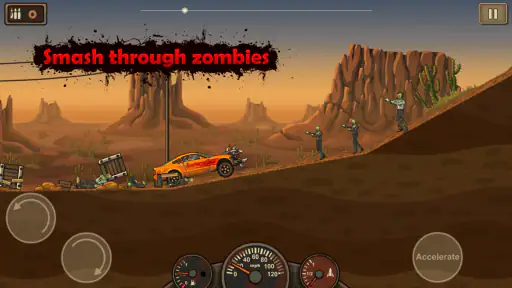
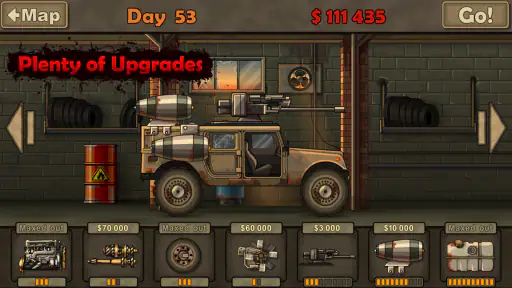
The core of Earn to Die is all about survival and strategy. You start with a basic car and a limited amount of fuel. Your mission? To get as far as possible while mowing down zombies and overcoming obstacles. The game cleverly combines elements of racing and strategy, requiring you to upgrade your vehicle with the money you earn from each run. You can beef up your ride with better engines, bigger wheels, and even weapons to ensure those pesky zombies are nothing more than a speed bump.
The controls are straightforward and intuitive, making it easy for anyone to pick up and play. You accelerate with a simple tap and tilt your device to keep your car balanced. But don’t be fooled by its simplicity—mastering the art of controlled acceleration is key to maintaining momentum and conserving fuel. Trust me, you’ll find yourself constantly on the lookout for that perfect balance between speed and fuel efficiency.
More From Our News Desk

Clash of Clans Is Won Between the Battles

Android Auto Makes the Case for Quieter Car Software

MobiOffice: Transforming Mobile Productivity with Seamless Integration

EA SPORTS FC™ Mobile Soccer: Redefining Mobile Sports Gaming

How Microsoft OneDrive Became a Mobile Productivity Giant

How Google Translate Breaks Language Barriers Effortlessly
Making the first upgrade count
My practical tip is to treat the end of each run as a small experiment, not just a shopping stop. Notice whether the car lost momentum on rough ground, ran out of fuel while still moving well, or struggled to clear an obstacle. Then choose an upgrade that addresses the problem you actually encountered. This is more useful than buying whatever sounds most powerful, because a stronger engine cannot solve every weakness at once. The satisfying part is learning how the changes affect the next drive rather than expecting one purchase to transform everything.
If balancing the car feels awkward at first, make small corrections instead of holding the device at a sharp angle. The goal is to keep the vehicle moving cleanly over bumps and through the air, not to perform dramatic flips. I would also avoid judging a run only by distance: earning enough to make a relevant improvement can be a worthwhile result even when the drive ends sooner than hoped.
A simple routine for early progress
For a first session, I’d keep the process uncomplicated: take a run without trying to perfect every movement, then remember the clearest reason it ended. On the next attempt, focus on that one issue. This makes it easier to tell whether your driving or an upgrade helped, instead of changing several things mentally at once and having no idea what made the difference.
There is a useful trade-off here. It can be tempting to treat every run as a test of skill, but the game’s progression means vehicle improvements matter too. If a route feels stubborn, repeating it with exactly the same approach may not be as productive as using the money from the previous attempt thoughtfully. Conversely, buying an upgrade without observing the car can leave you unsure why the next drive did or did not improve.
Visuals and Soundtrack that Set the Mood
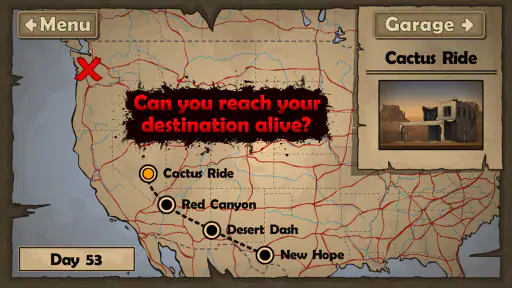
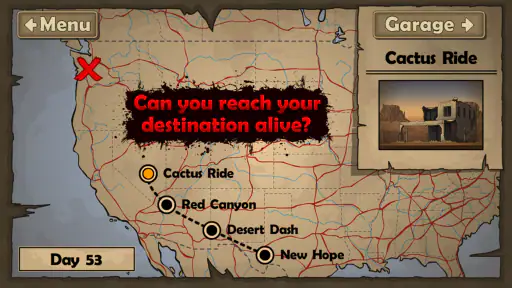
One of the first things that struck me about Earn to Die is its immersive graphics. The game’s gritty, post-apocalyptic landscapes are beautifully rendered, creating a world that’s both haunting and captivating. Each level takes you through different terrains, from desolate highways to eerie desert landscapes, ensuring that the scenery never gets stale.
Complementing the visuals is a pulsating soundtrack that ramps up the tension as you race against the clock. The sound of zombies splattering against your windshield, coupled with the roar of your engine, creates an atmosphere that’s both exhilarating and satisfying. It’s the kind of game where you’ll want to plug in your headphones and lose yourself in the chaos.
Choosing the right moment to play
The short-run format works well for a small gap in the day. If I had a few minutes before meeting a friend, for example, I could make one attempt and decide on an upgrade without needing to commit to a long session. That is different from a game built around a full race or a substantial story chapter, where stopping halfway can feel awkward. Here, one run naturally provides a stopping point.
For a commute, I’d treat it as a brief distraction while safely stationary rather than something to focus on while moving. The controls ask for attention, especially when balancing the vehicle, so it is not ideal if you need to keep your eyes on something else. And if you only enjoy games when each minute brings a new setting or mechanic, the compact repeatable loop may not be the best use of your downtime.
Where it fits among racing games
Compared with the usual lap-based racing games, this is much less about overtaking rivals or learning a circuit and much more about managing one vehicle’s progress through a hostile stretch of road. That difference makes it an easy choice when I want a compact run with a clear objective, but it also means players looking for competitive races, detailed tuning, or realistic handling should look elsewhere. Its zombie theme adds a playful layer of impact, though the core satisfaction comes from gradually making the car more capable.
A useful everyday approach is to play one or two runs while waiting for a meal or during a commute break, then leave the next upgrade decision until you have seen what held the car back. Because attempts build on one another, a short session can still feel complete. I would be less likely to recommend it for a long uninterrupted evening if repeated driving toward the same broad goal sounds tedious to you.
How to tell whether the loop is working for you
After a few attempts, ask yourself whether you enjoy noticing small changes in the car’s performance. If you find yourself thinking, “That obstacle was the problem; I’ll address it next time,” the game is giving you the kind of feedback it is built around. If instead you are waiting for a completely different activity to arrive, the basic structure may not change enough to win you over.
That distinction also helps when comparing it with other racing choices. A conventional racer is a better pick when you want to compete against opponents or improve around a circuit. A more story-led zombie game makes more sense when characters and narrative are the draw. This one sits between those expectations: it uses driving as a steady progression challenge, with the undead and wreckage shaping the mood rather than turning it into a conventional race.
Why You Should Download It
What sets Earn to Die apart from other zombie games is its replay value. Each run is a new opportunity to earn more money, upgrade your vehicle, and discover new strategies. The satisfaction of seeing your car transform from a rusty junker into a zombie-smashing machine is incredibly rewarding. Plus, the game’s progression system is well-paced, offering just enough challenge to keep you coming back for more.
For a paid game, the choice is straightforward: it costs $1.49, and its Teen content rating is worth noting if you are choosing a game for a younger player. It has a 4.8 average from around 104,000 ratings and over a million installs, which gives a sense of its broad appeal without guaranteeing that its loop will suit everyone. The current version is 1.0.38, it runs on Android 4.4 or later, and it was released on March 11, 2013. I’d check that your device meets the minimum before buying; the price is modest, but the repetitive run-and-upgrade structure is still a matter of taste.
Before you spend money or hand over the phone
The price is small, but I would still decide based on the kind of replay you enjoy rather than the popularity figures alone. A strong average rating cannot tell you whether you personally like repeating a route to improve a vehicle. If you are buying for someone else, the Teen rating is a useful checkpoint, and the straightforward driving idea makes the goal easy to explain before they start.
One question first-time players often have is whether an early short run means they are doing something wrong. I would not assume that. The opening attempts are part of learning how the vehicle behaves and building toward useful improvements. Another practical question is whether to focus on driving technique or upgrades; my answer is to observe the car first, then make one adjustment at a time so the next result is easier to understand.
The game is made by Not Doppler and has been available since March 11, 2013. Its current version is 1.0.38, with Android 4.4 or later listed as the minimum system requirement. It is a paid racing game rather than a free download, so I would check compatibility and consider the repeatable progression before purchasing, especially if you usually prefer competitive multiplayer or a story with a clear ending.
If you’re looking for a game that offers a satisfying blend of action, light planning, and zombie-themed fun, Earn to Die is a solid pick. I’d recommend it to someone who enjoys seeing small improvements add up and wants controls they can learn quickly. If you would rather have a varied racing competition or a richer story, choose a different game. Otherwise, start with a run, pay attention to what stopped you, and make your first upgrade solve that problem. That simple routine is the clearest path from a cautious first drive to a genuinely satisfying bit of progress.
Earn to Die Frequently Asked Questions
What is Earn to Die’s age rating, and is it suitable for younger players?
Earn to Die has a Teen content rating, which is worth considering before downloading it for a younger player. Its premise involves driving through a zombie apocalypse and smashing zombies, so the action is aimed at players comfortable with that theme. Parents and guardians can use the rating as a starting point when deciding whether the game is appropriate.
What kind of game is Earn to Die, and who developed it?
Earn to Die is a racing game from Not Doppler, built around driving through a zombie apocalypse. Its straightforward premise puts vehicles at the center of the action: choose a car, push through dangerous terrain, and smash zombies as you try to make progress. The game has a Teen content rating, so it may be worth checking that rating before downloading for a younger player.
How much does Earn to Die cost, and what Android version does it need?
Earn to Die is listed at $1.49, so it is a paid game rather than a free download. For Android, it requires version 4.4 or later. Check your device’s Android version before purchasing to avoid compatibility surprises. The game is also available on iOS, though the Android requirement does not apply to Apple devices; check the relevant store page for its compatibility details.
What is the main objective of Earn to Die?
Earn to Die is a thrilling driving game where the main objective is to survive a zombie apocalypse by navigating through various terrains using different vehicles. Players must upgrade their vehicles with better engines, weapons, and other features to overcome obstacles and reach safe zones, all while crushing zombies along the way.
How does the vehicle upgrade system work in Earn to Die?
In Earn to Die, players earn money by completing levels and defeating zombies which can be used to purchase upgrades for their vehicles. These upgrades include enhancements to the engine, fuel tank, tires, and weapons, allowing the vehicle to travel further and deal more damage, essential for progressing through tougher levels.
Pros
- Simple and intuitive controls.
- Engaging and addictive gameplay.
- Variety of vehicles to unlock.
- Visually appealing graphics.
- Offline mode available.
Cons
- Repetitive level design.
- In-app purchases can be costly.
- Limited storyline depth.
- Can become monotonous over time.
- Ads can be intrusive.
- Category
- Racing
- Version
- 1.0.38