Dungeon Defense
- 9.61K
- 4.8
- Installs
- 1.00M
- Price
- $0.99

Screenshots

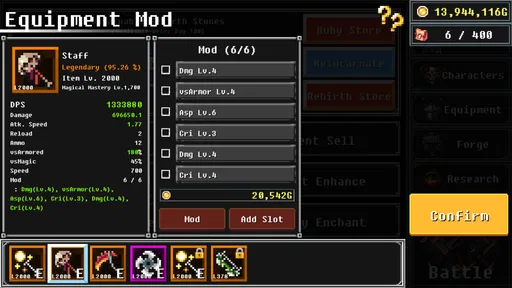
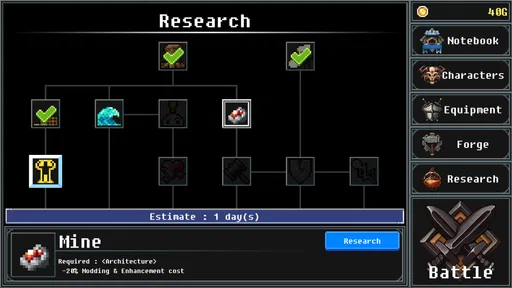

Analysis by Reviewed
When I first open Dungeon Defense, I know the basic idea immediately: I’m protecting the monsters’ home, not guiding a hero through someone else’s. That reversal gives this action game its personality, but the choice that keeps me engaged is what to change when a defense starts going wrong. If you enjoy watching a plan succeed—or spotting why it failed—there’s a satisfying first goal here: get through an attack, learn what held up, and make your next setup more deliberate.
What to expect from this unusual defense game
Dungeon Defense is an action game from GameCoaster, built around the pleasing reversal of defending a dungeon from invading heroes rather than helping heroes raid one. That change gives the familiar defense setup a mischievous edge. The pixel-art look suits the premise, and the main appeal is the steady tension of choosing how to protect your side while enemies press forward.
If you usually play tower defense games, expect a different point of view more than a completely different kind of decision-making. Positioning, upgrades, resource choices, and timing still matter; the fun comes from making those choices for the monsters. I find that makes the game easy to understand at a glance, while leaving room to adjust your approach when a defense starts to struggle.
The Basics of Dungeon Defense
Dungeon Defense is not your typical tower defense game. It takes the tower defense genre and flips it on its head by making you the villain. That’s right, you’re not saving the world; you’re defending your dungeon from those pesky heroes who think they can just waltz in and take your treasure. I love the twist here – it’s refreshing to play the bad guy for once!
Getting started without overthinking your setup
The game costs $0.99, with optional in-app purchases ranging from $0.99 to $74.99 per item. I’d treat the paid extras as optional rather than assuming you need them to understand the core loop. It’s rated Everyone 10+, and the current version is 1.93.06, so the version number is useful to check if you are comparing notes with someone playing a different build. It supports Android 6.0 or later.
For a first session, I’d focus on learning what each defense choice does before trying to optimize everything. Watch what is actually causing trouble: if heroes are getting through quickly, look at where your defense is weakest instead of spending resources on upgrades just because they are available. This simple habit makes early losses informative. You can see whether your plan needs stronger damage, better placement, or a different balance, rather than treating every defeat as a reason to restart blindly.
Gameplay Mechanics
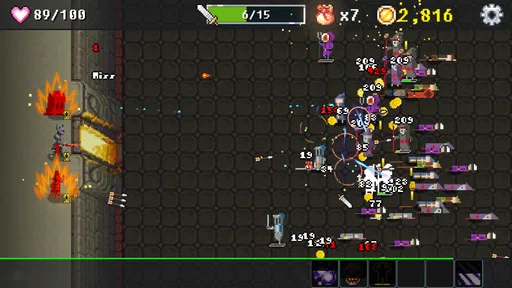
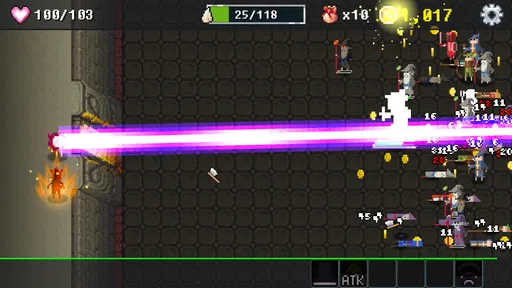
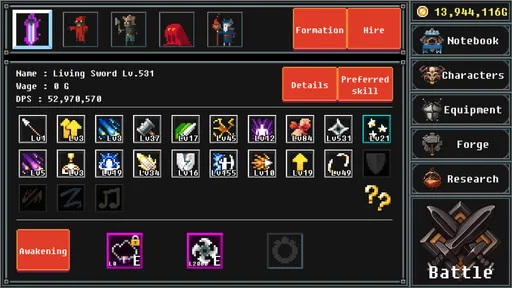
The game mechanics are straightforward yet incredibly engaging. You have to defend your dungeon against waves of heroes. As you progress, you get to upgrade your defenses, recruit monsters, and even use powerful spells to annihilate the intruders. The controls are intuitive, making it easy to get the hang of things quickly. With each level, the game throws in new challenges and tougher enemies, keeping you on your toes.
More From Our News Desk

Weather by Xiaomi Review: Clear at a Glance, Less Clear Up Close

X Under Pressure: Can It Recover When Posting Goes Wrong?

Clash of Clans Is Won Between the Battles

Android Auto Makes the Case for Quieter Car Software

MobiOffice: Transforming Mobile Productivity with Seamless Integration

EA SPORTS FC™ Mobile Soccer: Redefining Mobile Sports Gaming
Turning the first win into a useful lesson
My practical advice is to make your first successful defense a test run, not proof that one setup will always work. Notice which choices helped and which felt like sunk costs; then change one thing at a time on a later attempt. That gives you a clearer sense of cause and effect than rebuilding everything at once. It is especially useful when a wave feels difficult, because a small adjustment can reveal whether the problem is your arrangement or simply a tougher challenge.
This is also where the game’s replay value becomes more than a promise. Trying a different monster combination can change how you handle pressure, while a familiar setup gives you a baseline to compare against. If you tend to play in short bursts, that experimentation offers a concrete goal for your next visit: improve one part of the defense, rather than needing to commit to a long uninterrupted session.
Graphics and Sound
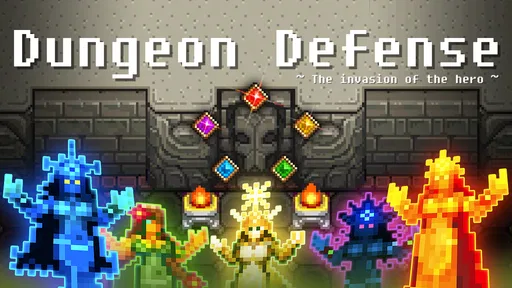
What’s a game without some eye candy, right? The graphics in Dungeon Defense are pixel art perfection. It’s got this retro vibe that’s both charming and nostalgic. The animations are smooth, and the attention to detail is impressive. Moreover, the sound effects and background music are spot on, adding to the overall immersive experience. Trust me, the sound of your monsters crushing the heroes is music to the ears!
Where it fits in an everyday gaming routine
I can see this working well during a commute or a quiet break when I want a focused game with a clear objective: keep the dungeon standing and learn from the next attack. It has more tactical involvement than a game that mainly asks you to tap through upgrades, but it is still approachable if you are new to defense games. On the other hand, if you want a sprawling story, a relaxed puzzle, or a game with little pressure to make tactical choices, this is probably not the right pick.
The main trade-off is that repeated defense can feel demanding when you would rather switch off completely. The strategy is part of the appeal, but it can also make a quick session feel less casual if you are trying to juggle several decisions at once. I’d play with sound when I want the extra atmosphere, and turn it down when I need a quieter break; the visual style still carries the game’s personality.
Strategy and Challenges
This game isn’t just about mindlessly defending your dungeon. Oh no, it requires some serious strategy. You need to place your monsters wisely, manage your resources efficiently, and time your attacks perfectly. Every decision counts, and one wrong move can spell disaster for your dungeon. It’s this challenge that keeps the game exciting and makes you come back for more.
How to decide whether to keep playing
When a defense fails, I wouldn’t immediately spend money or assume the game has hit a wall. First, look at what happened and make a focused change in your next attempt. That approach helps you distinguish a strategy problem from a simple mismatch between your preferred play style and the game. If you enjoy experimenting with monster choices and refining a plan, the setbacks can be satisfying. If you dislike retrying after a loss, the same loop may wear thin.
Compared with many action games that emphasize direct movement and reflexes, this one puts more weight on preparation and managing a defense. Compared with conventional tower defense, the villain’s perspective is a memorable hook, but the appeal still depends on whether you enjoy tactical waves and gradual improvement. The game has an average rating of 4.8 from around 113,000 ratings, and more than 1 million installs, which suggests it has found an audience without making it a guaranteed fit for every player.
Another thing I appreciate about Dungeon Defense is its replayability. Each playthrough feels different because you can try out new strategies, experiment with different monster combinations, and tackle various difficulty levels. It’s like a new adventure every time you hit the start button.
Final Thoughts
In a world full of mobile games, Dungeon Defense stands out with its unique take on the tower defense genre. It’s fun, challenging, and oh-so-addictive. Whether you’re a casual gamer or a hardcore strategist, this game has something to offer for everyone. So, if you’re looking for a game that’s going to keep you entertained for hours on end, give it a shot. Just don’t blame me if you end up spending more time defending your dungeon than you planned. Happy defending!
A low-pressure way to approach your first few sessions
I’d treat the first few visits as a set of small experiments rather than a campaign I have to master immediately. Before changing anything, I’d notice which enemy pressure felt hardest to answer; after a result, I’d adjust one part of the defense and see whether the next attempt feels more controlled. This keeps the learning process manageable and stops a rough run from turning into a string of random purchases or upgrades.
A realistic use case is a short break at home when I have enough attention to follow a wave but not enough time to settle into a long narrative game. I can aim for one useful observation—perhaps that a particular arrangement is more reliable—then put the phone away. The game suits that kind of goal better than an experience where progress depends on remembering a complex plot or coordinating with other players.
What makes the tactics rewarding—and what can feel repetitive
The most useful way I’ve found to think about decisions is to separate immediate survival from long-term improvement. A choice that helps with the current push may not be the best investment for later, so I try not to judge an option only by whether it makes the screen look stronger right away. Comparing attempts with one deliberate change gives me a better read on which trade-off matters in practice.
That method has a limit: if I want a game that constantly changes its rules or delivers a new kind of activity every few minutes, repeating defense and refinement may feel samey. The premise is distinctive, but the central pleasure remains planning, defending, and adjusting. I’d recommend it most to someone who likes making a small plan and testing it, rather than someone looking for a broad variety of unrelated modes.
Choosing it over other mobile action games
Against reflex-focused action games, the appeal here is less about moving a character through danger and more about arranging a defense before pressure builds. Against a familiar tower defense game, it offers the enjoyable villain-side framing, but it still asks for the patience that comes with resource decisions and repeated attacks. If you prefer direct control and fast reactions, another action game will likely suit you better; if you enjoy the planning layer, this provides a clear alternative without requiring you to root for the usual heroes.
It is also a better fit than a purely idle upgrade game if you want your choices to feel connected to what is happening in a defense. On the other hand, if your ideal break is something that can be played with almost no attention, I would choose a simpler casual game. Here, looking at why a defense is under pressure is part of the enjoyment, so distraction can make the tactical side feel like work instead of play.
Price, age suitability, and a sensible stopping point
The one-time price is $0.99, while optional purchases range from $0.99 to $74.99 per item. I’d decide in advance whether I’m comfortable with optional spending and keep the purchase menu separate from my judgment of whether the game itself is enjoyable. The core question for a new player is whether the defense loop holds attention; I wouldn’t treat a difficult attempt as a reason to buy something before trying a different strategy.
With an Everyone 10+ rating, it may be suitable for many younger players, though I’d still consider whether its repeated combat and tactical pressure match the individual child’s preferences. The pixel-art presentation has a playful look, but the main activity is still fighting off invading heroes. For an adult choosing a game to share, I’d focus less on the retro appearance alone and more on whether the player enjoys planning and retrying.
When I would recommend it, and when I would pass
I’d recommend Dungeon Defense to a player who likes defense games, enjoys seeing a plan improve over several attempts, or wants an action title with more thought than constant movement. It can also work for someone curious about a genre twist, since the familiar goal of stopping waves gets a different personality when the dungeon is yours to protect.
I’d pass if I wanted a story-led adventure, a calm game with no pressure, or a title built around precise real-time movement. I’d also be cautious if repeated attempts frustrate me more than they motivate me. The central loop is the point, not a temporary opening before the game becomes something entirely different, so it is worth choosing based on whether that loop sounds appealing.
Overall, I find it easiest to recommend as a compact strategy-minded action game with a memorable premise, not as an all-purpose mobile game. Start by learning what your choices do, treat early setbacks as information, and make changes one at a time. If that process is satisfying, the dungeon gives you a reason to return; if it feels like a chore, the game’s clever perspective may not be enough to make it click.
Dungeon Defense Frequently Asked Questions
Does Dungeon Defense have a clear premise for new players?
Yes. Dungeon Defense presents its core idea simply: defend your dungeon from heroes who are trying to invade it. The store describes it as a shooting defense game, so the focus is on fighting off attackers rather than exploring an unfamiliar story first. That straightforward setup makes it easier to understand what you will be doing when you start.
Is Dungeon Defense a good fit for players who enjoy action games?
Dungeon Defense is an action game built around defending a dungeon from attacking heroes. Its central appeal is the mix of shooting and defense: you repel incoming enemies while developing your defenses over time. If you enjoy games that ask you to react to waves of attackers and make tactical choices, its premise may suit you. It is also a paid game, with optional in-app purchases.
What is the main objective of Dungeon Defense?
Dungeon Defense is a strategic tower defense game where the main objective is to protect your dungeon from waves of relentless invaders. Players must strategically place traps, upgrade their defenders, and utilize special abilities to fend off attackers and prevent them from breaching the dungeon core. The game requires strategic planning and quick thinking to succeed.
Can Dungeon Defense be played offline?
Yes, Dungeon Defense can be played offline. This makes it a great option for gamers who want to enjoy strategic gameplay without needing a constant internet connection. However, some features, such as leaderboards or social sharing, may require an online connection to function properly.
What are the in-game purchase options available in Dungeon Defense?
Dungeon Defense offers a variety of in-game purchases that enhance the gaming experience. Players can buy gems and coins to upgrade their defenses, unlock special characters, and access exclusive content. While the game is free to play, these optional purchases can help players progress faster or customize their gameplay experience. The game itself costs $0.99, and in-app purchases range from $0.99 to $74.99 per item, so consider both costs before downloading.
Pros
- Addictive gameplay loops.
- Variety of unique heroes.
- Strategic depth in battles.
- Regular updates and events.
- Offline mode available.
Cons
- Can be grind-heavy.
- In-app purchases can be pricey.
- Steep learning curve.
- Repetitive at times.
- Requires significant storage.