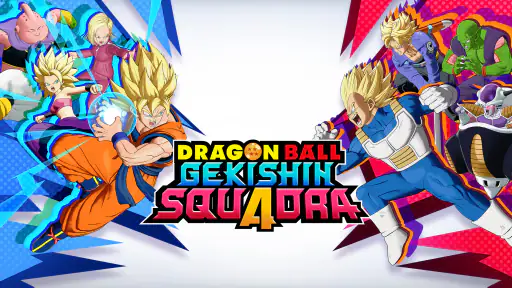
DRAGON BALL GEKISHIN SQUADRA
- 3.74K
- 4.2
- Installs
- 5.00M
- Price
- Free

Screenshots
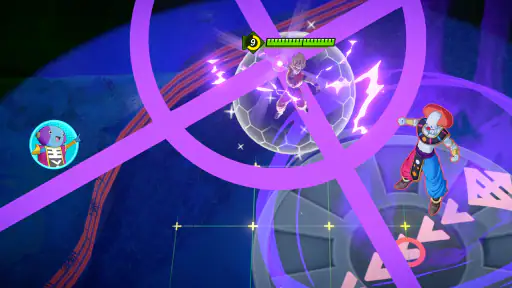
Analysis by Reviewed
DRAGON BALL GEKISHIN SQUADRA is the kind of action game that makes its first impression through movement and immediate team pressure rather than a long explanation. I found myself paying attention to what was happening on the battlefield almost at once: where allies were positioned, which opponent needed attention, and whether I was helping the group or simply chasing the most obvious target. That focus gives the game a clear identity as a team-oriented Dragon Ball experience, while also making it less suitable for anyone looking for a quiet, purely solo action game.
Developed by Bandai Namco Entertainment Inc., it is free to start and aimed at a Teen audience. The game has reached over five million installs and holds a 4.2 average from around sixty-three thousand ratings, which suggests that its fast team-based format has found a substantial audience. I would not treat those numbers as a guarantee that every player will enjoy it, though. The real question is whether you like short bursts of competitive action where your decisions matter alongside the choices of other players.
How the action loop feels from the first move to the next match
The first action is about reading the team, not just attacking
The most important adjustment I had to make was resisting the instinct to treat every encounter like a traditional Dragon Ball fighting game. The appeal here is not only the fantasy of controlling a powerful character. It is the tension created when several players share responsibility for the same result. A strong opening is therefore less about rushing forward without a plan and more about understanding what the team needs in that moment.
That makes the first few decisions surprisingly meaningful. I look for the safest way to contribute, watch how the opposing side is moving, and avoid spending all my attention on one dramatic exchange. In a team setting, an impressive attack can still be a poor choice if it leaves an objective, teammate, or vulnerable position unattended. This is one of the game’s more useful lessons: individual action only has value when it improves the team’s position.
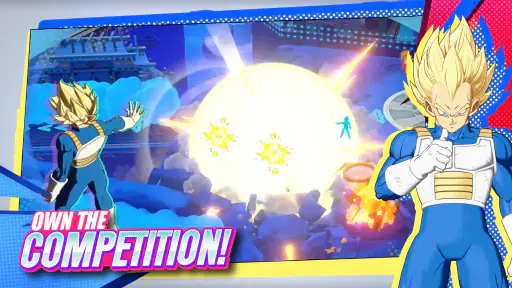
The Dragon Ball setting helps make those decisions feel energetic rather than technical. Familiar visual language and explosive confrontations give even a short encounter a sense of urgency. At the same time, the action can become visually busy, especially when several effects and characters occupy the same space. I learned to rely less on spectacle and more on the changing situation around my character. If you only follow the brightest attack on screen, you can miss the strategic reason the fight is shifting.
For a newcomer, I recommend treating the first sessions as observation practice. Instead of judging yourself by how many opponents you defeat, notice when your intervention changes the direction of an exchange. Did you save a teammate from pressure? Did you force the other side away from a useful position? Did you create enough room for your group to act? Those questions reveal the game’s real structure more clearly than a simple focus on damage.
The feedback rhythm keeps each encounter moving
The strongest part of the experience is the rhythm between action and response. I make a choice, the battlefield reacts, and that reaction tells me what to do next. A successful move can open an opportunity, but it can also attract attention or create a new weakness. That constant feedback prevents the game from feeling like a sequence of isolated attacks. Even when a match does not go my way, I usually understand that something changed because of a decision made on the field.
More From Our News Desk

Clash of Clans Is Won Between the Battles

Android Auto Makes the Case for Quieter Car Software

MobiOffice: Transforming Mobile Productivity with Seamless Integration

EA SPORTS FC™ Mobile Soccer: Redefining Mobile Sports Gaming

How Microsoft OneDrive Became a Mobile Productivity Giant

How Google Translate Breaks Language Barriers Effortlessly
This rhythm is also why careless play becomes tiring quickly. Charging into every confrontation may feel exciting for a few seconds, but the consequences arrive fast when the rest of the team cannot support that approach. The game rewards awareness more than button activity. I get better results when I pause briefly between exchanges, check the wider fight, and decide whether to continue, reposition, or help somewhere else.
One practical habit made a noticeable difference for me: I stopped judging a move only by its immediate visual impact. A flashy hit can be less useful than a modest action that interrupts an opponent’s plan or gives an ally time to recover. That is a non-obvious strength of this format. The game encourages me to think in terms of pressure, timing, and space, not just the size of the attack animation.
It also changes how I interpret defeat. Losing does not always mean my character was weak. Sometimes the team became separated, a promising advantage was extended too far, or I reacted to the nearest threat instead of the most important one. That distinction is helpful because it gives each failed session a practical lesson. If you want an action game that rewards reflection between rounds, this feedback loop has more depth than its quick matches may initially suggest.
Rewards make the next attempt feel purposeful
The reward stage matters because it gives the action a reason to continue after the immediate excitement fades. Finishing a session creates a natural moment to check progress, consider what went wrong, and decide whether another attempt is worthwhile. I like that the reward is not separate from the match experience; it completes the emotional sequence of taking a risk, seeing the result, and carrying something forward.
There is also a psychological trade-off here. A free game with random-item purchases can make progress feel tempting even when I had planned to play casually. The store description openly identifies that purchase element, and the available in-app items range from $1.99 to $79.99 each. I would advise setting a personal spending limit before getting invested. That is especially important if you enjoy collecting or feel frustrated when a session seems less rewarding than the previous one.
For me, the healthiest way to approach the reward system is to treat paid items as optional support rather than a requirement for enjoying the action. I focus first on whether I am learning the team flow and making better decisions. If the game stops being enjoyable unless I chase a particular random result, that is a sign to step away rather than spend automatically. This is not a criticism unique to Dragon Ball games; it is simply a real consideration whenever random-item purchases are part of the experience.
The reward loop works best for players who enjoy gradual improvement and small reasons to return. It is less appealing if you want every session to provide a clear, guaranteed upgrade. The uncertainty can add anticipation, but it can also create friction. I prefer to decide in advance whether I am playing for the match itself or for progression, because mixing those goals can make an ordinary loss feel more disappointing than it deserves.
The reset is where the game asks for one more session
After the action and reward, the session resets. That reset is not merely a pause between menus; it is the point where I decide whether the previous match was useful enough to justify another try. A close loss can be more motivating than an easy win because it leaves a specific problem to solve. Perhaps I overcommitted, ignored a teammate, or failed to recognize when the opposing team had changed its approach.
This is the main reason another session begins. The game creates a compact question: can I handle the same kind of pressure better next time? When the answer feels within reach, restarting is satisfying. I am not simply repeating a match; I am testing a revised habit. That makes the reset meaningful even when the visible rewards are modest.
There is a downside for players who dislike repetition. Because the core loop depends on returning to similar team confrontations, the experience can feel circular if you do not enjoy analyzing your own play. I would skip it if you prefer a campaign with a carefully paced story, a puzzle game with a fixed solution, or a fighting game where the spotlight remains entirely on your personal duel. The team structure is the attraction, but it is also the source of the game’s most persistent frustration.
A realistic everyday use case is a short break when I want something more active than scrolling but do not want to commit to a long single-player adventure. I can play, evaluate the result, and stop after a natural reset point. On the other hand, if I am tired or distracted, the same quick decisions become harder. Team action punishes divided attention more than a slower game does, so this is not always ideal for playing while multitasking.
What separates it from familiar alternatives
Compared with a conventional one-on-one fighting game, this title shifts satisfaction away from perfecting a personal duel and toward making useful decisions inside a larger conflict. That makes it more approachable for someone who enjoys Dragon Ball but does not want every victory to depend on mastering a long chain of precise inputs. It also means that personal skill cannot fully control the outcome. If you need complete responsibility for every win and loss, a traditional fighting game may feel fairer and more satisfying.
Compared with a solo action adventure, the game offers less control over pacing. You are responding to a live team situation rather than following a carefully authored route. The benefit is unpredictability: a match can develop differently depending on how both sides behave. The cost is that a poor team rhythm can make your own good decisions feel less powerful. I see it as a better alternative for players who enjoy shared objectives and changing pressure than for people who primarily want exploration or story progression.
It also differs from a simple arcade brawler because the most useful action is not always the most aggressive one. The deeper skill is recognizing when to support, retreat, redirect attention, or wait for a better opening. That gives the game more tactical texture than its energetic presentation might suggest. It is still an action game first, but its best moments come when the action and team judgment line up.
Small habits that improve the experience
My first tip is to watch the whole battle before committing to a target. The nearest opponent is not automatically the most important one, and chasing a retreating character can pull you away from the place where your team needs help. This simple change reduces wasted movement and makes victories feel more deliberate.
My second tip is to review the final moments of a lost session instead of blaming the entire team. Identify the last decision you personally controlled. Maybe you entered too early, stayed too long, or failed to notice that the fight had moved. That narrow review is more useful than trying to explain every mistake on the field.
My third tip concerns spending. Because purchases can include random items, I would never use frustration as a reason to buy. Play a few sessions, decide whether the action itself is enjoyable, and only then consider whether optional spending fits your budget. The game is free, but “free to start” should not be confused with a guarantee that every progression path will feel equally satisfying without purchases.
My fourth tip is to choose your playing time carefully. A focused short session can be rewarding because the feedback is immediate. A distracted session can feel chaotic and may lead to poor decisions that have little to do with your actual ability. This is one of those games where playing for fewer minutes with full attention can be better than playing for a long time while half-engaged.
Who should play, and who should pass
I recommend it to Dragon Ball fans who want an active team experience rather than another purely individual battle. It should also appeal to players who enjoy learning from quick rounds, adapting to changing pressure, and returning to improve one specific decision. The Teen content rating is worth keeping in mind for families deciding whether it fits a younger player.
I would be more cautious about recommending it to someone who dislikes competitive uncertainty, random-item purchases, or outcomes influenced by teammates. It is also not my first choice for a player seeking a deep solo story, a relaxing idle experience, or a fighting game built entirely around personal mastery. Those players may be happier with an alternative designed around direct control, guaranteed progression, or a slower pace.
Device compatibility is straightforward for supported users: the game requires Android 10 or later, and the current version is 1.6.20. I would check that requirement before planning to play, particularly on an older phone or tablet. Keeping the game updated is sensible as well, since team-based action depends on a stable, current version for the smoothest experience.
My final view of the complete loop
DRAGON BALL GEKISHIN SQUADRA succeeds when its five-part rhythm stays connected: I take an opening action, receive immediate feedback, earn a reason to continue, reset with a lesson, and begin again because the next attempt feels winnable. That loop is more compelling than the simple promise of controlling recognizable characters. The real hook is the moment when a chaotic team fight becomes understandable and one better decision changes my contribution.
Its limitations are equally clear. The team format can make losses feel outside my control, the action may become visually crowded, and random-item purchases require sensible boundaries. The game will not replace a story-driven Dragon Ball adventure or a focused one-on-one fighter for every player. Still, as a free action game built around shared pressure and repeatable improvement, it has a distinct appeal.
After spending time with it, I would recommend trying it if you want Dragon Ball energy with a cooperative competitive edge. Start slowly, learn to read the team, and judge progress by better decisions rather than only by rewards. If that way of playing sounds enjoyable, the next session has a genuine purpose. If you need complete control, guaranteed progression, or a calmer pace, this is probably the point where I would suggest choosing a different kind of game.
DRAGON BALL GEKISHIN SQUADRA Frequently Asked Questions
What kind of gameplay should I expect from DRAGON BALL GEKISHIN SQUADRA?
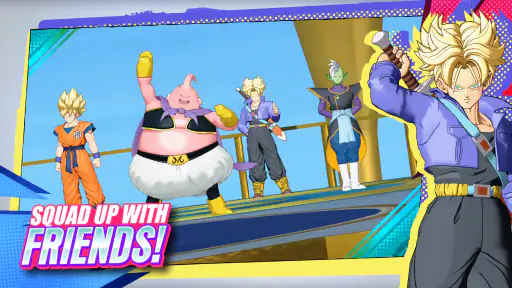
DRAGON BALL GEKISHIN SQUADRA is an action game centered on team-oriented play in the Dragon Ball world. Its appeal is built around fighting alongside teammates rather than treating every encounter as a solo adventure. If you enjoy action games and the idea of coordinating with a squad, that team focus is a useful point to consider before downloading.
Do I need to know the Dragon Ball series to enjoy the game?
The game takes place in the Dragon Ball world, so fans may enjoy seeing its familiar setting as part of the action. However, its team-based format is also a clear starting point for players who are mainly interested in action gameplay. Consider whether squad-focused battles sound appealing to you; the game is presented as a team-oriented experience rather than simply as a way to follow a story.
Is DRAGON BALL GEKISHIN SQUADRA free of charge, and does it include in-app purchases?
The game is free to download, so you can try its team-based action without paying an upfront price. It also includes optional in-app purchases, with items priced from $1.99 to $79.99. Since it features random-item purchases, consider checking purchase controls and spending limits before letting children play, even if you plan to enjoy the game without buying anything.
What age group is DRAGON BALL GEKISHIN SQUADRA suitable for?
DRAGON BALL GEKISHIN SQUADRA has a Teen content rating, which is worth considering before installing it for a younger player. Its focus is action and competitive team battles in the Dragon Ball world. Parents and guardians can review the rating and the game's purchase settings together, particularly because random-item purchases are included and optional spending may be available.
What is DRAGON BALL GEKISHIN SQUADRA?
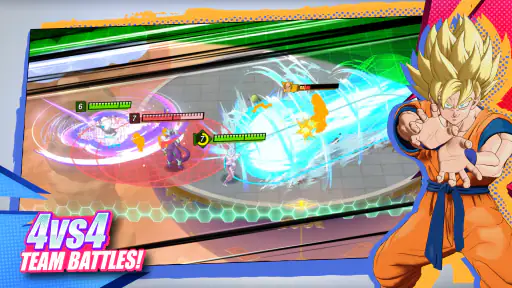
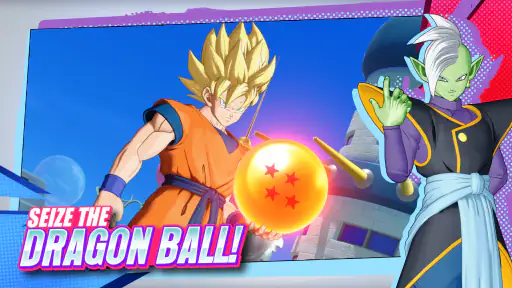
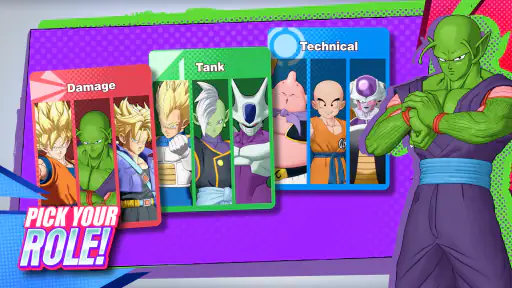
DRAGON BALL GEKISHIN SQUADRA is a team-based Dragon Ball action game built around fast multiplayer battles. Players choose familiar characters, work with teammates, and fight opposing squads using unique attacks, transformations, and special abilities. The experience focuses more on coordinated combat and short competitive matches than on a traditional single-player story campaign.
Pros
- Fast
- action-focused battles that are easy to pick up on mobile.
- Playable Dragon Ball roster with recognizable attacks and transformations.
- Short matches suit quick gaming sessions on Android and iOS.
- Team-based combat encourages varied character combinations.
- Bright visuals and energetic effects capture the anime’s atmosphere.
Cons
- Matchmaking quality may vary depending on region and active player numbers.
- Some characters or upgrades may require significant time or spending to unlock.
- Touch controls can feel crowded during intense team fights.
- Repeated objectives may make the progression feel repetitive over time.
- Online-focused gameplay requires a stable connection for the best experience.

- Category
- Action
- Version
- 1.6.20