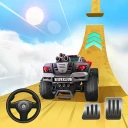
Drag Rivals: Tuning & Racing
- 15.00
- 4.3
- Installs
- 10.00K
- Price
- Free

Screenshots

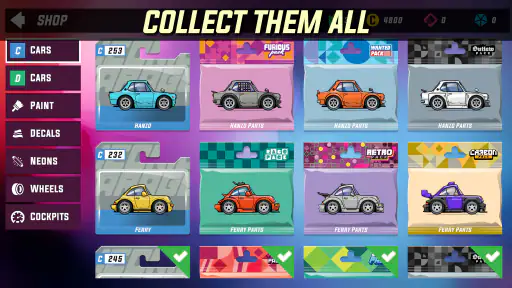
Analysis by Reviewed
Drag Rivals: Tuning & Racing is the kind of mobile racing game that makes sense in short bursts. I can open it when I have a few spare minutes, adjust a car, run a drag battle, and put the phone away without committing to a long circuit or complicated story. That focused format is its main attraction, but it also creates the question that matters more than the first impression: does the game remain interesting once the early excitement of unlocking, tuning, and racing starts to settle?
My answer is cautiously positive. The game has a clear identity as a drag racing game, and its appeal comes from preparing a car as much as from the race itself. It is free to play, rated for Everyone, and developed by RETROBOT s.r.o. The current release is version 0.8.2, and it runs on Android devices using version 6.0 or later. Those details make it accessible to a wide range of players, although the free entry point should be viewed alongside optional purchases priced from $1.99 to $99.99 per item.
What the first week feels like
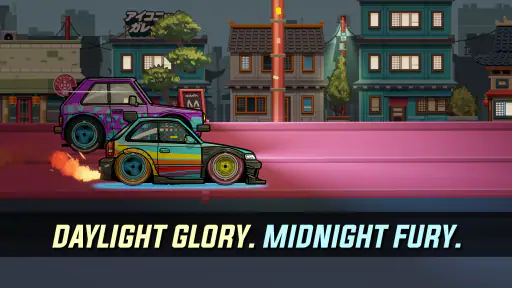
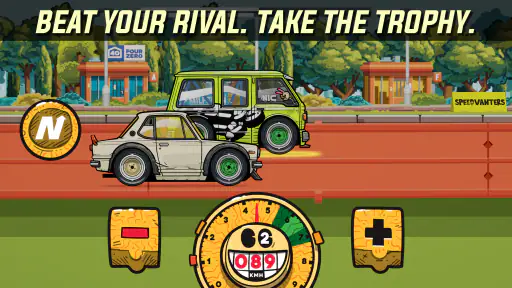
During the first few sessions, the straightforward structure works in the game’s favor. Drag racing is easier to understand than a full driving simulator: the road is short, the opponent is visible, and the result usually comes down to preparation and execution rather than navigating a large map. That simplicity lets me concentrate on the satisfying loop of choosing a car, improving it, and testing whether the changes actually help in the next battle.
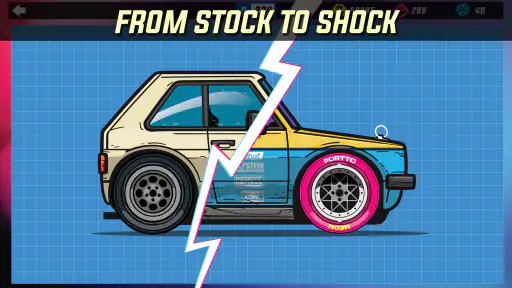
The tuning angle gives each race a little more meaning than simply pressing a start button. I am not only asking whether a car looks powerful; I am thinking about how the setup affects the launch and the run. That makes a defeat useful when I treat it as feedback. Instead of immediately blaming luck, I can reconsider whether I upgraded in the wrong order, changed too much at once, or entered a battle before the car was ready.
The best early habit is to change one thing at a time. If I make several adjustments before racing again, I lose track of what helped. A single upgrade followed by a test run creates a clearer connection between the garage and the track. This is a small discipline, but it makes the tuning system feel more deliberate and prevents the opening hours from becoming a random sequence of purchases.
The short-race format also suits everyday use. I can imagine playing while waiting for a coffee, during a commute break, or after finishing a task at home. It does not demand the same uninterrupted attention as a long race, and that makes it easier to return to. Players who enjoy quick competitive loops will probably understand the appeal within the first day.
There is a useful difference between this and conventional arcade racers. In a typical track-based game, the main skill may be steering through corners, braking at the right time, and learning a circuit. Here, the central challenge is more concentrated. The car’s preparation and the timing of the run matter more than memorizing a winding course. That makes Drag Rivals: Tuning & Racing a better fit for someone who enjoys optimization and head-to-head bursts than for someone looking for open roads or technical driving.
More From Our News Desk

Weather by Xiaomi Review: Clear at a Glance, Less Clear Up Close

X Under Pressure: Can It Recover When Posting Goes Wrong?

Clash of Clans Is Won Between the Battles

Android Auto Makes the Case for Quieter Car Software

MobiOffice: Transforming Mobile Productivity with Seamless Integration

EA SPORTS FC™ Mobile Soccer: Redefining Mobile Sports Gaming
Who gets the most from the opening sessions
I would recommend the first week to players who like seeing small improvements become visible. If you enjoy comparing a previous result with a new attempt, the tuning loop gives you a reason to keep experimenting. It is also friendly to people who find large racing games overwhelming, because the basic objective is easy to grasp without learning a huge map or a long list of controls.
It is less suitable for someone who wants realistic vehicle handling. Drag battles naturally narrow the driving experience. You are not getting the broader sense of speed, cornering, exploration, and traffic that a full racing simulator or open-world racer provides. The game should be judged as a focused acceleration contest, not as a replacement for every other type of car game.
The age rating of Everyone makes it approachable for a broad audience, but that does not mean every player will enjoy the same progression. Younger or more casual players may appreciate the immediate races, while experienced racing fans may quickly start looking for deeper variety. The first week is strongest when the pleasure comes from learning the game’s rhythm rather than demanding a large amount of content immediately.
How to avoid wasting the early progression
My practical advice is to resist spending resources simply because an upgrade is available. A visible improvement is not automatically the most useful improvement for the next opponent. I would first identify the part of the run that is holding the car back, then make the smallest sensible change and test it. This approach stretches the early progression and gives the garage more of a workshop feeling.
I would also avoid treating every loss as a reason to buy something. A failed run can reveal a timing mistake or an unsuitable setup, and spending immediately removes the chance to learn that distinction. This matters particularly in a free game with optional purchases, because the most satisfying progress comes from understanding the car rather than using money to erase every obstacle.
Whether the game earns a place after the novelty
I’d judge the game’s staying power by whether its tuning choices keep giving each brief race a purpose, rather than by how often I can play. A useful way to test that is to return after a short break and see whether I still have a clear adjustment I want to try; if I’m only tapping through battles without curiosity, the novelty may have run its course.
The month-to-month question
The long-term value depends on how much I enjoy repeating a compact improvement cycle. Drag Rivals: Tuning & Racing can remain useful as a regular pick if I like checking a setup, racing, adjusting, and trying again. That loop is naturally repeatable because the races are short and the decisions happen around them. It can become a comfortable daily habit rather than a game I need to schedule around.
However, the same focus can limit its staying power. A player who needs constant changes in scenery, new driving techniques, or a broad career structure may feel the format become familiar. The game’s strongest idea is also its main boundary: drag battles keep the action direct, but they do not offer the variety of a racer built around circuits, exploration, or multiple driving disciplines.
For me, recurring value comes from setting a modest personal goal instead of expecting endless novelty. I might aim to make a cleaner run, improve a car without unnecessary spending, or see whether a careful adjustment can overcome a previous defeat. Those goals make the game feel more rewarding than simply grinding until the next item appears.
Another useful routine is to separate testing from progression. When I am trying to understand a change, I should pay attention to the result rather than rushing into another upgrade. When I am tired and only want a quick distraction, I can race without turning every attempt into a technical exercise. Keeping those two moods separate helps the game remain relaxing instead of making every session feel like homework.
Maintenance without a heavy time commitment
The maintenance burden is fairly light in concept, but it is not zero. A tuning-focused racer asks me to remember what I changed and why. If I return after several days and immediately alter the car again, I may lose the thread of my previous experiments. The simple solution is to keep a mental note of the last meaningful change and judge the next run against that baseline.
This is one of the game’s less obvious trade-offs. The short races make it easy to play often, but frequent play can encourage careless upgrading. Because each attempt is quick, I may be tempted to make quick decisions too. The game rewards a slower garage mindset than the race length suggests.
Optional purchases are another part of the maintenance question. The game is free to start, but the available in-app items range from $1.99 to $99.99 each. I would treat spending as a personal boundary to decide before playing, not as a solution to every difficult matchup. Players who prefer a completely fixed-cost experience may be more comfortable with a premium racing game, while players who accept optional purchases can enjoy the free entry point with more control if they remain disciplined.
There is also a practical device consideration. Since the minimum requirement is Android 6.0, the game is not restricted to only recent Android phones. Still, an older compatible device may not deliver the same comfort as a newer one, especially during longer sessions. I would keep the game’s short-burst nature in mind rather than expecting it to replace a console-style racing experience on every phone.
Where fatigue can appear
The first source of fatigue is repetition. Drag racing is intentionally narrow, so the excitement depends on the sense that each run has a purpose. If I stop caring about why I am racing or what I am testing, the battles can start to feel like routine taps between garage visits.
The second is progression pressure. Free-to-play racing games can make the player feel that the next improvement is always just out of reach. I do not need to assume that every obstacle is unfair to recognize the emotional risk: if advancement starts feeling more like waiting or spending than driving, the game loses some of its charm. The best way to protect the experience is to play for the tuning decisions and personal improvement, not only for the next unlock.
The third is the difference between visual power and meaningful control. A car that looks stronger is not automatically more interesting to drive in a drag-focused format. If the tuning choices do not lead to decisions I can understand, the garage may become a checklist. I find the game more compelling when I can connect a change to a result, even if the outcome is not always a win.
This is also where the usual alternatives have an advantage. A circuit racer offers corners that naturally create variety. An open-world racer offers discovery and movement between events. A simulation-oriented title offers a broader lesson in braking, grip, and vehicle behavior. Drag Rivals: Tuning & Racing is preferable when I want compact competitive runs and setup decisions, but another racing game is the better choice when I need a richer driving vocabulary.
Who should skip it
I would skip this game if my main reason for playing racing games is exploration. There is no point choosing a concentrated drag format and then being disappointed that it does not provide the freedom of a large driving world. I would also look elsewhere if I dislike upgrade systems, because tuning is not a side activity here; it is part of the reason to return.
Players who want a one-time purchase with no optional spending may also prefer a paid alternative. The free model makes trying the game easy, yet the in-app purchase range means it is important to know your own tolerance before getting invested. I would especially avoid impulse purchases after a loss, since that turns a moment of frustration into a financial decision.
On the other hand, I think it is a good match for someone who wants a racing game that can be played in small windows and still offers a little strategy. It is also a sensible choice for a player who enjoys cars but does not want to learn a complex simulator. The game’s accessible structure makes it easier to recommend casually, provided the person understands that its appeal is focused rather than expansive.
My long-term verdict
After the opening novelty fades, Drag Rivals: Tuning & Racing earns continued space on my phone only when I use its strengths properly. It is not a complete racing collection, and it does not try to be one. Its lasting value comes from the compact relationship between preparation and result: make a thoughtful change, run the battle, learn from what happened, and decide whether the next adjustment is worth it.
The game has a 4.3 average from around 117 ratings, with over 10 thousand installs, which suggests a modest but interested audience rather than the scale of a mainstream racing giant. I would not use that alone to decide whether to play, but it fits my impression of a focused title that appeals most to a specific kind of mobile racer.
My final recommendation is to try it if you enjoy tuning, quick drag battles, and gradual improvement. Give it a fair chance by making controlled changes instead of spending impulsively, and judge it over several sessions rather than one exciting first run. If you need tracks, exploration, or realistic handling, choose a different racing game. If you want a compact garage-and-battle routine that can fit into everyday gaps, RETROBOT s.r.o.’s game has enough character to remain worthwhile beyond its first-week spark.
Drag Rivals: Tuning & Racing Frequently Asked Questions
What kind of racing experience does Drag Rivals: Tuning & Racing offer?
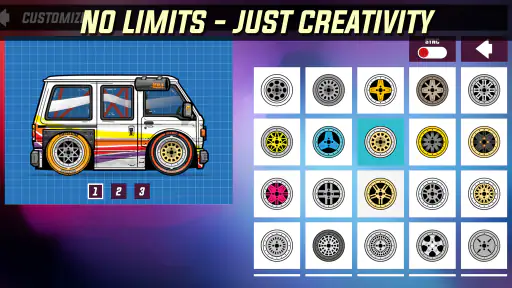
Drag Rivals: Tuning & Racing is a mobile drag-racing game focused on short, fast races and vehicle customization. Players compete by timing gear shifts, improving acceleration, and upgrading their cars for better performance. Alongside racing, the game emphasizes tuning and visual modifications, allowing you to create a vehicle that matches your preferred driving style and appearance.
What is Drag Rivals: Tuning & Racing?
Drag Rivals: Tuning & Racing is a mobile drag-racing game focused on short, fast races and vehicle customization. Players compete by timing gear shifts, improving acceleration, and upgrading their cars for better performance. Alongside racing, the game emphasizes tuning and visual modifications, allowing you to create a vehicle that matches your preferred driving style and appearance.
How does the racing gameplay work?
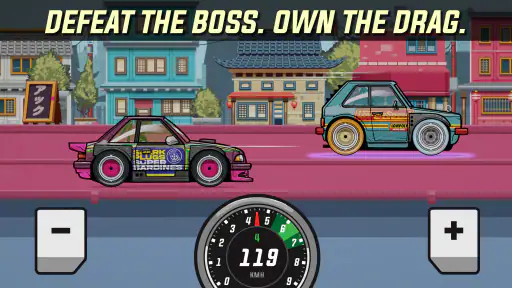
Races in Drag Rivals: Tuning & Racing are based primarily on timing and preparation rather than traditional steering. You need to launch effectively, change gears at the right moment, and use upgrades strategically to gain an advantage over your opponent. Although the controls are easy to understand, progressing through tougher events requires practice, careful tuning, and attention to each car’s performance characteristics.
Can cars be customized and upgraded?
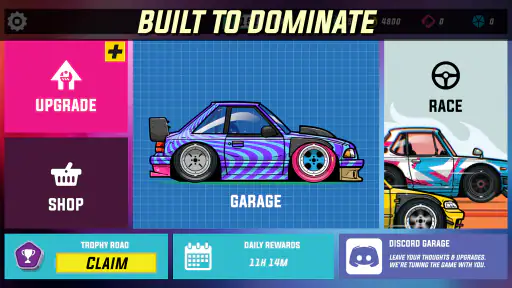
Yes, customization is one of the main attractions of Drag Rivals: Tuning & Racing. Depending on the available options in your version, you can improve important performance areas such as engine power, acceleration, grip, and shifting efficiency. Cosmetic changes may also be available, giving your car a more personal look. Choosing upgrades wisely is important because raw power alone does not always guarantee victory.
Is Drag Rivals: Tuning & Racing free to download and play?
Drag Rivals: Tuning & Racing is free to download, with optional in-app purchases priced from $1.99 to $99.99 per item. Races and upgrades provide the core play experience, while purchases may offer another route through progression. If you prefer not to spend, consider whether you enjoy earning improvements through play; the game’s free download does not mean every optional item is included at no cost.
Pros
- Deep tuning options let you personalize both performance and appearance.
- Short races make it easy to enjoy quick sessions on mobile.
- Competitive events provide goals beyond standard races.
- Responsive controls feel accessible for beginners and experienced players.
- Progression rewards experimenting with different vehicle setups.
Cons
- Upgrades may take considerable time without frequent play or extra spending.
- Some races can feel repetitive after mastering the available tracks.
- Performance differences between tuned cars may affect competitive balance.
- The game can require a stable connection for online features.
- Visual customization may be limited for players seeking extensive options.
- Category
- Racing
- Version
- 0.8.2