Demolition Derby 3
- 62.18K
- 4.7
- Installs
- 10.00M
- Price
- Free

Screenshots
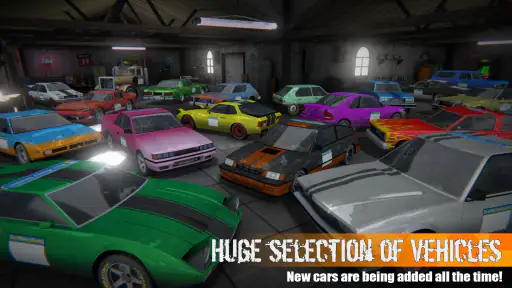
Analysis by Reviewed
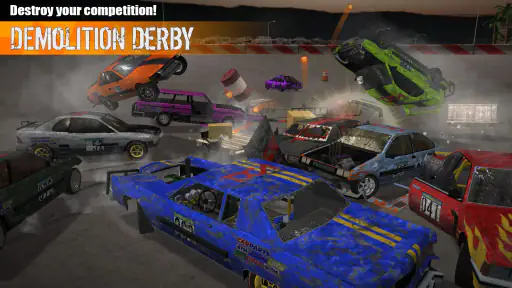
I went into Demolition Derby 3 expecting quick crashes and a bit of noisy fun, but I found a racing game with more staying power than its simple premise suggests. It is built around wrecking cars, surviving chaotic events, driving freely, and competing with other players, so the appeal is immediate: choose a vehicle, enter the action, and look for the best moment to hit rather than simply taking the cleanest racing line.
That focus makes it very different from a polished circuit racer. I am not playing mainly to shave tiny fractions from a lap. I am watching traffic, judging angles, protecting my own car, and deciding whether an aggressive move is worth the damage. Sometimes the smartest play is to stay out of trouble while the field weakens itself. Other times, waiting too long means losing the chance to control the event. That push and pull is the heart of the experience.
Why the first sessions work so well
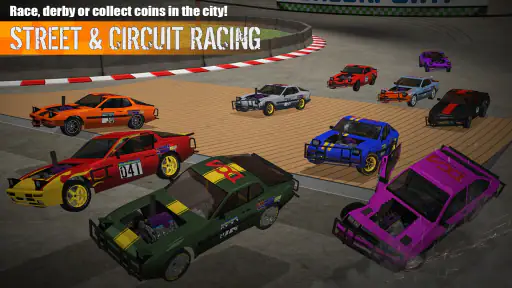
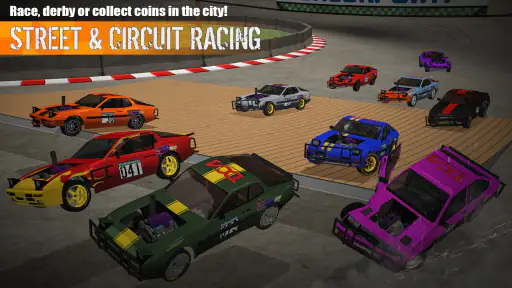
The game comes from Beer Money Games!, and its basic idea is easy to understand without a long explanation. The store summary points to destruction derby events, banger racing, open-world driving, and multiplayer, and those elements give the game several ways to occupy a short break. I can jump in for a destructive event, spend time driving around, or look for a more competitive match when I want other players involved.
My first useful goal was not simply “win.” It was learning how much contact the car could tolerate and how different impacts affected the next few seconds. A hit that looks spectacular may leave me badly positioned, while a less dramatic side impact can turn an opponent and open an escape route. That makes the early game feel active even before I am chasing larger unlock goals. I am building driving judgment at the same time as I am building progress.
The free-roaming side is especially useful in the beginning because it gives me room to understand steering, braking, camera movement, and the rhythm of collisions without the constant pressure of a crowded event. It is also a good place to decide whether the handling suits me. Players who want a perfectly smooth, realistic simulator may find the controls more playful and forgiving than expected, while fans of arcade destruction will probably settle in quickly.
One practical tip is to avoid treating every opponent as a target during the opening moments. In a crowded derby, the first attack can expose the side or rear of my own car to several follow-up hits. I get better results by watching where vehicles bunch together, then entering when another driver is already committed. This is one of the first signs that the game rewards timing more than constant acceleration.
Small objectives create a reason to return
The early goals are effective because they are connected to what I am already doing. Driving, crashing, surviving, and trying different events all feel like natural ways to move forward rather than chores added beside the racing. I do not need to invent a complicated routine to make a session worthwhile. Even a short play period can teach me something about positioning or help me work toward the next step.
That said, the game is not equally satisfying for everyone. If I want a traditional campaign with a carefully staged story, named rivals, and a strong sense of narrative consequence, this is not the right kind of racing game. Its motivation comes from the vehicles, events, driving freedom, and competition, not from a cinematic plot. I would choose a conventional racing title instead if my main goal were a structured championship journey.
The open-world driving also changes how I use the game day to day. When I have only a few minutes, I can focus on one event. When I want to relax, I can drive without treating every moment as a test. That flexibility matters on a phone because not every session begins with enough time for a long race. The game is at its best when I decide what kind of driving mood I am in instead of forcing every mode into the same routine.
How progress becomes visible during play
Progress in a destruction-focused racer is easier to feel when I compare my decisions rather than only my results. Early on, I often made contact without a plan and ended up trapped between damaged cars. Later, I started using the edges of the arena, leaving room to turn, and choosing attacks that changed the flow of the event. Those improvements are personal, but they give the unlock cycle more meaning because I can see why a better result happened.
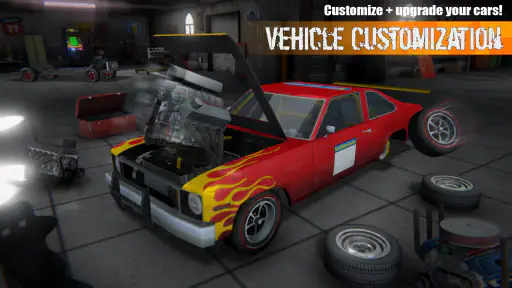
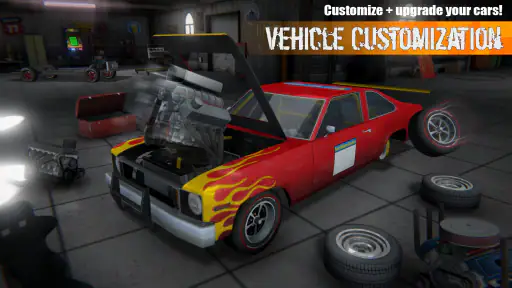
The vehicle side of the game adds another layer to that feeling. I pay attention to which car seems comfortable for a particular approach: a cautious driver may value control and survival, while an aggressive player may prefer a setup that supports direct contact. I would not recommend spending resources immediately just because a new option appears. It is better to keep using a familiar car long enough to understand whether the problem is the vehicle or my driving technique.
This is also where the free-to-play structure deserves attention. The game costs nothing to download, and optional in-app purchases range from $0.99 to $4.99 per item. I can enjoy the core driving without paying, but players who dislike any temptation to speed up progress should approach the purchase layer carefully. My advice is to decide in advance whether I am playing for gradual improvement or instant access to more options. That choice prevents a frustrating loss from turning into an impulsive purchase.
A useful routine is to alternate between a familiar event and a less comfortable one. The familiar event shows whether my performance is improving, while the unfamiliar event reveals whether I have learned general skills or only memorized one situation. This works better than repeating the same activity indefinitely, because destruction racing can become predictable if every session uses identical tactics.
The challenge curve rewards patience, not just force
The difficulty feels most interesting when the field becomes crowded and my first instinct is to attack everything. As the pressure rises, survival depends on reading movement. A car that looks vulnerable may be bait for a collision, and a target near a wall may be harder to hit safely than one moving through open space. I began to think in terms of exits: before making contact, I ask where my car will end up and whether I have enough room to recover.
That habit is more important than raw speed. In a normal circuit racer, a missed corner usually costs time. Here, a poor angle can cost control, expose the vehicle, and leave me unable to respond to the next impact. The challenge therefore comes from managing several risks at once. I am racing, but I am also choosing when not to race directly.
Players who find the opening hours too easy should experiment with more aggressive positioning rather than simply driving faster. Entering a pack from the wrong direction can create instant trouble, while approaching from a slight angle gives more control over the resulting movement. I also get better outcomes by braking before contact instead of assuming that maximum speed always produces the strongest attack. The goal is to make the other car lose options, not merely to create the loudest crash.
On the other hand, players who struggle should not interpret repeated losses as a need to spend money. The first adjustment I would make is defensive: stay mobile, avoid being pinned, and stop chasing a single opponent across the whole arena. A derby event can turn around quickly when several cars collide, so patience often produces a better opportunity than forcing one.
Where the pacing stays engaging
The combination of events, open driving, and multiplayer helps prevent the experience from feeling like one repeated race. I can change the pace when I become tired of one type of session. A destructive match creates immediate pressure, while free driving gives me a lower-stakes break, and multiplayer adds uncertainty because human opponents do not always behave like predictable traffic.
Multiplayer is most appealing when I want the game to feel less rehearsed. Against other people, a safe plan can fail because someone takes an unexpected line or attacks at a moment I would not choose. That unpredictability makes each match more memorable, but it can also make the experience less relaxing. I would choose solo play when I want to practice a technique or unwind, and multiplayer when I am willing to accept more disorder and less control.
The pacing is not perfect. Destruction games can lose their impact if every collision begins to feel interchangeable, and open-world driving can feel directionless when I am not pursuing a clear objective. I solve that by giving each session a specific purpose: survive longer, test a different approach, learn a route, or play against people. Without that small personal target, I am more likely to stop after a few events.
Another limitation is the gap between spectacle and strategy. A large crash may look rewarding even when it damages my position, while a quiet defensive choice may produce the better result without much visual drama. Players who judge every session by the biggest explosion may find the game inconsistent. I enjoy it more when I measure success by control, survival, and the quality of my decisions.
What keeps experienced players involved
The retention comes from a mixture of collection, improvement, and variety rather than from one single hook. I want to see what the next vehicle or event feels like, but I also want to revisit earlier situations with better judgment. A familiar arena can become a different challenge once I stop entering every collision head-on. That gives the game a useful second layer: the content may stay recognizable while my approach changes.
The large audience helps explain why the format has broad appeal. It has an average rating of 4.7 from around 547 thousand ratings, and it has passed 10 million installs. Those figures do not guarantee that every player will enjoy the handling, but they do reflect a game that has attracted a substantial number of people who like arcade destruction on mobile.
It is worth remembering that mobile racing has different expectations. A serious simulator usually emphasizes clean tracks, precise braking points, and realistic competition. A kart racer usually depends on power-ups and bright spectacle. This game sits elsewhere: its central satisfaction comes from manipulating contact, surviving disorder, and enjoying the consequences of bad driving. If I want a pure lap-time test, another racing game would suit me better. If I want every race to be calm and predictable, I should also look elsewhere.
The Teen content rating is relevant for families deciding whether it fits a younger player. The theme is built around crashes and vehicle destruction, so it is not presented as a gentle driving sandbox. I would consider that rating before installing it on a shared device, especially if the player prefers nonviolent racing or realistic road behavior.
Performance expectations also matter. The current version is 1.1.187 and the minimum requirement is Android 6.0. That makes the game accessible to a wide range of Android devices, but compatibility is not the same as identical comfort on every phone. I would still use the first session to check how the controls feel, whether the display is easy to read, and whether longer play causes heat or battery drain on my particular device.
Who should play it, and who should skip it
I recommend it to players who enjoy short, energetic sessions and do not mind learning through collisions. It works particularly well for someone who wants several forms of driving in one free game: destructive events for immediate action, open-world movement for casual play, and multiplayer for more unpredictable competition. It is also a good fit for players who enjoy improving through judgment rather than simply unlocking a faster car and repeating the same race.
I would be more cautious recommending it to someone who dislikes damage-based objectives, chaotic traffic, or progress that depends partly on experimenting. The game asks me to accept imperfect outcomes. I may lose because I chose the wrong angle, because I attacked too early, or because another vehicle changed the situation. That uncertainty is the point, but it can feel unfair if I only want direct control over the result.
For an everyday scenario, I can see myself using it during a short commute break: one event to get the competitive energy out, followed by a few minutes of free driving if I do not want to start another match. At home, I would use multiplayer when friends are available or when I want less predictable action. The important advantage is that I do not need to reserve the game for a long uninterrupted evening.
My strongest practical recommendation is to separate learning sessions from winning sessions. In a learning session, I test braking, angles, and movement around groups without worrying about the final result. In a winning session, I use what worked and avoid unnecessary experiments. That simple distinction makes the progression feel less frustrating and helps me understand whether a setback came from the car, the event, or my own decision.
The progression verdict
After spending time with it, I think the progression works because it supports the fantasy of becoming a more capable demolition driver. The early goals are clear through the action itself, progress becomes visible in better positioning and new options, and the challenge grows when reckless attacks stop being reliable. The pacing is strongest when I move between event types instead of grinding one activity without a purpose.
There is still some retention pressure in the free-to-play design, especially for players who are eager to access more content quickly. The optional purchases are affordable in isolation, but the right question is not whether an individual item seems inexpensive; it is whether paying matches the way I want to play. I prefer treating purchases as optional support rather than as a solution to a difficult event.
My final recommendation is simple: choose this if controlled chaos sounds more appealing than clean laps. It is free, supports Android devices from version 6.0 onward, and gives me enough variety to keep short sessions lively. Its weaknesses are real—some moments can feel repetitive, the handling will not satisfy simulation fans, and the destruction-first design is not for everyone—but its mix of derby action, open driving, and multiplayer gives it a clear identity.
In my experience, the best reason to keep playing is not just the next unlock. It is the growing ability to create a better crash, survive a situation that once overwhelmed me, and recognize when restraint is more valuable than aggression. That is a stronger foundation for long-term play than a store description alone might suggest, and it is why I would recommend Demolition Derby 3 to a friend who wants a noisy, flexible racing game rather than a conventional track simulator.
Pros
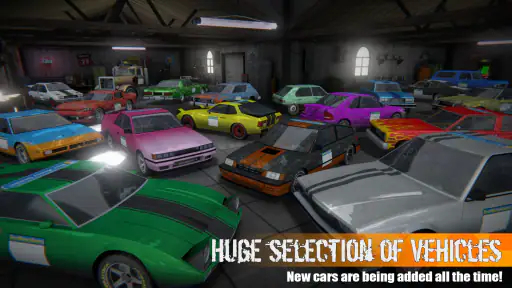
- Large vehicle selection with varied handling and upgrade options.
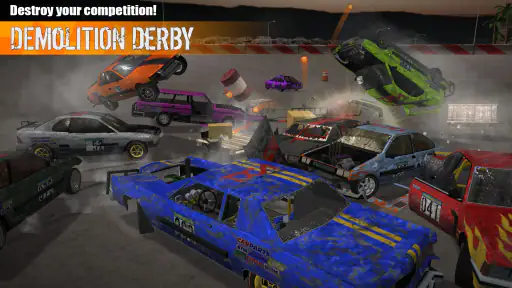
- Destruction effects make crashes feel satisfying and entertaining.
- Multiple event types help keep races from feeling repetitive.
- Offline play is useful when you have no internet connection.
- Simple controls make the game accessible for casual players.
Cons
- Frequent crashes can make some events feel more frustrating than strategic.
- Progression may require considerable grinding to afford better vehicles.
- Some cars handle poorly until you invest in upgrades.
- Visual quality varies noticeably between vehicles and environments.
- Advertising can interrupt the experience
- especially during free play.

- Category
- Racing
- Version
- 1.1.187