Cats&Soup: Relaxing Cozy Games
- 27.36K
- 4.6
- Installs
- 10.00M
- Price
- Free

Screenshots






Analysis by Reviewed
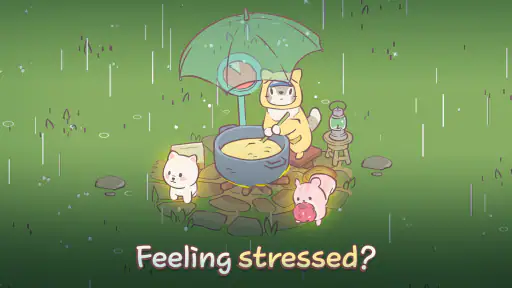
Cats&Soup: Relaxing Cozy Games is the kind of simulation I open when I want something gentle rather than demanding. The idea is simple: a growing group of cats prepares food, rests in a woodland setting, and gradually turns a small operation into a more developed idle business. I found the appeal less in chasing a difficult objective and more in arranging a pleasant routine that keeps moving while I am away.
That makes it a useful choice for short visits. I can check progress, collect rewards, improve the production flow, and spend a little time watching the cats before closing the game again. It is not trying to replace a deep management simulator or a competitive strategy game. Its strength is the softer rhythm, where small improvements feel satisfying without demanding constant attention.
How the free model affects the experience
The game is free to download, which makes trying it straightforward. The store lists optional in-app purchases ranging from $0.49 to $84.99 per item. I see that range as an important part of the decision: the basic entry cost is zero, but the possible spending ceiling is much higher than the price of a small one-time game.
For someone who wants to sample the loop before committing money, that is a reasonable arrangement. I could begin without paying and decide whether the slow accumulation, decorating, and cat collecting were enough to hold my attention. The more useful question is not whether it is free, but whether I am comfortable treating optional purchases as a convenience rather than a requirement.
I would not approach it expecting a fixed-price premium game with every part of the experience unlocked immediately. Its value comes from returning over time, watching the operation develop, and choosing how much patience or optional spending suits me. If I dislike idle progression or purchase prompts in free games, that model may become more noticeable than the cozy presentation.
A calm loop built around small decisions
The central routine is easy to understand. Cats work around food-making stations, money accumulates, and improvements help the little business grow. I do not need a long tutorial to understand what to do next, which is helpful when I am playing in short bursts rather than settling in for a long session.
What makes the loop work is the contrast between activity and stillness. There is enough management to give my visits a purpose, but the game does not make every moment feel like an emergency. I can check what has accumulated, decide which improvement seems most useful, and then leave the cats to continue their routine.
More From Our News Desk

Clash of Clans Is Won Between the Battles

Android Auto Makes the Case for Quieter Car Software

MobiOffice: Transforming Mobile Productivity with Seamless Integration

EA SPORTS FC™ Mobile Soccer: Redefining Mobile Sports Gaming

How Microsoft OneDrive Became a Mobile Productivity Giant

How Google Translate Breaks Language Barriers Effortlessly
One practical habit improved my sessions: I stopped spending every resource as soon as I received it. Saving briefly for a more meaningful improvement made the progression feel less scattered. Early on, it is tempting to upgrade whatever button is available, but a little patience helps me notice which part of the operation is actually slowing the next step.
The game also works well as a background companion. I might open it during a coffee break, collect what is ready, adjust the setup, and close it before the visit turns into a long commitment. That is a different kind of satisfaction from a conventional simulation, where leaving for a few minutes can mean missing an event or falling behind.
Why the cats matter more than the numbers
The management layer would be much less appealing if it were presented as a spreadsheet. Here, the cats give each improvement a warmer context. I am not only increasing output; I am building a small place that feels lived in. That emotional framing is the reason I found modest progress more enjoyable than I expected.
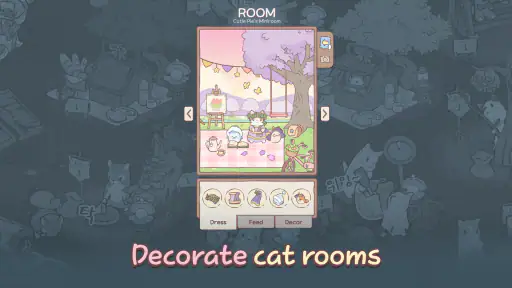
Collecting new cats gives the long-term routine a personal element. Even when the underlying task is familiar, seeing another character join the environment can make the next return feel worthwhile. I also liked that the visual mood encourages me to pause instead of treating the screen as a list of chores.
A useful tip is to spend time observing the scene before rushing through every available action. The relaxed presentation is part of the product, not decoration that can be ignored. If I only chase the most efficient upgrade, I lose some of what separates this from a plain idle income counter.
Progression for players who do not want pressure
The simulation category covers many games that turn optimization into the main challenge. This one takes a friendlier route. I can make decisions, but the consequences rarely feel like a crisis. That makes it suitable for people who enjoy gradual growth but do not want to memorize complicated systems or react to opponents.
It is especially comfortable for a daily routine. I can use it after work to decompress, during a short wait, or before bed when I want something visually pleasant rather than intense. The game gives me a reason to return without requiring the same concentration as a puzzle, action title, or competitive management game.
There is a trade-off in that softness. Players who need a strong sense of danger, a clear campaign ending, or highly demanding strategic choices may find the loop too gentle. The absence of pressure is a benefit only if relaxation is actually the goal.
What it does better than familiar alternatives
Compared with a traditional city-building simulator, this experience is easier to enter and less concerned with large-scale planning. I do not have to think about roads, populations, budgets, or a complicated chain of public services. The focus stays close to the cats and their small food operation, which keeps the screen approachable.
Compared with a competitive idle game, it feels more private and decorative. There is less reason to compare my progress with someone else’s, so I can play at my own pace. That makes it a better fit for a person who wants a personal collection and a calming environment instead of rankings or pressure to keep up.
Compared with a conventional pet-care game, it gives me more of a management reason to return. The cats are not only there to be watched; they are connected to the growth of the operation. I get the comfort of a pet-themed setting with enough progression to prevent the experience from becoming a static screen.
However, those comparisons also show where another game may be better. A premium simulation is usually the stronger choice for someone who wants a predictable purchase and a fully structured experience. A deeper tycoon game will offer more complex planning. A competitive idle title may deliver more urgency. This game wins when atmosphere and low-pressure progression matter more than depth.
Small habits that make the routine more rewarding
I found three habits particularly useful. First, I checked the whole operation before choosing an upgrade. Looking only at the largest visible reward can make the next visit less balanced, while a quick overview helps me spend resources where they support the broader flow.
Second, I treated collection as a reason to enjoy the setting, not merely as a checklist. Returning to see how the cats are arranged and how the space feels gave the game more staying power than chasing currency alone. This is a subtle difference, but it matters because idle numbers by themselves can become repetitive quickly.
Third, I used short sessions deliberately. Leaving the game after completing one sensible round of actions prevented the routine from becoming tedious. It is easy to overplay a calm idle game while waiting for the next improvement; accepting that some progress happens between visits makes the experience feel more natural.
These habits also reveal a trade-off: the game rewards consistency more than bursts of intense attention. If I have only one long session and then stop for several days, its gentle structure may not feel as satisfying as a game built around immediate challenges.
Where the experience can lose momentum
The same simplicity that makes the game welcoming can eventually make it feel repetitive. Once I understand the basic cycle, many visits follow a familiar pattern: open the game, collect progress, improve something, look around, and leave. That is pleasant when I want routine, but it may not be enough for someone who needs frequent mechanical surprises.
The idle format also means that waiting is part of the design. I cannot always force a major development through skill alone. Patience is useful, and optional purchases can make the free structure feel less appealing to players who want faster progress. I would recommend deciding in advance whether I am willing to wait or whether I am likely to spend impulsively.
The high end of the listed purchase range makes that self-awareness especially important. A free download can still become expensive if I treat every delay as a reason to buy something. I prefer to set a personal rule: play the free loop first, purchase only when the game has already proved that it belongs in my routine, and never spend simply to remove a moment of boredom.
Another limitation is that the cozy tone will not suit everyone. Some players interpret a lack of pressure as a lack of purpose. If I want a game that tests planning under constraints, this is probably not where I would look first.
Who will get the most from it?
I would recommend it to people who enjoy collecting characters, watching a small environment become busier, and checking in regularly without needing a long uninterrupted session. It is also a good match for anyone who finds traditional tycoon games intimidating but still wants a little sense of growth and decision-making.
It can be a pleasant choice for a household tablet or a personal phone used during small breaks. A realistic routine might be opening it on a commute break, collecting the results of earlier activity, making one or two upgrades, and then returning to work without feeling that an entire evening disappeared. That low commitment is one of its clearest practical strengths.
The Everyone content rating also makes the presentation broadly approachable. I would still choose it based on taste rather than age alone: a child or adult who likes cats and gentle progression may enjoy it, while someone looking for action or complex strategy may not.
I would skip it if I strongly prefer one-time purchases, dislike idle waiting, or tend to feel pressured by optional spending. I would also choose a different simulation if my main goal were detailed economic planning. The charming theme cannot turn a deliberately light system into a heavyweight management game.
Device expectations and long-term commitment
The game requires Android 6.0 or later, so it is not aimed only at the newest phones. That makes it easier to consider on an older compatible device, although the feel of any idle game still depends on how comfortable the screen is for extended viewing and how smoothly the device handles it.
NEOWIZ has kept the product positioned as an ongoing game rather than a short experience that I finish in one sitting. The current version is 5.0.0, and the large player base suggests that the concept has reached many people: it has over 10 million installs, an average rating of 4.6 from around 1.8 million ratings, and around 27 thousand written reviews.
Those figures are useful context, but they do not replace personal fit. A popular relaxing game can still feel too slow for me, while a player who enjoys quiet routines may find exactly the right amount of activity. I would use the free entry to test that feeling before deciding whether it deserves a permanent place on my phone.
My final value judgement
For me, the strongest value is not the amount of content I can rush through. It is the way the game turns a short break into a small, pleasant ritual. The cats, food production, and gradual improvements work together well when I want something that asks for attention without demanding all of it.
The free price makes experimentation easy, but I would judge the experience as a free-to-play idle game, not as a premium simulation. Optional purchases can be inexpensive at the low end and substantially higher at the top, so the best value comes from enjoying the unhurried route and treating spending as entirely optional.
My verdict: try it if you want a cozy cat-themed routine, not a demanding tycoon challenge. I would recommend starting without buying anything, learning whether the repeated visits feel comforting or repetitive, and setting a spending limit before the progression becomes familiar. For the right player, this is a warm and accessible simulation that makes small improvements feel good. For someone seeking depth, urgency, or a single all-inclusive purchase, skipping it will probably be the better decision.
Cats&Soup: Relaxing Cozy Games Frequently Asked Questions
Can I play Cats&Soup on iOS as well as Android?
Yes. Cats&Soup is available for both Android and iOS, so you can enjoy its cozy cat-collecting and cooking theme on either platform. On Android, the minimum operating system requirement is version 6.0. Before installing, check that your device meets the relevant system requirements and has room for the game. As with other mobile games, performance can vary depending on the device.
What does the Everyone age rating mean for Cats&Soup?
Cats&Soup has an Everyone content rating, which makes it broadly suitable for players of different ages. Its gentle presentation and approachable simulation gameplay are part of its appeal. The game also offers optional in-app purchases, so families may want to review purchase controls on the device before children play. An age rating is useful guidance, but parents can still check whether the game’s style and spending options suit their household.
Does Cats&Soup work on older Android devices?
Cats&Soup is a mobile simulation game, and its Android minimum requirement is version 6.0. Before downloading, check the operating system version on your device to make sure it meets that requirement. The game is also available for iOS. As with any mobile game, performance can vary between devices, so keeping your system and the app updated can help you have a smoother experience.
What kind of experience does Cats&Soup offer, and who makes it?
Cats&Soup is a free-to-download simulation game developed by NEOWIZ. Its premise is summed up by its cozy idle style: collect baby kitties, cook, relax, and grow your cat-filled forest. The emphasis is on gentle progression and a soothing atmosphere rather than fast action, so it may appeal to players looking for a calm game to dip into during quiet moments.
What is Cats&Soup: Relaxing Cozy Games?
Cats&Soup: Relaxing Cozy Games is a casual mobile game focused on creating a peaceful forest kitchen run by adorable cats. You collect different feline chefs, assign them cooking tasks, and gradually expand your woodland facilities. The game is designed for short, relaxing sessions rather than intense competition, making it suitable for players who enjoy cute visuals, gentle music, simple progression, and an atmosphere that feels more like a digital comfort space than a traditional action game.
Pros
- Charming hand-drawn visuals make the game pleasant to revisit.
- Offline play works well for relaxing sessions without mobile data.
- Frequent events add fresh goals and collectible rewards.
- Simple controls make it accessible for players of all ages.
- Gentle sound effects and music create a soothing atmosphere.
Cons
- Progress can feel slow without watching ads or spending currency.
- Many decorative items require substantial grinding to unlock.
- Gameplay becomes repetitive once the main activities are familiar.
- Some rewards depend on timers
- encouraging frequent check-ins.
- The large number of currencies and items may feel confusing at first.

- Category
- Simulation
- Version
- 5.0.0