Cats are Liquid - ABP
- 3.55K
- 4.6
- Installs
- 5.00M
- Price
- Free

Screenshots
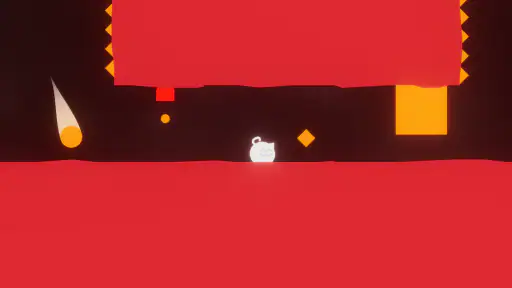
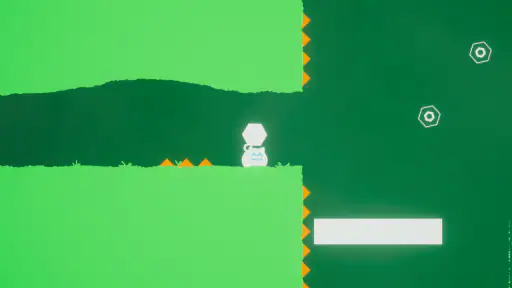



Analysis by Reviewed
I expected a small, cheerful platform game from Cats are Liquid - ABP, but its central idea gives it more personality than the name first suggests. You guide a liquid cat through compact two-dimensional stages, using her unusual shape to move through spaces that a normal platform hero could not handle. The result is lighthearted on the surface, yet it asks for enough timing and observation to keep me interested beyond the first few minutes.
After spending time with it, I see a game designed for short, focused sessions rather than a huge adventure that takes over your schedule. That distinction matters. Its strongest quality is the way a simple movement concept gradually becomes a puzzle-solving language. Its weakest point is also connected to that simplicity: once the surprise wears off, players who need constant novelty may find the routine less compelling.
Developed by Last Quarter Studios Ltd, this free adventure game is aimed at Everyone 10+. It has built a sizable audience, with an average rating of 4.6 from around 48 thousand ratings and more than 5 million installs. Those numbers suggest that the unusual cat-and-platforming combination has found a broad audience, but I would still judge it by how well it fits your habits rather than by popularity alone.
How the liquid-cat idea holds up after the first week
The first appeal is immediate because the character does not behave like a conventional platforming mascot. A liquid body changes how I read each gap, wall, and narrow passage. Instead of only asking whether I can jump far enough, I start asking which shape or route lets me pass safely. That small shift makes familiar platforming situations feel fresh without burying the controls under a long tutorial.
I particularly enjoyed the early process of learning through failure. A missed landing usually tells me something useful about timing, positioning, or the intended route. The game does not need a complicated rulebook to communicate its ideas; the level layout does much of that work. When I finally cross a section that looked awkward at first, the satisfaction comes from understanding the space rather than simply reacting quickly.
This makes the game a good fit for someone who likes approachable challenges with a playful presentation. I can imagine recommending it to a friend who wants something more active than a casual time-killer but does not want a demanding role-playing game or a sprawling open-world commitment. The cat theme keeps the mood friendly, while the platforming gives each attempt a purpose.
It also works well in ordinary gaps during the day. I found the format suitable for a short break between errands, a few minutes on public transport, or a quiet evening when I wanted to play without learning a large new system. The important habit is to stop after a satisfying attempt instead of forcing progress when concentration has dropped. Precision games become tiring faster when I treat every session like a test.
One useful approach is to play the first few sessions slowly, even when a route looks obvious. The liquid movement makes visual judgment more important than rushing. I got better results by watching how the character occupied a space, then committing to movement, rather than repeatedly throwing myself at the same obstacle. That is a small but meaningful tip: patience improves the experience more than frantic retries.
The game’s adventure identity is strongest when exploration and movement are working together. I am not just crossing a flat line of platforms; I am reading the environment for a safe sequence. That gives the levels a gentle puzzle quality. However, players looking for deep narrative choices, a large cast with extensive dialogue, or a long cinematic campaign should adjust their expectations. The appeal is primarily in movement and discovery.
Compared with a typical endless runner, this feels more deliberate. Endless runners reward constant forward motion and quick reflexes, while this game gives me reasons to pause and study the next move. Compared with a large premium platformer, it is less elaborate and easier to pick up, but it also offers less of the sense of a grand journey. Its best comparison is a compact mobile platformer that turns one memorable character rule into the heart of the experience.
The free price lowers the barrier to trying it, especially for families or players who are unsure whether this style will suit them. The age guidance of Everyone 10+ also places it comfortably in a broadly accessible space. Still, free does not automatically mean universally suitable. A person who dislikes retrying jumps, examining routes, or repeating a short section until the timing feels right may lose interest quickly.
What makes the first sessions feel more rewarding
I recommend treating each new area as a lesson in the game’s movement rather than as a race to the finish. Look at the full arrangement before moving whenever the screen gives you time to do so. Identify the awkward passage first, then work backward toward it. This reduces random attempts and helps reveal whether the challenge is asking for speed, restraint, or a better angle.
Another practical habit is to separate progress from mastery. Reaching the next part is one goal; understanding why a route worked is another. If I only chase completion, a lucky attempt can carry me forward without teaching me anything. If I pay attention to the successful movement, later sections become less intimidating because I have a clearer mental model of the character.
That distinction is one of the game’s less obvious strengths. The liquid-cat concept is not merely decoration. It encourages me to think in terms of space and shape, which makes the platforming feel different from a standard character who simply runs and jumps. The game remains easy to explain to another person, but its best moments come from applying that explanation carefully.
Whether it keeps earning attention month after month
The harder question is not whether the game is charming during the first week. It is whether I still want to return once the novelty of controlling a liquid cat has faded. My answer is cautiously positive, provided I want a compact platforming game rather than a constantly expanding service. Its recurring value comes from improving my own consistency and revisiting the movement with better judgment, not from an endless stream of unrelated activities.
That means the game rewards a particular kind of player. I can return after a few days away and quickly remember the basic feel, then spend a short session working on a section that previously frustrated me. There is little mental overhead compared with returning to a complex strategy game. For a phone or tablet, that low re-entry cost is valuable: I do not need to reconstruct a large plot or remember a complicated inventory before playing again.
At the same time, the lack of broad variety can become noticeable. If I need new characters, dramatic progression, competitive rankings, or a large number of systems to manage, the game may not hold my attention for months. The same focused design that makes it easy to start also limits the number of different reasons I have to return. Its longevity depends on whether refining movement feels rewarding to me.
I would describe the recurring value as skill-based rather than collection-based. I am not coming back because I need to maintain a virtual routine or gather a daily reward. I return because a route that once felt awkward can become readable. That is healthier for my schedule than a game that constantly pressures me to check in, but it also means there is no substitute for genuinely enjoying platforming.
For someone choosing between this and a more conventional adventure game, the trade-off is clear. A story-heavy alternative may offer stronger character development and more varied activities. A physics sandbox may provide more experimentation. A fast arcade game may deliver more immediate excitement. This title sits in the middle: it offers a distinct movement hook and approachable adventure structure, but its lasting appeal is narrower and more focused.
The current version is 1.3.8, and the game has been available since November 8, 2019. I mention that because it helps frame the experience as an established mobile game rather than a brand-new experiment. Its long presence makes it easier to view as a complete, familiar-style platformer, but it also means players seeking the feeling of following a rapidly changing release may prefer a newer title.
In everyday use, I would keep it installed for the kind of evening when I want a contained challenge. I would not make it my only mobile game. It complements a slower puzzle game or a narrative adventure well because it asks for a different kind of attention. After a mentally busy day, I can play a few attempts, notice a small improvement, and put it down without feeling that I have abandoned a large ongoing obligation.
How to avoid turning a pleasant game into a chore
The best maintenance plan is surprisingly simple: play in short blocks and leave when your decisions become rushed. Repetition is useful only while I am learning from it. Once I begin repeating the same mistake without changing my approach, another attempt usually adds frustration rather than progress. Taking a break preserves the game’s friendly tone and makes the next session more productive.
I also find it helpful to remember the route instead of memorizing button sequences. A fixed sequence can work once, but understanding the shape of the space adapts better when timing changes. This is a concrete difference between practicing the game intelligently and grinding it mechanically. The former builds confidence; the latter can make even a clever level feel like a tedious exam.
For younger players within the age guidance, the game can be a nice way to practice patience and visual planning, but I would not assume every child will find it easy. The cute presentation may suggest a completely effortless experience, while the platforming still asks for repeated attempts. It is better suited to a player who enjoys figuring things out than to someone who expects every stage to be immediately forgiving.
Where fatigue appears and who should skip it
The main source of fatigue is repetition without enough perceived change. Once I understand the basic liquid movement, a sequence that asks for similar timing several times can feel less surprising than the opening stages. This is not a serious flaw for a focused platformer, but it becomes important if I am deciding whether the game deserves permanent space on my device.
Precision can create another kind of friction. A level may look simple, yet a small error can send me back into a familiar attempt. Players who enjoy learning through retries will see this as part of the challenge. Players who want relaxed exploration may experience it as unnecessary interruption. I would skip this game if my priority were calm sightseeing, automatic progression, or a story that carries me forward without demanding much manual accuracy.
The controls are also more enjoyable when I have a clear view and enough concentration. Playing while distracted, walking, or trying to multitask is a poor match for the design. That is not a technical criticism so much as a practical limitation: the game asks me to notice small spatial relationships, and divided attention makes those relationships harder to read.
Another limitation is the narrowness of its identity. The liquid-cat idea is memorable, but the whole experience depends on my liking that idea and wanting to see it applied repeatedly. If I am indifferent to platforming, the charming character will not carry the game indefinitely. Likewise, if I have already spent a lot of time with several similar mobile platformers, I may need stronger variety before the game feels essential.
Still, I would not confuse focused design with a lack of value. The game avoids the maintenance demands that often make mobile titles exhausting. I am not managing a complicated roster, keeping up with a social schedule, or checking in simply to avoid falling behind. Its burden is mostly the time and patience required to improve. For many players, that is a fairer trade than a game built around constant notifications or obligation.
It is also worth considering device expectations. The game supports devices running Android 7.1 or later, which covers a wide range of Android hardware. That makes it a practical option for someone with an older compatible phone who wants an adventure game without committing to a visually heavy production. On iOS or Android, I would still choose a comfortable screen and stable controls where possible, because the movement benefits from clear visual judgment.
Who gets the most lasting value
I think the strongest audience is made up of players who enjoy compact platforming, unusual character physics, and the satisfaction of turning failure into understanding. It is especially suitable for someone who wants a free game that can be learned in small sessions and revisited without a large setup process. The game’s broad reach, reflected in its rating and install count, is understandable because the premise is easy to grasp while the movement offers more depth than the short description suggests.
I would be more cautious recommending it to someone who needs a substantial narrative, a large world, or a constantly changing set of activities. That player may have a better time with a fuller adventure game. I would also steer away from it for anyone who finds repeated platforming attempts stressful rather than satisfying. The friendly art direction does not remove the need for patience, and the game is at its best when that requirement feels enjoyable.
For families, the Everyone 10+ guidance is useful context, but I would still watch how an individual player reacts to failure. Some children will enjoy discovering how the liquid form works; others may become frustrated when a cute game does not let them pass immediately. Playing together and discussing routes can make the experience more approachable, especially because the challenges invite observation rather than obscure knowledge.
My long-term verdict on keeping it installed
After the initial novelty, Cats are Liquid - ABP earns a place as a dependable small platformer, not as an all-purpose mobile adventure. I like that its identity is clear: the liquid cat is both the visual hook and the reason the movement feels distinctive. The free entry point, approachable mood, and short-session structure make it easy to recommend to the right person.
My reservation is that its lasting value is selective. I can return regularly when I want a focused spatial challenge, but I would not expect it to replace a broader adventure game or remain equally exciting for every player. The experience asks me to supply some of the long-term motivation through practice. If improving at the movement is enough, that relationship can last. If I need frequent surprises, it may become a temporary install.
Last Quarter Studios Ltd has built something more thoughtful than a novelty wrapped in a cute character. The game turns its central idea into a practical platforming tool, and that gives the levels a clear purpose. My advice is to try it with the right expectation: do not approach it as an endless content machine, but as a compact adventure for learning routes, refining timing, and enjoying small victories.
For me, that is enough to keep it available, especially for short breaks when I want interaction without a heavy commitment. I would install it if I liked mobile platformers and wanted a fresh movement concept, while skipping it if my priority were story, variety, or effortless relaxation. The lasting test is simple: if solving one more liquid-cat route sounds satisfying, this game has genuine staying power.
Pros
- Creative platforming built around fluid movement and transformations.
- Hand-drawn visuals give the game a distinctive
- charming identity.
- Levels encourage experimentation rather than relying only on precision.
- The relaxed atmosphere makes it approachable for casual players.
- Offline play is convenient for gaming without an internet connection.
Cons
- Some puzzles can feel unclear without obvious hints or guidance.
- Movement physics may take time to master
- especially on touch controls.
- Later stages can become frustrating when timing and exploration combine.
- The minimalist presentation may feel repetitive during longer sessions.
- Progression is relatively simple for players seeking extensive customization.

- Category
- Adventure
- Version
- 1.3.8