Castle Cats - Idle Hero RPG
- 15.57K
- 4.7
- Installs
- 5.00M
- Price
- Free

Screenshots

Analysis by Reviewed
Castle Cats - Idle Hero RPG caught my attention because it understands the appeal of a game that can keep moving while I am doing something else. It is an adventure game from PocApp Studios, built around collecting heroes, arranging a team, and letting progress continue through an AFK-style structure. I found it easy to begin, but not completely mindless once the roster started to grow.
My first impression was cheerful rather than dramatic. The cat-themed setting gives the game a soft, playful identity, and the presentation makes the idea of sending a team into danger feel light instead of stressful. That matters here: the game is designed for short visits, repeated check-ins, and gradual improvement, so its friendly tone does a lot of work in making those routines feel inviting.
It is free to play, with optional purchases ranging from $0.99 to $99.99 per item. The game is suitable for Everyone, and it runs on devices using Android 7.1 or later. After several sessions, my main conclusion was that the best way to enjoy it is to treat it as a relaxed collection game, not as a fast action adventure or a deep role-playing game demanding constant attention.
A playful world that makes collecting feel personal
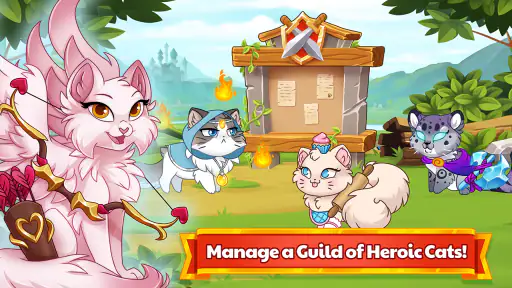
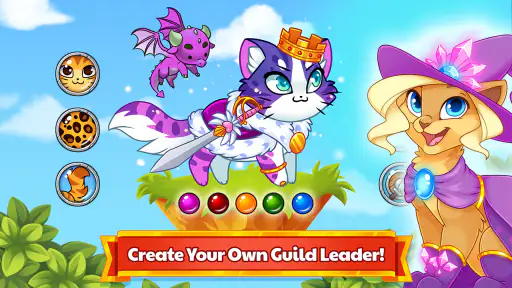
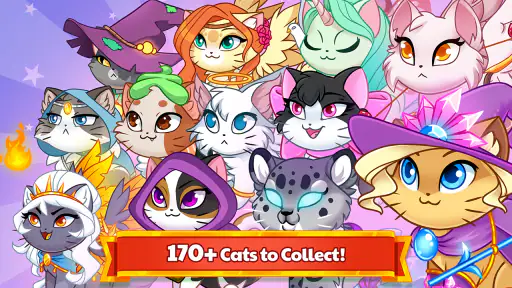
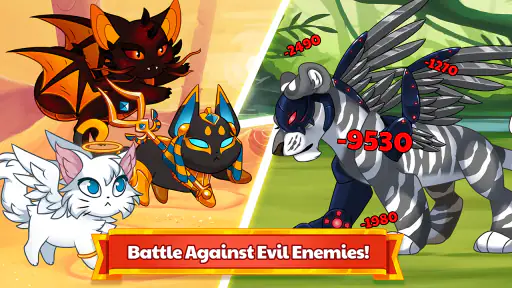
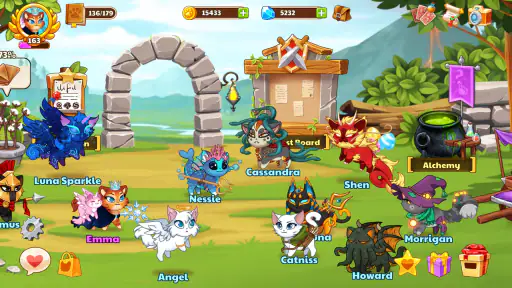
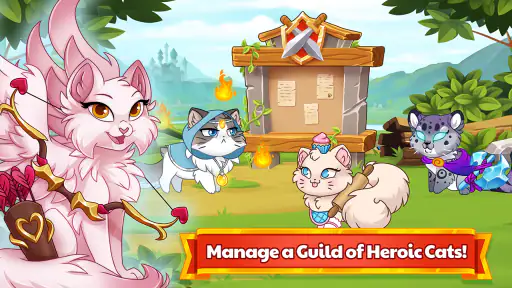
The strongest part of the presentation is the way the cats give the roster personality. A conventional fantasy RPG can make a new character feel like another icon in a menu. Here, the feline theme makes each addition feel more memorable, even when I am mainly thinking about team composition and upgrades. The setting is whimsical, but it still provides enough adventure framing to make expeditions and battles feel connected rather than like disconnected menu tasks.
The art direction also helps the game avoid a harsh competitive mood. I never felt that the screen was trying to intimidate me into playing perfectly. Bright character designs and a humorous atmosphere make experimentation less punishing emotionally. That is useful for younger players and for anyone who wants a game to open during a break without immediately demanding intense concentration.
There is a subtle trade-off in that approach. The cute style can make the underlying progression look simpler than it is, while players looking for a serious fantasy world may find the tone too lightweight. I would not choose this as a replacement for a story-heavy adventure with elaborate environments and long dialogue scenes. Its world is more like a comfortable backdrop for collecting and managing a team.
What kept me interested was the relationship between the setting and the idle format. The idea of a group of cats continuing their adventures while I am away feels natural within the game’s fiction. Instead of making inactivity seem like a technical compromise, the theme makes it part of the fantasy. That coherence is one reason the repeated cycle of returning, collecting progress, improving heroes, and sending the team out again does not feel completely mechanical.
The first session is simple, but the roster changes the experience
The opening hours are approachable because the central loop is easy to understand. I collect heroes, build a team, send them into the game’s activities, and return later to see what has happened. That simplicity is a real advantage on a phone. I can learn the basic rhythm without studying a large manual or memorizing complicated controls.
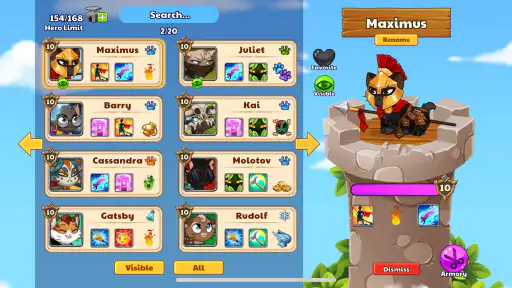
The more interesting decisions arrive when the collection becomes larger. A new hero is not only another character to admire; it also creates a question about whether that character deserves resources, a place in the active group, or attention later. I found it useful to avoid upgrading everyone immediately. Concentrating improvements on a dependable core makes early progress feel steadier, while spreading resources too widely can leave the whole roster feeling underpowered.
This is one of the game’s less obvious lessons: collecting and upgrading are not exactly the same goal. The excitement of obtaining a new cat can tempt me to invest at once, but an idle RPG rewards planning around the team I actually use. I recommend keeping a small reserve of resources until I understand which heroes fit my preferred setup. That approach reduces the frustration of spending heavily on a character who soon becomes a bench option.
The collection focus also gives the game a different personality from a traditional adventure title. In a conventional campaign, I usually care most about the next location or story event. Here, the roster itself becomes the long-term destination. I return partly to see how far the current group has advanced and partly because I want the next addition to make the team more capable or more interesting.
Sound and pacing support short, repeatable visits
The pacing is built around pauses. I do not need to remain in the game every minute to feel that the team is making progress. That makes it a good companion for a commute, a lunch break, or a few minutes before bed. I can check the current state, collect what is ready, make a decision about upgrades, and leave without feeling that I abandoned an urgent real-time battle.
That rhythm is also the main reason I would not recommend it to everyone. If I want a game that rewards quick reactions, precise movement, or uninterrupted exploration, this is the wrong shape of experience. Its pleasure comes from anticipation and adjustment rather than direct control. The pause between visits is part of the design, but players who dislike waiting may see that same pause as a limitation.
The sound and visual language work best when they stay in the background. The game’s mood is playful, and the audio presentation supports that feeling instead of pushing the action toward seriousness. I could imagine playing with the sound lowered when I wanted a quiet check-in, because the core loop remains understandable through the interface and the changing state of the team.
For me, the most successful pacing choice is that the game does not treat every visit as a major event. Some returns are small: I collect progress, make one improvement, and leave. Others become longer sessions because a new hero or a difficult stage gives me a reason to compare options. That variation keeps the routine from becoming completely flat.
A practical habit helped me enjoy the pacing more: I stopped opening the game with the expectation of completing everything in one sitting. Instead, I used a simple cycle. I checked the team, claimed available progress, chose one meaningful improvement, and only then decided whether I wanted to continue. This prevented the menus from turning a short break into an aimless upgrade session.
Where the idle design fits, and where it falls short
The central mechanical fit is clear. Castle Cats works for players who enjoy incremental progress, character collecting, and light team management. It is especially comfortable when I want something that can sit beside my day rather than take it over. The AFK structure means I can make progress without having the game open constantly, while the active decisions give me a reason to return instead of simply waiting for a timer.
The downside is that idle systems can make progress feel less earned than direct play. When the game advances while I am away, the satisfaction comes from planning and accumulation rather than from personally overcoming every encounter. I enjoyed that exchange, but I know some players will find it too passive. If the best part of an RPG for you is controlling every attack or exploring every corner yourself, the game may feel more like management than adventure.
Team building is where I found the most useful depth. I tried to think beyond the strongest-looking individual and consider how the group worked together. A hero who seems less exciting alone may still be valuable if the overall team becomes more reliable. This is a good reason not to judge the collection purely by appearance or by the newest arrival.
Another practical tip is to use the game’s slower moments to review the roster rather than upgrade automatically. When progress stalls, I first looked at whether the problem was team balance, neglected equipment or abilities, or simply a need to let the current group accumulate more progress. That small pause prevents the common mistake of spending purchases or resources as a reflex whenever a stage becomes difficult.
The free entry point makes it easy to test this style without committing money at the beginning. However, the presence of optional purchases means I would approach the economy carefully. The listed purchase range reaches from $0.99 to $99.99 per item, so I would set a personal spending limit before buying anything. The game is enjoyable as a free download, but collection-focused systems can make a new hero feel urgent even when waiting would be perfectly reasonable.
That is also why I would not hand it automatically to a child without checking how purchases are handled on the device. The Everyone rating describes the game’s content, but it does not remove the need for sensible purchase controls. For an adult player, the safest mindset is to see paid items as optional convenience or collection choices, not as a requirement for understanding the basic loop.
How it compares with other adventure and idle RPG choices
Compared with a story-led adventure game, this one offers less direct exploration and more repeatable management. I would choose a narrative adventure when I want a clear journey, dramatic discoveries, and a sense that my actions are shaping a specific plot. I choose Castle Cats when I want a friendly roster to develop over time and do not mind that the action is organized around waiting, checking, and improving.
Compared with a more demanding idle RPG, the cat theme makes this game feel less severe. The presentation lowers the barrier to entry, and the collection loop is easy to approach without treating every decision like a competitive test. The trade-off is that players seeking highly technical optimization may eventually want a system with more demanding combat control or a heavier strategic layer.
It also differs from a purely casual puzzle game. A puzzle can give me a complete burst of satisfaction in a few minutes, while this game asks me to think in longer arcs. I may make a choice now because it will improve the next return, not because it immediately finishes a level. That makes it better for routine play, but less satisfying if I want a self-contained challenge every time I open an app.
The game’s large audience reflects its accessible concept: it has a 4.7 average from around 189 thousand ratings and more than 5 million installs. I would read that as evidence that the format connects with many players, not as a guarantee that it will suit someone who dislikes idle progression. Popularity cannot change the basic fact that the game asks for patience.
Who will enjoy the daily routine
I think the best audience is someone who likes collecting characters but has an unpredictable schedule. A realistic example would be a player who checks the game on a morning train, leaves it alone during work or school, and returns in the evening to collect progress and adjust the team. The game fits that pattern because the meaningful decisions can be made in short bursts rather than requiring a long uninterrupted session.
It is also a good match for players who enjoy organizing a roster. If the fun comes from comparing heroes, deciding who deserves attention, and watching a group gradually become more capable, the game has a pleasant long-term pull. The cat theme adds warmth to that process, making the collection feel more like a cast of characters than a spreadsheet of statistics.
I would suggest skipping it if you want constant control, a serious dramatic setting, or a campaign that ends with a strong narrative conclusion. I would also be cautious if timers and optional purchases tend to make you feel pressured. The game’s relaxed mood helps, but it does not erase the basic tension built into any collection system: there is always another improvement or character that can make waiting feel inconvenient.
New players should give themselves time to learn the rhythm before judging the depth. The early loop is intentionally gentle, and the more meaningful choices appear as the roster and upgrade needs expand. At the same time, I would not force myself to continue if the idle structure already feels empty after a few visits. The game does not suddenly become a real-time action RPG; its identity remains rooted in gradual progress.
A coherent mood with a deliberately modest pace
Castle Cats - Idle Hero RPG succeeds because its art, setting, sound, and mechanics point in the same direction. The friendly cat world makes collecting inviting, the presentation keeps the adventure light, and the AFK rhythm gives the game room to fit around everyday life. I never felt that the cheerful surface was completely separate from the mechanics; the theme helps explain why returning to a small team and sending it back out can remain enjoyable.
Its limitations are equally clear. The game is not built around direct action, demanding exploration, or a tightly scripted story. Progress can feel slow, and the collection economy requires self-control, especially when optional purchases are available. Those are not minor details to overlook; they define whether the experience will feel relaxing or repetitive.
The current version is 4.4.20.13.17, and the game has been available since Jun 14, 2017. I see that long-running presence as fitting its design: this is a title meant to become part of a routine rather than be rushed through in a weekend. My advice is to approach it as a small daily hobby, keep upgrades focused on a practical core team, and avoid spending simply to remove the feeling of waiting.
My final recommendation is simple: try it if you want a warm, low-pressure adventure game that turns hero collecting into a steady background routine. I would recommend it to a friend who enjoys checking in, making small strategic choices, and watching a playful team grow. I would point that friend elsewhere if they wanted hands-on combat or a story-first journey. For the right player, the gentle pacing is not a weakness; it is the reason the game feels easy to keep around.
Pros
- Large roster of cats with distinct skills and upgrade paths.
- Idle rewards let progress continue while you are away.
- Simple controls make battles easy to follow and manage.
- Frequent events add limited-time challenges and collectible rewards.
- Whimsical art style and playful animations suit casual players.
Cons
- Progress can feel slow without spending premium currency.
- Many upgrades and currencies may overwhelm new players.
- Random summons can make obtaining specific heroes frustrating.
- Some features unlock only after extended gameplay.
- Online connectivity is generally needed to access the full game.

- Category
- Adventure
- Version
- 4.4.20.13.17