Bubble Freedom
- 9.21K
- 4.4
- Installs
- 10.00M
- Price
- Free

Screenshots


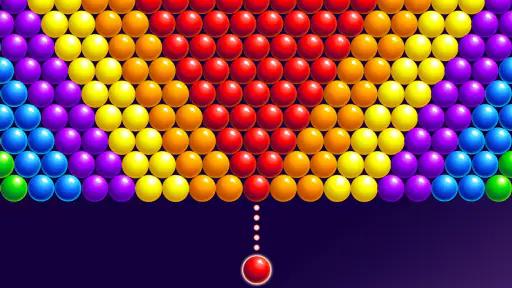

Analysis by Reviewed
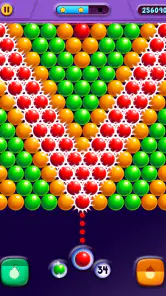
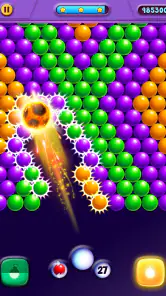
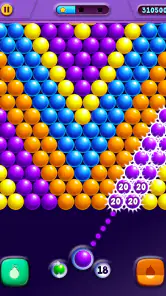
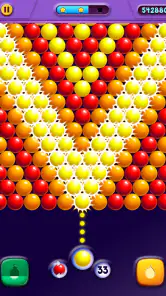
Bubble Freedom is the kind of adventure game I can open for a few spare minutes and understand immediately. The board is built around colorful bubbles, and the basic goal is to match groups of three or more so they pop and clear space. That simple idea makes it approachable, but the level structure, boosters, and power-ups give each attempt a little more to think about than a single casual tap.
I tested it with the mindset of someone choosing a game for everyday downtime rather than a long, story-heavy session. My overall impression is that it is best when you want a light puzzle challenge with quick visual feedback. It is free to download, suitable for Everyone, and developed by Bubble Shooter Artworks. The game has been available since December 7, 2017, so it is not a brand-new experiment; it is an established bubble-popping option with a large audience.
The important question is not whether the central mechanic is easy to learn—it is—but whether the experience remains comfortable after the novelty wears off. In my experience, Bubble Freedom succeeds when I treat it as a short-session game. It is less convincing for players who want deep strategy, a strong narrative, or a completely uninterrupted progression system.
How Bubble Freedom feels in everyday play
Quick starts and sensible speed expectations
The opening appeal is immediate. I do not need to study a complicated interface before making the first move. The visual language tells me what matters: colored bubbles, matching shots, open space, and the next opportunity to clear a section. That makes it a natural choice while waiting for an appointment, taking a short break, or winding down before bed.
The perceived speed comes less from any advanced action system and more from how quickly I can decide and see the result. A good shot produces an obvious change on the board, while a poor shot shows me the consequence right away. That fast feedback keeps the game feeling active even when the underlying puzzle is straightforward.
I would not describe every level as equally brisk. Early progress feels more relaxed because I can focus on matching colors and learning the rhythm. Later situations demand more patience: a shot may need to be aimed for a particular cluster, and clearing one area can affect what becomes possible next. The game therefore shifts between quick popping and slower planning without becoming a traditional, long-form strategy title.
One useful habit is to pause before firing instead of automatically targeting the largest visible group. I found that the best move is often the one that opens a route or removes an awkward color, not necessarily the one that creates the biggest immediate pop. This is a small distinction, but it helps prevent the game from becoming a sequence of random taps.
What happens during heavier play
Bubble Freedom is not a game that asks the device to render a large open world or manage a complicated real-time battle. Its presentation is centered on a contained puzzle board, so the visual workload feels modest compared with action adventures or graphically demanding multiplayer games. That makes it a sensible candidate for casual play on a range of Android devices that meet the minimum operating-system requirement of Android 5.1.
That does not mean every phone will feel identical. Screen size, touch response, background activity, and the general condition of the device can all affect how comfortable aiming feels. On a smaller display, the board may feel more compact, and precise shots can require extra attention. On an older phone, other apps running in the background may matter more than the game itself.
For longer sessions, the main strain is likely to be on the player rather than the hardware. Repeatedly aiming at similar targets can become visually repetitive, and the simplicity that makes the game accessible can also make it feel less stimulating after many levels. I would use it in bursts rather than expecting it to replace a larger adventure game.
There is also a practical trade-off in boosters and power-ups. They can make a difficult board feel more manageable and give a losing position a useful second chance, but relying on them too early can reduce the satisfaction of working out a clean solution. I prefer to save a helpful tool for a board where it changes the outcome, rather than spending it simply because it is available.
Stability, interruptions, and recovering from a pause
A casual game earns trust when it lets me stop without turning a short break into a chore. Bubble Freedom fits that use case better than games that demand constant attention. If I need to put the phone down, the natural structure of individual levels makes it easier to play in separate pieces instead of committing to a long match.
That recovery-friendly design matters in ordinary situations. Imagine playing on a bus and reaching a level just before your stop. I would rather have a compact puzzle that can be left between decisions than a game where abandoning the session ruins a team effort or wastes a long setup. Bubble Freedom is well suited to that kind of fragmented routine.
I also see an advantage in the straightforward board format when returning after a distraction. The objective is usually readable from the screen, so I do not need to remember a large number of story details or complicated controls. If I move away for a while and come back, the visual state of the puzzle gives me enough context to continue thinking.
Still, I would not confuse easy recovery with guaranteed reliability in every circumstance. A game can feel stable during normal use while a phone’s storage, memory pressure, operating-system behavior, or interruptions affect the experience. I cannot promise identical behavior on every device. My practical advice is to keep the operating system within the supported range, close unusually demanding background apps if play feels sluggish, and avoid starting a level when a sudden interruption would be frustrating.
Device limits and the right kind of player
The minimum operating-system requirement is Android 5.1, which gives the game a broader potential device range than many newer releases. That is useful for people using an older Android phone who want a simple adventure puzzle without choosing something designed around the latest hardware. The game is also free, so trying it does not require an upfront purchase.
Free does not mean cost-free in every possible play style. Bubble Freedom includes in-app purchases ranging from $0.99 to $99.99 per item. That wide range is important for anyone who prefers a strictly no-spend experience. I would approach the game with a personal limit in mind, especially if boosters or power-ups become tempting during difficult levels.
For a child or family device, the Everyone content rating makes the game easier to consider from a content perspective. I would still make purchase controls part of the setup, because age suitability and spending suitability are separate questions. A game can be appropriate for its audience while optional purchases still deserve adult attention.
Players with limited storage or a very old phone may also want to be realistic about expectations. The supported operating system tells me the game can run within an older Android environment, but it does not guarantee the same comfort on every model. Touch accuracy, screen brightness, battery condition, and general responsiveness can all change how pleasant a bubble-aiming game feels.
Small decisions that improve the experience
The most useful strategy is to look beyond the first available match. Before shooting, I try to identify whether a bubble is supporting a larger group or blocking access to a more valuable area. Removing a small cluster can be worthwhile if it exposes the colors behind it. This approach is more reliable than chasing the largest visible combination every time.
I also pay attention to the order in which I use power-ups. A booster has greater value when it solves a specific problem, such as opening a blocked route or setting up a chain, than when it is used on an ordinary board that I can clear with careful aiming. Saving tools creates a cushion for levels where the board layout is less forgiving.
Another practical tip is to treat an unsuccessful attempt as information. Instead of immediately repeating the same shot, I look at what the failed move changed. Did it leave an awkward color isolated? Did it remove support from a group I needed later? This turns a simple matching game into a modest planning exercise and helps the levels feel less dependent on luck.
For short sessions, I would stop after a natural endpoint rather than playing until every available tool is gone. That keeps the game refreshing and reduces the temptation to make rushed moves. Bubble Freedom works particularly well when I decide in advance that I am playing one or two levels, not when I expect an endless, highly varied adventure.
How it compares with familiar alternatives
Compared with a traditional match-three puzzle, Bubble Freedom feels more focused on aiming and positioning. In a grid-based alternative, I usually scan for swaps and plan around a fixed arrangement. Here, the direction of the shot matters more, and the satisfaction comes from attaching bubbles to the right place before clearing them. Players who enjoy spatial aiming may prefer this format.
Compared with a story-driven adventure game, it is much lighter. There is no need for me to follow a long plot or learn a large cast before the game becomes enjoyable. That is a strength for quick access, but it is also the reason I would not recommend it to someone choosing an adventure game mainly for exploration, character development, or a memorable narrative.
Against other bubble shooters, its strongest case is accessibility. The central action is easy to understand, while boosters and power-ups provide extra options when a simple shot is not enough. The trade-off is that the familiar formula may not satisfy players who have already spent a lot of time with similar bubble-popping games and now want a radically different system.
I would also choose it over a more demanding alternative when my attention is divided. A competitive action game punishes interruptions and often requires a longer uninterrupted session. Bubble Freedom is more forgiving as a casual companion, although anyone looking for competitive pressure or complex long-term planning should choose a different genre.
Who should install it, and who should skip it
I recommend Bubble Freedom to players who like colorful matching puzzles, short levels, and the feeling of gradually solving a board through careful shots. It is a good fit for commuters, casual players, families looking for an accessible game, and anyone with an older Android phone who wants a free title that does not present itself as a demanding action experience.
I would be more cautious about recommending it to someone who dislikes repeated mechanics. The core activity remains bubble matching, so the game’s appeal depends on enjoying that loop rather than expecting constant reinvention. Players who strongly dislike optional purchases should also decide whether they are comfortable ignoring them before starting.
It is not my first choice for a person who wants a rich adventure narrative, serious competitive play, or a game that rewards dozens of hours of intricate planning. A deeper puzzle title may offer more strategic variety, while a story-focused adventure will provide more emotional context. Bubble Freedom is better understood as a focused casual game, not a substitute for those experiences.
My performance verdict
After looking at speed, heavier-use moments, recovery, and device constraints together, I see Bubble Freedom as a practical low-commitment game. Its contained puzzle format should make it easier to pick up and put down than many larger adventure releases, and the Android 5.1 minimum makes it relevant to people who are not using the newest phone. I would still judge the final feel on the individual device, particularly if touch response or background performance is already inconsistent.
The game’s public reception is encouraging: it holds a 4.4 average from around 120 thousand ratings, with more than 9 million installs. Those figures suggest that the straightforward format has reached a substantial audience, though popularity alone does not make it right for every player. The current version is 6.40, and the game remains free to start, with optional purchases that should be treated as a real part of the decision.
My honest recommendation is to try it when you want a calm, colorful bubble puzzle that can fit around daily interruptions. Play thoughtfully, reserve power-ups for meaningful obstacles, and set a spending boundary if you prefer to keep the experience entirely free. Its biggest strength is dependable simplicity: Bubble Freedom gives me a clear activity with enough tactical choice to make each shot matter.
That simplicity is also its limit. Once the matching loop stops feeling satisfying, there is not much else to pull me back besides the next board and the chance to improve my approach. For the right player, that is exactly the point. I would install it for short breaks and relaxed puzzle sessions, but I would choose a more ambitious adventure or a deeper strategy game when I want richer variety.
Pros
- Simple bubble-popping gameplay that is easy to learn.
- Bright visuals and satisfying effects make short sessions enjoyable.
- Suitable for casual play when you have only a few spare minutes.
- Progression can provide a clear sense of achievement.
- Touch controls are generally intuitive on mobile devices.
Cons
- Gameplay may become repetitive after extended sessions.
- Some levels can feel overly dependent on luck or timing.
- Ads may interrupt the experience
- depending on the version.
- Limited depth may disappoint players seeking a complex puzzle game.
- Performance can vary on older phones or tablets.

- Category
- Adventure
- Version
- 6.40