Block Hole Clash
- 3.69K
- 4.6
- Installs
- 1.00M
- Price
- Free

Screenshots


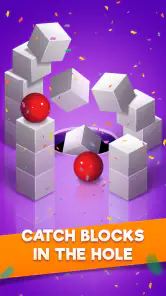
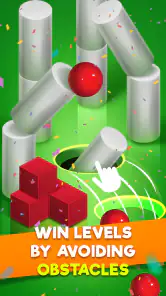
Analysis by Reviewed
I spent time with Block Hole Clash as a quick, casual board game, and my first impression was that it understands the value of a short session. The central challenge is simple: clear the board by managing the available blocks and deciding where each move will have the greatest effect. That makes it easy to begin, but the better decisions are not always obvious when the board starts to fill.
That simplicity is the main reason I can imagine recommending it to someone who wants a lightweight game rather than a demanding strategy title. It fits the kind of moment when I have a few minutes to spare, want something interactive, and do not want to learn a long list of rules. At the same time, anyone expecting a deep campaign, a competitive multiplayer experience, or a large collection of strategic systems may find the design too focused.
How the current game feels in everyday use
The game belongs to the casual category, and that description suits it closely. I can pick it up without preparation, understand the immediate objective, and start making decisions almost at once. The board gives the experience its identity: instead of treating each move as an isolated action, I have to think about how one placement changes the space available for the next.
That creates a useful tension between speed and caution. Playing too quickly can leave awkward gaps or reduce the number of sensible options later. Playing too slowly is not especially rewarding either, because the game is at its best when I keep a steady rhythm and recognize patterns as they appear. It is a small but important distinction: this is not merely a game about tapping until the screen changes. It asks me to read the board before committing.
A realistic use case is a short break between tasks. I could play a round while waiting for a friend, during a commute with reliable phone access, or at the end of the day when I want a mental reset without starting a large game. The low barrier to entry makes it more suitable for these moments than a traditional puzzle game with a long setup or a strategy game that expects sustained attention.
The free starting point also helps. I can try the core experience without paying first, which is exactly what I want from a casual title whose appeal depends on whether its board-clearing loop holds my attention. Optional purchases range from under one dollar to several dollars per item, so I would approach them as convenience spending rather than something necessary to understand the game.
One practical habit improved my sessions: I stopped treating every open space as equally valuable. When the board looks comfortable, it is tempting to place a block wherever it fits. I get better results by protecting flexible areas and using less useful spaces only when the move also helps clear a difficult section. This is not an obvious lesson from the short summary, but it makes the difference between a controlled board and a sudden lack of options.
A small game with a surprisingly important rhythm
The most enjoyable part is the changing rhythm of a board. Early moves feel generous because there is room to experiment. Later moves become more about preserving possibilities. That gradual shift gives the game enough structure to feel like a puzzle rather than a purely reflex-based pastime.
I also found that the best sessions are not necessarily the fastest ones. A quick move can look productive because it immediately fills or clears part of the board, but the more valuable question is what that move leaves behind. If it creates a narrow corner that is difficult to use, the short-term gain can become a long-term problem. I began checking the next likely placement before finalizing the current one, and that simple pause made the experience feel more deliberate.
This is where the game compares favorably with very basic match or tapping games. Those alternatives can be more instantly relaxing, but they often ask less of my planning. Block Hole Clash gives me a little more ownership over the outcome. On the other hand, a dedicated block puzzle can offer deeper progression, more varied objectives, or more demanding long-term planning. This game is better when I want a compact version of that thought process, not a full puzzle hobby.
What the developer’s current version tells me
Gimica GmbH is the developer behind the game, which has reached version 1.8.0. I view that version number as useful context rather than a promise of a particular feature set. It suggests a product that has moved beyond its earliest release, while the experience itself remains centered on the straightforward board-clearing idea that makes it approachable.
The game was released on July 20, 2022, and it supports devices running Android 7.0 or later. That compatibility range is helpful for people using older Android hardware, although actual comfort will still depend on the phone’s screen size, responsiveness, and general condition. On a smaller display, careful board reading may feel less comfortable than it does on a larger one, especially when I am trying to compare several possible placements quickly.
The current public response is strong: it holds a 4.6 average from around 96 thousand ratings, with roughly 3.7 thousand written reviews, and it has passed one million installs. Those figures do not replace personal testing, but they do indicate that the simple format has found a substantial audience. I would interpret that popularity as evidence of broad accessibility, not as proof that every player will find the loop deep enough.
The Everyone age rating also matches the tone I experienced. This is the sort of title I could suggest to a wide range of players who enjoy uncomplicated board challenges. Still, suitability is not the same as universal appeal. A young player may appreciate the clear objective, while an experienced puzzle fan may quickly ask for more variation than the basic format provides.
How existing players may experience the evolution
For someone who has been playing since the earlier release period, the move to version 1.8.0 is most meaningful as a sign that the game has continued as an active product rather than remaining frozen at launch. I would not assume that a version number alone transforms the design. The important question for an existing player is whether the current build feels stable, comfortable, and worth returning to after the initial novelty fades.
My own view is that the game’s lasting value comes from refining decision-making, not from discovering a large collection of unrelated mechanics. Returning to it makes sense when I enjoy improving my handling of crowded boards or testing whether a more patient approach produces better results. If I only want constant new content, the focused structure may feel limited.
There is also a useful difference between a game that is easy to understand and one that is easy to master. Block Hole Clash is very easy to understand. I know what I am trying to do almost immediately. Mastery is less clear-cut because it depends on how carefully I manage space and whether I learn from boards that become blocked. That gives returning players a reason to adjust their habits, even if they are not chasing a formal competitive ranking.
One of my preferred approaches is to divide the board mentally into safe and dangerous zones. Safe zones are areas that can accept several possible shapes or placements. Dangerous zones are corners, narrow channels, or spaces that become useless if filled too early. I try to keep the safe zones open for as long as possible. This makes the game less about reacting to the next piece and more about protecting future choices.
Where the experience still has limits
The same focus that makes the game approachable can also make it feel narrow. If I want a story, character collection, elaborate progression, or a clearly defined long-term campaign, this is not the right choice. It is also not a substitute for a serious strategy game. The board can require thought, but the overall experience is deliberately lighter and less demanding.
Another limitation is the risk of repetition. A compact loop is excellent for short breaks, yet repeated sessions can expose the boundaries of the design. Once I understand the basic priorities, I may want more reasons to return than the pleasure of solving another board. Players who need frequent changes in objectives or a strong sense of advancement should consider a richer puzzle alternative instead.
The free model is convenient, but in-app purchases can influence how different players judge the experience. I prefer to play first and decide later whether any optional item adds enough value for my habits. Someone who dislikes all forms of in-app purchasing may be more comfortable with a paid puzzle that offers its complete structure upfront. Conversely, a casual player who plays only occasionally may appreciate being able to sample the game without an initial cost.
I would also avoid recommending it to someone looking specifically for offline certainty, social competition, or a precise performance-training tool. The game works for casual personal play, but those needs call for different kinds of applications. A competitive block title is a better fit for head-to-head pressure, while a more advanced logic game is preferable for players who want carefully graduated difficulty and complex deduction.
Practical ways to get more from each board
My first tip is to delay the most obvious clearing move when it damages the board’s flexibility. A visible opening can be tempting, but clearing immediately is not always the best result if it leaves the remaining space fragmented. I look for moves that both improve the present arrangement and preserve a broad area for future placements.
My second tip is to use the edges with intention rather than automatically. Edges can help organize a board because they provide firm boundaries, but filling them too early can also create sections that are hard to reach. I treat an edge placement as a commitment and ask whether it supports a later sequence or simply removes an attractive empty area.
My third tip is to use a failed board as information instead of restarting mentally with the same habits. When I lose control, I try to identify the first move that reduced my options. Often the final blockage is only the visible consequence of an earlier placement. Reviewing that turning point is more useful than blaming the last piece.
A fourth useful habit is to separate urgency from importance. A crowded corner may look urgent, but the most important move could be one that keeps the central area open. This helps when several placements appear possible and prevents me from spending the whole session reacting to whichever part of the board looks most noticeable.
These techniques do not turn the game into a complex strategy product, and that is not their purpose. They simply make the compact format more satisfying. I get more control from the same rules, which is valuable when the appeal depends on replaying a familiar board-clearing idea without a long tutorial.
Who should install it and who should skip it
I would recommend this game to players who enjoy casual block puzzles, short sessions, and decisions that are simple to learn but slightly harder to execute well. It is especially suitable for someone who wants a free trial before committing to a puzzle habit, or for a player who likes to keep a low-pressure game available for spare moments.
It is also a reasonable choice for families or mixed-experience groups because the Everyone rating and uncomplicated objective make it approachable. I would still explain that the challenge comes from planning space, not from fast reactions. That distinction matters for anyone choosing between a board puzzle and an arcade-style casual game.
I would skip it if my priority were a substantial narrative, competitive matchmaking, elaborate rewards, or a constantly changing set of modes. I would also choose another option if I wanted a puzzle that could occupy a long evening with layered mechanics. Block Hole Clash is strongest when I accept its modest scope and judge it as a focused time-filler with real planning in each board.
What I would watch in future updates
Because the current version is 1.8.0, I would be interested in how Gimica GmbH continues to balance accessibility with replay value. The most useful improvements would be ones that preserve the immediate clarity of the board while giving regular players more reasons to return. New layers should support the central clearing challenge rather than bury it under menus or unrelated systems.
I would also watch how the free experience feels over longer use. Optional purchases priced from $0.99 to $4.49 per item are easier to judge after I understand whether they are genuinely useful or simply tempting during a frustrating board. My preference is for the basic game to remain enjoyable without pressure, because that is what makes a casual title worth keeping installed.
For now, my opinion is favorable but measured. The game does not try to be a complete puzzle universe. Instead, it offers a clean board-focused loop that rewards patience, spatial awareness, and learning from poor placements. Its strongest feature is the way a very small decision can affect the rest of a board.
My recommendation is to try it when you want a free, low-commitment puzzle rather than a deep strategy game. I would keep it available for short breaks, use the free access to decide whether the rhythm suits me, and avoid judging it by features it was never designed to provide. For the right player, that focused approach is a strength; for everyone else, it is the clearest reason to look elsewhere.
Pros
- Simple controls make it easy to start playing immediately.
- Short rounds are ideal for quick gaming sessions.
- Colorful visuals give the game a lively
- accessible style.
- Competitive matches add tension and encourage replaying.
- The gameplay is suitable for a wide range of ages.
Cons
- Gameplay can become repetitive after extended play.
- Some matches may feel unbalanced between opponents.
- Progression may lack depth for experienced players.
- Ads can interrupt the experience
- depending on the version.
- The game may require an internet connection for some features.

- Category
- Casual
- Version
- 1.8.0