Astro Merge
- 13.00
- 4.5
- Installs
- 50.00K
- Price
- Free

Screenshots




Analysis by Reviewed
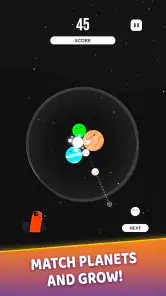
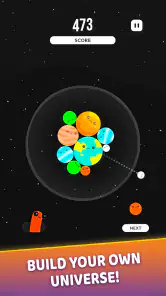
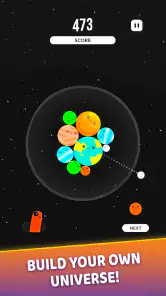
I spent time with Astro Merge as a light, casual game built around a simple idea: launch planets, combine matching ones, and try to push your score higher. That sounds immediately understandable, and it is. The early experience is easy to enter, with no complicated tutorial language or demanding setup getting in the way. I could begin making moves almost at once, which is exactly what I want from a game designed for short breaks.
What makes it worth discussing is not the basic rule itself, but the small decisions that appear once the board starts filling up. A careless launch can leave useful space blocked, while a well-timed merge can open a better chain of moves. I found the game most enjoyable when I stopped treating every move as an isolated action and started thinking one or two launches ahead. It remains approachable, but it rewards a little attention.
How the basic planet-merging loop feels in practice
The main routine is pleasantly direct. I launch a planet, look for a matching pair, and use the resulting merge to create room or prepare the next combination. There is no need to learn a large collection of controls before playing. The appeal comes from watching a crowded arrangement gradually turn into a more valuable one through deliberate placement.
That simplicity makes it a good fit for everyday moments when I have only a few minutes. I can play while waiting for an appointment, during a short commute break, or when I want something more interactive than scrolling. The game does not ask me to remember a long story or maintain a complicated character build. I can return to the central puzzle immediately.
My most useful baseline habit was to avoid launching the next planet automatically. I first checked where the existing planets were concentrated, then considered whether the new piece could support a merge or would simply consume another useful space. This pause is brief, but it changes the feel of the game. Instead of reacting to the latest object, I begin managing the shape of the whole playing area.
The score goal also gives the loop a clear reason to continue. A single successful merge feels satisfying, but the stronger motivation is trying to improve the way I reach the next high score. I liked that the objective stays understandable without turning the game into a heavy competitive system. It is a personal challenge first, even when the score encourages another attempt.
For a realistic daily example, I would use it as a ten-minute reset after finishing a task. On the first attempt, I might play quickly and create a messy layout. On the next, I would reserve a clearer section for likely matches and use the edges more carefully. That repeated comparison gives the game more depth than its short store summary suggests: the real improvement comes from changing my habits, not from unlocking a complicated menu of abilities.
Why the opening is friendly to casual players
Astro Merge belongs firmly in the casual game space. Its central interaction can be understood without specialist knowledge, and the Everyone content rating makes it suitable for a broad audience. I would feel comfortable recommending it to someone who wants a straightforward puzzle-like diversion rather than an action game with fast reflex demands or a long campaign.
The developer is Gimica GmbH, and the current release is version 1.0.0. That version label is worth keeping in mind when setting expectations. I approached the game as a focused core experience rather than assuming it would already contain the breadth of a mature, feature-heavy title. If you enjoy a clean loop and repeatable attempts, that is not necessarily a problem. If you need extensive progression, numerous modes, or a large amount of customization, the appeal may be narrower.
The game is free, which removes the main barrier to trying it. I could evaluate the central loop without committing money first. That makes it easier to decide whether the merge-and-score rhythm suits me personally. Free access does not automatically make a game a good fit, of course, but here it supports the pick-up-and-play character.
Settings and small preparation habits
Before settling into repeated attempts, I recommend checking the available device and game settings rather than assuming the default arrangement is ideal. In a casual title, settings are easy to ignore because the first session feels simple. Still, a comfortable sound level, a readable display, and an uncluttered playing position can make longer sessions less tiring.
I also found it useful to decide in advance what kind of session I wanted. If I had only a moment, I played for quick decisions and accepted that the result might be modest. If I wanted to chase a better score, I slowed down and treated each launch as part of a plan. This sounds basic, but separating those two moods prevents frustration. A rushed attempt should not be judged by the same standard as a deliberate one.
The most valuable setting is often the one that keeps attention on the board. I would reduce distractions around the game, keep the phone steady, and avoid switching between apps during an important sequence. That is not an invented gameplay feature; it is a practical way to get more from a small-screen puzzle. When the layout becomes crowded, a moment of visual interruption can lead to a poor launch.
Because the game is rated for Everyone, it is also a reasonable choice for shared casual play in a family setting. I would still explain the goal in my own words rather than assuming a new player will instantly understand the best strategy. Showing how one merge creates space is more helpful than simply telling someone to aim for a high score.
Faster patterns that improve repeat attempts
Once I understood the basic rhythm, I noticed three practical patterns that made my attempts more consistent. The first was space management. I tried not to let the center become a permanent pile of unrelated planets. Keeping some room available gives me more flexibility when the next launch does not fit my preferred plan.
The second pattern was delayed merging. A matching pair is tempting to combine immediately, but sometimes leaving the pieces in place for a short time gives me a better arrangement. I used this when a merge would have produced a new obstacle in an awkward position. The best move is not always the fastest visible merge; it is the merge that leaves the next move manageable.
The third pattern was learning from the end of an attempt. Instead of only looking at the final score, I asked what caused the board to become difficult. Did I launch too many planets toward one side? Did I spend open space too quickly? Did I chase a single match while ignoring the rest of the layout? These questions turn a failed run into a specific adjustment for the next one.
Experienced players can make this process almost automatic. I like to use a short mental checklist: identify the safest open area, look for the most useful matching opportunity, and consider where the merged result will sit. That habit is more valuable than rushing for speed. The game feels faster naturally once the decision process becomes familiar.
Another useful approach is to set a narrow goal for each session. One attempt might focus on keeping the board balanced. Another might focus on creating merges without blocking the central area. A third might simply test whether a slower pace produces a better result. This gives each replay a purpose and keeps the loop from feeling like identical repetition.
Where the game’s simplicity becomes a limitation
The same focused design that makes Astro Merge accessible can also limit its appeal. I would not choose it if I were looking for a story, a large progression system, deep strategic variety, or a broad collection of activities. The attraction is concentrated in the launch, merge, and score cycle. Players who need frequent novelty may find that cycle too narrow after the initial curiosity fades.
It is also not the right choice for someone who dislikes score-chasing games. There is no need to treat every attempt as a competition, but the high-score structure is central to the motivation. If improving a previous result does not interest you, the reason to replay may become weaker.
Compared with a traditional match-three game, the experience feels more spatial and less focused on scanning a fixed grid for immediate combinations. Compared with a physics-based launcher, it is calmer because the satisfaction comes from planning the arrangement rather than relying only on quick reactions. Those comparisons help define its place: it sits between a relaxed merge puzzle and a compact placement challenge.
That middle ground will suit some players better than others. I prefer it when I want a game that asks for attention but does not demand a long session. Someone who wants dramatic effects, character development, or a constantly changing set of objectives would probably be happier with a more expansive alternative in the casual category.
Device expectations and who should try it
The minimum operating-system requirement is Android 7.0, so the game is aimed at a wide range of Android devices that are still compatible with that platform level. I would still keep ordinary practical factors in mind: a comfortable screen, responsive touch input, and enough battery for the session. Planet placement depends on controlled input, so a device that misses touches can make the game feel harder than it should.
The game has reached over 50 thousand installs and holds a 4.5 average from around 200 ratings, with 13 written reviews. Those figures suggest that it has attracted a modest audience and generally positive reactions, while still being a relatively focused title rather than a massive mainstream game. I would treat that as encouragement to try it, not as a promise that every player will enjoy the same pace.
For me, the strongest audience is someone who likes compact puzzle sessions, wants a free game, and enjoys improving through repeatable habits. It can also work for a parent looking for a simple, age-appropriate diversion, or for a player who wants something less intense than an arcade game. The weaker audience is anyone who expects a long-term collection system, extensive customization, or a large amount of content to explore.
One practical recommendation is to play the first few attempts without chasing a target score. Learn how planets occupy space, notice which arrangements become awkward, and find a comfortable launch rhythm. After that, begin tracking one personal improvement at a time. This approach makes the game feel less random because progress is connected to an observable decision.
My verdict after building a repeatable routine
Astro Merge works because it keeps its promise small and clear. I launch, merge, manage space, and try to improve. The experience does not pretend to be a full adventure, and that honesty is part of its charm. When I want a short, low-pressure game that still rewards concentration, it is easy to open and understand.
Its best quality is the way a basic rule develops into a quiet planning exercise. I started by making obvious matches, then gradually paid more attention to board balance, delayed merges, and the consequences of each launch. Those are modest strategic layers, but they are enough to make a second or third attempt feel meaningfully different from the first.
Its main weakness is equally clear: the focused loop may not hold everyone’s attention for long. Players who need variety should look elsewhere, and anyone searching for a deep progression system will likely feel that the game is too restrained. I would also avoid recommending it as a primary game for long sessions unless the player genuinely enjoys score improvement and repetition.
For my own use, I would keep it installed as a dependable break-time option. The free price makes experimenting easy, the Everyone rating broadens its audience, and the straightforward controls mean I do not need to relearn the game after time away. My recommendation is simple: try it if you enjoy turning small placement decisions into a better personal score. If that kind of quiet mastery sounds satisfying, this compact casual game earns a place in the rotation; if you want constant new systems, choose a more expansive alternative instead.
Pros
- Simple merge mechanics are easy to learn and play casually.
- Short sessions make it suitable for quick breaks.
- Space-themed visuals give the game a distinctive atmosphere.
- Progression provides clear goals and a steady sense of reward.
- Playable without requiring advanced gaming skills.
Cons
- Repeated merging can become monotonous after extended play.
- Some upgrades may require considerable time to unlock.
- Ads may interrupt gameplay or appear frequently.
- Limited strategic depth may disappoint experienced puzzle players.
- Performance can vary on older phones or tablets.

- Category
- Casual
- Version
- 1.0.0