Water Sort: Color Match
- 507.00
- 4.8
- Installs
- 5.00M
- Price
- Free

Screenshots



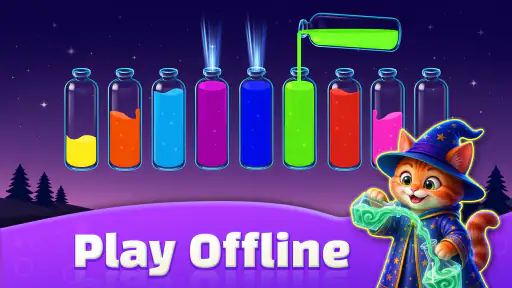
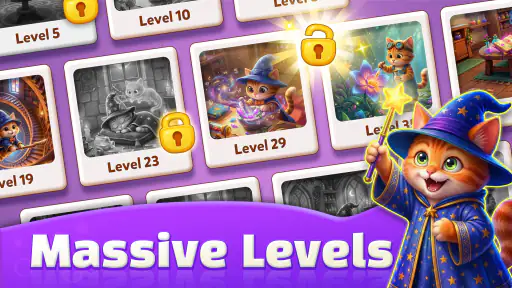
Analysis by Reviewed
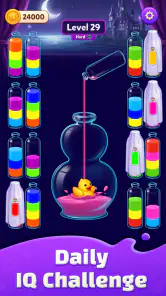
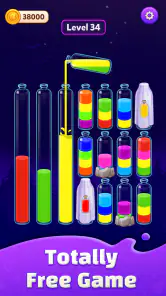
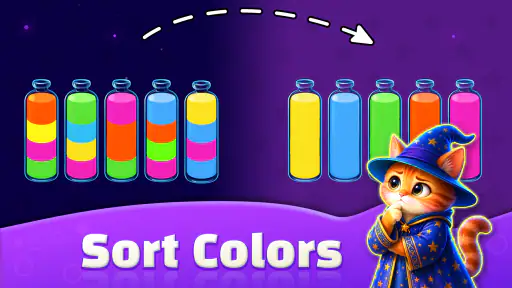
In a short break, I like having a puzzle I can understand at a glance but still need to think through. Water Sort: Color Match fits that mood: the task is to separate colored liquid among tubes, and the interesting part is deciding which pour will make the next few moves easier. I can begin without learning a story or a long list of rules, then stop when something else needs my attention.
Who will enjoy this kind of puzzle
I’d recommend it to people who like quiet visual challenges and don’t mind pausing to plan. It can suit a quick wait between errands or a few minutes on the sofa when I want to focus on one small problem rather than scroll through a feed. It is less suited to anyone looking for a lively competition, a social game, or a narrative to return to over several sessions.
Compared with the usual casual puzzle choices, the appeal here is its steady, spatial decision-making. Match-three games tend to reward quick reactions to changing layouts; word games ask me to search for language clues. This sorting puzzle instead asks me to track visible layers and preserve room for later. That makes it approachable without making every board effortless: patience and attention matter more than speed.
Articles Related to Water Sort: Color Match
How a typical puzzle unfolds
Start with the colors that are easiest to read
At the beginning of a level, I look across the tubes before making a move. I note which colors are already grouped, which appear near the top of several tubes, and whether there is an empty container available to act as temporary storage. That brief scan often prevents a tempting pour from blocking a color I need to reach later.
The central rule is simple, but a good move is not always the one that immediately makes a tube look tidier. Pouring a top layer onto a matching color can free space, yet it can also bury another color beneath a larger stack. I try to think one or two moves ahead: what will this pour expose, and where can I put the next layer if it is the wrong color?
That makes the game more satisfying than a purely reflex-based casual pastime. The challenge is to manage limited space while gradually separating the colors. When I get stuck, the useful question is usually not “Which tube should I fill?” but “Which move gives me the most flexibility?” An empty tube is valuable because it creates options, so I avoid treating it as a destination that must be filled immediately.
A practical rhythm for ordinary play
My repeatable approach is to clear obvious matching layers first, use open space to uncover buried colors, and pause before any move that would leave several tubes with awkward mixed tops. If two choices seem equally safe, I favor the one that opens access to a hidden layer or preserves an empty tube. This is not a guaranteed solution method for every board; it is a way to reduce avoidable dead ends.
You May Like

How Microsoft OneDrive Became a Mobile Productivity Giant

How Google Translate Breaks Language Barriers Effortlessly
Why Google Sheets Is the Ultimate Mobile Productivity Tool

Unveiling the Dynamic World of My Talking Tom Friends

Free Fire MAX: Dominating the Battle Royale Arena
Free Fire: Winterlands – The Ultimate Winter Gaming Adventure
I also try not to move liquid simply because a pour is available. Unnecessary transfers can make the board harder to read and consume the space that would help with a more important sequence. In a game built around sorting, restraint is often as useful as action.
A small habit for interrupted sessions
When I’m playing in short bursts, I try to stop at a natural pause rather than halfway through a complicated chain of pours. If I have to put the phone down, I note which color I was trying to expose and which tube I was keeping free. It is a modest habit, but it saves me from returning and making a rushed move just to reconstruct my plan.
Settings, habits, and playing at your own pace
Check the controls before settling into a routine
Because the experience depends on selecting a tube and making a pour, comfortable controls matter more than they might in a casual game built around tapping quickly. I recommend taking a moment at the start to see how the available options are presented and whether the game offers any assistance or presentation choices that suit you. I would not assume a particular shortcut or setting is present; the sensible habit is to inspect what the current version actually puts within reach.
If a board becomes confusing, slow down rather than tapping through several moves in a hurry. A quick visual reset—following one color from its exposed layer to the tube that can receive it—can reveal a better route. This also helps avoid accidental pours when colors sit close together or when I am playing one-handed while doing something else.
For a short break, I prefer to finish a level only when I can give it a little attention. The puzzle is easy to understand, but a half-planned sequence can be harder to resume after I lose track of which tube was serving as temporary storage. If I need to stop, I make a mental note of the color I was trying to uncover and the tube I was keeping open. That simple checkpoint makes returning less frustrating.
Where it fits into an everyday day
A realistic use for this kind of puzzle is a few minutes while waiting for a kettle, sitting in a waiting room, or taking a breather between tasks. It gives my attention one clear problem without asking me to learn a large control scheme. I would not choose it when I want a social match, a fast competitive round, or a substantial narrative to follow; its appeal is the compact process of spotting and correcting a color arrangement.
It is also a reasonable option for someone who enjoys visual sorting but does not want the pressure of a timer-driven challenge. The game is rated Everyone, which makes its basic puzzle premise approachable for a broad audience. Still, whether it suits a particular player depends on patience: people who dislike planning several moves ahead may find the same calm structure repetitive rather than relaxing.
Make a brief pause useful
One practical way to keep a short session from becoming aimless is to choose a single goal before pouring: uncover a specific color, consolidate a visible pair, or preserve the one open tube. That turns a few minutes into a focused attempt instead of a string of moves made because they are available. If the goal stops being possible, I reassess rather than trying to force the original plan.
What experienced play can—and cannot—do
Build a repeatable pattern, not a supposed shortcut
There is no need to chase a secret trick to improve. The more useful skill is recognizing recurring board situations: a color exposed at the top of multiple tubes, a nearly complete group that needs one more layer, or a single empty tube that should be protected until it can unlock a sequence. I treat these as cues, not rules. A move that is helpful on one board can be damaging on another if it closes off the only place to park a different color.
One particularly useful discipline is to reserve temporary space deliberately. Before using an open tube, I ask which color it is likely to help uncover and how I will clear it again. That keeps the empty tube from becoming an accidental permanent holding area. Another is to complete a color only when doing so does not strand a useful layer underneath elsewhere. These small checks make play more controlled without turning it into a tedious calculation exercise.
When I reach a point where every available move seems to make the board worse, I stop and inspect the top layers again. Often the issue is that I have focused on finishing one color instead of opening a route to another. If the game provides a restart or assistance option in the version being played, that can be a practical fallback, but I would use it after reconsidering the layout rather than as an automatic response to one awkward move.
Compared with other casual puzzles
Compared with match-three games, this is less about reacting to a changing board and more about maintaining a plan across a sequence of pours. Compared with word puzzles, it has almost no language barrier, but it relies more on visual tracking and spatial organization. Those differences make it a good fit for someone who wants a quiet logic task and a weaker fit for a player who needs frequent novelty, characters, or a strong sense of progression to stay engaged.
The format also has a natural ceiling. Once the sorting rule feels familiar, the interest depends on how satisfying the individual arrangements are and how much the player enjoys working through them. Anyone seeking deep strategy, elaborate mechanics, or a fresh kind of challenge in every session may prefer a more layered puzzle game. Water sorting is deliberately narrow, and that focus is both its strength and its limitation.
Where persistence stops helping
There is a difference between a board that needs a more careful scan and one where I have simply made the layout harder to manage. I find it useful to review the exposed colors and the available space before repeating a sequence that has already failed. If I still cannot see a workable route, restarting or using whatever help the game makes available can be more sensible than spending a break tapping through the same blocked pattern. That is not a shortcut to mastery; it is a way to keep a small puzzle from turning into needless frustration.
Value, access, and my verdict
FunForge Studios is the developer, and the game is free to install, with in-app purchases listed from $0.99 to $79.99 per item. I would keep the purchase range in mind before tapping any optional offer, especially if the goal is simply to try the core puzzle. The game has an average rating of 4.8 from around 74,000 ratings, with more than 5 million installs; those figures suggest broad interest, though they do not tell me whether its particular pace will suit you.
The release date is February 5, 2026, and the current version is 1.1.9. It requires Android 6.0 or later. Those details make it straightforward to judge basic device compatibility, while the Everyone content rating gives a clear sense of its general audience. I would still check the purchase prompts carefully if I were handing the device to a child.
A focused recommendation, with a clear caveat
My recommendation is specific: try it if you like calm, visual puzzles where a little planning makes each move feel earned. The best way to enjoy it is to scan first, protect useful empty space, and resist pours that only look productive. Skip it if you want a fast arcade loop, a multiplayer contest, or a puzzle with a broad set of evolving mechanics. For a modest, easy-to-understand sorting challenge, Water Sort: Color Match offers a pleasant pause, provided you enjoy the process of untangling a board one careful move at a time.
Water Sort: Color Match Frequently Asked Questions
What is Water Sort: Color Match?
Water Sort: Color Match is a casual color-sorting puzzle game built around moving liquid between containers. The goal is generally to arrange each color into its own bottle, using open space and careful planning to complete a level. It is designed for short play sessions and can suit players who enjoy simple rules, visual puzzles, and gradually more challenging stages.
How do you play Water Sort: Color Match?
Tap a bottle to select it, then tap another bottle to pour liquid when the move is allowed. In typical water-sort puzzles, you can pour only onto the same color or into an empty bottle, and each container has limited capacity. Plan moves before pouring so you do not leave colors trapped beneath others. Exact rules and available helpers may vary by version.
Is Water Sort: Color Match free to download and play?
The game may be available to download at no upfront cost, but that does not necessarily mean every part of it is free. Like many mobile puzzle games, it may include advertising, optional in-app purchases, or items that help with difficult levels. Check the current Google Play or App Store listing for pricing, purchase details, age guidance, and any conditions that apply in your region.
Can I play Water Sort: Color Match offline?
Basic puzzle gameplay may work without an internet connection, but offline availability can depend on the app version and how its features are configured. Ads, rewards, cloud saves, or other connected features may require internet access. If offline play matters to you, try opening the game in airplane mode after installation and check whether your progress is saved when you reconnect.
Is Water Sort: Color Match suitable for children, and what should parents check?
Color-sorting puzzles are generally straightforward to understand, but suitability depends on the specific version, its advertising, and any optional purchases or online features. Before a child plays, review the age rating and privacy information on the relevant store page, and check whether ads or in-app purchases are present. Parent controls can also help prevent unintended purchases.
Pros
- Simple rules make it easy to start playing right away.
- Short levels are convenient for quick breaks.
- Sorting colors offers a satisfying
- puzzle-like challenge.
- No precise timing is needed
- so you can play at your own pace.
- The colorful visuals make the tubes and water easy to distinguish.
Cons
- Some levels may require several attempts to find the right sequence.
- Later puzzles can feel repetitive if you play for long sessions.
- A single mistaken pour may force you to undo moves or restart.
- Ads or optional hints may interrupt the flow of play.
- Color-matching puzzles may not appeal to players seeking varied gameplay.

- Category
- Casual
- Version
- 1.1.9