Thorn And Balloons: Bounce pop
- 611.00
- 4.8
- Installs
- 1.00M
- Price
- Free

Screenshots
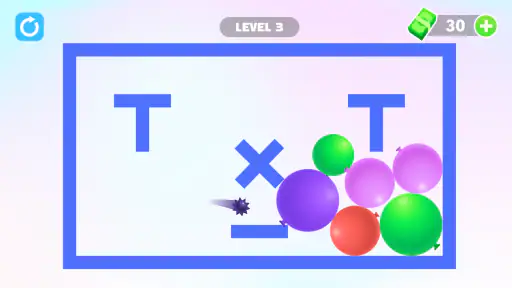
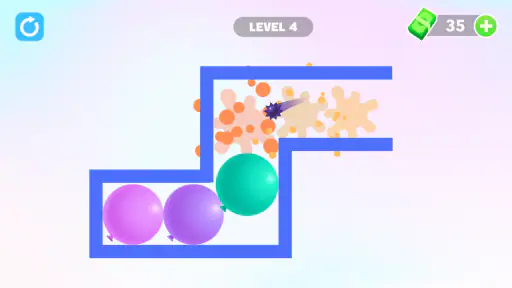
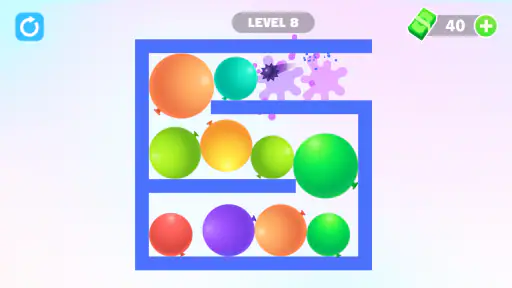
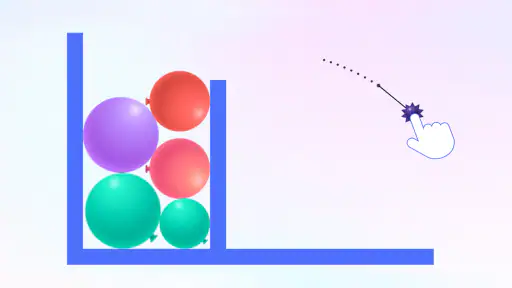

Analysis by Reviewed
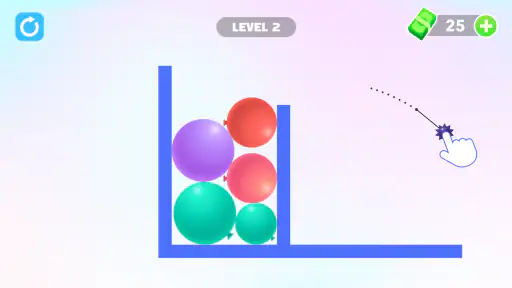
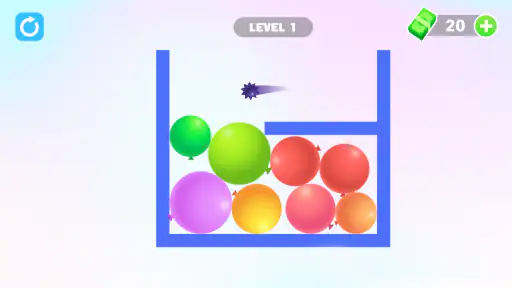
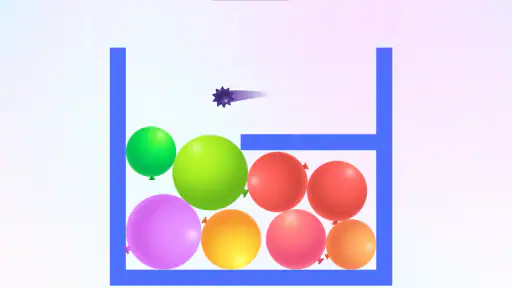
I judge a casual puzzle by what it asks of me in the small gaps of a day: can I understand the goal quickly, and does a failed attempt teach me enough to make another feel worthwhile? That balance is what makes Thorn And Balloons: Bounce Pop appealing. Its central challenge is to guide a thorn through bounces to reach balloons, so a simple-looking screen becomes a little exercise in prediction rather than just a reflex test. I enjoy that focused premise, though it suits players who like experimenting more than those who want a story or a broad set of activities.
When a quick puzzle fits the day
I can see this working well during a small pause when I want something more engaging than scrolling but do not have the time or attention for a long game. A realistic example: I might open it while waiting for an appointment, try a stage, and use the next attempt to change one part of my aim rather than restarting with no plan. If the solution does not come quickly, I can put it down without needing to remember a complicated plot or a long chain of objectives.
That makes it a better match for short, self-contained bursts than for people who want a game to occupy an entire commute or evening. The focused bounce puzzle is the point, and the same focus can become limiting if I am in the mood for variety. Players looking for exploration, character progression, or a changing set of activities may be happier with a broader casual game. Here, the appeal is narrower: inspect the arrangement, make a choice, and see whether the thorn’s path works.
A small puzzle for short breaks
This is easiest to recommend when you want a compact challenge: a few levels while waiting for a drink, unwinding between tasks, or passing a quiet moment without committing to a long session. I would treat it as a game to dip into, not as a deep campaign that needs a dedicated evening. If a stage takes longer than expected, stepping away and returning with fresh eyes can be more satisfying than repeating the same guess in frustration.
The useful habit is to pause before each attempt and trace the likely path mentally. Look at the thorn’s starting position, the target balloons, and the surfaces that might redirect its movement; then make one deliberate adjustment at a time. That makes retries informative instead of random. When I get stuck, changing a single part of my plan helps me tell whether the angle or my assumption about the bounce was the problem. It is a modest strategy, but it turns trial and error into a more thoughtful loop.
So, What’s the Game About?
At its core, Thorn And Balloons: Bounce Pop is a simple yet captivating puzzle game. The objective is straightforward: you’ve got balloons that need popping and thorns that need to hit their targets. Sounds easy, right? Well, not quite. The game is designed to test your strategic thinking and timing skills. You’ll have to plan your moves carefully to ensure those thorns bounce just right to burst all the balloons on the screen.
Reading the bounce instead of rushing
The most useful way I approach a tricky screen is to treat each attempt as a small experiment. Before acting, I look at the route I expect the thorn to take and ask what would have to happen for it to reach the balloons. If the result differs from my guess, I adjust one choice rather than changing everything at once. This makes it easier to learn from a miss, especially when I cannot immediately tell whether I misjudged the angle or the way a surface would redirect the movement.
More From Our News Desk

Clash of Clans Is Won Between the Battles

Android Auto Makes the Case for Quieter Car Software

MobiOffice: Transforming Mobile Productivity with Seamless Integration

EA SPORTS FC™ Mobile Soccer: Redefining Mobile Sports Gaming

How Microsoft OneDrive Became a Mobile Productivity Giant

How Google Translate Breaks Language Barriers Effortlessly
There is a trade-off in that method: it rewards patience, but it does not make every puzzle feel effortless. If I am tired or distracted, repeated aiming can feel like work rather than relaxation. I would not choose it when I want a game that asks almost nothing of me. A simple arcade distraction may suit that mood better, while a word puzzle may be a better alternative if I want to think without focusing on trajectories.
Gameplay Mechanics
The beauty of this game lies in its mechanics. It’s all about precision. You’ll find yourself adjusting angles, considering physics, and sometimes just going with your gut in hopes of that perfect bounce. It’s a bit like playing pool, but with a lot more at stake. The levels get progressively tougher, and just when you think you’ve mastered it, a new twist is introduced. Keeps you on your toes, that’s for sure.
Progress without turning it into a chore
What I would watch for is the point where a relaxing puzzle starts to feel like repetition. If you are stuck, make each replay a test of one idea rather than firing off several nearly identical attempts. That approach gives the careful aiming its appeal, but it also highlights the game’s main trade-off: players who want instant, effortless wins may find the need to reason through a bounce less calming than expected. If you prefer word puzzles or match-based games with a different rhythm, those may be better company.
A practical stopping rule helps here. I would give a difficult stage a few considered attempts, then pause if I catch myself tapping through the same plan without learning anything. The point is not to force progress at any cost; it is to keep the puzzle enjoyable. Coming back later can help because the screen is still a concrete problem to inspect, rather than a task that depends on remembering a story or managing several systems.
Why You’ll Keep Coming Back
One of the things that makes Thorn And Balloons: Bounce Pop so addictive is its replayability. Each level presents a new challenge, and let’s be honest, we all love proving to ourselves that we can conquer a tough stage. Plus, the satisfaction of seeing all those balloons pop is oddly fulfilling. It’s the kind of game you can easily pick up for a few minutes during your coffee break, but you’ll often find yourself coming back for more.
For a quick everyday routine, I’d use it as a short reset rather than leave it open as background entertainment: try a stage, think through what the bounce taught you, then stop when the puzzle stops feeling fun. That makes it a better fit for someone who likes small, self-contained goals than for someone seeking social competition, a long narrative, or constant novelty. Compared with many casual alternatives, its appeal is the direct link between aiming and outcome; it asks for a little planning instead of relying only on quick taps. The flip side is that players who dislike retrying a puzzle may prefer a more forgiving, low-effort casual game.
Choosing it over other casual games
Compared with match-based games, this one puts more weight on predicting a path than on making quick pattern matches. Compared with reflex-focused arcade games, it gives me a reason to pause and plan before acting. That difference is useful when I want a compact puzzle, but it also means the game is not automatically the best casual choice for every mood. If I want constant visual change or a faster tempo, another style will likely feel livelier; if I want a little trial-and-error reasoning, the bounce setup is a more distinctive fit.
It is also a game I would pick selectively for shared device time. The Everyone rating makes its age classification broad, but the puzzle’s appeal depends on whether the player enjoys aiming and trying again. I would sit with a younger player at first, not because the basic premise is hard to explain, but because seeing how they interpret the route can reveal whether they are enjoying the reasoning or simply repeating taps. That is a better test of fit than assuming every casual game works for every age.
Visuals and Soundtrack
Visually, the game is pretty charming. It’s colorful, clean, and the animations are smooth, making it a joy to play. The soundtrack complements the gameplay perfectly, with tunes that are light and not overly distracting. It’s the kind of background music that keeps you engaged without overpowering the experience.
For a low-distraction break, I would keep the focus on the puzzle rather than expect the presentation to carry a long session by itself. The clear, colorful look supports the simple goal, while the main satisfaction still comes from working out a successful bounce. That distinction matters if you are choosing between this and a casual game built around elaborate visuals or a more prominent soundtrack: here, the presentation is pleasant company for the puzzle, not a replacement for it.
Purchases and fairness
FunSpace’s casual game is free to download, rated for Everyone, and has a 4.8 average from around 17,000 ratings, with over a million installs. It was released on February 24, 2022, and version 1.2.9 runs on Android 6.0 or newer. Those details make it easy to judge basic access, but they do not answer every practical question about spending. In-app purchases are listed from $0.99 to $54.99 per item; I would check the purchase screen carefully and use the device’s purchase controls if children might play. The listed range alone does not tell me what any item does, whether it affects progress, or whether play without buying feels equally smooth, so I would not assume either an advantage or a disadvantage.
My fairness judgment therefore has a clear boundary. The game is free to download, and purchases are available, but the purchase range by itself cannot tell me whether an item is cosmetic, useful for progress, or something else. I would avoid deciding that spending is necessary—or that it has no effect—without seeing the purchase details in context. If the possibility of optional purchases is a deal-breaker, a game without in-app purchases is the more reassuring choice.
The 4.8 average from around 17,000 ratings and more than a million installs suggest that many people have tried it, but popularity does not settle whether its spending model will suit a particular household. I would treat those figures as context rather than proof that every level or purchase experience will feel fair to me. The most useful check is still the screen shown before buying and whether the game remains enjoyable for the way I want to play without spending.
That uncertainty matters most if you are choosing a game for a child or someone who wants a completely purchase-free experience. The age rating is Everyone, but that is not a substitute for reviewing purchase prompts together. I would also decide in advance whether optional spending is acceptable on the device, rather than making that call in the middle of a tempting moment. For a player who wants a guaranteed no-purchase environment, a game with no in-app purchases would be the clearer choice.
Does it work for very short sessions? Its bite-sized puzzle premise makes it a reasonable pick-up-and-play option, although a difficult stage can naturally take more than one attempt. Is it fair without spending? The purchase range is known, but the effect of purchases on play is not, so I would avoid promising that they are irrelevant. Is it suitable for younger players? The Everyone rating is encouraging, while adult supervision of spending remains sensible. These are practical questions worth settling before handing over a device.
Who should give it a try
I would recommend it to someone who enjoys careful aiming, short challenges, and the small satisfaction of turning a failed attempt into a better-informed one. It is also a sensible option for players who want a casual game that can be picked up without first learning a complicated set of systems. Someone who dislikes retrying, wants multiplayer competition, or expects a changing story to keep each session fresh should look elsewhere; the core activity is intentionally focused, and that focus will either be the draw or the limitation.
Before installing, I would ask myself one simple question: do I enjoy predicting where an object will go, then adjusting my plan when I am wrong? If yes, the central loop has a fair chance of landing well. If I mainly want to switch my brain off, I would choose something less dependent on precision. That distinction is more useful than the broad label of casual, because the game asks for a particular kind of attention even when the session is short.
My trust verdict
What I can confidently recommend is the basic proposition: a free-to-download casual puzzle from FunSpace, with a clear aiming challenge and an Everyone age rating. Android users need version 6.0 or newer, and the current version is 1.2.9. The listed in-app purchase range is $0.99 to $54.99 per item. Those are useful purchase and compatibility details, but they do not reveal what each item provides or whether it changes the pace of progress, so I would make spending decisions only after checking the in-game offer.
In conclusion, if you’re on the hunt for a new game that’s both relaxing and stimulating, give Thorn And Balloons: Bounce Pop a go. It’s a delightful way to challenge your brain, and you might just find yourself getting hooked. So, go ahead, dive into the world of thorns and balloons—you won’t regret it!
Thorn And Balloons: Bounce pop Frequently Asked Questions
Is Thorn And Balloons: Bounce Pop suitable for children and families?
Thorn And Balloons: Bounce Pop has an Everyone content rating, so it is presented as suitable for a broad audience, including families. Its casual balloon-popping premise is easy to understand, while aiming and planning add a little challenge. Parents may still want to review the game and any purchase prompts with younger players, especially if they share a device.
Does Thorn And Balloons: Bounce Pop have in-app purchases?
Yes. The game is free to download, and optional in-app purchases are available, ranging from $0.99 to $54.99 per item. You can begin playing without paying, but keep purchase prompts in mind if you prefer to avoid spending. If a child uses your device, checking its purchase settings can help prevent unintended transactions.
Who makes Thorn And Balloons: Bounce Pop, and what kind of game is it?
Thorn And Balloons: Bounce Pop is a casual game developed by FunSpace. Its central idea is simple to grasp: bounce and pop balloons to win. The focus on aiming and timing makes it easy to pick up, while the puzzle-like challenge gives players a reason to think through each move rather than simply tapping at random.
What is Thorn And Balloons: Bounce Pop?
Thorn And Balloons: Bounce Pop is an engaging mobile puzzle game where players must strategically pop balloons using thorns. The game challenges players with different levels, each requiring a unique approach to solve. With its vibrant graphics and intuitive gameplay, it offers both casual and hardcore gamers an enjoyable experience.
How do I play Thorn And Balloons: Bounce Pop?
To play Thorn And Balloons: Bounce Pop, you need to aim and release thorns to pop the balloons floating in various patterns. Each level has a specific number of balloons and thorns available, requiring players to plan their moves carefully. The game becomes progressively challenging, necessitating strategic thinking and precision.
Pros
- Engaging gameplay with intuitive controls.
- Colorful graphics and fun sound effects.
- Challenging levels keep you entertained.
- Frequent updates with new content.
- Offline play available.
Cons
- In-app purchases can be pricey.
- Ads can be intrusive at times.
- Some levels may feel repetitive.
- Limited customization options.
- Occasional bugs disrupt gameplay.
- Category
- Casual
- Version
- 1.2.9