Tag with Ryan
- 14.74K
- 3.8
- Installs
- 10.00M
- Price
- Free

Screenshots


Analysis by Reviewed
My first reaction to Tag with Ryan was that it understands its audience immediately. This is a casual game built around the familiar Ryan character, and its central idea is easy to grasp: become Ryan, move through the play space, and see how long you can keep going. I did not need a tutorial-heavy introduction or a long explanation before starting. That quick entry matters for a game aimed at younger players, especially when it is being opened for a short break rather than a long gaming session.
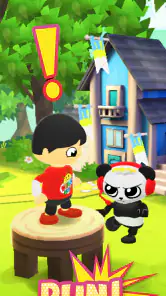
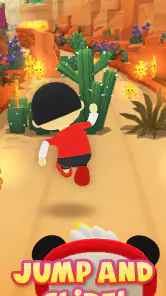
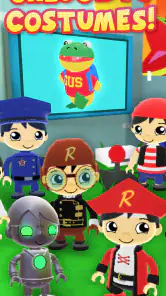
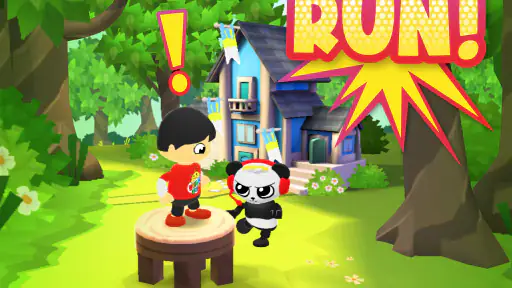
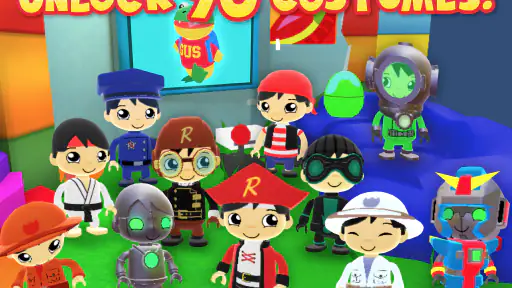
WildWorks keeps the presentation bright and approachable, with an art direction that feels designed to be read quickly on a small screen. The character focus is clear, the setting is playful rather than threatening, and the overall mood stays light. Nothing about the opening tries to make the game seem more complicated than it is. In my experience, that simplicity is one of its strongest qualities, although it also hints at the main limitation: players looking for a deep progression system or a demanding challenge may find the experience narrow.
The game is free to start, which makes it easy for families to try without committing money first. It is rated for Everyone, and the broad age fit matches the uncomplicated tone. At the same time, optional purchases range from $0.99 to $49.99 per item, so I would set expectations with a child before handing over a device. The game can be enjoyed without treating every purchase as necessary, but purchase awareness is still part of using it responsibly.
How the world, sound, and play rhythm work together
A visual world made for instant recognition
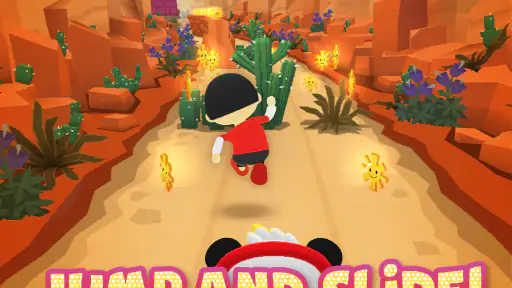
The setting does not ask me to study a complex map or learn a large cast of characters before having fun. Instead, its visual language supports the chase-like premise. Bright colors, clear character silhouettes, and an uncluttered sense of direction help the action remain understandable while things are moving. That is important for younger players, who often respond better when the screen communicates its priorities without too many competing icons or effects.
This visual clarity also affects how the game feels during repeated attempts. Because the presentation is cheerful and familiar, failure does not carry the weight it might in a darker or more punishing game. I can restart and try again without feeling that the previous attempt was wasted. The setting turns repetition into part of the appeal: each run becomes another chance to improve a little, react sooner, or simply enjoy the character on screen.
One useful habit is to treat the background as information rather than decoration. When the action speeds up or several objects compete for attention, I find it easier to focus on the open route directly ahead instead of trying to watch every animated detail. This is a small adjustment, but it helps make the colorful presentation work for the player instead of becoming visual noise.
The art style is also a good match for short sessions. I would be comfortable suggesting it for a child who wants something recognizable and immediately playable, or for an adult looking for a simple distraction with a family-friendly mood. I would not choose it as a visual showcase for someone who values elaborate environments, detailed exploration, or a story that unfolds through the setting. Its world is effective because it is direct, not because it is expansive.
Sound that keeps the chase moving
The audio contributes to the game’s sense of motion. Rather than creating a quiet, reflective atmosphere, it supports an upbeat rhythm that encourages me to stay alert and continue the attempt. In a game based on quick reactions and repeated play, that role is more important than having a large musical identity. The sound helps the experience feel active even when the underlying action remains simple.
I also think the audio design works best when the game is played in short bursts. A lively soundscape can make a brief session feel energetic, but repeated attempts may become tiring for players who prefer calmer games. For that reason, I would try it with the device volume kept moderate, particularly when a child is playing nearby or when the game is being used during travel. The visual action remains readable even when the sound is reduced, which is useful in shared spaces.
The relationship between sound and movement is one of the more successful parts of the package. The game does not need a complicated story to establish a mood; its colors, character presentation, and audio all point toward the same playful chase. That coherence gives the simple mechanics more personality. Without it, the experience could feel like a bare reaction test. With it, the repeated runs have a clearer identity.
Pacing that favors quick attempts
The pacing is built around immediate engagement rather than a long build-up. I can start playing quickly, understand the basic objective, and decide within a short time whether I want another attempt. That makes the game suitable for moments such as waiting for an appointment, taking a break between tasks, or letting a child play for a limited period while an adult remains nearby.
A realistic everyday use case is a short car journey as a passenger. A child can open the game, play a few attempts, and put the device away without needing to remember a complicated quest or manage a large inventory. The same structure works for an adult who wants a few minutes of low-pressure play. It is less suitable for a long evening session, because the core appeal comes from the immediate chase and the desire to improve, not from a broad campaign that keeps unfolding.
My advice is to judge the game by the quality of its short loops rather than by the amount of content I might expect from a larger action title. If the goal is quick, character-led entertainment, the pacing makes sense. If the goal is a substantial adventure with exploration and narrative milestones, I would look elsewhere.
Where the mechanics fit the mood
The mechanics and presentation generally support one another. The game’s casual structure means I am not fighting against complicated controls while also trying to appreciate the character and setting. The central action stays easy to understand, which is exactly what the bright art direction promises. This is a good example of a game avoiding a common problem: presenting itself as simple, then hiding a difficult control scheme underneath.
That does not mean every player will find it equally satisfying. A younger player may enjoy the act of becoming Ryan and repeating the chase, while an experienced mobile gamer may quickly ask what comes next. The game’s strength is accessibility, not mechanical variety. I would recommend it to someone who wants a straightforward character game, but I would not present it as a replacement for a more substantial platformer, endless runner, or adventure game.
One practical way to get more from it is to focus on consistency rather than frantic reactions. Watching the route ahead, keeping movements measured, and learning the timing of recurring situations can make attempts feel less random. This also gives children a useful sense of progress: improvement comes from paying attention and adjusting, not simply tapping faster. The game remains casual, but it can still reward a little patience.
Another trade-off is the relationship between familiarity and originality. Using Ryan as the playable focus makes the game immediately inviting for fans of Ryan’s World. A player who does not know the character may still understand the action, but the personal connection will be weaker. In that case, a different casual game with an original mascot or a broader gameplay hook might be more appealing.
What families should know before installing
The game runs on Android devices using version 7.0 or later, so compatibility is reasonably broad for older supported phones and tablets. It has passed the ten-million-install mark and holds a 3.8 average from roughly 107 thousand ratings, with about 15 thousand written reviews. Those figures suggest a sizeable audience, while the rating also tells me not to treat it as universally loved. The experience clearly works for many players, but its narrow, repetitive format will not suit everyone.
The current release is version 1.37.0. When I think about installing it for a child, I would check the device first, then open the game myself before allowing unsupervised play. That is not because the presentation feels unsuitable for its Everyone rating; it is because a parent should understand how the game handles its play flow and optional purchases. A brief inspection can prevent confusion later, especially when the device is shared.
Since the game is free, it is easy to test its fit without paying upfront. I would give a child a clear rule about purchases rather than assuming the free entry means the entire experience is purchase-free. The available items can cost as little as $0.99 or as much as $49.99, and even when purchases are optional, children may not interpret them that way. A simple family agreement is more useful than discovering the issue after an accidental tap.
The game is also a better choice for players who enjoy repeating a compact activity than for those who need constant novelty. If a child asks for new worlds, extended stories, or a larger collection of modes, this may provide only a temporary answer. If the request is specifically for a recognizable Ryan game that can be picked up and played quickly, it is much easier to recommend.
How it compares with familiar casual alternatives
Compared with a traditional puzzle game, this title is more active and character-driven. It relies less on sitting back and planning several moves ahead, and more on staying engaged with what is happening on screen. That makes it a stronger choice for a child who loses interest in quiet matching or logic games, but a weaker one for someone who prefers thoughtful, slower problem-solving.
Compared with a large endless runner, its appeal is more tightly connected to Ryan’s identity and the game’s playful presentation. A broader runner may offer more systems, unlocks, or long-term goals, while this one is easier to understand from the first attempt. I would choose the Ryan game for accessibility and familiarity, and choose the deeper alternative for a player who wants more strategic growth.
Compared with a story-focused children’s game, it asks less attention from the player. There is no need to follow a lengthy plot to enjoy the basic loop, which is convenient during a short break. The trade-off is that it may not create the same sense of discovery or emotional attachment that a well-written adventure can provide. The right choice depends on whether the child wants to act immediately or be guided through a larger narrative.
That comparison also explains why the game’s atmosphere matters so much. Its mechanics alone are modest, but the recognizable character, colorful world, and energetic sound give those mechanics a clear purpose. I would not recommend it because it offers the deepest casual gameplay on mobile. I recommend it when the mood, character, and ease of entry are more important than complexity.
Who should play it, and who should skip it
I think it is a good fit for young Ryan’s World fans, families seeking a simple free-to-start game, and casual players who enjoy short repeated attempts. It is also suitable for someone who wants a game that can be understood without reading a long manual. The Everyone rating supports that broad accessibility, while the visual and audio choices keep the tone friendly rather than intense.
I would skip it for players who dislike repetition, want a strong story, or expect a large collection of distinct activities. I would also hesitate to recommend it to families who do not want to discuss in-app purchases at all. The free price is helpful, but the presence of optional items means the adult managing the device should take a moment to establish boundaries.
For the best first session, I would play alongside the child instead of simply handing over the phone. That lets you see whether the pacing feels comfortable, whether the sound is appropriate for the environment, and whether the child understands the difference between playing and buying. It also turns the game into a shared activity rather than just another screen-based distraction.
Final thoughts on the atmosphere
After spending time with it, I see Tag with Ryan as a focused casual game whose strongest achievement is consistency. The art direction, sound, setting, and pacing all communicate the same message: this is a bright, approachable chase designed to be enjoyed quickly. The mechanics stay visible instead of being buried under decoration, and the presentation gives the simple loop enough character to remain inviting.
Its weaknesses are equally clear. The experience is not aimed at players who need deep progression, extensive exploration, or constant mechanical surprise. Repetition can become the deciding factor, and families should remain aware of the optional purchase range. Those are not reasons to dismiss it; they are reasons to choose it for the right situation.
WildWorks has made a free casual game that works best as a compact Ryan-themed activity rather than a full-scale mobile adventure. If that is what you or your child wants, the quick start, readable visuals, and lively rhythm make it worth trying. Its real strength is the way its cheerful mood and straightforward play support each other, giving fans an easy game to return to when they want a few minutes of familiar, uncomplicated fun.
Pros
- Simple tag-based gameplay that is easy for younger children to understand.
- Bright visuals and familiar Ryan-themed characters make it appealing to fans.
- Short rounds are suitable for quick play sessions.
- Controls are generally simple and touch-friendly on mobile devices.
- Can provide light
- casual entertainment without requiring advanced gaming skills.
Cons
- The gameplay may become repetitive after several rounds.
- Ryan branding may appeal mainly to a narrow age group.
- Some features or content may require in-app purchases.
- Ads or promotional elements can interrupt the playing experience.
- It may offer limited challenge for older children and experienced players.

- Category
- Casual
- Version
- 1.37.0