supertype
- 82.00
- 3.6
- Installs
- 100.00K
- Price
- $1.99

Screenshots
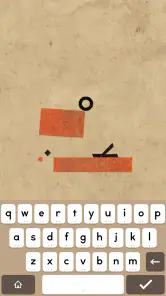
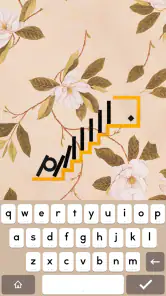
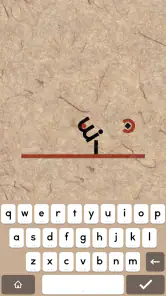
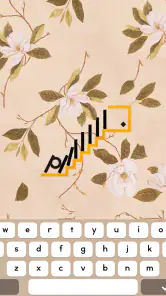
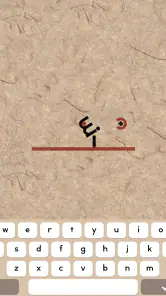
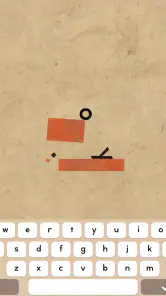
Analysis by Reviewed
I like Supertype best when I approach it as a small experiment rather than a race to clear a level. It is a casual puzzle game by Philipp Stollenmayer, built around a simple but unusual question: what happens when written characters behave like objects? That idea gives the game a more tactile feel than a typical word puzzle, and it rewards patience as much as cleverness.
A small purchase, a focused kind of play
The game costs $1.99, so the purchase decision is straightforward: you are paying for a puzzle experience, not choosing between a free download and a string of optional purchases. I find that appealing if I want a self-contained game to dip into without making spending decisions as I play. Its Everyone age rating also makes it suitable to consider for a shared family device, though the appeal will depend more on whether someone enjoys trial-and-error puzzles than on age alone.
That price does not automatically make it the right choice for everyone. If you mainly want a free game for a quick distraction, or expect a broad collection of modes and activities, this focused concept may feel too narrow. I would choose it for the specific pleasure of testing ideas with letters, not as an all-purpose game to keep every kind of player busy.
Experiment first, then refine
The useful shift is to stop treating each letter only as a symbol. Its shape matters because it can fall, turn, roll, or make contact with the target in a way that changes the outcome. When a solution fails, I would first change one variable at a time: try a different letter, alter where it starts, or reconsider the order in which pieces land. That makes a frustrating attempt more informative than simply repeating it.
This is also where progress can feel demanding. The basic premise is easy to grasp, but later puzzles ask you to picture motion before you act. If you prefer immediate, predictable answers, that uncertainty may wear thin. I enjoy it when a near miss helps me understand the physics; I enjoy it less when I want a puzzle to give clear feedback about which part of my reasoning went wrong.
How the letter puzzles work in practice
When I first opened Supertype, I was greeted with a minimalist design that's both inviting and intriguing. The game cleverly uses letters and words as puzzle elements, which is a unique concept in itself. Essentially, you're tasked with solving puzzles by dropping letters onto a canvas, with the goal of hitting certain targets. Sounds simple, right? But don't be fooled. As you progress, the puzzles become increasingly challenging, requiring you to think outside the box.
One of the coolest aspects of this game is how it leverages physics. You have to consider gravity and the physical interaction between letters. For instance, the letter "L" might tip over and roll, or "O" might bounce its way toward the target. It's a delightful blend of linguistics and physics, making each level a new adventure.
More From Our News Desk

Clash of Clans Is Won Between the Battles

Android Auto Makes the Case for Quieter Car Software

MobiOffice: Transforming Mobile Productivity with Seamless Integration

EA SPORTS FC™ Mobile Soccer: Redefining Mobile Sports Gaming

How Microsoft OneDrive Became a Mobile Productivity Giant

How Google Translate Breaks Language Barriers Effortlessly
The visual and sound experience
The developers have gone for a clean and crisp aesthetic that lets you focus on the puzzles without unnecessary distractions. The sound design is subtle yet effective, with gentle taps and clicks accompanying your actions, making the experience quite immersive. It's one of those games that you can easily lose track of time with, thanks to its soothing ambiance.
Moreover, the interface is incredibly user-friendly. You won't find yourself fumbling around trying to figure out what to do, which is always a plus in my book. Everything is intuitive, from the way you select letters to how you reset puzzles when you're stumped.
Fairness, fit, and the details that matter
For competitive players, one important question is whether skill is measured against other people. I see this as a solo puzzle experience: the satisfaction comes from working out a solution, not from beating a rival or climbing a leaderboard. That makes it a comfortable choice when I want a private mental challenge, but not a substitute for a head-to-head game if comparison and competition are what keep me motivated.
A practical way to play is to give a stubborn puzzle a short, deliberate session. For example, I might try a few placements while waiting for a meal, notice which shapes move in unexpected ways, then come back later with a better idea. The trade-off is that a brief session can end on an unresolved puzzle; the game’s thoughtful pace is not the same as a stream of instant wins.
It is also worth setting expectations around its scale and reception. The game has over 100,000 installs, with an average rating of 3.6 from around 1,000 ratings and 82 written reviews. I read that as a sign that its distinctive premise will click for some players more than others, rather than as a guarantee that every puzzle fan will enjoy the same things. It was released on May 1, 2018, and version 2.05 supports Android 4.0.3 and later, so it can suit older compatible devices as well as newer ones.
If you are deciding whether to buy, the key questions are practical: do you enjoy thinking through physical motion, are you comfortable with a puzzle that may take a few attempts, and does a paid, focused game fit what you want? The purchase price is $1.99; I would not assume anything beyond that about extra spending. Likewise, I would not infer particular saving, hint, or accessibility options from the premise alone. Those details can matter if you need a specific feature, so check the current version on your device before relying on it.
What makes this puzzle style distinctive
What really sets Supertype apart is its ability to engage both your linguistic and logical faculties. It's not just about solving puzzles; it's about understanding how the pieces of the puzzle interact with each other. And let me tell you, there's something immensely satisfying about watching your carefully thought-out plan come together perfectly.
Additionally, the app is quite generous with its levels, offering plenty of content to keep you entertained for hours. Whether you're looking to kill some time or want a more substantial mental workout, Supertype has got you covered.
When it fits into an ordinary day
The best use case I see is a quiet gap when I have a little attention to spare but do not want to commit to a long session. On a commute with a seat, during a coffee break, or while waiting for someone, I can focus on one puzzle and leave the next for later. It is less suited to moments when I need to keep looking up, because predicting how a letter moves takes more concentration than tapping through a casual match game.
For a younger player or a family member sharing a device, the Everyone rating is a helpful starting point, but I would still think about temperament. Someone who enjoys testing possibilities can have fun even when a first attempt fails. A player who expects every puzzle to explain its logic or reward them quickly may find the same open-endedness irritating. I would introduce it as a creative challenge, not as a vocabulary lesson or a timed contest.
There is also a useful way to avoid turning experimentation into random tapping. Before changing a letter, make a quick prediction: which edge will touch first, where might it rotate, and what could stop it? Then compare the result with that prediction. Even when the attempt misses, this small habit helps build an intuition for the shapes. It is a more satisfying loop than making several unrelated changes and then being unsure which one affected the outcome.
How it compares with familiar alternatives
Compared with a conventional word game, this is not mainly a test of spelling or vocabulary. Knowing more words is not the central advantage; noticing the physical possibilities of a character matters more. Compared with the usual physics puzzler, the pieces are not interchangeable blocks or balls. Their familiar letterforms make their behavior part of the puzzle, and that is the source of both the charm and the occasional awkwardness.
If I wanted a broad casual collection with quick rounds, varied activities, or a social score chase, I would pick something else. If I wanted a puzzle that asks me to form a hypothesis and watch it play out, this has a clearer identity than a generic match-and-clear game. The trade-off is depth in one particular idea rather than variety across many systems. That focused design is a strength for the right mood, but it is also why the game may not hold someone who quickly tires of its central mechanic.
Another practical distinction is how the challenge feels. In a standard logic grid, a clue can often tell you exactly what to reconsider. Here, the result of a drop may be understandable only after watching the movement, so the feedback is more physical than explanatory. I would recommend taking a moment to observe the whole path, not just whether the target was reached. A letter that lands differently than expected can reveal a useful property for another attempt.
My verdict for the right player
Compared with familiar word games that judge you on vocabulary, or standard physics puzzles that use generic objects, this one gets its character from letters doing double duty as language and machinery. I find that combination more inventive than a routine matching game, though it is less suitable if you want a large variety of mechanics or a clearly competitive structure. The most useful tip is to treat each failed drop as a small test: change one choice, watch the result, and carry that observation into the next attempt.
My trust in the purchase comes from keeping the expectations narrow and clear: this is a paid, focused puzzle game, and the listed price is $1.99. I would not read that as evidence about every possible cost or policy, and I would not promise a particular feature such as hints or cloud saves without checking it on the device. If those functions are essential to your routine, verify them before buying; if what you want is the letter-and-motion puzzle itself, the core proposition is easy to understand.
The title is a good fit for people who like patient trial and error, visual reasoning, and unusual uses of everyday symbols. It is a weaker fit for anyone who needs competitive rankings, frequent new mechanics, or a steady run of quick victories. I would choose it when I want a calm puzzle that lets me think, and skip it when I want a more varied or social game.
In conclusion, if you're on the hunt for a game that's both challenging and relaxing, Supertype is definitely worth a download. It offers a unique spin on puzzles that will have you hooked from the get-go. So why not give it a try and see how many letters you can drop in all the right places?
supertype Frequently Asked Questions
Is Supertype a good fit for players who enjoy thoughtful, low-pressure games?
Supertype is a casual puzzle game built around experimenting with letter shapes and physics. Its central challenge is to think about how a letter might fall and interact with the puzzle, rather than relying on fast reactions or competitive play. That makes it a good fit for players who enjoy trying ideas, observing what happens, and adjusting their approach.
What is Supertype, and what makes it unique among other mobile games?
Supertype is a unique puzzle game that challenges players to use their creativity and problem-solving skills. Unlike traditional puzzle games, Supertype incorporates elements of physics and typography, making each level a distinct challenge. Players must strategically drop letters and utilize their shapes to solve puzzles, creating a distinctive gameplay experience that combines logic and creativity.
Is Supertype suitable for all age groups?
Yes, Supertype is designed to be enjoyed by players of all ages. Its content rating is Everyone, and the game's intuitive design and simple mechanics make it accessible to younger players, while the increasing difficulty and unique challenges keep it engaging for adults. Parents can feel confident choosing this non-violent game for family play; its puzzles also invite players to think creatively.
How much does Supertype cost, and are there in-app purchases?
Supertype is a premium app, meaning users need to pay a one-time fee to download and enjoy the game. It costs $1.99. This purchase model eliminates the need for in-app purchases, providing a complete gaming experience without interruptions or additional costs. Users can enjoy the game without being prompted to buy extra content.
What devices and operating systems are compatible with Supertype?
Supertype is available for Android and iOS devices, making it accessible to a wide range of smartphone and tablet users. For Android, the minimum operating system requirement is 4.0.3. Check the requirements shown for your device in its app store before downloading, so you can confirm compatibility with your phone or tablet.
Pros
- Intuitive user interface
- Rich feature set
- Cross-platform compatibility
- Regular updates
- Strong community support
Cons
- Can be resource-intensive
- Requires stable internet
- Limited offline functionality
- Occasional bugs
- In-app purchases can be pricey
- Category
- Casual
- Version
- 2.05