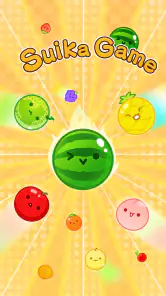
Suika Game
- 60.00
- 4.2
- Installs
- 100.00K
- Price
- $1.99

Screenshots






Analysis by Reviewed
I like puzzle games that make their point quickly, and Suika Game is appealing because its central idea takes almost no explaining: drop fruit, let matching pieces combine, and try to make room for the next one. My first few turns felt playful rather than demanding. Then the container began to fill, and every drop started to matter. That shift—from casual tapping to careful placement—is the reason a simple round can pull me back in.
The pleasure of getting started without a tutorial
The immediate appeal is that I can understand what I am trying to do while the puzzle is already underway. I do not need to study a map, remember a chain of objectives, or learn a roster of characters before the first decision feels meaningful. The fruit and the available space tell me what matters: choose a place, watch the pieces settle, and adapt to the pile that results.
That clarity makes the game easy to recommend for a brief mental reset, but it does not mean every session is effortless. The opening can feel loose and forgiving; as space gets tighter, I pay closer attention to where a piece may roll or settle and what that could obstruct. The most satisfying moments are not simply large merges. They are the turns where a modest placement keeps a useful gap open and gives me another workable choice.
How a short session finds its rhythm
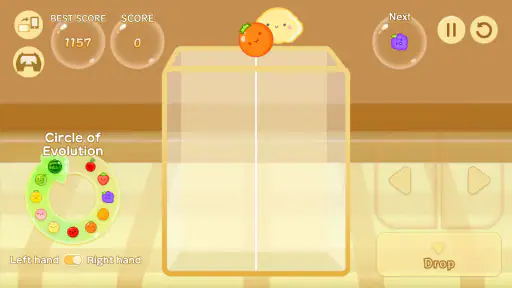
A round has a natural rhythm: inspect the pile, make one placement, see what changes, and decide again. I like that the decision is small enough to make quickly but consequential enough to invite a little thought. If I only have a spare moment, I can focus on the next drop rather than carrying a long plan in my head; if I have longer, I can get absorbed in managing the whole shape of the pile.
One practical habit is to pause for a moment before dropping a piece, especially when the container is already crowded. I look for the least risky landing area, then ask whether placing there could bury a match I might need later. This is not a guaranteed strategy for a strong run—random-looking outcomes and awkward piles are part of the challenge—but it helps me avoid treating every turn as a reflex tap. A quick glance can be more useful than trying to force a merge that leaves the rest of the board in worse shape.
The Allure of Simplicity
In a world filled with games that bombard you with complex graphics and intricate storylines, the Suika Game is a breath of fresh air. The concept is delightfully simple. You start with small fruits, and your goal is to merge them to create bigger fruits. Sounds easy, right? But as you level up, the challenge escalates, and that's where the real fun begins. The game’s charm lies in its ability to make you ponder your every move while keeping you hooked for hours.
A quick round still asks for a plan
The mechanics are easy to grasp, but I wouldn’t call every decision easy. Fruit placement affects the shape and stability of the pile, so a drop that looks harmless can make a later match awkward or leave less room for maneuvering. I get better results when I look at the current gaps before choosing where to send the next piece, rather than chasing the biggest possible merge every time. That small habit makes the game feel more thoughtful without turning it into homework.
More From Our News Desk

Clash of Clans Is Won Between the Battles

Android Auto Makes the Case for Quieter Car Software

MobiOffice: Transforming Mobile Productivity with Seamless Integration

EA SPORTS FC™ Mobile Soccer: Redefining Mobile Sports Gaming

How Microsoft OneDrive Became a Mobile Productivity Giant

How Google Translate Breaks Language Barriers Effortlessly
This is where it differs from many familiar casual games. A match-three game often gives me a board of clear options; here, the pile itself changes as I play, and I have to work with the space I have created. It is a good fit if you enjoy a puzzle that develops from your own choices. If you want a level-based game with a clear finish line, frequent rewards, or a story to follow, this is a much leaner experience and may not hold your attention in the same way.
Gameplay Mechanics
The mechanics of the game are straightforward, making it accessible for all ages. You drag and drop fruits to merge them, and with each successful merge, you score points. The graphics are vibrant and pleasing to the eye, enhancing your overall gaming experience. What's more, the background music is soothing, adding a layer of relaxation as you strategize your next move.
For short sessions, that clarity is a real advantage. I can understand the state of a round at a glance and decide whether I have time to play, rather than needing to remember a long objective or reload a complicated setup. A useful approach is to treat each turn as a small space-management choice: notice which side is already crowded, then avoid adding another piece there unless it helps create a match. It won’t guarantee a high score, but it can prevent a promising run from becoming cramped through careless drops.
Why You'll Love It
One of the standout features of the Suika Game is its addictive nature. I found myself saying, "just one more game," countless times, only to realize that hours had flown by. The sense of achievement you get when you finally merge two massive fruits is incredibly satisfying. Plus, it’s a great way to unwind and de-stress after a long day.
That replay pull comes from trying to improve your decisions, not from a complicated collection of tasks. A round can go badly because the pile gets crowded, but that also gives me a clear reason to start again: I can test a different placement strategy and see whether it keeps the board more manageable. I’d recommend it to someone who enjoys repeating a compact puzzle to learn its rhythm. I’d be less likely to suggest it to a player who dislikes restarting or needs steady progression to feel rewarded.
It also suits the in-between moments of a normal day. I might open it while waiting for a kettle to boil or sitting through a short break, play until I need to move on, and come back later when I want another small puzzle. The best way to keep those sessions pleasant is to set a stopping point before starting, because the “one more round” temptation is genuine. It is casual in its rules, not necessarily in how easily it lets me put the phone down.
When this kind of replay works—and when it doesn’t
The game is at its best for someone who enjoys seeing a familiar setup produce different problems through their own choices. I can return after a day away and get back into the basic task quickly, then concentrate on a different weakness: perhaps I have been crowding one side, or making a merge without considering where the resulting piece will settle. That self-directed improvement gives the repetition a purpose without requiring a large set of separate modes.
It is less suitable if I want each session to introduce a new rule or a new puzzle layout. Compared with a rotating set of logic challenges, this asks me to find variation inside one central activity. Compared with a fast arcade game, it is less about constant motion and more about judging a placement before committing to it. If my mood calls for novelty, a game with distinct stages will probably serve me better; if I want one clear puzzle to revisit, the consistency is a strength.
A realistic use for it is a short wait when I am already seated and can give the screen some attention—say, a pause between errands or a break at home. I can start a round, focus on a few decisions, and stop when I need to turn to something else. I would not choose it while walking through a busy area or doing something that needs my eyes and hands, because the pile is easiest to manage when I can actually watch it. Its simple rules reduce the learning burden, not the need to pay attention.
Another reason to love this game is its offline capability. Yes, you heard that right! You can play it without needing to be connected to the internet, making it a perfect companion for those long commutes or when you're stuck in places with no Wi-Fi.
Pause, Return, and the Cost of Repetition
The simple turn-by-turn structure makes it easy to step away when everyday life interrupts, then begin another attempt when I have a free moment. I would treat it as a game for separate bursts rather than something that needs a long, uninterrupted evening. On a commute, for example, I can play while seated and stop when I reach my destination; I would avoid starting a round if I know I’ll need to watch the road or respond quickly, since the puzzle still rewards attention to the pile.
There is a trade-off to that convenience. The same core loop that makes the game easy to return to can start feeling repetitive if I want new objectives, changing modes, or a broader sense of progression. The pleasure is in improving how I place fruit and watching merges unfold, so the game works best when that small, repeatable challenge is what I’m in the mood for. If I want varied puzzles with different rules each time, I’d choose another casual game instead.
Who It Suits—and What to Know Before Buying
Suika Game is a casual game from Aladdin X Inc., and its uncomplicated premise makes it approachable for a wide age range; its content rating is Everyone. It costs $1.99, so I’d think of it as a paid, focused puzzle rather than a free game to sample casually. The Android release arrived on Mar 28, 2024, and version 2.3.1 supports Android 5.1 and later. Its 4.2 average comes from around 1.2 thousand ratings, while the game has passed 100 thousand installs and received around 60 written reviews.
Those figures suggest it has found an audience, but they don’t tell me whether its particular rhythm will suit you. Before buying, the main question I’d ask is whether you enjoy a puzzle whose challenge comes from managing an evolving pile and replaying the same basic activity. If yes, the simple rules make it easy to get started, and the offline play is useful when a connection isn’t available. If you mainly want a free-to-try title, a changing set of challenges, or a game that can be played with almost no attention, this is probably not the best match.
Small frustrations that matter in practice
The price changes how I would approach the decision: I would buy it because I specifically want this fruit-merging puzzle, not because I expect a broad collection of casual activities. Someone unsure about the loop may prefer to try a free puzzle first, while someone already drawn to the idea may find the focused design easier to appreciate. The key question is whether repeated attempts sound satisfying to you; a low learning curve is not the same thing as endless variety.
On a phone, precise placement is part of the experience, so occasional uncertainty about a touch can be frustrating when the pile is nearly full. I try to make deliberate, controlled movements rather than flicking quickly, particularly when a small shift could change where a piece lands. Even then, a crowded situation can feel unforgiving. That is a genuine limitation for anyone who wants every input to feel perfectly predictable, although it does not erase the pleasure of a well-planned merge.
The visual and audio presentation help the basic loop feel inviting, but they do not transform it into a different kind of game. I would not come here for a story, a changing playlist of objectives, or a detailed sense of long-term advancement. The appeal is narrower and more honest: one readable puzzle, a pile that becomes harder to manage, and the chance to make a better attempt. Knowing that in advance makes the purchase decision clearer.
Room for Improvement?
Though the game is delightful, there's always room for a bit of polish. Occasionally, the touch controls can be a tad unresponsive, requiring a couple of swipes to get the fruit to move. It’s not a deal breaker, but something that could be improved in future updates.
Also, while the game is free to play, it does come with ads that can interrupt the flow. A small in-app purchase to remove ads could be a welcome addition for those who prefer an uninterrupted gaming experience.
Overall, the Suika Game is a wonderful mix of fun and challenge wrapped in a beautifully simple package. Whether you’re a casual gamer looking to kill some time or someone who loves a good puzzle, this game is sure to find a place in your heart. So, go ahead, give it a try, and see why I’m so hooked!
Suika Game Frequently Asked Questions
Who developed Suika Game, and what kind of game is it?
Suika Game is a casual game developed by Aladdin X Inc. Its simple premise makes it easy to approach, while the puzzle-focused play gives you a reason to think about each move. If you are looking for a game that fits into short breaks rather than a complex, story-heavy experience, its casual style may be a good fit.
Is Suika Game suitable for children?
Suika Game has an Everyone content rating, so it is presented as suitable for a broad audience, including children. As with any mobile game, parents may want to review how their child uses the device and any relevant account or store settings. The rating can help you decide whether the game’s general audience classification fits your household.
What platforms is Suika Game available on?
Suika Game is available for both Android and iOS platforms. Players can download it from the Google Play Store for Android devices and the Apple App Store for iOS devices. It is optimized to run smoothly on most modern smartphones and tablets, providing an immersive gaming experience regardless of the platform you choose.
Is Suika Game free to play?
Suika Game is not free to download; it costs $1.99. Once purchased, you can enjoy the game without treating it as a free-to-play download. Check the price displayed in your app store before purchasing, since the amount shown there is the one to use for your transaction.
What are the main features of Suika Game?
Suika Game offers a range of exciting features designed to engage players. It includes a captivating storyline, challenging puzzles, and stunning graphics. The game also supports multiplayer modes, allowing you to compete or collaborate with friends. Regular updates ensure new content and improvements, keeping the gameplay fresh and exciting.
Pros
- Engaging and addictive gameplay.
- Vibrant and colorful graphics.
- Intuitive user interface.
- Regular updates and new features.
- Free to play with optional in-app purchases.
Cons
- In-app purchases can be pricey.
- Occasional ads disrupt gameplay.
- Requires constant internet connection.
- May drain battery quickly.
- Limited offline features.
- Category
- Casual
- Version
- 2.3.1