Smash Blast
- 1.60K
- 4.5
- Installs
- 100.00K
- Price
- Free
Screenshots
Analysis by Reviewed
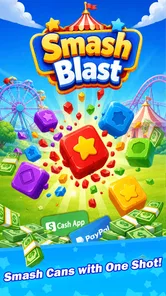
I can see why Smash Blast catches the eye: its whole appeal is easy to understand, with colorful carnival-style targets and the satisfying prospect of knocking cans down. It is a casual game from Devsimo, and that simple setup makes it approachable when I want a quick distraction rather than a long session or a complicated challenge. The important question, though, is whether the pleasure of lining up shots lasts beyond the first few rounds. My answer is: it can, as long as you enjoy careful aiming and modest bursts of play more than deep progression or constant novelty.
A quick test for the right kind of player
Before making room for it, I would ask myself one practical question: do I enjoy adjusting a shot after seeing what happened, or do I mainly want a new surprise each time I open a game? That distinction matters more here than whether I usually play casually. Someone who likes small, visible improvements can get a satisfying little loop from the target layouts; someone who needs a fresh system or objective every visit may find the basic appeal wears thin quickly.
For example, on a short commute break or while waiting for a takeaway order, I would play a few levels with the phone held steady and give each shot a moment of thought. I would avoid opening it while walking or trying to follow a conversation: aiming is the point, so divided attention makes the play less rewarding. It is a modest use case, but that is exactly where a compact game can be more useful than a larger title that expects me to remember where I left off.
From the first shots to a familiar routine
I start by looking at what makes the opening rounds feel inviting, then turn to the more useful test: whether the aiming loop still earns a place in my routine once the novelty settles. That distinction helps separate a pleasant first impression from lasting value. From there, I consider what makes returning worthwhile and where repetition may begin to wear on the experience.
Why the opening sessions work
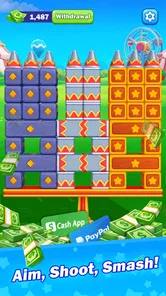
The first-week appeal comes from the clarity of the central action. I do not need to learn a sprawling set of rules before trying to hit a target. Each level presents a small, readable problem: judge the shot, fire, and see what happens to the arrangement of cans. That direct feedback is a good fit for a short break, and the bright carnival setting gives the activity a lighter mood than a stark target range would.
That simplicity is useful in everyday situations. If I have a few spare minutes while waiting for someone or need a mental reset between tasks, this is the kind of game I can pick up without planning a long session. It is also easy to hand to a family member who prefers straightforward games, though the Everyone 10+ age rating is worth keeping in mind when choosing what younger players should use.
The most satisfying moments are not simply the shots that land. They come when I pause long enough to judge how the cans are arranged and choose a sensible angle instead of firing immediately. A small adjustment can make a level feel like a puzzle rather than a reflex test. My practical tip is to take a beat before each shot: look at the target layout, make one deliberate attempt, and use the result to decide what to change. That keeps the game engaging without turning a casual session into a frantic tapping habit.
More From Our News Desk

Weather by Xiaomi Review: Clear at a Glance, Less Clear Up Close

X Under Pressure: Can It Recover When Posting Goes Wrong?

Clash of Clans Is Won Between the Battles

Android Auto Makes the Case for Quieter Car Software

MobiOffice: Transforming Mobile Productivity with Seamless Integration

EA SPORTS FC™ Mobile Soccer: Redefining Mobile Sports Gaming
Still, the core interaction is a narrow one. Players who enjoy aiming at objects and watching them topple may find the first rounds immediately pleasant; anyone looking for a story, character development, or a broad set of activities should not expect those things from this premise. Compared with casual games built around matching, endless running, or word puzzles, Smash Blast asks for more attention to shot placement but offers a similarly easy entry point. Its appeal is tactile and focused rather than varied.
What gives it repeat-play potential
For a casual game, repeat value depends on whether the small decisions stay interesting. The can-smashing format has a natural advantage: I can approach a target with a little care, learn from a missed or incomplete shot, and try a different line. That creates a modest skill loop without requiring me to memorize a complicated control scheme. When I want a brief activity that still asks me to think, that balance is more appealing than a game that plays itself while I wait.
The game’s average rating is 4.5, with around 8,600 ratings and roughly 1,600 written reviews. It has passed 100,000 installs, which suggests that the uncomplicated premise has found an audience. Those figures are useful context, but they do not tell me whether every player will enjoy returning. Personal fit matters more here: if knocking down targets feels rewarding to you, short sessions can remain pleasant; if the basic shot loses its charm quickly, a large audience will not change that.
For month-to-month value, I would judge it by the role it can realistically fill. I would not make it my main game if I wanted fresh systems to master or a steady stream of different kinds of play. I would keep it in mind as a pocket-sized option for low-commitment moments, especially when I do not want to resume a complex campaign or compete with other players. That is a narrower kind of value, but it can still be useful.
A good way to test that value is to notice why you return. If you come back because you enjoy refining your aim and solving each arrangement, the loop is doing its job. If you open it only out of habit and find yourself firing without looking, that is a sign the novelty may be fading. I would rather use the game intentionally for a short break than leave it open as background entertainment; its central action rewards attention, even if only for a moment.
Keeping it installed without creating clutter
The maintenance burden appears low in the everyday sense: this is a free casual game, currently at version 1.0.5, and it does not ask me to maintain a complicated collection of characters, equipment, or strategies in order to enjoy a round. Its listed minimum operating-system requirement is version 7.0, so a broad range of older devices may meet that baseline. The game is free to download, which also makes trying it a low-commitment decision.
That does not mean it deserves permanent space on every phone. The real maintenance question is whether the small amount of storage and attention it occupies earns its place through regular enjoyment. I would keep it installed if I use it as a dependable, quick aiming game; I would remove it if I repeatedly scroll past it without wanting to play. That is a more honest test than treating every free download as something worth keeping indefinitely.
One useful habit is to give it a specific occasion: a short wait, a quiet moment at home, or a break when I want to focus on one simple task. This makes it easier to tell whether the game is genuinely refreshing or merely filling time. It also prevents a common problem with lightweight games: opening them automatically, then staying longer than intended because the next attempt is always tempting. I find that setting a natural stopping point before starting helps preserve the casual feel.
Because the experience centers on aiming and impact, the way I play matters more than a long checklist of upkeep. Holding the phone comfortably and avoiding rushed shots makes the action easier to judge. If I am tired or distracted, the game can feel less satisfying because I am not paying enough attention to the placement. That is a small but practical trade-off: it works best as an active little break, not as something to play while my attention is elsewhere.
Where repetition can set in
The main source of fatigue is also the game’s defining strength: the same basic pleasure of aiming and smashing can become predictable. Colorful levels help establish a cheerful setting, but visual variety alone cannot make a repeated action feel new forever. If I want every session to introduce a new mechanic or a sharply different goal, this is not the safest choice. The available information supports a focused can-targeting concept, not a promise of endless variety, so I would choose it for that core loop rather than for imagined extras.
There is also a difference between a satisfying challenge and a frustrating one. When I can see how a shot might improve, a miss gives me something useful to learn. If a level starts to feel like trial and error without a clear reason to adjust, the relaxed mood can disappear. My advice is to change one thing at a time—such as the angle or timing of a shot—rather than repeating the same attempt rapidly. That makes each try informative and helps reveal whether the game is asking for patience you actually enjoy.
Players who need social competition, a rich narrative, or substantial long-term goals may be better served by another casual game designed around those needs. Likewise, if you prefer passive entertainment, a game centered on precise shots may feel like work rather than a break. Smash Blast is at its best when a player actively enjoys the small decision of where to aim, and its limits become more noticeable when that decision stops being interesting.
I would also be cautious about judging it solely by the first burst of novelty. A bright setting and an immediately understandable action can make a new game feel more compelling than it will after repeated sessions. Give it a few short visits rather than one long marathon. If you still want to improve your shots after that, it may have a useful place in your routine; if not, there is little reason to force a habit around it.
How it fits beside other casual games
The usual alternatives ask for different kinds of attention. A match-style puzzle is more about spotting combinations and planning a sequence; an endless runner leans on quick reactions and keeping a run going; a word game puts language at the center. This title occupies a narrower lane: I am looking at a physical arrangement and trying to make a shot count. That can be a welcome change when I want something more hands-on than a puzzle but less demanding than a fast action game.
The trade-off is that its strongest moment and its limitation come from the same source. A clear target and a direct response make it easy to understand, but they also leave less room for a player who wants the activity itself to keep changing. I would choose it over a word puzzle when I want visual, spatial decisions, and choose a broader puzzle game instead when I want several kinds of problem-solving in one session. Neither preference is a criticism; it is a useful way to avoid expecting one small game to cover every mood.
If I were sharing a device with someone else, I would let them try a couple of levels before recommending it as a regular pick. The controls and goal are approachable, but liking the premise is not the same as enjoying the repetition. That quick trial is a better indicator than a long first session, which can make almost any simple action feel fresh for a while.
Who should make room for it?
I would recommend trying it to someone who likes compact, low-pressure games and gets satisfaction from aiming carefully at a clear target. It can suit adults looking for a brief reset and families selecting a casual title with the age guidance in view. Its free price makes that test straightforward, while its simple premise means a new player can understand the basic appeal quickly.
I would skip it if I were searching for a game to occupy long evenings, a constantly changing challenge, or a strong sense of progression. It is also not the best match for someone who dislikes repeating a central action. A puzzle game may offer more variety in the kind of reasoning involved; an action game may provide a faster pace; and a story-focused game will better serve someone who wants characters and narrative. Those alternatives are not inherently better—they simply answer different needs.
For me, the lasting-space verdict is measured rather than enthusiastic. Smash Blast works best as a small, occasional aiming game, not as an all-purpose source of entertainment. Its carnival targets and direct shooting loop give it a friendly first impression, and the chance to make each shot more deliberate adds enough texture for short returns. But repeated play depends on liking that exact rhythm; the game should not be expected to transform it into a much broader experience.
If that focused rhythm sounds appealing, I would try a few brief sessions and see whether careful shots still feel rewarding after the initial novelty wears off. Devsimo’s casual game is free, rated Everyone 10+, and has an average rating of 4.5. Those details make it easy to consider, but the deciding factor is simpler: whether you enjoy taking a moment to aim, then watching the cans fall. If you do, it can earn a modest place on your device; if you want deeper variety, I would look elsewhere without hesitation.
Smash Blast Frequently Asked Questions
What kind of game is Smash Blast?
Smash Blast is a casual action game built around breaking or blasting targets and working through short, fast-paced challenges. Its simple premise makes it approachable for players who want a quick game rather than a long story or complicated controls. The exact modes, objectives, and progression can vary by version, so check the app listing and in-game instructions to confirm what is available in your region.
Is Smash Blast free to download, and does it include purchases or ads?
The price and monetization details depend on the version and storefront where you download Smash Blast. A game may be free to install while offering optional in-app purchases, displaying advertisements, or providing paid content. Review the Google Play or App Store listing before downloading, and check the purchase and advertising disclosures. If children will play, consider enabling purchase authentication and reviewing the device’s parental controls.
Can I play Smash Blast offline?
Offline availability is not guaranteed and may differ between versions. Some casual games let you play their main levels without an internet connection, while other features—such as ads, events, rewards, account syncing, or leaderboards—may require connectivity. Check the game’s listing or test its core mode after installation if offline play matters to you. Avoid assuming that every feature will remain accessible without a connection.
Is Smash Blast suitable for children?
Suitability depends on the game’s content, advertising, social features, and purchase options, as well as a child’s age and sensitivity. Before installing, check the age rating and content descriptions on the relevant app store. Also review whether the game includes ads, online interactions, or in-app purchases. Parents can use device-level controls to restrict spending and manage screen time, and should supervise younger players.
Which devices support Smash Blast, and how can I download it safely?
Smash Blast’s compatibility depends on the particular release, operating system, and device requirements. Check its official Google Play listing for Android or App Store listing for iOS to confirm supported versions, available storage, and regional availability. Download from an official store rather than an unknown website, and review the developer name and permissions. If the game does not appear for your device or region, it may not be supported there.
Pros
- Quick rounds make it easy to play in short breaks.
- Simple tap controls are easy for new players to learn.
- Blast effects make successful shots feel satisfying.
- Aiming adds a little strategy beyond basic tapping.
- The core gameplay is easy to pick up without a long tutorial.
Cons
- Repeated levels can make the gameplay feel predictable.
- Later stages may require repeated attempts to pass.
- Missed shots can feel punishing when timing is tight.
- Progress may feel slow without frequent play.
- The simple mechanics may not offer much depth for experienced players.