Shape Transform: Shifting Car
- 112.00
- 4.3
- Installs
- 10.00M
- Price
- Free

Screenshots


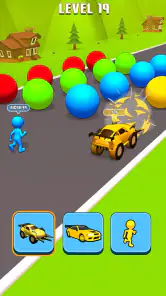

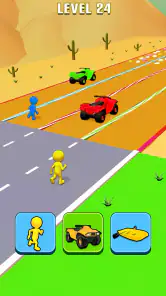



Analysis by Reviewed
I tend to enjoy casual games most when they give me one clear thing to think about without asking for a long session, and Shape Transform: Shifting Car has an appealing premise for exactly that kind of play. Its central idea is to change the vehicle’s shape to suit the terrain, so the challenge is less about traditional racing lines and more about noticing what is coming and reacting in time. That makes it an easy game to understand at a glance, though whether it stays satisfying depends on how much you enjoy quick, repeated decisions.
What the purchase context tells you
This is a free casual game from Rebel Actions, and it is rated Everyone, so it is an approachable option to try without paying upfront. It has a 4.3 average from around 83,000 ratings and more than 10 million installs, which suggests it has found a broad audience. The current version is 1.16.37, and it runs on Android 7.0 or later. Those details help set expectations, but they do not tell me whether every player will enjoy its pace; the important question is whether adapting to changing terrain sounds fun to you.
Quick decisions, not a conventional race
From the moment you launch Shape Transform: Shifting Car, you’re thrown into an exhilarating world where the laws of physics are more of a suggestion than a rule. The game lets you switch your car’s shape on the fly to adapt to various terrains and obstacles. Imagine driving through a steep mountain road and with just a tap, your car morphs into a sleek, aerodynamic vehicle perfect for the climb. Or picture cruising across a desert and transforming your car into a hovercraft to glide effortlessly over the sands. It’s all about adapting and surviving, and let me tell you, it’s a blast!
The Thrill of Transformation
The appeal is the small burst of judgment each terrain change asks for: recognize the route, choose a suitable form, and avoid letting a simple run become a string of late reactions. I would approach it as a short-session reflex game rather than a deep driving simulator. If you have a few spare minutes between errands or want something easy to pick up while waiting, that quick loop is a natural fit. It is also a useful choice for younger players who prefer clear, visual actions over complicated controls, while the Everyone age rating makes its intended audience broad.
Graphics and Soundtrack
The graphics in this game are nothing short of stunning. Each transformation is visually striking, with smooth animations that make the shifts feel incredibly realistic. The environments are beautifully rendered, immersing you in a vibrant world where every detail has been meticulously crafted. And the soundtrack? It’s like having your personal DJ who knows exactly how to pump up the adrenaline with every beat. The combination of visuals and music keeps you engaged and on the edge of your seat from start to finish.
Gameplay and Mechanics
Now, onto the gameplay itself. The controls are intuitive, making it easy for anyone to pick up and play, yet challenging enough to keep you coming back for more. The pacing is perfect, with each level introducing new challenges that test your reflexes and decision-making skills. There’s something incredibly satisfying about mastering a tricky section of a track by perfectly timing your transformations. Plus, the game offers a variety of cars and upgrades, adding a layer of strategy as you decide how to optimize your vehicle for different tracks.
How I’d play it in an everyday break
For a realistic routine, I’d open it during a short wait, play a few runs, then stop before the repetition starts to feel automatic. A practical tip is to watch the terrain ahead rather than focus only on the vehicle: the useful decision is usually about preparing for what comes next, not correcting a mismatch after it has already caused trouble. That small shift in attention can make the controls feel more deliberate. If you are playing with a child, it also gives you an easy way to share the screen and talk through choices without needing to explain a complicated ruleset.
More From Our News Desk

Clash of Clans Is Won Between the Battles

Android Auto Makes the Case for Quieter Car Software

MobiOffice: Transforming Mobile Productivity with Seamless Integration

EA SPORTS FC™ Mobile Soccer: Redefining Mobile Sports Gaming

How Microsoft OneDrive Became a Mobile Productivity Giant

How Google Translate Breaks Language Barriers Effortlessly
Choosing the right kind of casual game
The best fit is someone who likes a simple action with a visible consequence: spot a change in the route, switch the vehicle’s form, and see whether the timing works. I would especially recommend trying it during a calm pause, such as while waiting for a meal or sitting on a commute, when you can glance at the screen consistently. It is less suitable for moments when you need to keep looking away. This is not the kind of game I would leave running as background entertainment; the terrain cue is the point, and missing it can make a run feel unfair even when the real issue is divided attention.
For younger players, the straightforward premise can make it easy to understand what the game is asking without a long tutorial. I would still stay nearby at first, not because the basic idea is difficult, but because a child may tap repeatedly instead of watching for the next change. Asking them to call out what they see before switching turns the game into a small observation exercise and can make shared play more engaging. That approach also helps you tell whether they enjoy reacting to the route or are simply pressing the screen at random.
Compared with familiar casual runners, this game’s distinguishing hook is not simply dodging obstacles or collecting things; it asks you to match a changing vehicle form to the route. That can feel more active than a straightforward endless run, but it is still a light arcade experience rather than a substitute for a detailed racing game. Players who want tuning depth, realistic handling, or a long strategic campaign may be happier with a conventional racer. Likewise, if you dislike having to react quickly to visual cues, its core appeal may become a source of frustration rather than a reason to keep playing.
Progress, pressure, and fairness
The satisfying part of progression is learning to anticipate the next terrain shift instead of treating every section as a surprise. I would focus on making clean, timely transformations before worrying about chasing a perfect run; that makes it easier to tell whether a mistake came from timing or from simply not noticing the route. The game’s casual framing makes it suitable for dipping in and out, but repeated attempts can still feel pressuring if you prefer games that let you pause and plan at your own pace.
It is free to start, but that alone does not establish how optional purchases work or whether spending affects progression or competition. I would not assume that paying is necessary, nor that every competitive result is determined only by skill. If you are cautious about spending, check the purchase details on your device before handing the game to a child, and agree on a simple rule about purchases first. That is more useful than guessing from the price label alone.
There is a multiplayer mode described as letting players compete with friends or people around the world, which could add a social reason to return after the basic transformation loop feels familiar. The trade-off is that players seeking a purely solo, self-paced experience may not care about that hook. I would try the core play first and treat competition as an optional extra, rather than choosing the game mainly for multiplayer.
Making repeated runs feel more useful
When a run goes wrong, I find it more helpful to identify one specific cause than to restart immediately and repeat the same approach. Was the terrain change noticed late, or did the switch happen at the wrong moment? Keeping that distinction in mind turns repetition into practice instead of an impatient cycle. It is a modest strategy, but it suits a game whose central demand is observation and timing. If you are playing with a friend, you can also take turns watching the route and calling out the next change; that makes the interaction social without needing to treat every round as a serious contest.
The flip side is that this learning loop may not offer enough variety for someone who wants every session to introduce a substantially different system. A transformation mechanic can be immediately readable and still become familiar quickly. I would treat it as a small reflex challenge to revisit when the mood fits, not as a game that must become a daily routine. If a few attempts stop feeling satisfying, switching to a puzzle or a slower casual game is a reasonable choice, not a sign that you have missed some hidden strategy.
Where expectations should stay grounded
Some specifics that matter to a buying decision remain unavailable here, including the precise purchase setup and how progression is balanced against spending. I would also avoid assuming that the vehicle examples or terrain situations in a review describe every stage exactly. The safest expectation is a casual game built around switching forms to handle different surfaces, with timing and attention doing much of the work.
That distinction matters if you are comparing it with other free casual games. A familiar tap-to-dodge title may be easier to play while distracted, while this one asks you to watch for changes and make a quick choice. On the other hand, someone who wants a low-pressure puzzle with time to think may prefer a turn-based option. I see this as best for players who enjoy a visual cue, a fast response, and the satisfaction of getting a transition right.
What I’d want to know before settling in
A natural question is whether the game suits a very short session or asks for a long stretch of concentration. I would approach it as something to sample in a few brief runs: the core decision is easy to grasp, but the timing still rewards attention. Another practical question is whether the game will appeal to someone who prefers solo play. The transformation loop can be enjoyed on its own, while the multiplayer element is there for players who want a competitive reason to return. I would not install it solely for social play unless that feature is the main draw for you.
It is also fair to wonder whether a free game is automatically free of spending pressure. The starting price answers only the cost of installing it; it does not tell you how purchases relate to progress or competition. I would check the purchase prompts as they appear and make a decision based on what the game actually asks of you. If you want a completely predictable, purchase-free experience for a child, a paid game with a clearly stated one-time price may be a better fit.
One useful way to judge whether it suits you is to try a brief session when you can give the screen your attention, rather than playing while crossing a street or doing another task. If the shape-switching feels intuitive and you like improving your timing, it can work as a compact break. If the visual prompts feel hard to read or the repeated runs become monotonous, there is no need to push through; a slower casual game will probably be a better match.
One of the standout features is the multiplayer mode. Competing against friends or players worldwide adds a competitive edge that keeps the game fresh and exciting. Who doesn’t love a little friendly rivalry?
Final Thoughts
In a sea of racing games, Shape Transform: Shifting Car manages to stand out with its unique gameplay mechanics and stunning presentation. Whether you’re a casual player looking for a fun way to pass the time or a hardcore gamer seeking a new challenge, this game has something to offer. The thrill of transforming your car to overcome obstacles is a refreshing twist that keeps you hooked from the get-go. So buckle up, hit the download button, and get ready for a transformative experience that’s sure to rev up your gaming routine!
My trust verdict
I would recommend giving it a try if you want a free, accessible casual game centered on quick terrain-based choices, especially for short breaks or friendly competition. I would skip it if you are mainly after realistic driving, substantial long-term strategy, or a fully transparent picture of spending before you install. Its strongest promise is a simple mechanic with room to improve your timing; its sensible limit is that a focused, repetitive loop will not suit every mood. That is a fair basis for deciding whether it belongs on your phone.
Shape Transform: Shifting Car Frequently Asked Questions
What kind of gameplay does Shape Transform: Shifting Car offer?
Shape Transform: Shifting Car is a casual game built around changing a vehicle’s shape to match the terrain. The central appeal is reacting to the course and choosing a form that helps you move past its obstacles. It is a straightforward premise for players who enjoy quick decisions and an easy-to-understand challenge, rather than a game that requires a complicated introduction.
Can I play Shape Transform: Shifting Car on my device?
Shape Transform: Shifting Car is available on Android and iOS, including Android phones and tablets and Apple iPhones and iPads. On Android, the minimum operating system requirement is version 7.0, so check your device’s software before downloading. The game’s current version is 1.16.37. If your device meets the relevant platform requirements, you can find the game through the app store for that device.
Is Shape Transform: Shifting Car free to download?
Yes. Shape Transform: Shifting Car is a free casual game from Rebel Actions, so you can try its shape-shifting driving challenges without paying to download it. It has been installed over 10 million times and has an average rating of 4.3 from around 83,000 ratings. Those figures give a sense of its reach, but whether the quick transformations and obstacle courses suit you will depend on your own tastes.
What is Shape Transform: Shifting Car and how does it work?
Shape Transform: Shifting Car is an innovative mobile game where players navigate through dynamic environments by transforming their vehicle's shape to overcome various obstacles. Players control a car that can shift into different forms, allowing it to fit through tight spaces, jump over hurdles, and maneuver around barriers. The game's core mechanic focuses on quick thinking and reflexes, challenging players to adapt their strategy on-the-fly to progress through increasingly difficult levels. Its short description, “Shape Transform,” captures the central idea: switch forms to suit the terrain as you play.
What platforms is Shape Transform: Shifting Car available on?
Shape Transform: Shifting Car is available for both Android and iOS devices. You can download it from the Google Play Store for Android phones and tablets, and from the Apple App Store for iPhones and iPads. The game is designed to run smoothly across a wide range of devices, ensuring a consistent gaming experience regardless of the platform. On Android, it requires version 7.0 or later; the game’s current version is 1.16.37.
Pros
- Engaging gameplay with shape-shifting mechanics.
- Variety of levels keeps the game interesting.
- Simple controls suitable for all ages.
- Bright and colorful graphics enhance experience.
- Frequent updates with new features and levels.
Cons
- In-app purchases can become expensive.
- Ads may interrupt gameplay frequently.
- Some levels feel repetitive over time.
- Requires internet connection to play.
- Battery consumption is relatively high.
- Category
- Casual
- Version
- 1.16.37