SD Gundam G Generation ETERNAL
- 1.96K
- 4.5
- Installs
- 1.00M
- Price
- Free

Screenshots


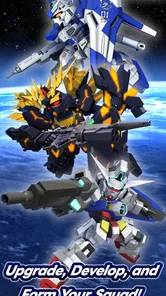
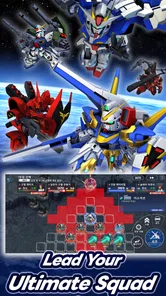
Analysis by Reviewed
I went into SD Gundam G Generation ETERNAL expecting a straightforward robot-battle game, but it works better when I treat it as a small strategy hobby: pick a squad, think through a fight, then decide what to improve next. It is a free simulation game from Bandai Namco Entertainment Inc., and its SD-style Gundam cast gives the battles a playful look without removing the appeal of planning. If you are new to the series, the first useful goal is simple: learn how positioning and team choices affect a fight before worrying about building a perfect roster.
What a first session is really about
The easiest way to approach the game is to set a modest first-session goal. Rather than trying to understand every unit, story detail, and customization choice at once, I would aim to complete a mission and come away knowing why one decision worked. That makes the early experience less like a test and more like learning a new tabletop game: observe the pieces, try a sensible move, and see how the board changes.
It is also worth separating the game’s two kinds of attention. Battles ask you to think about immediate threats and actions; improving a squad asks you to compare options and consider what you want your team to do. Those activities complement each other, but they do not have to happen in one sitting. If I have only a short break, I prefer to play rather than start a string of changes that I cannot properly evaluate.
What to expect from the battles
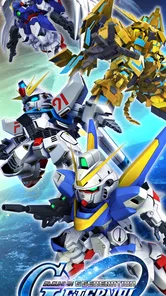
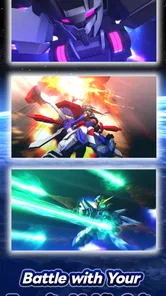
First things first, the battles in SD Gundam G Generation ETERNAL are downright epic. You start by selecting your team of adorable yet fierce SD Gundams, each with its unique abilities and weapons. The strategic element of the game is what keeps you on your toes. It’s not just about brute force; you need a solid strategy to outmaneuver your enemies. Planning your moves, exploiting enemy weaknesses, and unleashing special attacks at the right moment is incredibly satisfying.
Starting out without overthinking it
On a first session, I would focus on understanding the basic rhythm of a battle rather than trying to master every option at once. Look at what your units can do, consider which enemy poses the greatest threat, and make a deliberate move before committing to an attack. That gives you a clearer sense of why a fight went well or poorly. A small win you can explain is more useful than a lucky victory that teaches you nothing.
A practical routine is to play one mission, pause afterward, and review what you would change in your squad or approach. If you keep losing the same way, change one thing at a time instead of rebuilding everything. That makes experimentation less frustrating and helps you tell whether a different unit choice or a more careful use of attacks actually made a difference.
Reading the fight instead of rushing
One useful habit is to take a moment before each important action to ask what problem it solves. Is a unit in danger, is an enemy preventing a safer move, or are you spending an attack simply because it is available? This quick check can stop a promising turn from becoming a sequence of flashy but disconnected choices. It is especially helpful when several enemies are visible and the obvious target is not necessarily the one that matters most.
More From Our News Desk

 Instagram
’s Power Comes From Its Place in Your Phone
A close look at how Instagram turns Meta’s reach, recommendation systems and everyday camera habits into durable platform power—and what that costs users.

 Gmail
Gmail in a Busy Inbox: Who Benefits Most?
From first account to crowded workday, Gmail earns its place through dependable search and flexible sorting—but its best fit depends on how much inbox maintenance you can tolerate.

 Prime Video
Switching to Prime Video: What Changes in Your Viewing Routine
Prime Video can make a compelling second home for streaming, but switching means learning a different catalog, rental layer, and route from browsing to playback.

 Universal TV Remote Control
 Works Best as a Reliable Backup
A phone remote earns its place through quick setup and reliable habits. Here is how to get more from Universal TV Remote Control—and where its limits show.

 Weather - By Xiaomi
Weather by Xiaomi Review: Clear at a Glance, Less Clear Up Close
Xiaomi’s weather app makes everyday forecasts quick to scan, but its calm surface can leave useful details and recovery paths harder to find than they should be.

 X
X Under Pressure: Can It Recover When Posting Goes Wrong?
A resilience-focused review of X, examining setup, mistaken posts, interruptions, weak connections, and the gaps that matter when recovery needs to be dependable.
Latest News



I would also treat a failed attempt as information rather than a verdict on the whole squad. If a particular unit repeatedly struggles, the issue may be where it is being used or which threat it is facing, not necessarily that the unit is worthless. Keeping notes in your head about one recurring problem can make the next attempt more purposeful than changing multiple team choices at once.
Graphics and Sound Design
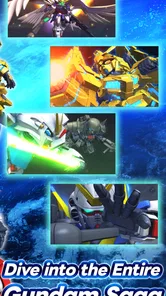
Let’s talk about the graphics. They’re vibrant and detailed, bringing each Gundam to life in a spectacular fashion. The animations during battles are smooth and dynamic, making every skirmish feel intense. The sound design complements the visuals perfectly, with explosive sound effects and a soundtrack that pumps you up for battle. It’s like being in a Gundam movie!
The presentation is a particular treat for players who enjoy seeing distinct mobile suits act out a fight, rather than treating combat as a row of abstract numbers. At the same time, flashy effects can make it tempting to rush through decisions. I get more from the game when I watch what happens after a move and use that feedback to plan the next turn, especially when an enemy’s position or threat changes the value of my original plan.
Customization Galore
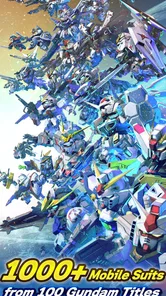
One of my favorite aspects is the customization. You can tweak your Gundams to suit your playstyle, from upgrading their parts to choosing which pilots will helm them. The game offers a plethora of customization options, allowing you to build a team that’s uniquely yours. It’s a joy to experiment with different combinations and see how they fare in battle.
For a new player, the useful trick is to avoid spreading attention across every possible combination too early. Pick a few units you enjoy and learn what each contributes before making broad changes. This gives you a reliable core to return to when an experiment fails. It also makes comparisons fairer: if you swap several parts and pilots at once, it becomes hard to know which choice helped and which one merely looked appealing.
That flexibility has a trade-off. Players who prefer a game that hands them a fixed roster and keeps decisions minimal may find the tinkering more involved than they want. I see the customization as most rewarding when I have time to think, not when I am trying to squeeze in a battle while distracted.
Making upgrades easier to judge
A simple way to keep customization manageable is to decide what you want a unit to contribute before changing it. Maybe you want a dependable member of the core squad, or you want to try a different approach in a specific kind of encounter. Having that intention makes it easier to notice whether an adjustment helped. If you change a pilot, parts, and the wider team together, a better result is harder to explain and a worse result is harder to undo.
This is where the game’s appeal differs from a more immediate action title. The reward is not only the moment an attack lands; it is also the gradual sense that you understand your roster better. That can make a small, deliberate adjustment feel satisfying. It can also make the game a poor match for someone who wants every session to deliver fast action without any between-battle decisions.
Engaging Storyline
And let’s not forget about the storyline. The game pulls you in with its intriguing plot and charismatic characters. Each mission reveals a bit more about the world and the motives of its inhabitants. You’ll find yourself invested in the story, eager to see what happens next. It’s like binge-watching your favorite anime series!
That story focus makes the game a natural fit for Gundam fans who want battles connected to characters and a larger setting. If you are unfamiliar with the franchise, you can still approach it as a sequence of missions and let the cast and context become familiar over time. If your priority is a self-contained tactical challenge with little narrative, though, a more stripped-down strategy game may suit you better.
When another kind of game is a better fit
Compared with action-focused mech games, this is a better choice when you want to make decisions before and during a fight instead of relying mainly on quick reactions. Compared with lean strategy games that focus almost entirely on combat, its Gundam identity, characters, and team-building give it a more franchise-centered feel. Those strengths are also its limits: if you do not care about Gundam and would rather have a compact tactical puzzle with fewer customization choices, a simpler strategy alternative may be more satisfying.
I would particularly recommend it to someone who likes to recognize mobile suits, compare how different units contribute, and enjoy a story alongside tactical play. A newcomer can still enjoy the structure, but someone who expects instant familiarity with every character may need patience. The visual style is approachable; the wider cast and the choices around a squad take longer to absorb.
A good fit for short, focused sessions
A realistic way to fit the game into an ordinary day is to play a mission during a break, then leave squad adjustments for a quieter moment later. The battle gives you a clear, manageable objective; the planning afterward can be more absorbing than a quick session allows. I would avoid starting a major team overhaul when you only have a minute or two, since comparing units and choices is easier when you can give it attention.
For example, if I have a spare moment between errands, I can use it to play and notice one thing that caused trouble. Later, when I have more time, I can revisit the team with that specific issue in mind. This split keeps a short session from turning into rushed menu decisions, and it gives the next battle a clear purpose: test a focused change rather than hope that a complete rebuild fixes everything.
It is aimed at Teen players, and it is free to download, though optional in-app purchases range from $0.99 to $64.99 per item. I would begin without spending and first see whether the strategic loop and collection-oriented customization hold your interest. Purchases are a personal choice, not a requirement for deciding whether the game’s core style suits you. The game has a 4.7 average from around 72,000 ratings, with over 500,000 installs, but those figures cannot tell you whether its pace is right for you.
For a first-time player, the practical question about purchases is whether you enjoy the game before considering anything optional. I would give the core battles and squad decisions a fair try first. If what you like is the planning, you already know what you are coming back for; if you find the routine tedious, spending would not solve that basic mismatch. The broad range of optional item prices also makes it sensible to decide on a personal limit before browsing purchase options.
It was released on April 13, 2025, and version 1.1.2 is available for devices running Android 8.0 or later. If you are deciding whether to install it, the main question is less about technical complexity and more about taste: do you enjoy building a squad and learning how its pieces work together, or would you rather jump into quick action with fewer decisions?
The easiest first milestone is not a flawless team or a perfect run. It is finishing a battle with a clearer idea of what your squad did well and what you want to try next. That is a reassuring way to begin because it does not require a deep knowledge of the franchise. If the first mission leaves you curious about how another combination might work, the game has probably found the kind of player it is meant to keep.
Who should give it a try
I would put this on the shortlist for Gundam fans who want their interest in the suits and characters to connect with a tactical routine, and for simulation players who enjoy planning, adjusting a team, and learning from outcomes. It also works for someone who likes to split play into a battle now and a bit of roster thinking later. That rhythm makes it easier to enjoy without needing every session to be long or especially ambitious.
I would skip it if you mainly want fast, direct mech action, dislike managing a roster, or feel impatient when a game asks you to think about upgrades and team composition. It is also not my first recommendation for a player who wants a strategy game with no franchise storytelling. In those cases, a more action-led robot game or a narrowly focused tactics title is likely to match your expectations better.
In conclusion, SD Gundam G Generation ETERNAL is a must-play for any Gundam enthusiast or strategy game lover. With its addictive gameplay, stunning graphics, and engaging storyline, it’s a game that you’ll find hard to put down. So, if you’re ready to command your fleet and dive into the world of Gundams, this game is waiting for you. Suit up, pilot!
SD Gundam G Generation ETERNAL Frequently Asked Questions
Can I play SD Gundam G Generation ETERNAL on my device?
SD Gundam G Generation ETERNAL requires Android 8.0 or later, so check your device’s operating-system version before downloading. The game is also available for iOS. Since it is a mobile game with online features and updates, it is sensible to make sure your device has enough storage and a reliable internet connection for installation and play.
Who developed SD Gundam G Generation ETERNAL?
SD Gundam G Generation ETERNAL is developed by Bandai Namco Entertainment Inc. The game brings Gundam robots and mobile suits into a mobile simulation experience focused on collecting units and using them in strategic battles. If you are already familiar with the Gundam universe, its recognizable mech theme may be a strong reason to try it; newcomers can also approach it as a strategy-focused collection game.
Is SD Gundam G Generation ETERNAL suitable for younger players?
SD Gundam G Generation ETERNAL has a Teen content rating, so parents and players should consider that guidance before downloading. It is a Gundam robot and mech game built around collecting units and taking part in strategic battles. The rating can help families decide whether its themes and gameplay are appropriate, while the game’s tactical focus may appeal most to players who enjoy planning and the Gundam universe.
What kind of game is SD Gundam G Generation ETERNAL?
SD Gundam G Generation ETERNAL is a simulation game centered on Gundam robots and mobile suits. Its appeal comes from bringing units from the Gundam universe into a game where players can collect and customize them, then use them in strategic battles. If you enjoy mech-themed games and managing a roster of units, its combination of collection and tactical play is the main draw.
What is SD Gundam G Generation ETERNAL?
SD Gundam G Generation ETERNAL is a mobile game that brings the iconic Gundam universe to your smartphone. Players can collect and customize a variety of mobile suits from different Gundam series, engage in strategic battles, and experience original storylines. The game features both single-player missions and multiplayer modes, allowing players to team up or compete against others worldwide.
Pros
- Highly detailed graphics enhance gameplay
- Wide range of Gundam units to choose from
- Engaging storyline keeps players hooked
- Regular updates with new content
- Intuitive controls for smooth gameplay
Cons
- Requires a stable internet connection
- Can be resource-intensive on devices
- Limited offline features
- In-app purchases can be pricey
- May experience occasional lag