Satisfying Puzzle: Tidy Up
- 138.00
- 4.6
- Installs
- 1.00M
- Price
- Free

Screenshots







Analysis by Reviewed
I reach for a tidy-up puzzle when I want a small, contained activity rather than another stream of notifications or a game that asks me to learn a complicated system. Satisfying Puzzle: Tidy Up is built around that simple appeal: look at a cluttered space, work out where things belong, and enjoy the sense of order when it comes together. I find that idea especially appealing when I have a few spare minutes and want something gentle to focus on.
The key question is whether arranging objects feels satisfying to you. The game’s appeal is focused rather than broad, so it is not trying to replace a story-driven adventure or a demanding strategy game. I’d think of it as a casual puzzle for visual attention and a brief mental reset. That distinction helps set expectations before you download it: the pleasure comes from the tidying task itself, not from a large world or a complex set of goals.
What the free entry point means
The game is free to download, so you can try its tidying puzzles without paying an upfront price. That makes it an easy choice for a short trial when you’re unsure whether this style of casual game suits you. There are in-app purchases listed at $5.99 per item, though, so free access and optional spending are separate parts of the value question. I’d start by seeing how far the free experience takes you before deciding whether any purchase is worthwhile.
That distinction matters because a relaxing puzzle is most valuable when it stays low-pressure. If you prefer to avoid spending inside games, you can still assess whether the central activity is enjoyable before considering a purchase. I wouldn’t treat the presence of a listed item price as a reason to buy anything; the practical test is whether the game’s puzzles hold your attention on their own.
For me, the sensible way to judge a free-to-start game is to separate access from value: downloading it costs nothing, while the listed purchase price tells me that optional paid items are part of the experience. I would not assume that paying automatically makes the game more enjoyable. First see whether its basic loop is something you return to naturally; if it is not, spending is unlikely to change that.
The Art of Tidying Up
So, what’s this app all about? Picture this: you’re presented with a cluttered room, and your mission is to organize everything until it’s picture-perfect. Sounds simple, right? But hold on, there’s more to it. As you progress, the levels become increasingly challenging, requiring more strategic thinking and a keen eye for detail. It’s like Marie Kondo meets puzzle-solving, and honestly, I’m here for it.
Visuals That Mesmerize
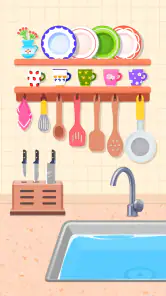
One of the first things that struck me about Satisfying Puzzle: Tidy Up is its stunning visuals. The colors are vibrant, and every little object is meticulously designed to make the tidying process incredibly satisfying. Each level feels like a beautifully crafted piece of art. And trust me, the sound effects when you place an item in its rightful spot? Pure auditory bliss. It’s these little touches that make the whole experience feel so rewarding.
More From Our News Desk

Clash of Clans Is Won Between the Battles

Android Auto Makes the Case for Quieter Car Software

MobiOffice: Transforming Mobile Productivity with Seamless Integration

EA SPORTS FC™ Mobile Soccer: Redefining Mobile Sports Gaming

How Microsoft OneDrive Became a Mobile Productivity Giant

How Google Translate Breaks Language Barriers Effortlessly
That visual clarity is part of the puzzle, not merely decoration. When a room is busy, I find it useful to look at the empty spaces first rather than tapping randomly through the objects. An unusual outline or a conspicuous gap can give me a better clue than scanning every item at once. This small change in approach keeps the task deliberate and can make a stuck moment feel like a solvable observation problem instead of a guessing game.
Gameplay That Hooks You In
The gameplay is intuitive, which means you won’t spend hours scratching your head trying to figure out what to do. You’ll find yourself quickly slipping into the flow of the game, rearranging objects, and feeling that oh-so-satisfying click when everything falls into place. It’s addictive in the best way possible. Plus, the app offers a variety of rooms and themes to keep things fresh and exciting, so boredom is never an issue.
The step up in challenge is a welcome change from a puzzle that stays identical from start to finish, but it also changes how I’d use the game. Early on, I can treat a level as a quick, almost automatic reset; when the arrangement becomes less obvious, it deserves a little more attention. If I’m tired or in a hurry, I’d rather stop after a completed room than push through a harder one and turn a relaxing activity into a test of patience.
That is also where it differs from the usual match-three or word-game alternative. Those games often lean on repeated patterns, vocabulary, or a fast sequence of decisions. Here, the pleasure is more tactile and spatial: I’m trying to make sense of a particular scene and bring it into order. If you like spotting shapes and relationships, that can feel more personal than clearing a standard grid; if you want a changing stream of mechanics, the focused format may feel narrow.
Hints, patience, and a useful way to play
Another cool feature is the hint system. If you ever find yourself stuck, you can use hints to nudge you in the right direction. It’s like having a helpful friend by your side, offering just the right amount of guidance without giving everything away.
I’d save a hint for the point where I’ve genuinely stopped noticing possibilities, rather than tapping it the moment I hesitate. Before using one, I scan the remaining objects and compare their shapes with the open spaces, then take a short pause and look at the whole room again. That keeps the hint as a nudge instead of making it my default move. It is a useful distinction for players who want to solve the scene themselves but do not want to abandon a level just because one placement is elusive.
A practical question for anyone considering it is whether it works as a low-effort wind-down or asks for too much concentration. My experience is that it can do either, depending on the room and my mood: a clear arrangement is soothing, while a less obvious one calls for active visual searching. I would not start a difficult level when I have only a few distracted seconds. For a brief break, I’d choose a moment when I can give the screen a little attention and leave the game once the task feels complete.
How I’d fit it into a day
I’d use this as a small reset between tasks rather than a game I need to plan an evening around. Imagine having a few quiet minutes while waiting for food to finish cooking: a room gives your attention one clear job, and the hint option can help you move on if you lose momentum. A useful approach is to pause briefly before using a hint and scan the room for objects whose shape or position seems to match an obvious open space. That keeps the puzzle engaging without turning a relaxing break into a frustrating search.
It could also suit a quiet moment on a commute or a short pause between work and household chores, provided you have enough attention to look at the room rather than play entirely on autopilot. I would treat it as a screen-based equivalent of a small organizing task, not as a way to improve the state of my actual home. That sounds obvious, but it matters: players looking for practical cleaning advice or a home-planning tool should choose something designed for that purpose instead.
Compared with a word puzzle, this is more about visual arrangement than vocabulary or trivia; compared with a fast arcade game, it asks for a slower, more deliberate kind of attention. That makes it a better fit when you want a gentle task than when you want competition, quick reflexes, or a demanding strategy challenge. The rising difficulty can be appealing, but it also means the game may stop feeling effortless if you’re looking only for something completely mindless.
A Perfect Companion for Relaxation
Satisfying Puzzle: Tidy Up isn’t just about solving puzzles; it’s about creating a sense of calm and order in your mind. Whether you’re looking to unwind after a long day or need a quick mental break, this app provides the perfect escape. It’s like a mini-vacation that fits right in your pocket.
I see that calming quality as a possibility, not a guarantee. If visual clutter usually bothers you, the act of sorting a scene may feel pleasing; if scanning lots of small objects wears you out, it may have the opposite effect. The best test is a short trial when you are in the mood for a quiet puzzle. I would not rely on it as a universal stress remedy, but it can be a pleasant way to direct my attention toward one manageable task.
It’s a casual game from Stella Joy Studio, with an Everyone age rating, and it runs on Android 7.0 or later. The current version is 2.8. Those details make it approachable for a broad audience, including someone who simply wants a low-stakes puzzle to dip into rather than a complex game to learn. It has a 4.6 average from around 40,000 ratings and over 1 million installs, which suggests many players have been willing to give the tidy-up format a try; popularity alone, of course, won’t tell you whether its particular pace is right for you.
For someone choosing between this and a conventional puzzle app, I’d ask what kind of feedback feels rewarding. A crossword or word search gives progress through language; a match game tends to reward chains and repeated combinations. This title’s draw is the visual before-and-after feeling of a room becoming orderly. That gives it a distinct niche, but it also means there is less reason to keep playing if the arrangement itself does not appeal to you.
One trade-off is that the core appeal depends on enjoying the act of sorting and arranging. If you prefer stories, character progression, or a strong competitive goal, this may feel slight beside those alternatives. Likewise, if you find visual-search puzzles tiring, the same attention to small objects that makes a room satisfying to complete could become work rather than relaxation. I’d choose it for a calm break, not as a substitute for a deeper puzzle game.
Who gets the most value from a free start
I’d recommend giving it a try if you enjoy visual puzzles, find order satisfying, and want something you can approach in short sessions. It may also suit someone who likes the feeling of finishing a small, contained task without needing to keep track of a long campaign. On the other hand, skip it if you want a more varied challenge than arranging objects, or if spending decisions inside games are a deal-breaker for you. Since the game is free to start, my verdict is to try it without committing money first and judge its value by how often you genuinely want to return.
The free download makes that recommendation straightforward, but it does not mean every player will get lasting value from it. If you enjoy a few rooms and then feel you have had enough, you have still learned whether this style suits you without an upfront payment. If the game becomes part of your regular short breaks, you can decide separately whether any optional purchase is worth considering at its listed price of $5.99 per item. I would base that decision on the enjoyment you already get, rather than on the hope that spending will make the core puzzle more compelling.
My buy-or-skip verdict
My recommendation is to try it if a tidy visual scene sounds more appealing than another word grid or reflex challenge, and to skip it if you need a story, competition, or a wide range of puzzle types. The game’s focused identity is its strength and its limitation: it knows the pleasure it is aiming for, but that pleasure depends on your own taste for arranging and spotting details. I’d start free, play when I have a few calm minutes, and only consider paying if I keep choosing it on its own merits.
For families, the Everyone age rating makes it broadly approachable, though I’d still choose games based on an individual child’s interests and play habits. For adults who want a quiet diversion, the same accessibility can be useful when introducing a casual puzzle to someone who avoids complicated controls or long tutorials. It is not the right pick for every shared play session: anyone hoping for head-to-head competition or a cooperative objective would likely be happier with a game built around those activities.
In conclusion, if you’re searching for an app that combines the joy of tidying with the satisfaction of puzzle-solving, look no further. Satisfying Puzzle: Tidy Up is your go-to app for some well-deserved me-time. So go ahead, give it a try, and let the tidying begin!
Satisfying Puzzle: Tidy Up Frequently Asked Questions
Can I play Satisfying Puzzle: Tidy Up without an internet connection?
Satisfying Puzzle: Tidy Up focuses on casual tidy-up puzzles, so it may appeal to players looking for a simple activity to pick up during a break. Whether it can be played offline depends on the game’s current requirements and how it handles features such as loading or saving progress. If offline access matters to you, check the game’s behavior after installation before relying on it for travel or places with limited connectivity.
Is Satisfying Puzzle: Tidy Up easy to learn for someone new to puzzle games?
The game is designed as a casual experience centered on tidying virtual spaces, giving players a clear organizing goal rather than a complicated story or elaborate premise. That makes it approachable for someone who is new to mobile puzzles. As with many puzzle games, individual stages can still ask you to think carefully about how items should be arranged, so the challenge may grow as you play.
Does Satisfying Puzzle: Tidy Up work well for short play sessions?
Its casual format and focused tidy-up puzzles make Satisfying Puzzle: Tidy Up a natural option for a quick gaming break. You can open it when you want a straightforward activity based on arranging and organizing virtual spaces, rather than settling in for a long story. Puzzle games can vary in how much time a stage takes, so it is worth seeing how its levels fit your own routine.
Is Satisfying Puzzle: Tidy Up free to download, and does it include optional purchases?
Satisfying Puzzle: Tidy Up is free to download, so you can try its casual tidy-up puzzles without an upfront purchase. It also includes in-app purchases, with items priced at $5.99 each. Those purchases are optional; you can enjoy the game without paying, while choosing to spend is a personal decision. If you are downloading it for a child, it is sensible to review purchase settings on the device first.
What kind of experience does Satisfying Puzzle: Tidy Up offer?
Satisfying Puzzle: Tidy Up is a casual game built around the appeal of cleaning and organizing virtual spaces. Its central idea is to tidy areas by working through puzzles, making it a fit for players who want a straightforward activity rather than a complicated, story-led game. The organizing theme gives each puzzle a clear purpose, while the focus on neat results aims to make play feel relaxing and satisfying.
Pros
- Engaging gameplay keeps users hooked.
- Visually appealing graphics enhance experience.
- Simple controls suitable for all ages.
- Variety of levels offers continuous challenge.
- Relaxing background music aids concentration.
Cons
- Advertisements can be intrusive at times.
- Limited free levels before in-app purchases.
- Occasional bugs disrupt gameplay flow.
- High battery usage on prolonged play.
- Lack of multiplayer mode for social play.
- Category
- Casual
- Version
- 2.8