Royal Arrow: Merge & Match
- 813.00
- 4.2
- Installs
- 100.00K
- Price
- Free

Screenshots



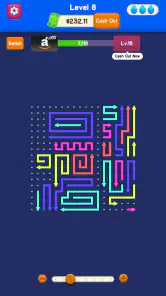
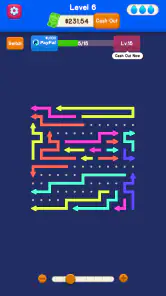
Analysis by Reviewed
I approached Royal Arrow: Merge & Match as the kind of casual game I could open for a few quiet minutes rather than as a title demanding a long, uninterrupted session. Its central idea is easy to understand: match and merge arrows, make decisions on a compact puzzle board, and keep going while the arrangement remains manageable. That simplicity is the main attraction. I never felt I had to study a complicated rulebook before playing, yet the best moves still require more thought than the short store summary suggests.
The game is free, belongs to the casual puzzle category, and is published by Харитония Илиева. It is aimed at Everyone 10+, which fits the accessible presentation and straightforward premise. The current version is 1.0.2, and it requires Android 6.0 or later. After seeing an average rating of 4.2 from around 2.9 thousand ratings and more than 100 thousand installs, I would describe it as a small but established option rather than an untested experiment.
How Royal Arrow feels during a normal session
The first thing I noticed is how quickly the game gets to its main decision. There is no need to learn a large collection of characters, memorize a story, or manage a complicated inventory before the puzzle becomes meaningful. The arrows are the focus, and the match-and-merge loop gives each move a clear purpose. That makes it a natural fit for short breaks, waiting rooms, or the few minutes before going to sleep.
Its speed is best understood as quick to start, but not necessarily mindless. The opening moves can feel immediate because the rules are so readable. As the board becomes more crowded, however, I spend more time looking at possible combinations and considering whether a tempting merge will leave an awkward layout afterward. This creates a useful rhythm: the game responds to simple actions without turning every round into a race.
That balance matters for a relaxing puzzle. A game that moves too slowly can feel unresponsive, while one that pushes constant urgency can undermine the calm mood. Royal Arrow sits closer to the relaxed side. I can make a move, inspect the result, and plan the next one without feeling that I am being forced into frantic tapping. For players who enjoy quick visual decisions but dislike timers or intense action, that pacing should be appealing.
Why the simple rules still create decisions
Matching arrows sounds obvious until several possible moves compete for attention. A useful habit is to look beyond the first available pair. I found it better to check whether a merge opens space, preserves a future match, or pushes another arrow into a less useful position. That extra glance is where the game gains its modest strategic layer.
This also gives the game a natural difference between a casual move and a careful move. If I only want to pass time, I can choose an available combination and continue. If I want to improve my result or avoid getting boxed in, I need to think about the board as a sequence rather than a collection of isolated matches. That is a good design choice for a casual title because it serves both relaxed players and people who enjoy optimizing small decisions.
One practical tip is to avoid treating every visible match as equally valuable. A merge that looks convenient may remove the only arrangement that could help later. I would first scan the whole board, identify the most restrictive arrow positions, and then decide whether the obvious match is actually the best one. This approach is especially useful when the board starts to feel crowded and the available choices become less forgiving.
Using it in an everyday break
Imagine waiting for a train with only a few minutes available. I would choose Royal Arrow over a story-heavy game because I can understand the objective immediately and stop without losing the thread of a narrative. The same applies to a short coffee break: the game gives me something to focus on, but it does not require headphones, a long setup, or a commitment to remember several systems.
It also works well as a mental reset after repetitive work. Matching and merging arrows gives my attention a narrow problem to solve, which can be more satisfying than scrolling through unrelated content. The important distinction is that the game is relaxing only while I accept its small scale. If I expect a deep campaign, character progression, or a large variety of puzzle rules, I would probably find the experience too limited.
The offline positioning is particularly useful for this type of scenario. I can think of it as a dependable time-filler for places where connectivity is inconvenient, rather than a game built around online competition or shared events. That makes it easier to recommend for travel and commutes, although I would still treat it as a focused puzzle rather than a replacement for a full offline game collection.
What happens during longer or heavier use
A short session and a long session ask different things from a casual puzzle. In a brief visit, the important qualities are immediate access and readable choices. During heavier use, repetition becomes more noticeable. The same core action—matching and merging arrows—has to remain interesting through the quality of the board decisions, not through a broad set of unrelated activities.
I think the game is strongest when I play it in small portions. Several quick sessions can feel pleasantly consistent, while an extended run may expose the narrowness of the central loop. That is not a flaw for everyone. Some players specifically want a focused puzzle they can return to without learning new mechanics. Others will want changing objectives and more dramatic progression, and those players may be better served by a larger puzzle game.
When the board becomes busy, the main performance concern is not action-heavy gameplay but mental and visual load. I need to distinguish arrow directions, recognize useful relationships, and avoid making a move simply because it is the most obvious one. A cluttered arrangement can make the game feel slower even when the device is responding normally. In that sense, perceived speed depends partly on layout clarity and partly on how much planning the current position demands.
My advice for longer play is to use a deliberate pause between moves instead of tapping through every available option. That helps separate a genuine strategic choice from an automatic reaction. It also reduces the chance of creating a poor arrangement through haste. For a game built around merging, patience is more valuable than rapid input.
Resource expectations and battery-friendly use
Royal Arrow presents itself as a compact casual puzzle rather than a graphically demanding action game. That sets a reasonable expectation for modest resource needs, especially compared with games that constantly render large environments or process online matches. Still, I would not turn that expectation into a promise that every older phone will behave identically. Device age, available storage, background activity, and the condition of the operating system can all affect how comfortable any game feels.
The minimum Android requirement of 6.0 makes the game available to a broad range of devices, including phones that are no longer recent. That is helpful for readers using an older handset, but compatibility alone does not guarantee the same smoothness on every model. A phone with limited free space or many background apps may take longer to open or may feel less responsive than a newer device.
For a cleaner experience, I would close demanding apps before a long session, keep enough free storage for the operating system to work comfortably, and avoid judging the game during a moment when the phone is already hot or overloaded. These are simple steps, but they matter more on an older device than on a current one. Since the game is based on a contained puzzle board, it should be a more sensible choice for light play than a visually intense 3D title.
Battery use is also likely to be more manageable than in a game that keeps a camera, large world, or online connection active. I would still lower screen brightness during a long commute and avoid leaving the game open when I am finished. The useful point is not that the game consumes no battery, but that its casual, board-focused design makes it a reasonable candidate for short sessions when I want entertainment without putting my phone through a demanding workload.
Reliability, interruptions, and returning to a puzzle
Reliability in a puzzle game is about more than whether it opens. I also want taps to feel predictable, the board to remain understandable after a pause, and a short interruption not to turn a relaxing session into a frustrating recovery process. Royal Arrow’s straightforward structure works in its favor here because there are fewer layers to keep track of than in a game with several menus, currencies, missions, and live activities.
The offline nature is valuable for reliability in everyday use. If I am somewhere with weak reception, the central puzzle does not depend on a stable connection in the way an online match would. That makes the game a better fit for underground travel, airplane mode, or a quiet location with unreliable service. It also keeps the experience focused on the board instead of making network status part of the session.
There is a trade-off, though. An offline puzzle does not offer the same social energy as a competitive game with real-time opponents or shared progress. If my main reason for playing is to compare moves with friends, I would choose a different category. Royal Arrow is more suited to private concentration than to conversation or competition.
Short interruptions should be treated sensibly. If I need to put the phone away, I would pause at a natural point rather than leave a complicated position half-considered. That is less about a confirmed technical behavior and more about good puzzle practice: returning to a board is easier when I remember what I was trying to achieve. On any mobile game, I would also make sure the device has not aggressively closed the app in the background before assuming that every interrupted session will resume exactly where I left it.
Older phones and practical device limits
The Android 6.0 requirement makes this a plausible download for people who keep an older phone as a backup or use an inexpensive everyday device. The simple format should be less intimidating for modest hardware than a large action game. I would especially consider it for someone who wants an offline distraction without filling a phone with a visually elaborate title.
Even so, older hardware can introduce friction that has little to do with the puzzle itself. A small screen may make arrow directions harder to inspect, touch sensitivity may be inconsistent, and limited memory may cause apps to reload after switching away. Those are important practical considerations for anyone planning to play during frequent interruptions.
If the screen is compact, I would play with the phone held steadily and avoid tapping rapidly near the edges of the board. Careful input is more useful here than speed. Players with visual strain may also prefer shorter sessions, because distinguishing directional shapes repeatedly can become tiring even when the game itself remains calm.
The age rating of Everyone 10+ gives families a useful starting point, but I would still judge suitability by the individual player. A child who enjoys matching puzzles may understand the core idea quickly, while a younger player might need help with planning rather than with the basic controls. For adults, the rating also signals that this is not being positioned as a mature or intense game, which matches my overall impression of its tone.
How it compares with familiar casual puzzle choices
Compared with a match-three game, Royal Arrow feels more focused on directional relationships than on creating chains of colored pieces. The appeal is not simply clearing a row and watching a large cascade; it is deciding how an arrow merge affects the remaining arrangement. Players who enjoy examining a board before committing should find that difference meaningful.
Compared with word puzzles, it asks for less language skill and more visual scanning. That makes it a better choice when I want a puzzle that can be understood without reading clues or building vocabulary. On the other hand, word-game fans may find the arrow theme too narrow if they want varied definitions, clues, or a stronger sense of subject matter.
Compared with idle or merge-collection games, this title is more about the immediate puzzle position than about building a long-term collection. I do not approach it expecting a large management system. That is a strength when I want fewer distractions, but a weakness if I enjoy unlocking objects, decorating spaces, or watching numbers grow over many days.
The offline format also separates it from many modern casual games that assume a constant connection. For me, that makes it more dependable as a travel companion. The trade-off is that it may feel less dynamic than games built around daily events, online rankings, or frequent content changes. Choosing between them depends on whether I value quiet consistency or ongoing variety.
Who should install it, and who should skip it
I would recommend it to someone who likes compact visual puzzles, wants an offline option, and prefers relaxed decision-making over fast reflexes. It is also a good match for players who like to improve through small choices: preserving space, spotting future combinations, and resisting the first move that appears.
I would be more cautious about recommending it to anyone seeking a deep progression system, a narrative campaign, multiplayer competition, or a large range of puzzle formats. The focused arrow mechanic is the reason to play, but it is also the boundary of the experience. If repetition quickly bothers you, a broader puzzle collection will probably offer better long-term value.
Because the game is free, it is easy to try without making it a major purchase decision. I would approach it with the right expectation: this is a light, self-contained way to occupy a break, not a substitute for a large premium puzzle adventure. That distinction prevents the most common disappointment.
My performance verdict after weighing the trade-offs
Royal Arrow: Merge & Match succeeds because it keeps its central action understandable while leaving room for careful choices. Its perceived speed is best during short sessions, when the clean objective and compact board make it easy to begin and stop. During longer play, the narrow loop becomes more apparent, so the game depends on whether I enjoy refining decisions within one theme.
From a device perspective, the Android 6.0 minimum makes it approachable for older phones, and its casual board format suggests a lighter workload than graphically ambitious games. I would still keep expectations realistic: older hardware, limited memory, heat, and background apps can affect any mobile experience. The most sensible setup is a reasonably maintained device with enough free space and a screen large enough for comfortable visual checking.
The offline design is one of its most practical strengths. It makes the game useful in places where online alternatives are inconvenient, and it lets the puzzle remain the main event. Reliability also benefits from the uncomplicated structure, although I would still pause thoughtfully before interruptions and avoid assuming that every phone handles background recovery in exactly the same way.
With a price of free and more than 100 thousand installs, it is an easy low-risk choice for casual puzzle fans who want something quiet and accessible. My recommendation is strongest for commuters, occasional players, and people who enjoy planning one move ahead without pressure. I would skip it only if I needed social competition, rich progression, or constant novelty. For everyone else, the best way to enjoy it is to treat each board as a small planning exercise rather than a race to merge everything immediately.
Pros
- Simple merge-and-match mechanics are easy to learn from the first round.
- Short levels make it convenient for quick sessions on the go.
- Progression gradually introduces new challenges without overwhelming beginners.
- Bright visuals and playful effects make the board pleasant to follow.
- Offline play can be useful when you have limited or no internet access.
Cons
- Repeated merging can feel monotonous after extended play sessions.
- Some upgrades may require considerable time or repeated level attempts.
- The small play area can become visually crowded as more items appear.
- Difficulty may depend on luck when useful matching pieces appear infrequently.
- Frequent promotional prompts may interrupt the flow between levels.

- Category
- Casual
- Version
- 1.0.2