Rogue Hearts
- 784.00
- 4.2
- Installs
- 500.00K
- Price
- $0.99

Screenshots
Analysis by Reviewed
I like dungeon crawlers most when the decisions between fights matter as much as the fights themselves. Rogue Hearts is a role-playing game from Ninetail Games built around direct control: you guide the character through challenges rather than watching the action unfold on its own. That hands-on approach gives exploration a more deliberate feel, and it is the clearest reason I would point a tactics-minded player toward it.
Why direct control changes the pace
Controlling the character directly makes each stretch of a dungeon feel like a sequence of choices, not just scenery between battles. I find that appealing when I want to pause, look at what is ahead, and decide how to proceed instead of relying on automatic movement or rapid reactions. The trade-off is that this is not the best fit for someone who wants a game to play itself during a spare minute; its appeal comes from being involved.
That involvement also makes the game easier to approach in short, focused sessions. If I have a little time while waiting for an appointment, I can concentrate on one challenge at a time rather than treating a run as background entertainment. A useful habit is to stop before tapping through a risky moment: direct control is most valuable when I use it to think, not simply to move faster.
A practical rhythm for short sessions
That same hands-on rhythm works well when I have a brief window but still want to play something that asks for attention. On a lunch break, for example, I would rather make a few deliberate decisions than begin a long narrative sequence I may have to abandon halfway through. I would treat a short session as a chance to focus on the next immediate challenge, not as a promise to finish a particular stretch of the game.
There is a small but useful distinction here: direct control does not automatically make every moment low-pressure. It gives me a say in how I approach the challenge, but it also means I cannot expect the game to make decisions for me. If I am distracted, tired, or switching between messages, I am more likely to rush than to benefit from that control. I get more from it when I can give the screen a few uninterrupted minutes.
The Thrill of Exploration
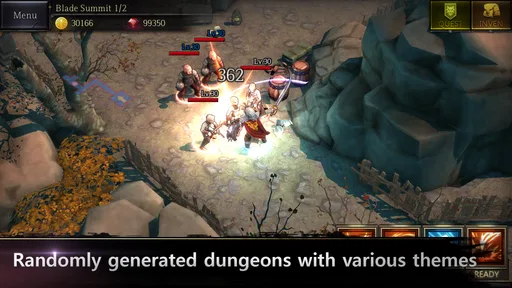
Once you dive into Rogue Hearts, you're greeted with a beautifully designed world filled with mysteries waiting to be uncovered. Each dungeon is procedurally generated, so no two adventures are the same. It's like having a new puzzle to solve every single time you play. The game keeps you on your toes with its unpredictable layouts and traps that require you to think on your feet. Honestly, the thrill of exploration never gets old here.
How to make a run feel manageable
The changing layouts are a good reason to resist rushing. I would treat unfamiliar ground as a prompt to reassess rather than assume a route that worked before will work again. That small adjustment is especially useful when playing in short bursts: take a moment to understand the situation each time you return, then make the next move with the current dungeon in mind. It makes the exploration feel more considered and helps avoid turning a tactical game into a series of hurried taps.
More From Our News Desk
 Instagram
’s Power Comes From Its Place in Your Phone
A close look at how Instagram turns Meta’s reach, recommendation systems and everyday camera habits into durable platform power—and what that costs users.

 Gmail
Gmail in a Busy Inbox: Who Benefits Most?
From first account to crowded workday, Gmail earns its place through dependable search and flexible sorting—but its best fit depends on how much inbox maintenance you can tolerate.

 Prime Video
Switching to Prime Video: What Changes in Your Viewing Routine
Prime Video can make a compelling second home for streaming, but switching means learning a different catalog, rental layer, and route from browsing to playback.
 Universal TV Remote Control
 Works Best as a Reliable Backup
A phone remote earns its place through quick setup and reliable habits. Here is how to get more from Universal TV Remote Control—and where its limits show.

 Weather - By Xiaomi
Weather by Xiaomi Review: Clear at a Glance, Less Clear Up Close
Xiaomi’s weather app makes everyday forecasts quick to scan, but its calm surface can leave useful details and recovery paths harder to find than they should be.

 X
X Under Pressure: Can It Recover When Posting Goes Wrong?
A resilience-focused review of X, examining setup, mistaken posts, interruptions, weak connections, and the gaps that matter when recovery needs to be dependable.
Latest News



A practical way to use that unpredictability is to think in terms of the decision immediately in front of you, rather than trying to remember a perfect route. What worked in one layout may not help in another, so I would focus on reading the current space and responding to what it presents. That mindset makes a failed assumption easier to catch early, before it turns into a string of careless moves. The changing arrangement is not just variety; it is a reason to stay observant.
If you are wondering whether changing dungeons make the game endlessly replayable, I would put it more modestly: they help keep exploration from feeling completely memorized. Familiarity with the style of play can still grow, but each new arrangement asks you to pay attention again. That is a satisfying loop for someone who likes adapting, though it will not replace a strong central story for a player who wants a fixed sequence of dramatic events.
How it compares with other role-playing games
For players comparing it with more conventional role-playing games, the key distinction is the emphasis on navigating challenges directly. A story-led RPG may be a better choice if you mainly want to follow a long narrative, while an action-focused dungeon game may suit you more if quick reflexes are the main attraction. I would choose this one when the pleasure is in working through a changing space and engaging with the challenge at hand.
Compared with an idle or auto-battling RPG, the appeal here is participation rather than checking in to collect progress. Compared with a fast action crawler, it leans more toward considering a move than relying on continuous reactions. Neither comparison makes it universally better: the right choice depends on whether I want to steer through a challenge or let a game fill a few minutes with minimal thought. For me, its direct-control focus is most rewarding when I am in the mood to make decisions, not merely watch numbers rise.
Combat That Makes You Think
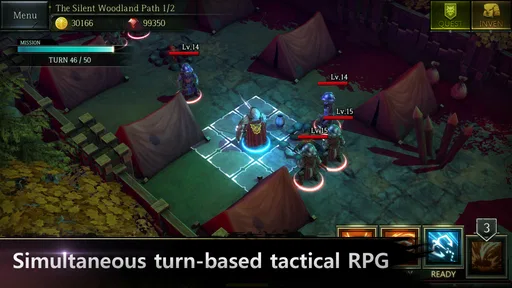
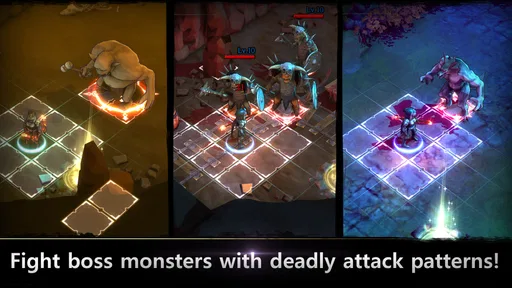
What truly sets this game apart is its combat system. It’s not just about hacking and slashing your way through foes. Instead, you need to strategize each move, considering the strengths and weaknesses of your enemies. The turn-based combat demands you to plan your steps carefully, making every encounter a mini chess game. It’s deeply satisfying when a well-thought-out plan comes together, and you walk away victorious from a tough battle.
That planning creates a useful reason to slow down before committing to a move. When an encounter starts to feel difficult, I would avoid repeating the same approach automatically and instead reconsider what the opponent is asking me to handle. The point is not to search for a universal trick; it is to make each choice with the current fight in mind. This kind of attention can make a win feel earned, but it also makes careless play more noticeable than it would be in a game built around spectacle and speed.
Making experimentation less frustrating
The game also offers a variety of skills and equipment, allowing you to tailor your character to your preferred playstyle. Whether you enjoy being a stealthy assassin or a powerful mage, Rogue Hearts has got you covered. The customization options are extensive, and experimenting with different setups is half the fun!
For a newcomer, I would resist changing several parts of a setup at once. If the result feels better or worse, changing one element at a time makes it easier to understand what caused the difference. It is a simple approach, but it turns experimentation into learning rather than guesswork. It also helps when a preferred style is not working as expected: rather than assuming the whole build is wrong, I would make a focused adjustment and see whether it suits the challenge better.
There is a trade-off between flexibility and decision fatigue. Having room to try different skills and equipment can make the character feel more personal, but it asks me to spend time thinking about how I want to play. Someone who enjoys testing approaches will see that as part of the game; someone who wants to pick one obvious option and move on may find it a drag. I would choose based on whether build decisions sound enjoyable in their own right.
Choices, limits, and who will enjoy them
Skills and equipment make experimentation part of the appeal, but that also means it may take a while to settle on a setup that feels right. I would change one part of a build at a time where possible, so it is easier to tell what actually improves the way a character handles a challenge. If you prefer a fixed hero and a straightforward path through combat, this degree of tinkering may feel like work rather than a reward.
The game is rated Teen, and it costs $0.99 to download, with optional in-app purchases priced from $0.99 to $49.99 per item. I would decide whether that purchase model suits you before getting invested, particularly if you prefer games with no additional spending options. It runs on Android 5.1 or later; the current version is 1.6.9. Those practical details matter if you are choosing a game for an older device or deciding whether the initial price fits your budget.
The distinction between the upfront cost and optional purchases is worth considering before you install. I would treat the purchase price as the entry point and decide for myself whether I am comfortable with a game that also presents optional spending. If you are choosing for a younger player, the Teen rating and the presence of in-app purchases are both sensible points to discuss in advance. That does not change the game’s core appeal, but it can affect whether it fits your household’s preferences.
What the presentation contributes
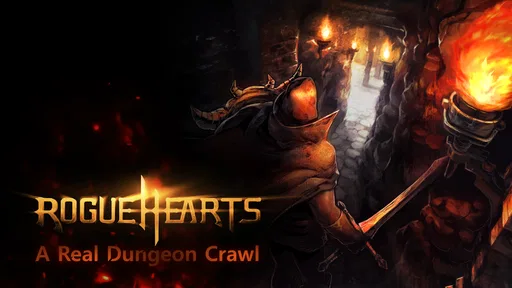
Let’s talk about the visuals and sound. The graphics strike a balance between dark, moody atmospheres and vibrant, detailed environments. It’s a treat for the eyes as you navigate through the dungeons, each with its unique aesthetic. The soundtrack, too, complements the gameplay perfectly, enhancing the overall experience without being intrusive. It’s immersive, to say the least.
For me, presentation matters here because exploration involves looking at a space and deciding what to do, not simply moving through a backdrop on the way to a fight. The mood supports that slower attention without having to compete with the tactical side. If I am choosing a game mainly for elaborate cutscenes or a soundtrack I want to listen to on its own, I would look elsewhere; the appeal described here is how the atmosphere accompanies dungeon exploration rather than taking over the experience.
Who should give it a go
If you’re a fan of dungeon crawlers but crave something with a bit more depth, Rogue Hearts is definitely worth checking out. It’s a game that challenges your tactical skills and rewards your strategic thinking. Plus, the element of surprise with each new dungeon keeps the gameplay fresh and exciting.
I think it suits players who enjoy having a say in how they move through a challenge, who do not mind pausing to consider a tactical choice, and who find experimentation satisfying. It is less suited to someone looking for a passive game to leave running while doing something else, or for a tightly scripted RPG whose main attraction is a continuous plot. If your favorite part of a role-playing game is adjusting an approach until it feels right, the combination of direct control, changing layouts, and build choices gives you several reasons to stay engaged.
A realistic use case is a quiet evening at home: I could play for a focused stretch, stop when I need to, and return later ready to assess a different layout rather than expect to continue along a fixed route. On a noisy commute, by contrast, I would only choose it if I could concentrate on the screen. The game’s control style is a benefit when attention is available and a limitation when it is not. That is a more useful way to judge its fit than simply asking whether it can be played in short sessions.
The game has a 4.2 average from around 17,000 ratings, and more than 500,000 installs. I see that as a useful sign that it has reached a substantial audience, not a guarantee that its deliberate pace will suit everyone. Its strongest match is someone who enjoys taking a moment to think through movement and combat; players who want constant speed or a largely hands-off experience should look elsewhere.
Its age also shapes what I would expect from it. Released on February 17, 2018, and currently at version 1.6.9, it is an established game rather than a new release I would pick for novelty. I would approach it for the style of play it offers, not because I expect the latest presentation trends or a constant stream of newness. That makes it easier to judge on its real strength: whether deliberate, direct involvement is the kind of role-playing experience I want.
In a world where games often focus on fast-paced action, Rogue Hearts stands out by slowing things down and making you think before you act. This thoughtful approach to dungeon crawling is what makes it a standout title in its genre. So gear up, dive in, and let the adventures begin!
My take after weighing the trade-offs
Released on February 17, 2018, this is not a recommendation based on novelty alone. I would pick it for a commute or a quiet evening when I can give its challenges my attention, rather than for a moment when I need a quick burst of uncomplicated action. The ability to control the character directly is the central draw, but it asks for patience in return. If that exchange sounds appealing, the modest upfront price makes it an easy game to consider; if you would rather have a story-first RPG or a faster arcade-style crawl, those alternatives are likely a better fit.
My clearest advice is to ask what you want from the next game on your phone. If you want an RPG that invites you to steer, inspect, and make tactical choices, this is an appealing option to consider. If you want hands-off progression, a narrative-led journey, or constant action that rewards reflexes above deliberation, another subgenre will likely feel more natural. I would recommend it to a friend who enjoys thinking through a dungeon, while being candid that its deliberate pace is exactly what some players will not enjoy.
Rogue Hearts Frequently Asked Questions
Who developed Rogue Hearts, and what kind of game is it?
Rogue Hearts is a role-playing game developed by Ninetail Games. Its store summary describes a game where you break through challenges and trials by controlling the character directly, making direct player input central to the experience. It may appeal to players looking for an RPG built around overcoming successive obstacles.
What is Rogue Hearts and what makes it unique?
Rogue Hearts is a dungeon-crawling RPG available on both Android and iOS platforms. What sets it apart is its blend of strategic turn-based combat with roguelike elements. Players explore procedurally generated dungeons filled with traps, monsters, and loot. The game offers rich graphics and immersive gameplay, challenging players to think tactically and adapt to ever-changing environments. The uniqueness lies in its replayability and depth of strategy.
Is Rogue Hearts free to play, or does it require purchases?
Rogue Hearts is a premium game, meaning it requires an upfront purchase to download. However, it does not rely on in-app purchases or ads, providing a clean and uninterrupted gaming experience. The initial cost ensures that players have access to all the features and gameplay elements without needing to spend extra money later.
What are the system requirements to run Rogue Hearts smoothly?
To enjoy Rogue Hearts without any hitches, Android users need a device running at least Android 4.4, while iOS users require iOS 9.0 or later. It's advisable to have a device with decent processing power and memory to handle the game's detailed graphics and complex mechanics. A stable internet connection is recommended for updates and online features.
How does the combat system work in Rogue Hearts?
The combat in Rogue Hearts is turn-based, requiring strategic planning and careful consideration of each move. Players must manage their character’s skills, health, and equipment to overcome various enemies. The game emphasizes tactical gameplay where positioning, timing, and resource management play crucial roles in succeeding against increasingly challenging foes.
Pros
- Engaging turn-based combat mechanics
- Rich
- immersive dungeon environments
- Variety of character classes
- Challenging puzzles and traps
- Regular updates with new content
Cons
- Can be difficult for beginners
- In-app purchases can be pricey
- Requires constant internet connection
- Occasional bugs and glitches
- Limited character customization