Prison Survival: Tap Challenge
- 25.00
- 4.5
- Installs
- 1.00M
- Price
- Free

Screenshots
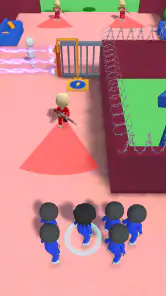
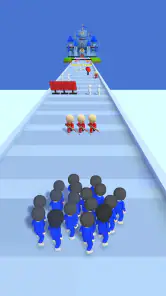
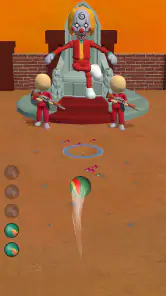
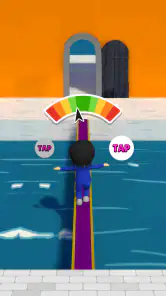
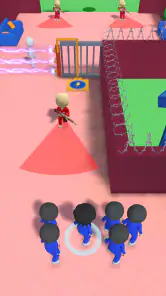
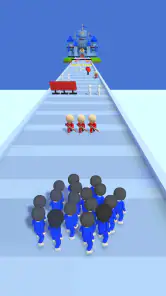
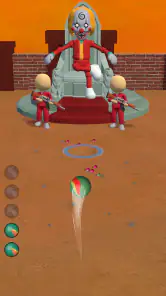
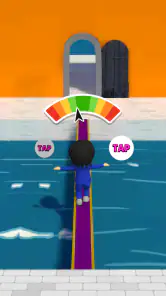
Analysis by Reviewed
I find Prison Survival: Tap Challenge easiest to enjoy as a brief, shared-device game: one person can take a turn, hand over the phone, and let someone else try the next stretch. That makes it a plausible choice for a quiet moment at home, though I would treat it as a game to pass around rather than assume it offers separate household profiles or shared progress tools.
Passing the phone without passing the plan
When more than one person uses the same device, I’d agree on a simple boundary before playing: whose turn it is, and whether the next player should continue the current run or begin fresh if that option is available. The game’s tap-focused rhythm is easy to explain, but choices about tasks and priorities can still shape how a session feels. A quick handoff works best when the person holding the phone says what they were trying to accomplish, instead of leaving the next player to guess.
That small bit of coordination matters more here than it would in a game where every turn is self-contained. The appeal is partly in making decisions about survival, resources, and other inmates, so a second player may want to make different calls. I’d use those disagreements as part of the fun, while avoiding the assumption that everyone will prefer the same strategy.
A practical routine for a shared device
For an ordinary evening at home, I’d make the game a short turn-taking activity rather than leave the phone in the middle of the room with no plan. One person can play while waiting for dinner, explain the current goal, then pass the device when a natural pause arrives. The next person can decide whether to follow that plan or try a different approach. This keeps a shared session social without pretending the game is designed for everyone to act at once.
A useful small habit is to say what you changed before handing over the phone: which task you focused on, what you hoped to gain, and what the next player should watch for. That explanation need not be a detailed strategy briefing. It simply prevents the next person from mistaking an unfinished plan for a mistake and makes the handoff feel intentional. If the player would rather explore independently, agree that each turn is their own experiment instead.
Who will enjoy this kind of challenge?
This casual game is best suited to someone who likes tapping as a core action and doesn’t mind repeating familiar tasks while working toward a larger goal. It may fit a short break between chores or a relaxed evening when you want something more involved than a one-button diversion but less demanding than a lengthy, complex strategy game. If you want precise controls, a deep simulation, or a story that carries the experience on its own, I’d look elsewhere.
The usual alternatives in casual games tend to emphasize quick puzzles, automatic progress, or a clear sequence of short stages. This one leans instead on the prison-survival premise and the promise of choosing what to prioritize. That gives it a different flavor, but it also means tapping can feel like busywork if the decisions stop feeling meaningful. My practical tip is to play in focused bursts: decide on one immediate objective, work toward it, and take a break if the repeated actions start to blur together.
More From Our News Desk

Clash of Clans Is Won Between the Battles

Android Auto Makes the Case for Quieter Car Software

MobiOffice: Transforming Mobile Productivity with Seamless Integration

EA SPORTS FC™ Mobile Soccer: Redefining Mobile Sports Gaming

How Microsoft OneDrive Became a Mobile Productivity Giant

How Google Translate Breaks Language Barriers Effortlessly
There’s also a useful trade-off for shared use: the premise is easy to summarize, but the choices are more enjoyable when the player understands the current situation. If a family member or friend picks it up mid-session, a short explanation can make the handoff smoother. I wouldn’t choose it as a cooperative game in which everyone contributes at once; it makes more sense as a pass-and-play conversation around one person’s turn.
What to expect from the first session
If you are deciding whether to install it, I’d approach the opening session as a test of the central loop, not as a promise that every later moment will feel fresh. Pay attention to whether the tapping feels satisfying when connected to a choice, and whether you enjoy thinking about what to do next. If those two parts work for you, the prison setting gives the actions a theme to follow. If the repeated input already feels tedious, the premise alone may not be enough to make the game a good fit.
That is also a helpful way to judge whether it suits a child or another household member: watch how they respond to the actual play style, rather than assuming that a casual label means every player will enjoy it. Some people like a game they can understand quickly but revisit in small bursts; others want each round to introduce a new puzzle or a different kind of interaction. The distinction matters more than whether someone is generally a fan of mobile games.
Getting Started: A Dive into the Prison World
Right off the bat, Prison Survival: Tap Challenge pulls you in with its intriguing premise. As you launch the app, you’re immediately thrust into a scenario where you must make alliances, gather resources, and strategize your way through the daily grind of prison life. The game’s graphics are not exactly cutting-edge, but they have a certain charm that suits the rough and rugged theme perfectly. It’s almost like watching an old-school crime series with a modern twist.
Gameplay Mechanics: Tap Your Way to Freedom
The core gameplay revolves around tapping, as the title suggests. It’s a simple mechanic, yet it cleverly incorporates elements of strategy and resource management. You need to tap to gather items, complete tasks, and interact with other inmates. The more efficiently you tap, the better your chances of surviving and eventually escaping. There’s a surprising depth to the gameplay as you decide whom to trust, which tasks to prioritize, and how to manage your time effectively.
One of the game’s unique features is its social aspect. You can form gangs, trade goods, and even start riots. The interactions with other virtual inmates add an element of unpredictability, making each session unique. It’s this dynamic environment that keeps you hooked, always wondering what will happen next.
Making the choices work for you
For me, the most useful way to approach the task-and-resource loop is to avoid tapping aimlessly. Choose one priority, such as making progress on a task or building toward a particular goal, then give that choice enough attention to see whether it feels worthwhile. This makes it easier to tell whether you enjoy the decision-making or are simply repeating inputs. It also gives a friend who takes the next turn a clear starting point without requiring them to copy your whole approach.
There is a trade-off in that method: focusing on one objective can mean leaving other possibilities alone for a while. That is not necessarily a problem in a casual game, but it can be frustrating if you expect every action to advance several goals at once. I’d treat a change of plan as part of trying the game rather than as a failure. If a particular routine becomes monotonous, switch your immediate focus or pause instead of forcing a long session.
Challenges and Rewards: What Keeps You Coming Back
The game throws a variety of challenges your way, from simple tasks like gathering food to more complex missions like orchestrating an escape plan. Each challenge you complete earns you rewards, which you can use to upgrade your cell, improve your character’s stats, or purchase essential items. This progression system is highly addictive, as there’s always something new to achieve.
However, it’s not all smooth sailing. The game can get repetitive after a while, especially if you’re not a fan of tap-based gameplay. But if you enjoy casual games with a strategic twist, you’ll likely find yourself playing for hours on end.
Choosing between this and other casual games
Compared with a quick puzzle game, this is less about solving one compact problem and moving on; the appeal is in building progress through repeated actions and decisions. Compared with an idle-style game, it asks you to stay involved by tapping and considering priorities rather than simply checking in on accumulated progress. Those are broad differences in feel, not a guarantee that one style is better. I’d pick this one when I want a themed loop with some choices to discuss, and a puzzle alternative when I want each attempt to be more self-contained.
It is not my first choice for a commute or any situation where I cannot pay attention to the screen. The tap-based loop may sound simple, but the choices are easier to follow when you can keep track of what you were aiming for. A short session at home, with the device comfortably in hand, makes more sense than trying to squeeze it into a moment when interruptions are constant. For a very brief wait, a game that can be put down after one obvious round may be more convenient.
Age, spending, and household expectations
The game is rated for everyone, which can make it easier to consider for a household device, but I’d still think about whether its prison setting and references to gangs and riots suit the person playing. An age label is a useful starting point, not a substitute for a parent’s judgment. If children share the phone, I’d also make sure they understand that purchases are real transactions: the game is free to start, with in-app purchases priced at $2.99 per item. I would keep purchase approval with the device owner rather than treating the game itself as a family account system.
For context, Higame Global Ltd. develops this casual title. It was released on November 5, 2024, and its current version is 0.9, with Android support starting at version 6.0. Its average rating is 4.5 from around 5.7 thousand ratings, and it has over a million installs. Those figures suggest that plenty of players have tried it, but they don’t remove the main question for me: do you enjoy tapping repeatedly when it’s tied to small strategic decisions?
Keeping expectations clear around accounts and purchases
On a household phone, I’d make the device owner responsible for approving any spending and explain that a free download does not mean every optional item is free. That is a practical boundary, not a claim about special family controls inside the game. Before letting someone else take a turn, it is also worth agreeing whether they should continue the current play or simply try the game briefly. Clear expectations help avoid confusion over progress and purchases, especially when several people use one device.
The same principle applies to personal progress: I would not assume that a shared-device handoff creates separate player histories or keeps each person’s choices apart. If that separation is important, a game built around individual profiles would be a safer fit. Here, the simplest arrangement is to treat a session as one shared run and talk through how each person wants to play, rather than expecting the game to sort out household boundaries for you.
Final Thoughts: A Captivating Experience
In conclusion, Prison Survival: Tap Challenge is a captivating app that offers a unique take on the survival genre. It’s not perfect, and it might not appeal to everyone, but if you’re looking for a game that combines strategy, social interaction, and a bit of tapping fun, this app is worth checking out. So, put on your virtual prison jumpsuit and see if you have what it takes to survive the tap challenge!
A sensible household verdict
I’d recommend it to a household that enjoys taking turns, talking through choices, and doesn’t mind a repetitive tapping loop. It is less suitable when each person expects a clearly separate experience, when you want a game built around simultaneous teamwork, or when repeated actions quickly become dull. With a shared phone, agree on turns and spending boundaries before starting; for a solo player, short sessions and one clear objective help keep the routine from wearing thin.
When I would choose something else
I’d skip it if the main thing you want from a mobile game is precise, tactile control, a long narrative, or a fresh challenge in every short round. The prison theme and progression give the tapping a reason, but they cannot remove the repetition built into the core action. Likewise, it is not the strongest option for a group that wants everyone to play simultaneously. A puzzle game is a better match for quick independent turns, while a deeper strategy title may suit someone who wants more planning and less repeated tapping.
For a player who enjoys the loop, though, the game can work as a low-pressure way to fill a pause and invite conversation about priorities. I’d try it in a short, relaxed session, see whether the tasks and decisions hold my attention, and then decide whether I want to return. That is the clearest test of its appeal: not how dramatic the premise sounds, but whether the repeated actions remain enjoyable once the novelty settles.
Prison Survival: Tap Challenge Frequently Asked Questions
Does Prison Survival: Tap Challenge work on my Android device?
Prison Survival: Tap Challenge is available for Android devices running Android 6.0 or later. Before downloading, check your device’s software version and make sure you have enough storage for the game. It is a casual game, so it is designed around straightforward play sessions rather than requiring a specialized gaming setup.
Who developed Prison Survival: Tap Challenge, and how popular is it?
The game is developed by Higame Global Ltd. It has received a 4.5 average from around 5.7K ratings, with 25 written reviews, and has over 1 million installs. Those figures suggest that many players have tried it, though ratings and reviews are only one way to judge whether its style of casual gameplay will suit you.
What is Prison Survival: Tap Challenge?
Prison Survival: Tap Challenge is an engaging mobile game that simulates the experience of surviving in a prison environment. Players must navigate challenges, complete tasks, and make strategic decisions to progress. The game combines elements of strategy, role-playing, and action to create an immersive gameplay experience. Its store description also encourages players to pass all the levels, become the champion, and earn a big reward.
Is Prison Survival: Tap Challenge free to play?
Yes, Prison Survival: Tap Challenge is free to download and play. However, it offers in-app purchases, priced at $2.99 per item, that can enhance the gameplay experience. Players can choose to buy additional resources, power-ups, or unlock special features, but these purchases are optional and not necessary to enjoy the game.
What are the main features of Prison Survival: Tap Challenge?
Prison Survival: Tap Challenge features a variety of challenges and tasks that test players' strategic thinking and decision-making skills. The game offers multiple levels with increasing difficulty, character customization options, and a wide range of items to collect and use. The interactive storyline and dynamic gameplay keep players engaged and entertained.
Pros
- Engaging gameplay with strategic elements.
- Offline mode available for continuous play.
- Regular updates with new content.
- Intuitive controls for easy navigation.
- Challenging levels increase replayability.
Cons
- In-app purchases can be expensive.
- Requires frequent ads to unlock features.
- Graphics could be more detailed.
- Limited social interaction features.
- Occasional bugs affecting gameplay.
- Category
- Casual
- Version
- 0.9