Pod Runner
- 54.00
- 4.2
- Installs
- 10.00K
- Price
- Free

Screenshots
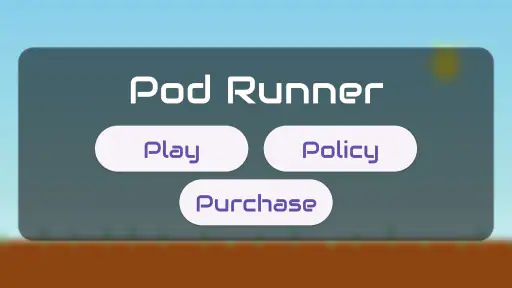

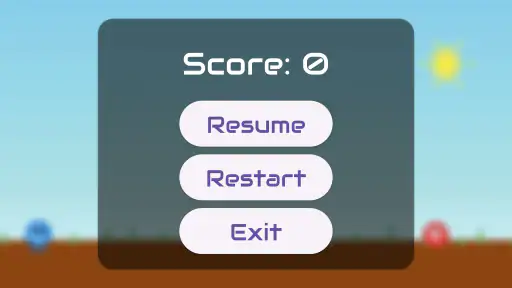

Analysis by Reviewed
I found Pod Runner most enjoyable in the kind of moment when a shared phone is passed around the house and everyone wants something that can be understood immediately. There is no long explanation to give: you guide the pod, watch the route, and try to avoid whatever blocks the way. That makes it a natural fit for a short break, a quick turn between chores, or a relaxed challenge where people can hand the device to one another without learning a complicated rule set first.
It is a free casual game from Noman006, with a 4.2 average from over two hundred ratings and more than ten thousand installs. Those figures suggest a modest but real audience rather than a huge mainstream release. I would approach it with the right expectation: this is a small, focused dodging game, not a broad adventure with a long campaign. Its appeal comes from the immediacy of each attempt.
How Pod Runner works when a household shares the device
The first useful quality is its low entry barrier. A person who has never played it can understand the basic objective after watching a single attempt. That matters on a shared device, because the game does not demand that every player create a personal routine around it before taking a turn. One person can play for a little while, then pass the phone over without a lengthy handover.
I can picture it working well during a short wait at home. One family member starts a run while another is preparing a snack, then the phone moves to someone else when the attempt ends. The game suits this rhythm better than a title that expects uninterrupted attention for half an hour. It also avoids the social pressure of a complicated multiplayer setup: players can compare how far they got or simply enjoy seeing someone else react to an unexpected obstacle.
That simplicity is also the main limit. A basic obstacle-dodging loop can be satisfying when I want a small test of timing, but it does not automatically provide the variety of a platform game, puzzle game, or larger arcade package. If the household wants shared progress, character development, or a story that gives everyone a reason to return, this will probably feel too narrow. Pod Runner is strongest when the goal is a quick individual attempt, not a long group activity with a shared campaign.
What I would expect during a first session
I would begin by treating the first few attempts as a way to learn the movement rather than as a serious score chase. The useful question is not only “How far can I get?” but also “What kind of reaction does this game reward?” In a dodging game, rushing every input can be worse than making a controlled adjustment, especially when the route begins to demand attention from more than one direction.
For a shared phone, I recommend giving each player a clear turn and avoiding advice while they are actively playing. Back-seat instructions can make a simple game feel more stressful than it needs to be. A better household routine is to let the player finish, discuss one moment that went wrong, and then allow the next person to try. That turns a solitary casual game into a small coordination exercise without pretending it has built-in team play.
Another practical tip is to keep the device in the same orientation and hand it over carefully. In a game based on avoiding obstacles, an accidental change in grip can affect the next attempt even when the player understands the controls. That is a small detail, but it matters more here than it would in a turn-based title where a pause between actions is expected.
Setting boundaries before the game becomes part of the routine
The game is free to download, which makes it easy to try on a family device without an upfront purchase decision. It does include optional in-app purchases ranging from $0.51 to $500.00 per item. The upper end is significant enough that I would not treat the game as something to leave entirely unsupervised on a shared phone. That is not a criticism of the dodging gameplay itself; it is a reminder that a free download can still require sensible purchase boundaries.
In a household, I would decide in advance who is allowed to make purchases and whether the game is strictly for play without spending. This conversation is especially useful when children use the same device as adults. The simplest arrangement is to keep payment decisions with the device owner and make sure younger players understand that a button connected to the game is not automatically permission to buy anything.
There is also a useful distinction between access to the game and access to the wider device. Pod Runner can be a casual option for a shared phone, but the phone itself may contain messages, photos, work material, or personal accounts. I would hand over the device only after closing anything private and would avoid assuming that a child’s familiarity with the game means they should freely browse the rest of the phone. The game creates a reason to share the screen, not a reason to remove normal device boundaries.
Because the current version is 1.0.7, I would keep expectations realistic about maturity. That version number does not tell me how extensive future development will be, so I would judge the game by what it offers now rather than expecting a large stream of new systems. For a short casual title, that can be perfectly acceptable. It simply means I would not choose it specifically because I am looking for a constantly expanding game.
Keeping turns fair on one phone
Shared-device play works best when the household agrees on a simple turn structure. A practical method is one attempt per person, followed by a second round if everyone still wants to continue. This prevents the strongest player from holding the phone indefinitely and gives beginners a fair chance to understand the timing. Since the game is built around dodging rather than a cooperative objective, fairness comes from the group’s rules, not from the software.
I would also avoid turning every session into a competition based only on the highest result. A better approach is to celebrate improvement: surviving longer than the previous attempt, making it past a section that caused trouble, or learning to wait instead of reacting too quickly. That makes the game more welcoming for younger or less experienced players and reduces the chance that a short casual activity becomes frustrating.
For adults sharing the device, the same structure can make the game surprisingly useful as a mental reset. I might play one or two attempts while waiting for dinner, then stop before the quick challenge turns into an unplanned time sink. The game’s narrow focus supports that kind of boundary. It is easier to define “one more run” than it is with a game built around missions, unlocks, or an open-ended world, although the temptation to retry after a mistake is still very real.
One trade-off is that a game this direct can expose differences in patience. Some players enjoy repeating a short challenge until their timing improves; others want new content after a few failures. In my view, Pod Runner belongs with the first group. If someone in the household dislikes repetition or needs a clear sense of progression, another casual game with puzzles, levels, or collection goals would be a better shared choice.
Age, trust, and the right kind of supervision
The content rating is Everyone, which makes the game broadly suitable from an age-content perspective. I would still separate that rating from a blanket recommendation for unsupervised use. Age suitability describes the nature of the game, while a shared device introduces other questions: who can use the phone, who can spend money, and whether the player understands the household’s rules.
For a younger player, I would demonstrate the game once, explain that the aim is simply to avoid obstacles, and establish the purchase rule before handing over the device. That is enough for this kind of simple game; there is no need to create an elaborate family procedure around a short arcade experience. The important part is that the child knows the difference between playing and changing anything connected with the device or account.
I would also pay attention to how the child responds to repeated failure. Dodging games can be harmless fun, but their quick retry cycle may encourage a player to keep going after they have stopped enjoying it. A short timer or a fixed number of turns can help. This is not a special control inside the game; it is a household agreement that keeps the activity balanced with homework, sleep, meals, or other plans.
For older children and adults, trust becomes more important than constant supervision. If the player respects the device, follows the purchase rule, and gives others a turn, Pod Runner is easy to include in a shared routine. If the household has had problems with accidental purchases or arguments over screen time, I would solve those issues before adding any free-to-play game to the common phone. The game should fit an existing agreement, not be expected to create one.
There is no need to present Pod Runner as an educational tool. Its value is simpler: it offers a small timing challenge and a reason to take a brief break together. That honesty helps set the right expectations for children. They can enjoy it without adults claiming that every minute has to teach a lesson, and adults can stop the session without feeling that they are interrupting an important long-form activity.
Where it fits beside other casual games
Compared with a casual puzzle game, Pod Runner asks for quicker reactions and less planning. That makes it a better choice for someone who wants immediate movement, but a worse choice for someone who prefers to think through a board without pressure. Compared with a platform game, it appears more focused on the act of avoiding obstacles than on exploring a world or following a character through a sequence of stages.
It also differs from a typical multiplayer party game. A party title usually gives the group a direct shared objective, while this game is more naturally passed from player to player. That can be a strength in a household with one phone, because nobody needs to coordinate several devices. It can be a weakness if the group expects everyone to participate at the same time.
Against endless-runner alternatives, the key question is whether the particular movement and obstacle rhythm hold your attention. Many games in this area can feel interchangeable after the first few minutes. I would give Pod Runner a fair trial, but I would not recommend staying with it out of habit if the central dodge loop does not feel satisfying. A more feature-rich runner may offer stronger long-term motivation, while a slower puzzle title may be more comfortable for relaxed shared play.
My practical comparison is therefore about the moment, not a universal ranking. Choose Pod Runner when you want a free, quick, easy-to-explain challenge on one device. Choose something else when you need a story, long-term progression, simultaneous multiplayer, or a calmer pace. That distinction is more useful than calling it simply “good” or “bad,” because the game’s narrow design is exactly what makes it convenient in some situations and limited in others.
Everyday use, device fit, and small points of friction
The minimum operating-system requirement is Android 7.0, so it is positioned to work with older Android phones as well as newer ones. That is helpful for a household where the shared device is not the latest model. I would still judge the experience on the actual phone being used, because a game that depends on quick reactions is less enjoyable if the screen is awkward to hold or the device is already struggling with other tasks.
Storage and battery habits are worth considering in a shared-device setting even when the game itself is small and straightforward. I would avoid starting a session when the phone is nearly empty, especially if the device is also needed for calls or navigation. This is less about Pod Runner demanding a particular routine and more about protecting the phone’s main purpose. A casual game should remain secondary on a family device.
One non-obvious benefit of a focused game is that it can make stopping easier than in a game with a large map or several unfinished objectives. After an attempt, there is a natural pause for handing over the phone. I would use that pause deliberately: check whether someone else wants a turn, put the phone down if the household needs it, and avoid letting a failed run decide the schedule.
The corresponding friction is the retry impulse. When a mistake happens close to a personal best, the obvious response is to try again immediately. That can be motivating, but it can also make a five-minute break expand without anyone noticing. In my experience, the best boundary is to choose the number of attempts before beginning, rather than negotiating with myself after every failure.
For a child sharing with a sibling, I would make the order visible and keep the rule consistent. The game does not need to provide account-based coordination for the household to coordinate well; a simple spoken order is enough. If the players cannot agree on turns, the problem is not likely to be solved by this particular title. A cooperative game with shared goals might suit that household better.
Who should install it and who should skip it
I would recommend Pod Runner to someone who likes compact arcade challenges, wants a free trial before committing to anything, and enjoys improving through repeated attempts. It is especially suitable for a shared Android phone where people need to understand the game quickly and take turns without creating separate profiles or learning a large ruleset. The Everyone rating also makes it a reasonable candidate for mixed-age use when adults handle the device and spending boundaries.
I would be more cautious about recommending it to someone seeking a deep solo game. The simple obstacle-dodging premise is the point, but it also limits how much variety I would expect from one session. Players who need narrative, strategic planning, character customization, or a substantial progression system should look toward a different casual category rather than hoping this game will become one.
I would also skip it for a household that specifically wants a built-in group experience. Passing the phone can be social, but it is not the same as simultaneous play or cooperative problem-solving. Likewise, anyone uncomfortable with optional purchase ranges should establish account safeguards first or choose a game with a payment model that better matches the household’s rules.
For a realistic evening example, I could see two adults and a child using it after dinner: each person gets a short turn, the child watches the adults attempt the same challenge, and everyone stops after the agreed round. That is a good use of the game because the activity stays light and contained. It would be a poor choice if the family wanted a longer shared project or if the phone needed to remain available for important communication.
My household verdict
Pod Runner succeeds by keeping its purpose clear. It gives me a quick dodging challenge that I can understand immediately, play for a short time, and pass to someone else. Noman006 has kept the concept approachable enough for casual use, and the free entry point makes experimentation easy. The 4.2 average and audience of over ten thousand installs show that it has found interest, though I would still judge it by whether its particular rhythm suits you.
My recommendation is positive but specific: try it as a short shared-device arcade game, not as the household’s main game library. Set the turn order, decide the spending rule, and agree on when the phone goes back to its everyday duties. Those small boundaries make a noticeable difference because the game’s simplicity encourages quick retries and easy handoffs.
The best reason to choose Pod Runner is its immediate, low-commitment challenge. The best reason to choose something else is the same thing viewed from another angle: if you need depth, cooperation, or long-term variety, its focused design may feel thin. For a brief family break, a casual reaction test, or a few minutes alone, I think it earns a place on the device. Just keep the expectations—and the household boundaries—clear.
Pros
- Great for structured interval training and improving running consistency.
- Audio cues help maintain pace without constantly checking your phone.
- Offers workouts for different running speeds and fitness levels.
- Simple interface makes it easy to start a session quickly.
- Useful for runners who enjoy guided training without video distractions.
Cons
- The music selection may feel dated compared with modern streaming services.
- Some workouts and features may require additional purchases.
- Limited social features for sharing progress or competing with friends.
- Audio guidance can become repetitive during frequent training sessions.
- May not suit runners who prefer fully customizable workout plans.

- Category
- Casual
- Version
- 1.0.7