Nomerix: License Plates
- 4.00
- 3.7
- Installs
- 100.00K
- Price
- Free

Screenshots

Analysis by Reviewed
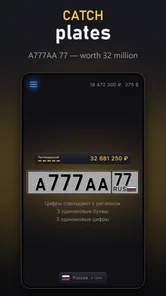
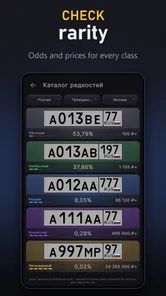
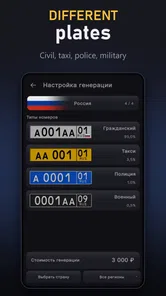
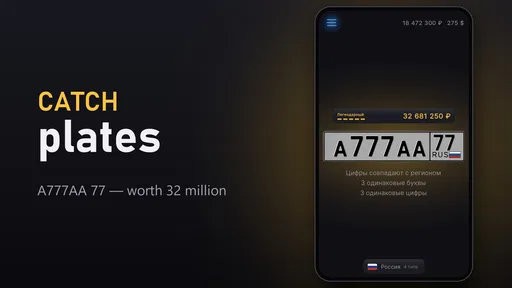
I can see the appeal of Nomerix: License Plates in one glance: it turns a tiny, familiar object into a reason to tap, wait for a result, and hope the next number feels special. This is a casual game from Mitrofan Games, built around generating Russian license plates and looking out for rare VIP combinations. It is free to play, and its simple premise makes it easy to try during a short break rather than something that demands a plan or a long session.
That simplicity is both its best quality and the question I would keep in mind before installing it: does the little thrill of seeing another plate stay enjoyable once the novelty wears off? I think the answer depends on whether you like collecting and noticing patterns for their own sake. If you expect a layered game with a story, elaborate challenges, or a changing set of activities, this is probably not the right fit. If you enjoy small, repeatable moments of chance, it has a clear and unusually specific appeal.
Why the first sessions are satisfying
The first few sessions are easy to understand without a tutorial-heavy introduction. You tap to produce a plate, then judge the result: is it ordinary, or does it have the kind of pattern that makes it feel worth keeping an eye on? That quick loop suits spare moments—waiting for a friend, taking a short pause between tasks, or sitting through a commute when you only want something you can put down immediately.
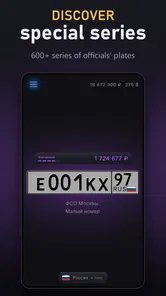
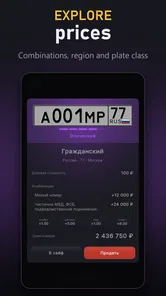
The Russian plate theme gives the game a more distinctive identity than a generic number generator. Even if you are not deeply familiar with how Russian plates are structured, the hunt for an unusually appealing combination gives each result a simple point of interest. I would treat the VIP idea as a playful collecting hook rather than a promise of meaningful progression: the pleasure is in spotting a standout result, not in mastering a complicated system.
A useful way to approach it is to decide what counts as memorable before you start tapping. You might personally like repeated digits, a tidy sequence, or a combination that simply looks balanced. Having your own informal standard gives the activity a little shape and prevents every generated plate from feeling interchangeable. It also makes the game more satisfying for someone who enjoys pattern recognition, even without turning the session into a serious score chase.
That personal angle is important because the game’s central action is deliberately narrow. In a typical casual puzzle game, a new level or obstacle keeps changing the immediate problem. Here, the interest comes from the result itself and your response to it. For the right person, that feels relaxing and low-pressure. For someone who needs frequent new mechanics to stay engaged, the first pleasant surprise may be followed quickly by the question of what else there is to do.
Making the number hunt feel less repetitive
I would use short sessions rather than leaving the game open as a background activity. A small stopping point—such as checking a handful of results and then closing it—keeps the focus on the occasional satisfying combination. This is a practical habit for any game built around repeated attempts: stopping while the activity still feels light is better than tapping long after you have stopped noticing the plates.
More From Our News Desk

Weather by Xiaomi Review: Clear at a Glance, Less Clear Up Close

X Under Pressure: Can It Recover When Posting Goes Wrong?

Clash of Clans Is Won Between the Battles

Android Auto Makes the Case for Quieter Car Software

MobiOffice: Transforming Mobile Productivity with Seamless Integration

EA SPORTS FC™ Mobile Soccer: Redefining Mobile Sports Gaming
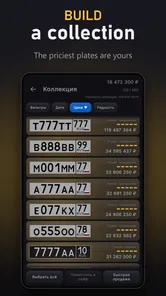
It also helps to separate “rare” from “personally interesting.” A VIP result may be the game’s intended prize, but your own eye can find pleasure in a plate that is not especially prestigious. Looking for patterns you like, rather than treating every ordinary result as failure, makes the loop less dependent on luck. That is a small but useful way to get more out of a game whose core appeal is visual and collectible.
There is a trade-off here. If you want a clear objective that tells you when a session is complete, the open-ended hunt may feel vague. If you are happy to make your own stopping rule, the lack of a demanding commitment becomes an advantage. I would not install it expecting an elaborate checklist or a long-term campaign; I would install it as a compact diversion that leaves the player in control of how much attention it gets.
Does it keep earning a place on your phone?
I’d judge this game by whether its quick number hunt still feels inviting once the first curiosity has passed, rather than by how often I can open it. A useful test is to notice whether I’m choosing to look for an interesting pattern or simply tapping from habit; that distinction makes its modest role clearer. From there, the key question is how easily it fits into an ordinary routine without becoming another obligation.
Month-to-month value depends on your own collecting instinct
After the initial novelty, recurring value comes down to whether you enjoy returning to the same simple question: will the next plate be more interesting than the last? There is no need to schedule sessions or build a routine around it. I can imagine opening it when I have a few idle minutes, enjoying a brief run, and forgetting about it until another quiet moment. That is a perfectly valid role for a casual game, even if it does not become a daily habit.
The strongest long-term use case is for someone who enjoys small collections, visual patterns, or luck-driven outcomes without needing a competitive environment. It can also suit a person who wants a game that is easy to pause in the middle of everyday life. Someone looking for a richer alternative—one with varied puzzles, character development, or a steady stream of new tasks—will likely get more lasting value from a different casual game. Nomerix is focused enough that its appeal does not automatically broaden over time.
One way to test whether it has staying power for you is to revisit it after a few days rather than tapping continuously on the first sitting. If the possibility of an appealing plate still feels inviting, it may earn a place as an occasional time-filler. If you already know what most results look like and feel no curiosity about the next one, there is little reason to force a habit. Its value is best measured by whether those brief returns feel pleasant, not by how often you open it.
The game has a 3.7 average from around 768 ratings, while 100K+ installs show that it has reached a sizeable audience for this focused idea. I would read those figures as context, not as a substitute for knowing your own taste: a narrow, chance-based game can be satisfying to one player and repetitive to another. The audience scale makes it easier to see that the concept has found users, but it does not change the central trade-off between quick novelty and repeatable enjoyment.
Low effort to maintain, but repetition is the real cost
In practical terms, the maintenance burden seems modest because the game asks for little beyond returning and tapping. Its current version is 3.2.2, and it supports Android 7.1 or later, which makes the compatibility threshold relatively approachable for people using older devices that still meet that requirement. It is free, so trying it does not require an upfront purchase decision. I would still think of the main cost as attention: repeated results can become dull if you keep playing after the simple pleasure has passed.
For a more deliberate experience, I would suggest using it as a short reset rather than a replacement for a game you play to make progress. That distinction helps set expectations. Nomerix is not the kind of title I would choose when I want to feel that I have completed a substantial task. It works better when I want a tiny, self-contained activity that does not punish me for leaving after a minute.
There is also a small mental maintenance task: remembering why you found the game enjoyable. If you return only to chase an abstract idea of a rare result, ordinary outcomes can make the session feel like waiting. If you return to notice interesting-looking combinations and enjoy the randomness, the same loop has a more generous feel. That difference is not a hidden feature; it is a way of choosing a healthier expectation for a repetitive game.
Who may tire of the loop—and who should skip it
The obvious fatigue point is that the central action does not change much. Repeated tapping is the premise, so anyone who quickly needs new mechanics may find the experience thin. The VIP hunt can keep attention focused for a while, but a rare-result chase can also make ordinary results feel like wasted turns. I would avoid treating it as a game with deep progression unless that kind of lightweight repetition is already enjoyable to you.
I would also skip it if your main reason for playing casual games is to solve increasingly difficult problems or compete against other people. A level-based puzzle offers a clearer sense of improvement, while a social game gives you other players to react to. This one is more solitary in spirit: the interest sits in the generated plate and in your own reaction to it. That is a strength for someone seeking quiet downtime, but a limitation for anyone wanting a stronger sense of momentum.
Its Everyone age rating makes the presentation suitable for a broad audience, and the straightforward premise is easy to explain. Still, “easy to understand” should not be confused with “engaging for everyone.” Younger players or adults who enjoy spotting patterns may find it amusing, while players who need a lot of visual variety or a concrete goal may move on quickly. The best test is whether the number hunt itself sounds fun, rather than whether the game is free or simple to start.
One small way to decide whether it fits your routine
If you are unsure whether this kind of play will hold your attention, try it in a situation where you would normally scroll without much purpose: waiting for an appointment, for instance, or taking a quiet pause after finishing a task. Give yourself a natural endpoint before you begin, then notice whether you are curious about the plates or merely tapping to fill the time. That distinction tells you more than a long first sitting would. It also keeps the game in its best role—as a brief diversion rather than another habit demanding regular attention.
For households considering it for different ages, the broad Everyone rating and instantly understandable premise make it easy to introduce, but I would not assume that every player will want to keep returning. A child who enjoys comparing number patterns may find a personal challenge in the results; someone who prefers movement, characters, or a clear win condition may lose interest. Since the activity is so focused, choosing it for a specific taste is more useful than choosing it simply because it is an accessible casual game.
My verdict after weighing the novelty against the habit
My honest recommendation is to try it as a small, low-commitment diversion, not as a game you expect to occupy you for months. Its first-week appeal is clear: the action is immediate, the theme is specific, and a pleasing or unusual plate can make a brief session feel rewarding. Whether it earns lasting space is more personal. If you naturally enjoy looking for patterns and are content with short bursts, it can remain a pleasant pocket-sized habit. If you need fresh challenges, deeper systems, or a strong sense of progress, the novelty is likely to fade sooner.
Nomerix: License Plates works best when you set modest expectations and let its focused loop be exactly what it is. Mitrofan Games has made a casual game with a recognizable hook, and its free price makes an experiment easy. I would keep it installed only if the occasional hunt still gives me a small moment of curiosity; otherwise, there is no need to turn a simple pastime into an obligation. For pattern-spotters who enjoy chance in bite-sized doses, it is worth a try. For everyone else, a puzzle or progression-based alternative will probably offer more reasons to return.
Nomerix: License Plates Frequently Asked Questions
What is Nomerix: License Plates?
Nomerix: License Plates is a mobile app centered on license plates, intended for users who want to identify, explore, or keep track of plates. Its exact features can vary by app version and region, so check the store listing and screenshots before installing to confirm that it offers the tools you need. It is not a substitute for official vehicle or ownership records.
Is Nomerix: License Plates free to download and use?
The app’s price and business model may depend on your platform, location, and current version. Before downloading, look at its Google Play or App Store listing for the initial price, in-app purchases, subscriptions, and any trial terms. If you decide to subscribe, review the renewal price and cancellation instructions in your store account, since deleting the app generally does not cancel a subscription.
Can Nomerix identify a vehicle owner from a license plate?
Do not assume that Nomerix can reveal a vehicle owner’s identity. Personal registration information is protected by privacy laws in many places, and consumer apps typically cannot provide unrestricted access to official motor vehicle records. Any identification or lookup features may be limited to information the app is legally permitted to display. For a legitimate safety or legal concern, contact the appropriate authorities.
Does Nomerix: License Plates work in every country, and does it need internet access?
Coverage can depend on which countries, regions, and plate formats the app supports, so confirm compatibility in the store description before relying on it while traveling. Some functions may require an internet connection to search or update information, while others may work offline; the listing or in-app settings should clarify this. Results can also differ according to local plate rules and available data.
Is Nomerix: License Plates safe to install, and what permissions should I check?
Download Nomerix only from the official Google Play or Apple App Store listing, and check the developer name, recent reviews, and privacy information before installing. Review permission requests and allow only those that make sense for the features you use. You can also inspect the app’s data-safety or privacy disclosures for information about collected data, sharing, and deletion options.
Pros
- Quickly look up vehicle information using a license plate.
- Straightforward interface makes searches easy to start.
- Useful for checking a vehicle before buying or meeting its owner.
- Can help identify basic details without contacting the vehicle owner.
- Handy reference tool for occasional plate checks.
Cons
- Available vehicle data may vary by country and region.
- Some searches may require a paid plan or in-app purchase.
- Results may be incomplete or out of date.
- A license plate search may not identify the vehicle's current owner.
- Requires an internet connection to retrieve search results.