Mystery Dumpling: Squishy Box
- 0.00
- 0.0
- Installs
- 50.00K
- Price
- Free

Screenshots







Analysis by Reviewed
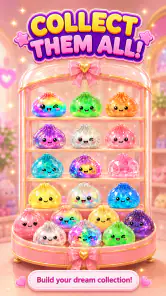
I went into Mystery Dumpling: Squishy Box expecting a tiny casual game built around the pleasure of opening surprises, and that is exactly where its appeal begins. The idea is easy to understand: open mystery boxes, collect soft-looking dumpling characters, and keep an eye out for less common discoveries. It is the kind of game I can pick up without preparing myself for a complicated tutorial or a demanding challenge.
That simplicity is important because the game is not trying to compete with a deep role-playing game or a long story-driven adventure. It belongs to the relaxed side of mobile gaming, where a short visit can be enough. My first impression was shaped less by strategy and more by the small anticipation before each opening. The question is not whether I can master a difficult control scheme, but what the next box might reveal and whether the collection will gradually become more interesting.
Developed by Brocker Bus Studio, the game is free and aimed at Everyone, which makes it a natural fit for families, younger players, and adults who want something gentle between more demanding tasks. It is available for devices running Android 8.0 or later. The current version is 0.7, so I would approach it as a compact experience that is still early in its life rather than as a fully mature collection game with years of refinement behind it.
Why the first week feels more rewarding than the store summary suggests
The opening days are carried by curiosity. Even when the basic action is repetitive, the collection format gives each session a small purpose. I am not simply tapping through an empty loop; I am checking what has been added and deciding whether I want to continue for another opening. That difference matters. A casual game can feel surprisingly pleasant when every short session leaves behind a visible sign of progress.
The dumpling theme also gives the experience a clear personality. Cute collectibles are common in mobile games, but dumplings make the collection feel more focused than a random assortment of characters. The visual idea is immediately readable, and that helps the game work for players who do not want to spend time learning a large fictional world before having fun.
During a first week, I would use it in the gaps that usually disappear into aimless scrolling: while waiting for an appointment, during a short break, or at the end of the day when I want something lighter than a competitive game. It does not ask me to remember a complicated build or return at a precise moment. That low entry cost is one of its strongest qualities.
There is also a useful psychological distinction between collecting and winning. The game’s pleasure comes from completing a personal set and noticing unusual finds, not from proving that I am better than another player. For anyone who finds leaderboards stressful, that makes this a more comfortable choice than many popular casual alternatives. If you enjoy the reveal itself, the first sessions have a pleasant rhythm.
My practical advice is to decide early what kind of player you are. If you enjoy opening every available box immediately, the novelty will be intense but may burn out faster. I found the experience more satisfying when I treated each visit as a small check-in instead of trying to exhaust the available activity in one sitting. That habit preserves the anticipation that gives the game its identity.
The collection loop is charming, but it needs personal boundaries
Mystery-based rewards are naturally good at encouraging “one more” attempts. That can be harmless when the game is used as a short break, but it can also turn a simple pastime into background tapping. I would set a stopping point before opening the game, especially if I am playing late at night or trying to avoid distractions.
The useful question is not whether every box feels exciting. It is whether the collection gives me a reason to return after the first surprise has faded. Early on, the answer is usually yes because there are still plenty of discoveries to make. Later, the answer depends on how much satisfaction I get from incremental progress and repeated reveals.
For a child, the Everyone rating makes the concept approachable, but I would still treat the mystery-box structure as something worth discussing. A parent can frame it as a collecting game rather than an endless reward machine and help establish reasonable play sessions. For an adult, the same awareness helps keep the game in its best role: a small diversion, not a task that quietly takes over spare time.
What changes after the novelty wears off
The first month is where the game has to prove more than its theme. A cute collection can hold attention for a while, but lasting value comes from the feeling that returning is still worthwhile. In my experience with this kind of design, the strongest long-term use case is not daily obligation; it is occasional comfort. I can imagine opening it when I want a predictable, low-pressure activity rather than looking for a new challenge.
That makes the game a better companion to more substantial titles than a replacement for them. If I already play a strategy game, puzzle game, or competitive multiplayer game, this can fill a different role. It asks less concentration and offers a softer emotional payoff. The trade-off is that it cannot provide the same depth, mastery, or variety as those alternatives.
The collection can also work as a small visual record of my time with the game. Seeing a group of dumplings grow is more motivating than receiving rewards that disappear into a counter. When I return after a few days away, I have a concrete reason to look around again. That is a subtle strength: the theme gives progress a more personal feeling than a generic points system.
Still, I would not recommend making it the only game on a phone. Players who need constant novelty, complex decisions, or a clear sense of skill improvement may find the month-to-month loop too narrow. A traditional puzzle game is likely a better choice if you want to sharpen pattern recognition, while an idle game may suit you more if you prefer progress that continues with minimal interaction. This title sits between those options, with the reveal and collection doing most of the work.
The install base is already over 50 thousand, which suggests that the concept has found an audience without making the game feel like an enormous social platform. I see that as a useful middle ground for someone who prefers a quieter experience. At the same time, a smaller community can mean fewer reasons to return for conversation or competition. If shared events and player interaction are central to your idea of a mobile game, this may feel limited.
How I would build a sustainable routine
I would keep the game attached to a specific moment, such as a short afternoon break, rather than opening it automatically whenever I feel bored. That simple rule prevents the collection loop from becoming invisible habit. It also makes each visit feel intentional, which is important for a game whose main reward is anticipation.
I would also avoid judging the experience by how much I complete in a single day. The better measure is whether I still enjoy the small reveal after several separate visits. If I do, the game has recurring value for me. If I only enjoy it when I am opening several boxes in quick succession, then I am probably responding to the initial novelty rather than the lasting design.
Another useful approach is to treat uncommon discoveries as pleasant bonuses instead of goals that must be forced. Chasing one particular rare dumpling can make a relaxing game feel frustrating. Letting the collection grow naturally keeps the mood lighter and avoids turning chance into pressure.
Where the maintenance burden and fatigue appear
The maintenance burden here is mostly mental rather than mechanical. A small collection game is easy to operate, but the player has to decide how often it deserves attention. If I feel compelled to check repeatedly, the game is no longer serving as a break. If I forget it for weeks, that may be a sign that the collection alone is not enough to sustain my interest.
That is not a criticism unique to this title; it is the central risk of mystery-box games. The opening animation or reveal can remain pleasant, but repetition becomes noticeable when there is no fresh personal goal. I would pay attention to that transition. The game works best when I am curious, not when I am completing a routine out of obligation.
Version 0.7 reinforces my cautious view of long-term commitment. I can enjoy what is present without assuming that the game already offers the breadth of a long-established casual favorite. Players who like watching a small project develop may find that appealing. Players who expect a polished, content-heavy experience from the first installation may prefer to wait until the game feels more established.
The free price makes trying it easy, and that changes how I evaluate the limitations. I do not need to justify a large purchase before discovering whether the collection loop suits me. I can install it, spend a few short sessions with it, and decide based on my own tolerance for repetition. That low-risk entry is especially useful for families or anyone looking for a gentle game without committing money upfront.
My main fatigue point is the possibility that the surprise becomes predictable. Once I understand the basic rhythm, I need the collection itself to remain interesting. If every session feels identical apart from the character revealed, the game may lose its place on my home screen. This is where it differs from a puzzle game with fresh problems or a story game with new scenes: its variation is tied closely to what I collect.
There is also a trade-off between comfort and depth. The same straightforward design that makes it accessible can make it feel thin for experienced players. I would recommend it to someone who wants a calm, cute diversion, but not to someone looking for layered systems, demanding objectives, or a campaign with a strong ending. Choosing it for the wrong reason would create disappointment that the game itself is not designed to solve.
Who should keep it installed
I think it earns lasting space for players who enjoy themed collections, short sessions, and low-pressure surprises. It is especially suitable for someone who likes checking progress in small pieces and does not need every game to test reflexes or strategic thinking. The Everyone rating also makes its central idea broadly approachable, although adults should still guide younger players toward healthy limits around repeated rewards.
I would be more selective for players who dislike chance-based collecting. If the possibility of receiving a less common item feels irritating rather than exciting, the central loop may become a source of annoyance. A fixed-level puzzle game would be a better alternative because it offers a clearer relationship between effort and outcome.
I would also skip it if I want a game that rewards long, uninterrupted sessions. The experience seems better suited to brief visits than to an evening of concentrated play. Its strength is that it can fit around daily life; its weakness is that it may not give enough substance when I ask it to fill a large block of time.
My long-term verdict
Mystery Dumpling: Squishy Box earns a place as a small comfort game, not as a complete replacement for deeper mobile entertainment. I like the focused theme, the approachable collection idea, and the fact that I can understand its appeal immediately. The free entry point makes experimentation sensible, and the game’s casual nature means it can suit a wide range of ages and play styles.
Its lasting value depends on moderation and expectations. I would keep it installed if I enjoyed returning every few days for a short collecting session, especially when I wanted something cheerful and undemanding. I would remove it if the openings started to feel like a chore or if I found myself checking only because the habit had become automatic.
Brocker Bus Studio has a simple foundation to work with, and the current version feels best approached as an early, compact experience rather than a definitive long-term collection platform. For me, the deciding test is easy: after the first week, do I still look forward to discovering a dumpling, or am I merely repeating the motion? If the curiosity remains, this gentle casual game can keep its space. If not, a puzzle, idle, or story-focused alternative will probably offer more lasting value.
Overall, I recommend trying it when you want a friendly mobile distraction with a clear collecting identity. Just give it a defined role in your routine. Used that way, it stays pleasant without demanding constant attention, and its small surprises have a better chance of remaining enjoyable after the first wave of novelty passes.
Pros
- Cute dumpling characters make the game visually charming.
- Simple tap-based controls are easy for younger players to learn.
- Short play sessions work well for quick breaks.
- Collecting different dumplings adds a fun completion goal.
- Relaxing gameplay offers a low-pressure casual experience.
Cons
- Progress may feel repetitive after extended play sessions.
- Some content can take time to unlock without extra purchases.
- Small screens may make certain details harder to see.
- The game may require frequent attention for timed rewards.
- Limited challenge could disappoint players seeking deeper gameplay.

- Category
- Casual
- Version
- 0.7