Mini Antistress Relaxing Games
- 27.00
- 4.4
- Installs
- 1.00M
- Price
- Free
Screenshots
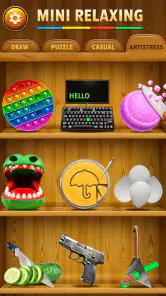
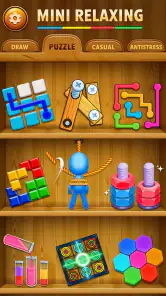
Analysis by Reviewed
When I have a spare minute and want to do something with my hands instead of opening a social feed, Mini Antistress Relaxing Games is the sort of casual game I’d consider. It gathers short activities that ask for little commitment: choose one, interact with it, and decide whether that brief pause has done its job. I see it as a small diversion, not a treatment for anxiety or a substitute for professional support. Its value depends on whether a simple, immediate activity helps you shift attention for a moment.
Starting with one small action
Mini Antistress Relaxing Games is a casual game from stick hunter, rather than a guided meditation app or a structured wellness program. It is free to download, with optional in-app purchases listed at $2.99 per item. The game is rated Everyone 10+, and its current version is 0.6. If you want breathing lessons, a sleep routine, or a longer progression system, I’d look elsewhere; if you simply want a quick activity to occupy your hands and attention, this is a more fitting choice.
The practical question is not whether a mini-game can solve a stressful day, but whether it gives you an easy next step when you’re stuck waiting or need a short mental change of pace. I’d open it with a specific boundary in mind: one activity while the kettle boils, for example, then back to what I was doing. That makes the game a deliberate break rather than another reason to keep the phone in my hand.
How the mini-game loop works
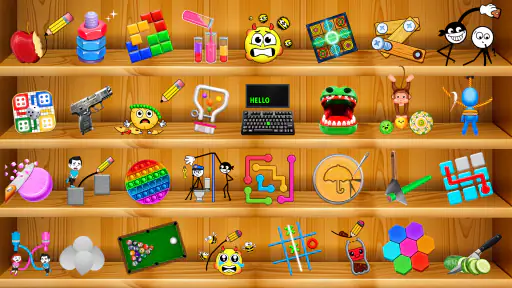
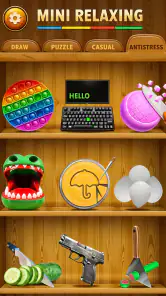
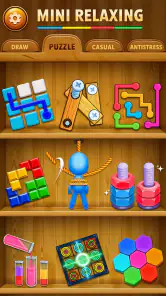
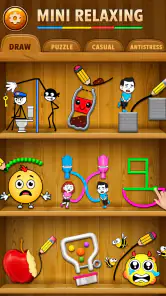
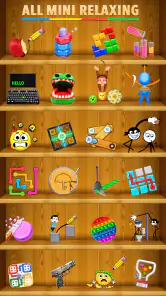
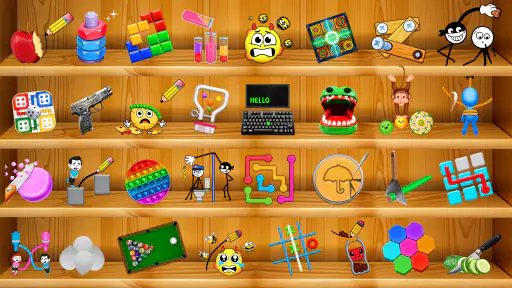
First off, the sheer variety of games is impressive. Whether you're into popping bubble wrap, drawing with sand, or slicing fruit, Mini Antistress Relaxing Games has something for you. The developers have clearly put a lot of thought into how to cater to different tastes and preferences.
Variety is most useful here as a way to find the kind of interaction you personally enjoy, not as a promise that every activity will suit every mood. If one option feels too busy or repetitive, I’d switch rather than force myself to like it. A helpful way to test the collection is to sample different actions and notice which one holds your attention without making you feel as though you need to win, improve, or keep going.
Getting from the menu to the activity
The user interface is as smooth as butter. You open the app and you're greeted with a clean, intuitive layout. No complicated menus or endless tutorials here. You can jump straight into the action, which is exactly what you want when you're feeling stressed. Just pick a game and start relaxing!
That direct start is a good fit for brief breaks because setup can otherwise swallow the time you meant to spend resting. I’d still treat the first visit as a quick orientation: choose one activity, try its basic interaction, and see whether it feels comfortable before settling in. If you’re opening the game while distracted, keeping that first session simple makes it easier to close it again when your break is over.
More From Our News Desk

Clash of Clans Is Won Between the Battles

Android Auto Makes the Case for Quieter Car Software

MobiOffice: Transforming Mobile Productivity with Seamless Integration

EA SPORTS FC™ Mobile Soccer: Redefining Mobile Sports Gaming

How Microsoft OneDrive Became a Mobile Productivity Giant

How Google Translate Breaks Language Barriers Effortlessly
What the feedback adds
One of the first things I noticed was the high-quality graphics. The visuals are crisp and vibrant, making each mini-game a pleasure to play. Coupled with soothing sound effects, the overall experience is like a mini-vacation for your senses. It's amazing how a simple game can transport you to a place of calm and relaxation.
The appealing part of a tactile mini-game is the short feedback cycle: an action gets a visible or audible response, and that response gives your attention something immediate to follow. I wouldn’t assume that sound or bright visuals will feel calming to everyone, though. If I’m already overstimulated, I’d choose the least busy-feeling activity I can find, and I’d lower or mute the sound if it distracts me. The point is to use the feedback as a focus, not to add more noise to a hectic moment.
A pause that has a natural stopping point
For me, the useful pattern is simple: choose an activity, interact with it, enjoy the immediate response, then decide whether I’m ready to stop or want another short round. That quick feedback can make a few idle minutes feel more intentional. One practical use is a short pause between tasks: I can open the game, focus on one activity, and put the phone away when the break ends rather than letting a feed pull me into an endless scroll. I’d keep the session brief if I’m trying to return to work quickly.
That stopping decision matters more than it might in a game built around a long campaign. Here, I’d use an external cue—a meeting starting, a drink steeping, or a timer I already rely on—to keep a quick break quick. If I keep tapping through activities after the original pause is over, the game has stopped serving that purpose. It works best for me when I decide what “enough” means before I open it.
Where it fits in a normal day
What's great about this app is that each game is designed to be quick and easy. Whether you're on a short break at work or just need a quick escape from life's chaos, you can fire up a mini-game and feel the tension melt away in just a few minutes. It's like having a pocket-sized therapist!
I’d describe that benefit more modestly: it can offer a brief distraction, but it can’t assess what is causing stress or provide care. A realistic use is waiting in a queue when I don’t want to start a video or get drawn into messages. I can try one activity, put the phone away when my turn comes, and carry on. For a longer commute, a quiet walk, or a moment when I need to think through a problem, putting the phone aside may be more useful than playing.
It can also work as a small transition between chores. After finishing one task, I might use a mini-game for a short reset before starting another, rather than letting a break turn into a longer watch session. That use depends on being able to stop easily; if I tend to lose track of time on my phone, I’d set a reminder first or choose a different kind of break.
Who is likely to enjoy the format
I can see this working best for people who like casual, low-commitment play and want several small activities in one place. It may also suit someone waiting for a ride or winding down between chores, especially if choosing an activity feels easier than deciding what to watch or read. The trade-off is that the short, playful format may not satisfy anyone looking for deep strategy, a clear challenge, or a carefully guided relaxation routine. In those cases, a focused puzzle game or a dedicated meditation app is likely a better fit.
Compared with a single-purpose fidget or simple toy, a collection gives you options when one kind of interaction stops holding your attention. Compared with a conventional puzzle game, though, the appeal is less about solving a difficult problem or building skill and more about the immediate action. I’d choose a focused puzzle when I want a goal to work toward, and a meditation app when I want structured guidance. This game sits between those choices: more interactive than passive audio, but lighter and less directed than either.
It may be a poor match if repetition irritates you, if you prefer a clear sense of progress, or if you need tools that support a consistent wellbeing routine. It is also not my first choice when I need to calm down in a way that involves stepping away from screens. In those situations, a breathing exercise, a walk, or another offline activity may fit better. The useful question is whether a small game helps you pause, rather than whether it can replace every other way of unwinding.
Trying it without overcommitting
The game has an average rating of 4.4 from around 3.8 thousand ratings, with over 1 million installs. Those figures suggest it has found an audience, but they don’t tell me which mini-games any one player will prefer. I’d try a few different activities before judging it: a tactile action may feel soothing to one person and repetitive to another. Since the game includes optional purchases, I’d also check the purchase prompt carefully and stick to the free experience unless an item genuinely seems worth it to me.
For a sensible first try, I’d sample more than one type of activity but keep the session short. That gives a fairer impression than deciding based on the first interaction alone, while avoiding the assumption that I have to explore everything at once. If a purchase prompt appears, I’d pause to read what it offers before making a choice; the free download does not mean every item is included at no cost. The game is available for Android devices running version 6.0 or later, so I’d check that requirement before installing on an older phone.
Another useful test is to notice how you feel after closing it. If you return to your task more settled or simply less tempted to scroll, it has done a small job well. If you feel impatient, overstimulated, or pulled into a longer session than intended, that is a sign to switch to a different break. The best activity is not necessarily the most visually appealing one; it is the one that leaves you ready to stop.
In summary, Mini Antistress Relaxing Games is more than just an app; it's a sanctuary for your mind. With its diverse collection of mini-games, user-friendly interface, and high-quality graphics and sound, it's a no-brainer for anyone looking to de-stress. So, if you haven't already, give it a try and let me know what you think. Trust me, your mind will thank you!
Why I might come back
The reason I might return is not a long-term goal but the low effort of starting again: when I have a spare moment, I can pick a different small activity rather than commit to a lengthy game. The game was released on May 2, 2025, and lists Android 6.0 as its minimum operating system, useful details to check against an older device before installing. Overall, I’d recommend trying it if a handful of casual mini-games sounds like a pleasant way to break up the day. I’d skip it if I need a structured tool for managing stress, or if repeated simple interactions quickly lose their appeal.
My verdict is that the loop is at its best when it stays small: action, immediate feedback, a little satisfaction, then a clear reset. The option to begin again makes it handy for an unplanned wait, but it is also the main trade-off—without a strong endpoint or deeper challenge, another round can feel much like the last. I’d keep it as a lightweight choice for short, screen-based pauses, and reach for something more purposeful when I want instruction, meaningful progression, or a break that gets me away from my device.
Mini Antistress Relaxing Games Frequently Asked Questions
What are Mini Antistress Relaxing Games?
Mini Antistress Relaxing Games is a collection of small, interactive games designed to help users unwind and alleviate stress. These games often include simple tasks or soothing activities that can be performed with minimal effort. They are perfect for short breaks during the day, providing a quick escape from daily stressors and helping to improve mental well-being.
How many games are included in Mini Antistress Relaxing Games?
Mini Antistress Relaxing Games typically includes a wide variety of games, usually more than 50, each offering a unique experience. From popping bubbles to drawing on sand, the games are designed to engage different senses and provide a diverse set of activities that cater to various preferences and relaxation needs.
Are Mini Antistress Relaxing Games suitable for all ages?
Yes, Mini Antistress Relaxing Games are generally suitable for all ages. The games are designed with simple, intuitive controls and lack any inappropriate content, making them ideal for both children and adults. They can serve as a fun way for families to unwind together or for individuals to enjoy some peaceful alone time.
Do I need an internet connection to play Mini Antistress Relaxing Games?
One of the advantages of Mini Antistress Relaxing Games is that they are designed to be played offline. This means you do not need an internet connection to enjoy these games, making them perfect for use in places where connectivity is limited, such as during travel or in remote locations.
Are there any in-app purchases in Mini Antistress Relaxing Games?
While many Mini Antistress Relaxing Games are free to download, some may offer in-app purchases. These purchases often include additional content, game levels, or features that enhance the user experience. However, the core games are usually fully playable without the need for any purchases, allowing players to enjoy stress relief without spending money.
Pros
- Wide variety of relaxing games.
- Easy and intuitive controls.
- Visually appealing graphics.
- Quick loading times.
- No intrusive ads.
Cons
- Limited free content.
- In-app purchases can be pricey.
- No multiplayer options.
- Requires internet connection.
- Sound may be repetitive.
- Category
- Casual
- Version
- 0.6