MemeMix Challenge: Funny Party
- 15.00
- 3.5
- Installs
- 1.00M
- Price
- Free

Screenshots
Analysis by Reviewed
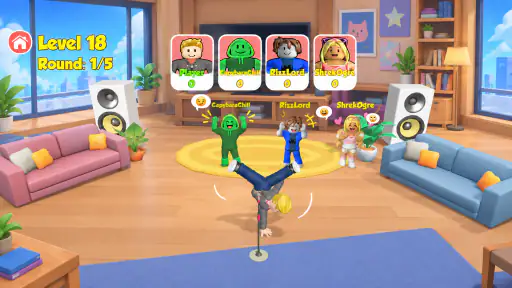
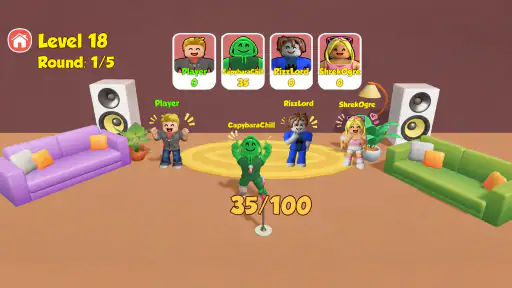
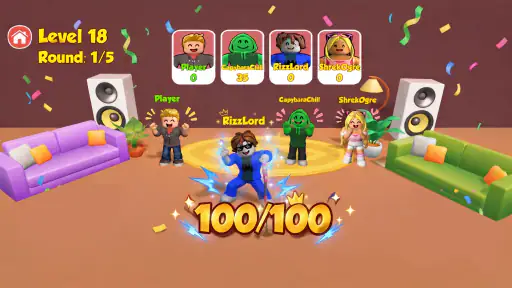
I’d treat MemeMix Challenge: Funny Party as a quick social game, not something to settle into for a long solo session. Its central idea is simple: make a funny sound, let the game score the attempt, and turn the result into a reason for friends to laugh and have another go. That makes it a natural fit for a casual get-together, a break between activities, or a video call where everyone needs an easy prompt. The appeal is less about mastering a complicated game system and more about seeing how people interpret the same sound in different ways.
Getting a round going without making it awkward
Start with the room, not the score
When I bring a sound-based party game into a group, I first make sure everyone knows the point is to have fun, not to perform perfectly. That advice matters here: the scoring can give a round structure, but the best moments are often the attempts that go slightly wrong. If people are shy, I’d begin with a small group or let one confident player go first. A silly example tends to lower the pressure more effectively than explaining the rules at length.
The game is listed as a casual title from Amobear VN Game Global, and its sound-mimicking premise gives it a different rhythm from familiar tap-to-match or puzzle games. You do not need a long explanation to understand the basic activity. One person makes a sound, the game evaluates it, and the group has something immediate to react to. That short cycle is useful when you have only a few minutes or when attention is split between conversation, snacks, and other party activities.
A realistic use case is a quiet lull while friends are waiting for food or deciding what to do next. Rather than asking everyone to install a complex multiplayer game and learn several controls, I’d use this as a low-commitment icebreaker. One person can try a sound, another can attempt it differently, and the group can decide whether the score or the performance deserves the bigger laugh. It is particularly suited to people who enjoy spontaneous imitation and do not mind being a little ridiculous.
Make the scoring part of the joke
I would not treat the score as a definitive measure of who is funniest. Sound imitation depends on how a person interprets the prompt and how comfortable they feel making noise around others. A result can give the group a playful point of comparison, but it cannot capture timing, confidence, or the unexpected delivery that makes a performance memorable. The better habit is to react to the attempt first and use the score as a second beat in the joke.
That distinction also helps avoid a common party-game problem: a competitive player turning a lightweight activity into a test. If one person keeps chasing a better result, I’d rotate the turn quickly and give everyone a chance rather than letting a single attempt dominate the room. The game’s concept works best when the social exchange stays central. People who want a strict contest with clearly defined strategy may find the experience too dependent on mood and performance.
Keep the first session simple
For a first try, I’d avoid overplanning. Open the game, understand how a turn works, and let the group discover its own pace. A useful pattern is to agree that everyone gets one attempt before anyone repeats a turn. That small rule keeps the activity moving without needing extra mechanics from the app, and it makes the comparison feel fairer when people have different levels of confidence.
If you are playing with someone who dislikes being recorded or heard, check in before handing over the device. The game’s central activity involves making sounds, so comfort and setting matter more than they would in a quiet word or card game. I would choose a place where laughter and noise are welcome, and skip it in a shared workspace, a library, or a setting where strangers could be disturbed. The most practical preparation is social rather than technical: make participation optional and keep the atmosphere relaxed.
Small habits that make repeat play smoother
Check the basics before passing the phone around
Because the game depends on hearing and making sounds, I’d check the device’s volume and the room’s noise level before a group session. That is not a special feature claim; it is a straightforward way to make a sound-focused activity easier to follow. In a noisy room, move closer together or pause nearby conversation during an attempt. If the game is difficult to hear, people may blame the score or the performance when the real issue is simply that the room is too loud.
I’d also make sure the phone is easy to pass safely. A single shared device can work well for a small group, but it creates a practical bottleneck if everyone wants to try at once. Passing it deliberately, rather than placing it in the middle of a crowded table, reduces interruptions and gives the next player a clear turn. This is a simple workflow, but it often makes a casual game feel more organized without making it feel formal.
Use short rounds and rotate naturally
The most reliable repeat-play habit is to stop while the group still wants another turn. Sound games can lose their charm if everyone is asked to imitate endlessly, especially once the same people have had several attempts. I’d keep turns brief and switch to conversation or another activity when the jokes start repeating. Coming back later can make the same basic idea feel fresh again, while pressing on through fading interest tends to expose the limits of a simple premise.
For a group with mixed confidence, let people choose whether to perform, judge, or simply watch. The game is built around imitation, so a person who does not want to make a sound may not get the same direct appeal as an eager participant. Still, they can enjoy the reactions and scoring as part of the group. If your gathering needs an activity where every person can contribute without performing, a trivia game, a word game, or a conventional party prompt may be a better fit.
Know what the purchase and platform details mean for you
The game is free to download, with optional in-app purchases priced at $1.99 per item. I’d start without spending and see whether the core activity suits the group before considering any purchase. That is a sensible approach for a casual party title: the value depends heavily on whether your friends actually enjoy making and reacting to sounds. A paid item is not automatically useful just because it is available, and I would not buy anything until I understood what it adds in practice.
It is rated for Everyone, which makes the stated age classification broad, but the social setting still deserves common sense. A child may enjoy making funny noises, while an adult group may use the same idea as a quick icebreaker; the tone comes from the people playing together. The game’s current version is 0.0.3, so I would approach it as an early-stage release and keep expectations measured rather than assuming it has the depth or polish of a long-established party franchise.
The minimum operating-system requirement is 7.1. Before planning a group session, check that the device you intend to use can run it, especially if you are relying on an older phone. The game has a 3.5 average from 495 ratings, alongside 15 written reviews, and has passed 1 million installs. Those figures suggest that people have tried it, but they do not tell me whether it will click with your particular group; the fastest test is a short round with friends who already enjoy playful imitation.
Where the format has limits
The main trade-off is that this is a performance-led activity. If you are alone, the social energy that gives the concept its appeal is missing, and the basic loop may feel thin compared with a solo puzzle or a game built around progression. Likewise, people who are uncomfortable making noises in front of others may not enjoy being the focus of a turn. I would not recommend choosing it as the main entertainment for a long evening unless your group is happy to invent its own variations around the simple premise.
It also differs from familiar party alternatives in a useful but narrow way. Trivia games reward recall, drawing games reward visual interpretation, and word games give quieter players time to think. This one puts immediate vocal performance at the center. That makes it faster to explain and potentially funnier in a lively group, but it gives less room to players who prefer planning or subtle participation. If your friends enjoy quick reactions and do not mind being heard, the difference is a strength; otherwise, a turn-based quiz or drawing game will probably include more people comfortably.
What I would not assume
I would go in expecting the stated sound-and-score concept, rather than a deep collection of modes or a long-term challenge system. The available description frames the game around mimicking sounds and sharing the results with friends. That is enough to judge its basic appeal, but it is not a reason to imagine extra mechanics. For a better experience, build repeatable habits around the activity you can see: take turns, keep the room audible, make participation voluntary, and let the group’s reactions matter more than chasing a particular outcome.
That approach is also a fair way to judge whether it belongs on your phone. Try it during a short social window, not as a replacement for every other party game. If the group starts inventing funny ways to take turns and asks to play again, it has done its job. If people hesitate, the score becomes the only focus, or the room is too noisy for anyone to follow what is happening, move on without trying to force the format.
Who should try it—and who should pass
I’d recommend MemeMix Challenge to friends who like imitation, silly voices, and games that can begin without a lengthy tutorial. It is especially promising as a quick icebreaker for a small, relaxed group, or as a change of pace between more involved activities. The casual classification is a good match for that role: it is about an easy shared moment, not demanding sustained concentration or a serious competitive session.
I would suggest skipping it if you want a substantial solo game, a quiet experience, or a party activity that gives every player a meaningful role without speaking. It may also be a poor match for a group that is embarrassed by performing or easily distracted by scoring. In those situations, a word-based or trivia alternative is likely to be more comfortable. The right choice depends less on the phone than on whether your friends enjoy being playful in public.
A modest party pick with a clear best use
My verdict is that this is worth trying when you have the right people and a little room for noise. Its appeal is specific: quick sound imitation, a score to react to, and the chance for friends to turn imperfect attempts into the highlight of a gathering. I would keep sessions short, avoid treating the results as a serious ranking, and use the free starting point to decide whether the group wants more.
At 3.5 on average, MemeMix Challenge: Funny Party is not an automatic recommendation for every player, and its early version makes a measured first impression more sensible than expecting a fully developed party toolkit. But when your group is in the mood to be silly, its narrow focus can be exactly what makes it easy to start. I’d keep it in mind for a casual get-together, not as the main game for a long night—and I’d let the laughter, rather than the score, decide whether to play another round.
MemeMix Challenge: Funny Party Frequently Asked Questions
What is MemeMix Challenge: Funny Party?
MemeMix Challenge: Funny Party is a casual party game built around meme-inspired prompts and humorous challenges. It is intended to bring friends together for quick rounds of lighthearted play, with the fun coming from reacting to the prompts and sharing amusing moments. Check the current store listing for the exact game modes and features, since these can vary by version.
Can I play MemeMix Challenge: Funny Party with friends?
The game is presented as a party-style experience, so it is best suited to playing alongside other people and comparing reactions to its challenges. Before downloading, check whether the version available on your device supports local group play, online multiplayer, or both; party games do not always offer the same connection options. Also consider whether everyone needs to install the app or whether one device can be shared.
Is MemeMix Challenge: Funny Party free to download?
The download price and any optional purchases can differ between the Android and iOS versions and may change over time. Review the app-store listing before installing to see whether the game is free, includes in-app purchases, or offers paid extras. If children will be playing, check the purchase settings on the device and consider enabling purchase approval to avoid accidental charges.
Does MemeMix Challenge: Funny Party need an internet connection?
Whether you need internet access can depend on the game’s current features and how you choose to play. Some party games work offline for shared-device play, while online modes, ads, updates, or certain content may require a connection. Check the store description and permissions for the version you plan to download, and test the game before relying on it at a gathering without Wi-Fi or mobile data.
Is MemeMix Challenge: Funny Party suitable for children?
A meme-based party game may include jokes, images, or user-facing content that is not suitable for every age group. The appropriate choice depends on the material in the current version, so adults should review the store’s age rating, screenshots, and content notes before letting children play. It is also sensible to check privacy details, advertising, and in-app purchase options before installing.
Pros
- Quick rounds make it easy to play during short breaks or between activities.
- A party-friendly format gives groups a simple way to get everyone involved.
- Humor-focused prompts can spark funny
- spontaneous moments with friends.
- The challenge format encourages players to think creatively under pressure.
- Its casual premise is approachable for players who don't usually play games.
Cons
- The jokes and prompts may not land with every player or group.
- Repeated prompts can make sessions feel less fresh over time.
- It may be less enjoyable when played alone than with a group.
- Players who dislike performing or sharing jokes may feel put on the spot.
- Humor can vary by age and culture
- so some content may not suit everyone.

- Category
- Casual
- Version
- 0.0.3