Mahjong Crush: Tile Match
- 265.00
- 4.8
- Installs
- 100.00K
- Price
- Free
Screenshots
Analysis by Reviewed
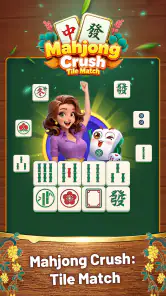
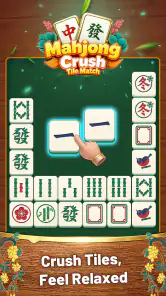
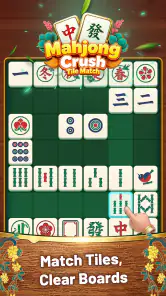
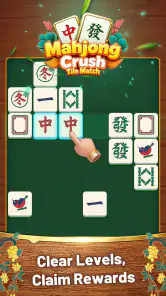
I spent time with Mahjong Crush: Tile Match as a light, casual puzzle game, and my first impression was straightforward: it is built around quick decisions rather than long sessions of complicated rules. You slide tiles, look for matching suits, and work toward clearing the board. That familiar loop makes it easy to understand within moments, but the real question is whether the short, focused format gives you enough variety to keep returning.
My answer is cautiously positive. This is the kind of game I would keep available for a spare minute, especially when I want something quieter than an action game and less demanding than a full strategy title. It is free to play, carries a mature age rating, and comes from the developer reupload. Its average rating is 4.8 from around 13 thousand ratings, while the game has passed 100 thousand installs. Those figures suggest that its simple idea has found an audience, although they do not replace the more important question: whether its pace and presentation suit the way you like to play.
How the tile loop feels in everyday play
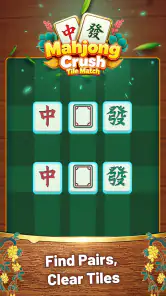
The opening experience is approachable because the central task is immediately visible. Instead of learning a large collection of systems, I could concentrate on the arrangement in front of me, identify useful matches, and decide which move would open the board most effectively. That low barrier is one of the strongest reasons to try it. Someone who normally avoids puzzle games with lengthy tutorials can understand the basic purpose without much preparation.
The sliding interaction also gives the game a different feel from a traditional mahjong solitaire title. In a conventional version, the main challenge is often recognizing exposed pairs and planning around blocked tiles. Here, the emphasis on sliding makes positioning part of the decision. A move is not only about finding two similar pieces; it is also about considering what the movement reveals or leaves behind. That makes the board feel more active than a simple search-and-tap exercise.
I found the best sessions happened when I treated each board as a small planning problem instead of rushing for the first available match. Clearing a convenient pair can be satisfying, but it may also remove the visual structure that helps you find a better sequence. My practical tip is to scan the entire board before moving anything, then prioritize matches that improve access to several nearby tiles. That habit adds depth without making the game feel like a serious commitment.
It is also useful for people who want a game that can be paused mentally between other tasks. I can imagine opening it while waiting for an appointment, taking a few turns during a quiet break, and putting it aside without needing to remember a complicated storyline. The trade-off is that players looking for character development, competitive rankings, or a large strategic campaign may find the experience too narrow. Its appeal depends on enjoying the board itself.
What makes the pace feel quick
The game’s perceived speed comes less from frantic action and more from the short distance between thought and result. You see a possible match, slide the relevant tiles, and immediately understand whether the board has become easier or more awkward. That compact feedback loop is well suited to casual play. I did not need to reserve a long uninterrupted block of time to appreciate a session.
There is a subtle difference between a game that is fast and one that merely feels uncluttered. This one benefits from keeping attention on the tile layout. When the board is readable, I can make decisions quickly; when several possible matches compete for attention, the same simplicity turns into a small test of visual discipline. I recommend slowing down whenever the arrangement becomes dense. A few seconds of inspection can prevent a careless move and make the puzzle feel more deliberate.
For everyday use, that means it fits best into short bursts rather than being treated as an all-evening game. A commuter could use it during a waiting period, a student could play a little between tasks, and someone winding down at home could enjoy a quiet puzzle without sound or story demands becoming the main focus. The experience is especially suitable when you want mental activity that remains contained.
One limitation follows directly from this design. If you prefer games that steadily introduce new controls, changing objectives, or elaborate challenges, the basic loop may begin to feel repetitive. Mahjong Crush: Tile Match has a clear identity, but clarity can also expose a lack of variety for players who need constant novelty. I would choose it for dependable, familiar puzzle sessions, not for a game that promises a dramatically different experience every time it opens.
Handling busy moments and repeated sessions
The most demanding moments are not likely to come from complicated controls. They come when the board offers several plausible moves and I have to decide which one preserves the best route toward a clear. That is where careless speed becomes a disadvantage. I found it more useful to group the visible options mentally: first consider matches that remove obstacles, then look at pairs that create new access, and only afterward take the easy match that changes little.
This approach also helps during repeated play. When I return after several short sessions, I can keep the game engaging by giving myself a different focus. In one session, I might aim to make the cleanest sequence I can. In another, I might deliberately examine the board more carefully and avoid impulsive slides. These are self-imposed goals rather than separate modes, but they make the familiar mechanics feel less automatic.
A realistic scenario would be playing after dinner while waiting for a television program to start. I would not expect a deep campaign to occupy the entire evening, but I could complete a few focused rounds, stop when my attention wanders, and return later. That makes it a better companion for fragmented time than for a long uninterrupted gaming session. If you regularly play with one hand while distracted, however, the need to inspect tile relationships can make rushed play frustrating.
Heavy use also means repeated visual scanning. Even though the rules are simple, the game asks you to compare shapes or suits over and over. I recommend taking short breaks if you notice yourself making matches without checking the next position. The strongest part of the design is thoughtful board reading, and that benefit disappears when fatigue turns every move into a guess.
Stability, recovery, and what I would expect from the current build
The current version is 1.0.2, which places the game in an early stage of its release history. I would approach it with reasonable expectations: the central puzzle should be judged on whether it is clear and enjoyable, while long-term polish may depend on how the developer continues to refine it. The release date is May 26, 2026, so players installing it near launch should remember that an early version can feel more focused than a mature, feature-heavy puzzle platform.
In my experience of evaluating a game like this, reliability is not only about whether it opens. It is also about whether the board remains understandable after interruptions, whether a mistaken slide is easy to recognize, and whether returning to play feels natural. The simple structure works in its favor because there are fewer layers to keep track of than in a role-playing game or a live multiplayer title. That makes recovery from a brief pause less mentally expensive.
I would still recommend a sensible habit: finish or pause at a clear point before switching to another app. Puzzle games can be easy to resume when the board is visible, but a player should not assume that every interruption will preserve an unfinished decision exactly as expected. This is not a criticism of a particular failure; it is simply the safest workflow for any short-session game. If you are playing during a busy day, treat each board as something to leave in a settled state.
The developer name, reupload, is worth noting because it is part of what appears with the game, but it does not tell me how ambitious the longer-term support will be. I would not install this expecting a clearly established ecosystem around it. I would install it because the core activity appeals to me now. That distinction matters for readers who choose games based on frequent content expansion, community events, or a long public development history.
Device fit, age rating, and practical expectations
The minimum operating system is Android 6.0, so the compatibility range reaches well beyond only the newest phones. That is helpful if you use an older device and want a casual game rather than a visually demanding release. At the same time, operating-system compatibility should not be confused with identical performance on every handset. Screen size, available memory, background apps, and general device condition can still affect how comfortable any game feels.
Because the gameplay centers on a board of tiles rather than rapid three-dimensional movement, I would expect it to be a gentler choice for modest hardware than a graphically intensive action game. I am deliberately keeping that expectation practical rather than promising a particular battery result or loading time. The useful point is that the design does not appear to demand the same kind of sustained rendering associated with large 3D worlds. For an older phone, closing unnecessary background apps is still a sensible way to keep the session comfortable.
The game is free, which removes the biggest barrier to trying it. That makes it easy to test on your own device before deciding whether it deserves a permanent place on your home screen. Free access is particularly valuable here because the appeal is personal: some players will enjoy the calm repetition, while others will quickly want more objectives. I would give it a short trial rather than judging it solely by its high rating.
The mature 17+ content rating is an important part of the decision, especially for families. I would not treat the simple tile mechanics as a reason to ignore that label. Parents should check the rating in context before allowing a younger player to install it, and adults who want a clearly family-oriented puzzle should look for an option with an age designation that better matches their needs. The gameplay may look harmlessly casual, but the published rating should guide the choice.
Where it stands beside other casual puzzle choices
Compared with classic mahjong solitaire, this game’s sliding emphasis makes movement feel more central. Traditional alternatives can be better for players who enjoy a slow, purely matching-based search through layered layouts. Mahjong Crush: Tile Match is more appealing to me when I want the board to respond to positioning and when I prefer a brisker decision cycle.
Compared with match-three games, it is less about building chains, chasing cascading effects, or managing a changing grid after every move. That can feel refreshingly controlled. A match-three player who enjoys surprise combinations may find it restrained, while someone who dislikes chaotic boards may appreciate the more deliberate relationship between a slide and its result.
It also differs from word puzzles because the challenge is visual rather than language-based. That makes it a more accessible choice when I am tired or do not want to concentrate on spelling and vocabulary. On the other hand, word games usually offer a broader sense of progression through themes, dictionaries, or increasingly difficult clues. This title is the better fit when the pleasure comes from arranging and clearing tiles, not from learning or recalling words.
My most useful comparison is with minimalist offline-style puzzle games in general. Those games often succeed through one strong mechanic, and this one follows that tradition. The benefit is low friction; the cost is that there may be less to discover after the basic interaction becomes familiar. If you want a compact mental break, that is a fair trade. If you want a long-term hobby with layered systems, another casual game will probably serve you better.
Who should install it, and who should pass
I would recommend it to players who enjoy mahjong-inspired matching, prefer short sessions, and like making small positional decisions without learning a complicated rulebook. It is also a reasonable choice for an older Android phone because the minimum requirement reaches Android 6.0. The free price makes experimentation simple, and the current 1.0.2 build gives interested players a clear starting point.
I would be more cautious about recommending it to anyone who needs a family game, because the mature 17+ rating should not be brushed aside. I would also steer away players who want multiplayer competition, a narrative campaign, or a strong sense of character progression. Nothing about the central experience suggests that those are the reasons to choose it. Its value is concentrated in the board-by-board puzzle loop.
For me, the strongest tip is to play with intention: inspect first, slide second, and use the move that improves future access rather than simply taking the easiest visible pair. That small change turns the game from a basic matching distraction into a more satisfying exercise in sequencing. It also gives experienced puzzle players a way to stay engaged without pretending that the game is more complex than it is.
Another practical tip is to use it as a transition game. A few minutes before work, during a waiting period, or after finishing a task can be enough to enjoy it without letting the repetition dominate the day. If you notice that every board feels identical, stop trying to force longer sessions. The game is at its best when its compact design matches your available attention.
My performance verdict after weighing the trade-offs
Mahjong Crush: Tile Match succeeds because it understands the appeal of a small, readable puzzle. Sliding tiles and matching suits are easy to grasp, but careful ordering gives the board enough thought to support repeat play. I like that it can fit into ordinary gaps in the day and that its minimum Android requirement makes it approachable for people who are not using a recent phone.
Its weaknesses are equally clear. The focused mechanic may not provide enough variety for players who expect constant new content, and the mature rating makes it unsuitable as an automatic family recommendation. The early version number and recent release also make me view it as a game to try for its present experience rather than as a proven long-term platform. Those are not reasons to reject it; they simply define the right expectations.
My final recommendation is to install it if you want a free, casual tile puzzle that rewards observation more than reflexes. Give the board a careful scan, use the sliding mechanic to open future choices, and judge it after several short sessions rather than one rushed attempt. If that rhythm feels satisfying, the strong user response makes sense. If you need story, competition, or a constantly changing challenge, I would choose a deeper alternative instead. For a quiet, compact matching game, though, this is an easy one for me to suggest to the right friend.
Pros
- Simple matching rules make it easy for beginners to start playing.
- Short levels are convenient for quick sessions during breaks.
- Relaxing tile designs create a calm
- casual gaming experience.
- Progressive challenges help keep the gameplay engaging over time.
- Works well for players who enjoy traditional Mahjong-style puzzles.
Cons
- Some levels may feel repetitive after extended play sessions.
- Difficulty can vary noticeably between consecutive puzzles.
- Hints and other assists may be limited during challenging boards.
- Frequent rewards or prompts can interrupt the flow of a level.
- Players seeking competitive multiplayer may find the experience too solitary.
- Category
- Casual
- Version
- 1.0.2