Lucky Harbor Arcade
- 85.00
- 4.5
- Installs
- 10.00K
- Price
- Free

Screenshots



Analysis by Reviewed
Lucky Harbor Arcade is the kind of casual game I open when I want a short, low-pressure distraction rather than a demanding challenge. I found its harbor theme easy to settle into, and the mix of themed slot-style activities, mini-games, and daily free rewards gives the app more variety than a single-screen spinner. It is free to play, aimed at Everyone, and developed by LEARN APPS, so the basic appeal is clear: quick sessions, simple controls, and a relaxed arcade mood.
My overall impression is positive, but with an important qualification. This is best treated as a light entertainment game, not as a serious strategy title or a substitute for real-world gambling. The reward loop is designed to encourage regular visits, and that can be enjoyable when I keep my sessions brief. It can also become repetitive if I expect deep progression, competitive depth, or a large collection of systems to master.
How the harbor experience works in everyday play
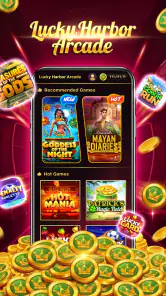
The central appeal is the combination of themed slots and smaller activities. Slots provide the familiar, almost effortless interaction: start a round, watch the result, and decide whether to continue. The mini-games help break up that rhythm. In practice, I would use the slot-style mode when I only had a minute or two, then move to a mini-game when I wanted a little more involvement without committing to a long session.
That division makes the game suitable for several ordinary moments. It works during a short break, while waiting for an appointment, or at the end of the day when I want something visually lighter than a competitive multiplayer game. The daily free rewards also give me a reason to return even when I do not feel like playing for long. A useful routine is to collect the daily reward first, play one or two activities, and then stop before the session turns into automatic tapping.
The harbor setting matters because it softens the presentation. Instead of feeling like a stark menu of repeated rounds, the game frames the experience around a themed location. I found that helpful for casual play, although the theme alone cannot carry the experience forever. After the novelty fades, the quality of the mini-games and the balance of the reward cycle become more important than the scenery.
Controls are approachable enough for people who do not normally play mobile games. There is no need to learn a complicated character build or memorize a large set of commands. That simplicity is a strength for families and occasional players, especially because the age rating is Everyone. It is also the main reason experienced players may find the game too shallow. If you want precise timing, tactical planning, or a sense that every decision meaningfully changes the outcome, this may feel limited.
What the free model means in practice
The important point is that the game is listed as free. That makes it easy to try without paying at the outset, which suits a casual title designed around short visits. However, “free” does not automatically tell me how spending fits into the complete experience. The available product facts confirm the price category, but they do not establish specific purchase options, costs, or whether spending changes the pace of progress.
Because of that, I would approach the game with a simple personal rule: enjoy the free loop first and never spend merely to recover from an unlucky round. Slot-style mechanics can make another attempt feel tempting, particularly when rewards are presented as a daily habit. Keeping a fixed play limit is more useful than trying to predict the next result. This protects the relaxing quality that attracted me to the game in the first place.
I also would not confuse in-game rewards with cash value. The harbor activities are entertainment, and any virtual winnings or bonuses should be viewed as part of the game’s progression rather than something that can be converted into real money. That distinction is especially important when recommending an Everyone-rated game to younger players. Parents may still want to supervise how the child uses the device, even though the age classification is broad.
Progress feels better when I set a stopping point
The daily reward structure is useful, but it can subtly change how I play. Instead of opening the game because I genuinely want a round, I may start opening it because I do not want to miss something. That is a common pressure point in free casual games. My practical solution is to decide in advance whether today’s session is for collecting the reward, playing a mini-game, or simply relaxing for a few minutes. Once that purpose is complete, I close the app.
A second helpful habit is to judge progress by entertainment rather than by the size of a virtual balance. If a session is enjoyable, it has already done its job. If I am repeatedly replaying a mode only because I feel close to a target, the reward system is controlling the session more than I am. This is one of the less obvious trade-offs of the design: daily bonuses can make the game feel welcoming, but they can also make skipping a day feel more significant than it really is.
For a casual player, that structure is manageable. For someone who dislikes timers, recurring rewards, or any system that encourages routine check-ins, the same feature may be irritating. In that case, a self-contained puzzle game with fixed levels would probably be a better fit. Those games usually offer a clearer stopping point and place less emphasis on returning every day.
Fairness, competition, and the limits of what can be judged
Lucky Harbor Arcade is not the kind of game I would choose for serious competition. Its appeal comes from chance-based rounds and casual mini-games, not from a deep ranked ladder or a skill-focused multiplayer format. That makes fairness a slightly different question. I am less concerned with whether another player has a stronger build and more concerned with whether the reward loop feels transparent and whether progress remains enjoyable without spending.
The confirmed product details identify the game as casual and free, but they do not provide a complete breakdown of purchase mechanics, reward probabilities, matchmaking, or competitive rules. I therefore cannot responsibly claim that the game is pay-to-win, nor can I promise that every reward path is equally generous. The fairest conclusion is narrower: it is suitable for relaxed personal play, while anyone specifically seeking a transparent competitive environment should look for a game that publishes clearer information about rankings, odds, and monetization.
That distinction also affects how I would compare it with ordinary alternatives. A traditional puzzle game usually rewards planning and repeated improvement. A standard arcade game often tests reaction time. Lucky Harbor Arcade sits somewhere else: it offers a themed, low-effort loop where chance and presentation do much of the work. If I want to unwind, that difference is welcome. If I want to feel that better decisions reliably produce better results, I would choose a skill-based alternative instead.
The mini-games may provide more agency than the slot-style activities, but I would still avoid assuming that every outcome depends entirely on player skill. Without a detailed explanation of each mode’s rules, the sensible approach is to enjoy them for their moment-to-moment interaction rather than treating them as a reliable test of ability. That is a useful expectation-setting point for anyone downloading the game after seeing the word “arcade.”
Three practical ways to keep the experience fair to yourself
Use the daily reward as a small bonus, not as a reason to extend a session. Collecting it and leaving is a perfectly valid way to play.
Separate entertainment time from spending decisions. If a round feels frustrating, take a break instead of trying to reverse the result with another attempt.
Compare the game with your actual goal. Choose it for atmosphere and quick variety; choose a puzzle or action title when you want skill, mastery, or measurable competition.
These habits are not criticisms of the game so much as a way to use its design deliberately. Casual reward systems work best when I remain in control of the length and purpose of each visit. They work less well when I treat every bonus as an obligation or every virtual result as a meaningful achievement.
Who should try it, and who should skip it
I would recommend the game to someone who enjoys themed slot-style entertainment, short mini-games, and a simple daily check-in. It is also a reasonable choice for a family member who wants an approachable casual title rather than a complex role-playing game. The Everyone rating supports that broad audience, although adults should still guide younger players around device use and any spending decisions available on the device.
I would be more cautious about recommending it to players who need a substantial long-term challenge. If you are looking for detailed strategy, a strong story, competitive rankings, or a campaign with carefully designed levels, the harbor format may not provide enough depth. Players who dislike chance-based outcomes should also skip it, because the slot-style portion is central to the identity of the game rather than a minor side activity.
It is not the best choice for someone searching for a genuinely skill-pure arcade experience. A reflex game, rhythm game, or traditional puzzle title will usually make the connection between practice and performance clearer. Lucky Harbor Arcade is better understood as a relaxing amusement space with occasional interaction than as a demanding arcade test.
Technical details, expectations, and my trust verdict
The current version is 1.0.2, and the game runs on Android 7.0 or later. That makes compatibility fairly approachable for people using older supported Android devices. The app has passed the early discovery stage with over ten thousand installs, alongside an average score of 4.5 from around two hundred ratings and roughly eighty-five written reviews. Those figures suggest a generally favorable reception, though they are not a substitute for deciding whether the specific play style suits you.
The release date is July 8, 2026, so I would view the product as relatively early in its public life. That matters when thinking about updates and long-term variety. A newer casual game may still be finding its rhythm, and its future appeal could depend on how the developer expands or refines the activities. I would not download it expecting a mature ecosystem built around years of content. I would download it because the current concept sounds pleasant enough to try for free.
One question many players will have is whether the game can be enjoyed without paying. The answer I can give responsibly is that it is free to download and try, with daily free rewards forming part of the experience. The exact role of optional purchases is not established by the product facts available here, so I would check the purchase screen carefully before confirming anything. That is not a reason to avoid the game; it is simply the right way to approach any free mobile title.
Another likely question is whether it needs an internet connection. I would not make a firm promise either way without a clearly stated offline mode. Since daily rewards and any account-related systems can depend on current app behavior, I would test the game in the situation that matters to me rather than planning around offline access. If I need a dependable airplane-mode game, a fully offline puzzle title is the safer choice.
Players may also wonder whether progress transfers between devices. I would not assume that it does. Before changing phones or reinstalling, I would look for an in-game account or backup option and read the wording carefully. This is a practical precaution for a game built around recurring rewards: losing access to a local progression path can be more frustrating than losing a single short session.
My final question is whether the game is worth keeping installed after the first day. For me, the answer depends on how much I value atmosphere and routine. If the harbor theme, mini-games, and free daily rewards make a five-minute break feel pleasant, it earns a place as a small time-filler. If I quickly notice that I am opening it from habit rather than enjoyment, uninstalling it is the sensible decision. A casual game should fit around my day, not dictate it.
My trust verdict is cautiously positive: I like the clear, approachable concept and the fact that the game can be tried for free, but I would keep expectations modest around depth, competition, and spending transparency. Lucky Harbor Arcade is most convincing as a relaxed harbor-themed diversion, not as a high-skill arcade challenge or a serious progression game.
In the end, I would recommend Lucky Harbor Arcade to friends who want quick sessions, colorful themed activities, and a gentle daily reason to return. I would tell them to treat virtual rewards as entertainment, set their own stopping point, and review any purchase prompt before accepting it. Used that way, the game has a pleasant niche: it gives casual players something easy to pick up, offers more variety than a lone spinner, and asks for very little commitment. Those who want transparent competition, deep mastery, or a fully self-contained offline experience should choose another category instead.
Pros
- Quick arcade-style rounds are easy to pick up and play.
- Bright visuals and lively sound effects make sessions entertaining.
- Simple controls work well on both phones and tablets.
- A variety of challenges helps keep gameplay from feeling repetitive.
- Short play sessions suit casual gaming during spare moments.
Cons
- Progress may feel repetitive after extended play.
- Some features may require an internet connection.
- Ads can interrupt gameplay
- depending on the version.
- The game may offer limited depth for experienced arcade players.
- Performance can vary on older or less powerful devices.

- Category
- Casual
- Version
- 1.0.2