Lavish Luck Slots
- 3.98K
- 4.5
- Installs
- 500.00K
- Price
- Free

Screenshots




Analysis by Reviewed
I approached Lavish Luck Slots expecting a straightforward casual slot game, and that is exactly where its appeal begins. It does not ask me to learn a complicated system before I can play. The focus is on short sessions, quick spins, and the visual promise of a lavish casino-style setting. That simplicity makes it easy to pick up when I have a few spare minutes, although it also means the experience depends heavily on how much I enjoy repetition and chance-based play.
Developed by Prudent Owl Limited, this free game sits in the casual category and is suitable for players aged Everyone 10+. It has reached over 500 thousand installs and holds a 4.5 average from around 9 thousand ratings, which suggests that its basic format is connecting with a sizeable audience. I found that its strongest quality is not depth in the traditional game sense, but the way it packages familiar slot mechanics into a polished, easy-to-follow routine.
A polished casino mood built for quick sessions
My first few minutes with the game were immediately understandable: select a spin, watch the reels resolve, and see whether the result creates a rewarding combination. That low barrier is useful for anyone who wants something casual rather than a game that demands planning, reading, or a long tutorial. The presentation gives the activity a sense of occasion, so even a very short visit feels more deliberate than simply tapping through a menu.
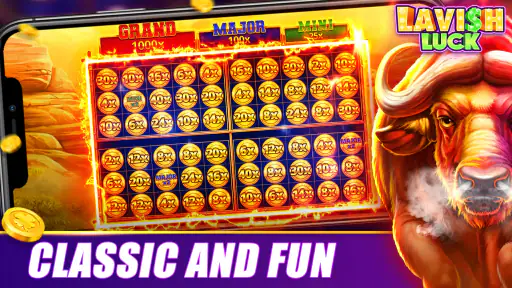
The setting is important because slot games can become visually interchangeable. Here, the lavish theme gives the experience a clear identity. The design language points toward glamour, bright rewards, and a celebratory casino atmosphere rather than a quiet puzzle board or an adventure world. I would not describe it as a narrative game, but it does establish a consistent mood, and that consistency helps the repeated spins feel like part of one coherent place.
That said, the game’s simplicity is also its main limitation. Players looking for character development, exploration, tactical choices, or a campaign with meaningful progression will probably find the format narrow. The pleasure comes from anticipation and presentation, not from mastering a complex ruleset. I think that distinction matters before installing it: this is best treated as a casual entertainment loop, not as a substitute for a deeper casino simulation or a strategy game.
One practical strength is how naturally it fits into interrupted play. I can imagine opening it while waiting for transport, taking a few spins during a break, and closing it without losing the thread of a story or a mission. There is no need to reserve a long block of time for the game to make sense. Its rhythm is self-contained, which makes it more convenient than many casual games that still expect players to complete a level before leaving.
The trade-off is that short sessions can expose repetition quickly. If the visual reward of the reels and the suspense before a result do not appeal to you, there is not much else here to pull you forward. I would recommend trying it with modest expectations: the game is about enjoying the moment-to-moment spin, rather than waiting for a large collection of mechanics to unfold later.
How the visual language supports the play
The art direction does useful work by making the central action easy to read. In a slot game, the player needs to understand the reels, recognize a result, and notice when something rewarding has happened. The lavish presentation frames those events as celebrations, giving the screen a sense of movement and occasion without requiring a complicated interface.
I especially appreciate the way the setting and mechanics point in the same direction. The glamorous theme is not an unrelated decoration placed around a generic puzzle. It reinforces the idea that every spin is a small event. That connection makes the game feel more intentional, even though the underlying action remains simple.
For new players, this visual clarity lowers the learning curve. Someone who has never spent much time with digital slots should be able to understand the basic interaction quickly. For experienced slot players, the benefit is different: the familiar structure lets them focus on the presentation and pacing instead of deciphering unusual controls.
There is a subtle usability lesson here. When a game is built around chance, the player cannot influence every outcome, so the surrounding feedback becomes especially important. Clear visual reactions help distinguish an ordinary result from a more exciting one. They also make the waiting period between starting a spin and seeing the outcome feel purposeful rather than empty.
Still, visual richness cannot solve every issue. A glamorous theme may attract players who enjoy casino aesthetics, but it will not change the fundamental fact that the player’s control is limited. I would skip this game if I need a strong sense of agency in every turn. A puzzle, card battler, or arcade game would be a better fit when I want skill to dominate the result.
Sound, timing, and the feeling of a spin
The sound design and timing matter because a slot game is experienced as much through anticipation as through its final result. The pause while the reels resolve creates a small build-up, and the visual response at the end gives the action a clear finish. Even without a story, that sequence provides a beginning, middle, and end to each interaction.
I found the pacing most enjoyable when I treated each spin as a brief activity rather than rushing through a large number of them. The game’s mood works best when I notice the presentation: the anticipation, the reveal, and the celebratory response. If I tap mechanically without paying attention, the experience becomes much flatter, because there are fewer decisions to occupy me.
This is also where personal preference becomes important. Some players like a lively casino atmosphere and will enjoy the audio-visual punctuation around a result. Others prefer silent, minimalist games they can play in any setting. For the latter group, the game may be more comfortable with the device muted, but doing so can reduce part of the intended mood. I would test it in both modes and decide whether the sound adds energy or becomes distracting.
The pacing is well suited to a casual audience because it does not demand sustained concentration. I can play while taking a short break and stop after a small number of spins. However, the same relaxed rhythm may feel slow to people who want constant action or rapid skill-based feedback. A traditional arcade game will provide more direct reaction and control, while this title asks the player to enjoy suspense and presentation.
One useful habit is to separate entertainment from expectation. I get more value from the game when I view the sounds, animations, and reel movement as part of a themed pastime rather than as a promise of a particular outcome. That mindset keeps the atmosphere enjoyable and prevents the basic loop from turning into a frustrating search for a result that may not arrive.
Where the mechanics fit—and where they do not
The core mechanics are a good match for the game’s casual identity. Spins are easy to understand, outcomes arrive quickly, and the player can return without remembering a complicated build or inventory. That makes it friendly to newcomers and convenient for people who want a low-commitment game on a phone.
The important limitation is that chance remains central. I cannot approach each round with the same kind of control I would have in a match-three puzzle, a platformer, or a card game. Any sense of progress comes from continuing the slot experience and enjoying its rewards, not from steadily improving a personal technique. Players who need their choices to determine most outcomes should be aware of that before committing time to it.
For me, the best way to use it is as a short mood game. I would open it when I want something bright and uncomplicated, play for a limited period, and leave before the repetition becomes tiring. It works less well as my only mobile game, because it does not offer the variety I would expect from a broader casual collection.
Another trade-off is the difference between familiarity and surprise. The recognizable slot format means I can begin immediately, but it also restricts how much the game can surprise me mechanically. The art direction and pacing carry more of the experience than strategic innovation. That is not a flaw if the intended audience wants a comfortable, recognizable loop; it is a weakness for players who judge games mainly by new systems.
The current version is 2.3, and the game requires Android 6.0 or later. That makes the compatibility requirement relatively approachable for people using older supported Android devices, though I would still keep expectations realistic on very modest hardware. A game can be technically compatible and still feel less comfortable if the screen is small, the device is slow, or the player dislikes bright, busy presentation.
Because it is free, the initial barrier to trying it is low. That makes experimentation sensible: install it, play enough to understand whether the spin rhythm suits you, and decide based on your own tolerance for repeated chance-based sessions. I would not choose it because it is free alone. I would choose it because the free entry lets me sample a specific casino mood without first committing to a purchase.
Everyday uses and the right kind of player
Imagine waiting twenty minutes for an appointment. I might not want to start a story-driven game, because I could be interrupted before reaching a natural stopping point. I might also be too tired for a puzzle that requires careful thought. This game fits that moment: I can open it, enjoy a few spins, and close it when my name is called. The session has a complete shape even if it lasts only a short while.
It also suits players who enjoy themed presentation more than complicated progression. Someone who likes the look and rhythm of casino entertainment, but wants a simple mobile format, will probably understand the appeal quickly. The age guidance of Everyone 10+ makes it appropriate for a broad audience, although parents should still decide whether chance-based play and casino styling are suitable for the individual child.
I would be more cautious recommending it to anyone who is easily drawn into extending a session after an unsatisfying result. The design of a slot game naturally encourages another attempt, because every spin ends with the possibility of a more exciting outcome. Setting a personal time limit before playing is a sensible way to keep the experience casual rather than letting it take over a longer break.
It is also not the right choice for players seeking an offline hobby with a strong sense of accomplishment, or for anyone who wants a competitive game where practice clearly improves performance. In those cases, a puzzle game, rhythm game, or traditional arcade title would offer more direct feedback. This game is strongest when the player accepts its limited control and values atmosphere, convenience, and quick entertainment.
Compared with other casual games, its advantage is immediate accessibility and a focused identity. Many casual titles use tasks, levels, or collection systems to keep attention. This one relies more on the ceremony of the spin and the appeal of its lavish setting. That makes it easier to start, but potentially less rewarding for someone who wants goals that develop over time.
My final view of the atmosphere
After spending time with it, I see Lavish Luck Slots as a focused casual game that understands its own purpose. The visuals establish a glamorous setting, the sound and timing give each spin a small sense of occasion, and the mechanics remain simple enough for quick visits. Those elements support one another instead of competing for attention, which gives the game a coherent playable mood.
Its weaknesses are equally clear. The loop can become repetitive, the player has limited influence over outcomes, and the presentation cannot replace deeper variety. I would not recommend it to someone who wants a story, demanding strategy, or a game built around measurable skill. I would recommend it to a friend who enjoys slot-style entertainment and wants a bright, easy-to-enter option for short mobile sessions.
Prudent Owl Limited has kept the experience approachable, and the game’s strong audience response—with around 4 thousand written reviews alongside its broader rating activity—shows that the format has found interested players. I would still judge it personally rather than relying on popularity, because enjoyment here depends heavily on how comfortable I am with repetition and chance.
My recommendation is simple: try it as a small, deliberately limited pastime, not as a game you expect to keep expanding. If the lavish casino mood, reel pacing, and celebratory feedback appeal to you, the free download makes it easy to see whether it belongs in your casual rotation. If you need constant decisions or a stronger feeling of control, choose a different genre instead. For the right player, its restraint is the point: it creates a polished little atmosphere and lets the spin remain the center of attention.
Pros
- Bright visuals and lively animations make each spin feel engaging.
- Simple controls let new players start spinning without a steep learning curve.
- A broad selection of slot themes provides variety between sessions.
- Quick rounds suit short play sessions on phones and tablets.
- Free-play access lets users try the game without immediate payment.
Cons
- Frequent reward prompts may feel distracting during regular play.
- Progress can feel slow without using bonuses or optional purchases.
- Slot outcomes rely entirely on chance
- with no skill-based advantage.
- Some features may require an internet connection to function properly.
- Players should monitor spending
- as in-app purchases can add up quickly.
- Category
- Casual
- Version
- 2.3