Joy Match 3D
- 1.91K
- 4.7
- Installs
- 500.00K
- Price
- Free

Screenshots

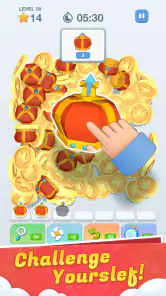
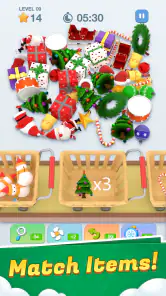
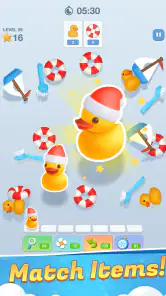
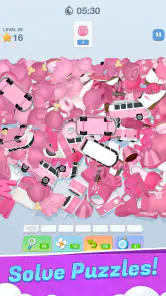
Analysis by Reviewed
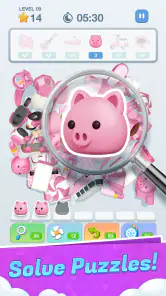
I spent time with Joy Match 3D as a light, pick-up-and-play puzzle game, and my first impression was easy to understand: it turns matching objects into a small 3D sorting challenge. The idea is simple enough to start immediately, but the spatial view gives each round more character than a flat matching board. You are not just looking for identical pictures; you are also trying to notice what is visible, what is partially hidden, and which selection will keep the board manageable.
That makes it a natural fit for short breaks. I could play a little while waiting, switch to something else, and return without needing to remember a complicated story or control scheme. At the same time, the casual label should not be mistaken for completely effortless play. Once the arrangement becomes crowded, observation and order matter. My overall view is that this is a pleasant option for players who enjoy tidy visual puzzles, provided they are comfortable with the usual free-game tradeoff between accessible play and optional spending.
How the 3D matching idea feels in everyday play
The central appeal is the physical-looking arrangement of objects. Instead of scanning a traditional grid, I look around a compact scene and search for matching items. That small change affects how I play: I naturally rotate my attention around the pile, check the exposed pieces first, and think about whether removing one object will reveal another useful match. It feels closer to organizing a messy tabletop than completing a conventional tile board.
The strongest moments come when a cluttered arrangement suddenly becomes readable. I might spot two matching pieces near the front, clear them, and then discover the third item tucked behind another shape. That sense of gradually opening the board gives the game its rhythm. It also means that rushing is not always the best approach. A quick tap on an obvious object can be less useful than taking a few seconds to identify a safer sequence.
I found the game easiest to enjoy when treating each round as a visual exercise rather than a test of speed. The casual format makes it suitable for relaxed sessions, but the three-dimensional layout still rewards attention. If you like sorting drawers, arranging small collections, or finding patterns in a busy image, the basic concept should feel immediately approachable.
Why the perspective matters more than the premise
Matching three items is familiar territory, so the perspective is doing most of the creative work here. The 3D presentation changes what counts as a good move. In a flat board, the relevant pieces are usually visible at once. Here, an object can be easy to miss because another item draws the eye or partly covers it. The result is a puzzle that depends on visual scanning and board awareness as much as recognition.
That also creates a useful distinction from many standard match-three alternatives. Those games often focus on swapping pieces in a fixed grid, building combinations, or chasing a chain reaction. This game feels more deliberate. I spend less time planning a large cascade and more time deciding which individual objects should be removed first. Players who prefer calm sorting may find that more satisfying, while fans of explosive combos may find it comparatively restrained.
The 3D approach is not automatically better for everyone. Some people may prefer the instant clarity of a flat board, especially when they want a quick puzzle with no visual searching. Here, the same depth that makes the game distinctive can also make a crowded round feel busy. I would choose it for object recognition and spatial tidying, not for competitive score chasing or elaborate strategic chains.
What you receive before spending anything
Joy Match 3D is free to start, which is the most important cost fact for someone deciding whether to try it. I could approach it without paying an entry fee and judge the core experience first. That matters for a casual game because the right question is not whether it looks interesting in a store preview, but whether the matching loop holds my attention after several sessions.
Optional in-app purchases range from $0.99 to $99.99 per item. I would treat that range as a reason to set a personal spending limit before playing, rather than assuming every useful convenience has the same small cost. Free access gives the game a low-risk starting point, but the presence of purchases means the long-term value depends on how comfortably you play without buying and how disciplined you are when a difficult moment encourages an extra option.
For me, the sensible approach is to install it as a free casual pastime, play enough to learn whether the visual matching loop is genuinely enjoyable, and only then consider any optional purchase. I would not regard an in-app purchase as necessary to validate the game. Its value should begin with the basic play experience, not with an assumption that spending is part of the admission price.
Where the free experience earns its place
The free starting point works particularly well for people who want something less demanding than a long-form adventure or a competitive multiplayer title. There is no need to learn a large rulebook before trying the first puzzle. The object-matching idea communicates itself through play, which makes it suitable for a mixed-age household as well as for adults who want a quiet distraction.
The Everyone content rating supports that broad accessibility. I would still make the usual distinction between age suitability and spending awareness: a game can be appropriate for general audiences while optional purchases remain something parents may want to discuss with younger players. The rating tells me the tone is broadly approachable; it does not turn purchase decisions into an afterthought.
Another advantage is the low commitment. A player who only has a few minutes does not need to reserve an evening for it. I could use a short break to complete a little sorting, then put the phone away. That makes the free model feel reasonable for occasional players who do not expect a large campaign, deep narrative, or a permanent progression project.
Small techniques that make the boards easier to read
My first practical tip is to avoid selecting every obvious match immediately. I look for the third item before committing to the first two, especially when the scene is crowded. This reduces the chance of filling the available selection area with pieces that do not complete a set. In a 3D puzzle, recognizing a pair is only half the job; knowing where the final matching object is can determine whether the move is useful.
A second tip is to scan in layers. I start with the front and sides, then revisit the center after removing anything that blocks it. This is more reliable than repeatedly staring at the whole arrangement and hoping a hidden object becomes noticeable. The method also makes the game feel less frantic because I am following a repeatable visual routine rather than tapping randomly.
I also try to preserve flexibility. If I see several possible matches, I favor the one that clears a blocking shape or exposes more of the board. That choice may not look exciting, but it creates better information for the next few moves. The hidden advantage of the 3D format is that a good move can improve visibility, not merely reduce the object count.
When I am tired, I deliberately slow down before making a selection. Visual matching becomes less comfortable when I play on autopilot, and the depth effect can make similar objects blend into the surrounding clutter. A short pause to identify shape, color, and position is often more useful than tapping faster. This is one reason I see the game as a concentration break rather than a pure reflex challenge.
A realistic use case for short sessions
Imagine having ten minutes before an appointment. A story-heavy game would be awkward because stopping halfway through a mission may interrupt the experience. A competitive game could demand more attention than the moment allows. This is where the title makes sense: I can open it, work through a visually contained puzzle, and stop when the spare time disappears.
The same applies to an evening wind-down. I would choose it when I want a small task for my hands and eyes but do not want to follow dialogue, manage a complicated inventory, or compete with other players. The object-sorting theme gives the session a clear beginning and end, which is more satisfying than endlessly scrolling through short videos.
There is a tradeoff, though. If I am looking for a game that develops a long-term strategy or gives me a strong narrative reason to return, this format may feel lightweight. Its strength is repeatable, accessible interaction. That is useful in the right moment, but it should not be judged as a substitute for a deeper puzzle adventure.
Where the experience can become frustrating
The main friction comes from visual density. A 3D pile can be appealing when the objects are easy to distinguish, but it can also demand more concentration than a clean two-dimensional board. When several pieces have similar silhouettes or are partly obscured, I may spend more time searching than solving. Players with visual fatigue or a preference for uncluttered interfaces should keep that in mind.
The game can also feel less satisfying if I expect every move to produce a dramatic reward. Its pleasure is incremental: identify, select, clear, reveal, repeat. That loop is calming for me, but someone who wants constant combo feedback may consider it too measured. The usual match-three alternatives are often better when the goal is spectacle, cascading effects, or a stronger sense of immediate acceleration.
Free access brings another consideration. The optional purchase range means I would avoid treating every prompt or convenience as a good deal by default. I prefer to decide in advance whether I am playing strictly for free or whether I have a modest entertainment budget. That simple boundary keeps the game from turning a short relaxing session into an impulsive spending decision.
I would also skip it if my priority is a fully paid experience with no purchase decisions during play. The free entry is convenient, but it is not the same value proposition as buying a complete premium puzzle once and using it without an in-app economy. For some players, that difference matters more than the visual style.
Who is most likely to get good value
I think the best audience is anyone who enjoys casual object sorting, visual search, and short sessions that can be paused easily. It suits players who want a gentle mental task without learning complex controls. It is also a reasonable choice for people who have already tried standard match-three games and want a change from swapping jewels or clearing a fixed grid.
The game may be especially appealing to someone who likes organizing challenges. The satisfaction is not only in finding identical objects; it is in making the scene more orderly and using each cleared space to understand what remains. That tactile, tidy feeling is more important here than a large story or a competitive ranking.
On the other hand, I would point strategy enthusiasts toward a more systems-heavy puzzle game. If you want branching decisions, resource management, or a campaign that builds complexity over time, the simple matching premise may not offer enough depth. I would also suggest a conventional flat match-three game to anyone who finds 3D layouts visually tiring or who mainly wants chain reactions.
The developer is Ino Labs, and the game has built a sizeable audience, with over 500 thousand installs and a 4.7 average from around 8 thousand ratings. Those figures suggest that the format connects with many players, but they do not replace personal testing. A popular casual game can still be the wrong fit if its visual pace or spending model conflicts with what you want.
Device and version considerations
The current version is 34.2.4, and the listed minimum operating system is Android 8.0. That makes the compatibility requirement relatively clear for Android users deciding whether an older phone can run it. I would still keep the device's available storage and general performance in mind, particularly because a 3D presentation can feel less comfortable on a small or aging screen even when the operating system qualifies.
The release date was January 13, 2023, so this is not a brand-new experiment built around an untested idea. I see that as useful context rather than a guarantee: the concept has had time to establish itself, while the current version indicates that the app remains maintained as a live offering. I would update before judging performance, since the version installed can affect the feel of any current session.
For families, the Everyone rating makes the theme broadly approachable, but I would still supervise purchase settings where children use the device. For adults, the more relevant question is whether the free loop gives enough enjoyment without spending. In my experience, that answer depends on whether you value a few relaxed rounds or expect a large amount of evolving content.
My buy-or-skip verdict
I would recommend trying Joy Match 3D if you want a free, low-commitment casual game built around finding and grouping objects in a 3D space. The perspective gives the familiar matching idea a useful twist, and the best rounds reward patience, visual scanning, and smart clearing order. It is a good companion for short breaks, quiet evenings, and anyone who finds satisfaction in turning clutter into organized sets.
I would skip it if you specifically want a premium game with no optional purchase layer, a story-driven adventure, or the energetic chain reactions of a traditional match-three title. The 3D layout can also feel busy, and the free-to-start structure requires sensible spending boundaries. Those are not deal-breakers for me, but they are important parts of the value calculation.
My final advice is to begin without paying and judge two things honestly: whether you enjoy searching the scene rather than simply swapping tiles, and whether the free sessions feel complete enough for your habits. If both answers are yes, the game earns a place as an easy everyday distraction. If you need deeper strategy or a one-time purchase experience, another puzzle category will likely serve you better. For my use, the strongest value is the accessible 3D sorting loop, not the promise of spending more to extend it.
Pros
- Simple tap-to-match gameplay that is easy to learn.
- Bright 3D graphics make objects easy to recognize.
- Short levels work well for quick gaming sessions.
- Increasing difficulty keeps the matching challenges engaging.
- Helpful boosters can make difficult levels more manageable.
Cons
- Some levels may feel repetitive after extended play.
- Limited moves can make certain stages frustrating.
- Ads may interrupt the game between levels.
- Progress can become slower without using extra boosters.
- The small objects may be harder to identify on smaller screens.

- Category
- Casual
- Version
- 34.2.4