Hunter's Haven
- 82.00
- 4.2
- Installs
- 10.00K
- Price
- Free

Screenshots
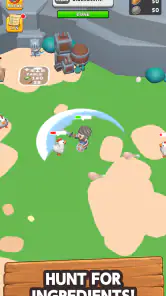
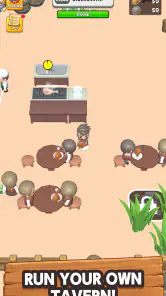
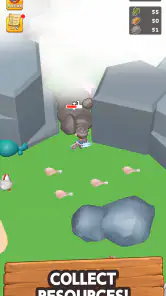




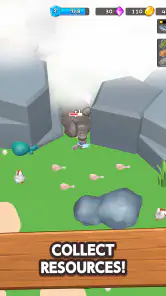
Analysis by Reviewed
I went into Hunter's Haven expecting a small, straightforward adventure game, and that is mostly what I found: a free survival-focused experience from Gamincat built around hunting monsters, collecting valuable materials, and trying to stay alive through each outing. It is easy to understand at a glance, but the practical question is whether its simple premise gives you enough reason to keep returning. In my experience, the answer depends heavily on how much you enjoy cautious progress and repeated resource-gathering rather than a tightly scripted adventure.
The game is listed for Everyone, which makes it approachable for younger players and for anyone who wants something less demanding in tone. It has reached over ten thousand installs, with an average rating of 4.2 from more than three hundred ratings. Those numbers suggest a generally positive early reception, although they also place the game in a smaller, less established part of the mobile adventure scene. I would treat it as an easy game to try, not as a polished replacement for a major console-style survival title.
Where the first sessions can become confusing
The opening idea is clear, but the loop can still leave new players unsure about what deserves attention first. Hunting monsters sounds like the main event, yet gathering materials and preserving the ability to continue are just as important. A player who treats every encounter as a fight may burn through a run quickly, while someone who focuses only on collecting can miss the purpose of taking risks. The most useful mindset is to view each trip as a short expedition with a goal, not as an endless attempt to clear everything in sight.
I found that the biggest early mistake is chasing rare materials without deciding what “success” means for that particular session. If I am playing during a short break, I would rather make a modest, safe collection and finish with a healthy run than turn the session into a reckless hunt. If I have more time, I can accept greater risk and look for better rewards. That simple choice makes the game feel more controlled and prevents an unsuccessful outing from feeling completely wasted.
Another possible sticking point is the balance between curiosity and caution. Adventure games often encourage players to investigate every corner, but survival changes the value of exploration. A material is not automatically worth pursuing if reaching it exposes you to a monster at the wrong moment. I recommend learning which situations are comfortable before trying to optimize every trip. Early progress is better used to understand the rhythm of the game than to force an ambitious collection record.
The current version is 0.12.1, so I approached it as a game that may still be developing rather than one with years of refinement behind it. That matters when judging small rough edges. A slightly awkward interaction or a moment where the next action is not obvious can be annoying, but it does not necessarily ruin the experience. I would give the game a little time before deciding whether its basic loop works for me.
What I would check before blaming the game
If the game does not launch properly, my first step would be ordinary device housekeeping rather than assuming the adventure itself is broken. I would close other demanding apps, restart the phone or tablet, and make sure the device has enough free storage for normal operation. I would also confirm that the operating system meets the listed minimum of Android 9. These checks are simple, but they remove several common causes of slow loading, crashes, or interrupted sessions.
More From Our News Desk

Clash of Clans Is Won Between the Battles

Android Auto Makes the Case for Quieter Car Software

MobiOffice: Transforming Mobile Productivity with Seamless Integration

EA SPORTS FC™ Mobile Soccer: Redefining Mobile Sports Gaming

How Microsoft OneDrive Became a Mobile Productivity Giant

How Google Translate Breaks Language Barriers Effortlessly
I would also install the game through the official app store and let the installation finish completely before opening it. If a download appears stuck, switching between an unstable mobile connection and Wi-Fi can make troubleshooting harder, so I would use the more reliable connection available and try again. A fresh launch after a restart is more useful than repeatedly tapping the icon while another download or update is still running.
Because this is a game built around repeated runs, interruptions are especially frustrating. Before beginning a longer expedition, I would close unnecessary background apps, disable any battery-saving mode that aggressively limits games, and avoid starting a session when the device is nearly out of power. These are not special Hunter's Haven settings; they are practical ways to reduce the chance that the operating system interrupts a progress-heavy session.
It is also worth checking the store page if the game behaves differently after an update. The developer, Gamincat, may change how the experience works between versions, and an older installation can sometimes create problems that disappear after updating. I would not immediately uninstall, though. If local progress matters, removing the app can create an avoidable loss, so I would first try a restart and an update, then consider more drastic steps only when I understand the consequences.
A safer way to build a reliable gameplay routine
My preferred routine is to begin each session with one specific intention: collect a certain kind of material, test a hunting approach, or simply see how long I can survive. This prevents the familiar mobile-game trap of wandering without a plan and then taking a needless risk because the session feels unproductive. A clear objective also helps me judge the game fairly; I can tell whether the problem was the design or whether I entered the run without a sensible priority.
I would separate learning runs from reward runs. During a learning run, I would pay attention to how monsters behave, which encounters feel manageable, and how quickly danger builds. During a reward run, I would use that knowledge and avoid experiments. This two-part approach is one of the more useful ways to play a compact survival adventure because it turns failure into information instead of making every failed attempt feel like a setback.
When a run goes badly, I would resist immediately repeating the same route or decision. Ask what actually caused the failure: an unnecessary fight, a detour for a rare material, or simply staying out too long. Then change one thing on the next attempt. Changing everything at once makes it difficult to learn, while a single adjustment reveals whether the real issue was timing, risk selection, or a misunderstanding of the game’s priorities.
For players who share a device with family members, I would also make sure everyone understands who is using the game before starting a serious session. That sounds obvious, but a survival run is more vulnerable to accidental interruption than a quick puzzle round. The Everyone age rating makes the game suitable for a broad audience, yet younger players may still benefit from a simple rule: finish a safe stopping point before handing over the device.
Recovering after an interrupted or disappointing run
If the game closes unexpectedly, I would reopen it once and look for the last stable state before doing anything else. I would avoid repeatedly clearing app data or reinstalling in frustration. Those actions can remove local progress in some games, and there is no good reason to take that risk before basic recovery steps have been tried. Restarting the device, checking for an available update, and launching again on a stable connection are sensible first moves.
If a run ends because of a mistake rather than a technical problem, I would use the next attempt as a controlled recovery session. Choose a modest target, avoid unnecessary monster encounters, and rebuild confidence before chasing rare materials again. This is particularly important for players who tend to respond to failure by playing more aggressively. In a game where survival is part of the objective, impatience usually creates a second failure instead of repairing the first one.
In-app purchases range from $4.99 to $7.49 per item, so I would decide in advance whether I want to spend anything. The free entry point is useful because it lets me judge the core loop without paying first. I would not buy an item simply because a run went badly; that turns frustration into the reason for spending. A better test is to play enough free sessions to know whether the underlying hunting and gathering cycle is enjoyable on its own.
There is also a practical difference between recovering progress and recovering interest. Even if a technical issue is fixed, the game may still not suit someone who dislikes repeating similar activities. I would give it a fair trial, but I would not force myself to continue just because the rating is positive. A 4.2 average is encouraging, yet ratings cannot determine whether my own preferred pace matches the game’s survival rhythm.
When the device, connection, or expectation is the real problem
Not every poor experience points to a fault in the game. If other apps are also slow, freezing, or failing to download, the device or connection is the more likely source. I would test another app, restart the network connection, and check whether the problem continues outside Hunter's Haven. This quick comparison prevents unnecessary reinstallations and helps distinguish a game-specific issue from a wider phone problem.
Expectations can cause trouble too. Someone looking for a large open-world adventure with extensive dialogue, deep character development, or a long campaign may find this a poor match, even if the game runs perfectly. Its appeal is closer to a focused mobile survival outing: hunt, gather, manage risk, and try again. Players who prefer short, repeatable sessions should understand that this structure is a strength, while players wanting constant narrative progression may prefer a different adventure game.
It is also not the best choice for people who dislike resource pressure. The need to survive changes how I evaluate every opportunity. I cannot treat rare materials as free rewards because the route to them may carry a cost. If that kind of decision-making feels stressful rather than satisfying, a relaxed exploration game would probably be a better alternative. On the other hand, players who enjoy weighing a tempting reward against the chance of losing a productive run may find the tension engaging.
Compared with a typical action game, Hunter's Haven asks me to be more selective. A conventional action title may reward constant movement and frequent combat, whereas here I get more value from observing, choosing targets, and knowing when to stop. Compared with a traditional adventure game, it places less emphasis on a fixed story and more on the outcome of each individual expedition. That makes it easier to play in short bursts, but it may also make the experience feel repetitive sooner for some users.
Who will get the most from it
I think the game suits players who enjoy compact survival loops and do not need a large amount of explanation before beginning. It can work well for a short commute, a waiting-room break, or a quiet evening when I want a goal-oriented game without committing to a long campaign. The free price makes experimentation easy, and the Everyone rating means it can fit a shared family device more comfortably than many darker survival games.
A realistic everyday use case would be a ten-minute break between tasks. I could start a run with the aim of gathering one useful material, take only the encounters that support that goal, and stop once the objective is complete. That approach makes the game feel purposeful even when I do not have time for a long session. It also reduces the temptation to keep playing past the point where a safe return would have been the smarter choice.
I would recommend skipping it if the main reason you play adventure games is story, spectacle, or a constant stream of new locations. I would also be cautious if you are sensitive to optional spending prompts, since the game includes purchasable items. The right question is not whether those purchases exist, but whether I can enjoy the free experience without feeling pushed to buy something after a disappointing run. If the answer is no, another game with a different progression model will be more comfortable.
For younger players, I would still explain that “free” does not mean every item is free. The age rating is Everyone, but in-app purchases are available, so family members sharing a device should use their normal purchase safeguards. That is a general household precaution, not a criticism unique to this title. The game itself remains easy to approach, but spending decisions should be handled separately from the fun of the hunt.
My practical verdict after settling into the loop
Hunter's Haven is best understood as a modest, accessible adventure game for players who like the tension between collecting something valuable and getting out safely. I appreciate that its premise can be understood immediately, yet still leaves room for better decision-making once I stop treating every monster and material as equally important. The most satisfying sessions are the ones where I set a realistic goal, accept that not every reward is worth the risk, and finish with a sense that I made deliberate choices.
Its limitations are just as clear. The compact structure may not provide enough variety for players who need a strong story or a constantly changing world. Early friction can also come from unclear priorities, interrupted sessions, or expectations borrowed from much larger adventure games. Basic device checks and a more disciplined play routine solve some of that frustration, but they cannot change whether the central loop appeals to me.
At no cost to start, it is easy to test honestly: play several sessions, try both cautious gathering and more ambitious hunting, and decide whether the repeated expedition pattern remains enjoyable. I would keep purchases out of that first judgment. If the free loop already makes me want to return, the game has done the important work; if it feels like a chore before spending anything, buying an item is unlikely to fix the mismatch.
My recommendation is therefore measured but positive. Hunter's Haven is worth trying for patient players who enjoy survival decisions in short mobile sessions, especially those who prefer planning a small expedition to following a long scripted campaign. I would choose a more narrative or action-heavy alternative for a bigger adventure experience, but for a simple hunt-and-gather game that rewards restraint, Gamincat’s release has a clear place on my device.
Hunter's Haven Frequently Asked Questions
Who developed Hunter’s Haven, and what kind of game is it?
Hunter’s Haven is an adventure game developed by Gamincat. Its central premise is clear from the short description: hunt monsters, gather rare materials, and survive as long as you can. That focus makes it a choice for players who enjoy creature hunting and collecting resources, with survival as part of the challenge.
What is Hunter’s Haven, and what can I do in the app?
Hunter’s Haven is an outdoor-focused app designed to support hunters with useful information and tools for planning and managing hunting activities. Depending on the version and region, it may include hunting-related resources, location or trip planning features, equipment notes, seasonal information, and ways to organize personal records. Users should review the current app description because available features can vary by platform and location.
Does Hunter’s Haven require an internet connection or location access?
Some Hunter’s Haven features may work offline, but an internet connection can be necessary for downloading content, updating maps or information, signing in, synchronizing data, or accessing community-based features. Location permission may also be requested for mapping, navigation, or recording activity details. Before granting access, check the permission explanation and disable location services if you do not need those features.
Is Hunter’s Haven suitable for beginners as well as experienced hunters?
Hunter’s Haven can be useful for both newcomers and experienced hunters, particularly when organizing trips, reviewing information, or keeping personal records. However, the app should not be treated as a replacement for official regulations, certified training, local knowledge, or proper safety preparation. Beginners should confirm licensing requirements, legal hunting seasons, land access rules, and firearm or equipment safety independently.
Is Hunter’s Haven free to download, and does it include in-app purchases?
The download model and pricing may differ between Android and iOS, and some features may be free while advanced tools, premium content, subscriptions, or additional resources require payment. Check the app store listing before installing to see the current price, trial terms, renewal conditions, and available purchases. If a subscription is offered, review how cancellation and automatic renewal work.
Pros
- Relaxing hunting gameplay with a calm
- immersive atmosphere.
- Wide range of wildlife keeps exploration and tracking interesting.
- Simple controls make it easy for new players to get started.
- Progression provides goals beyond completing individual hunts.
- Outdoor environments offer varied scenery and exploration opportunities.
Cons
- Some hunts may feel repetitive after extended play sessions.
- Progress can be slow without spending extra time in the game.
- Wildlife behavior can occasionally feel predictable.
- The game may require substantial storage on older devices.
- Performance and loading times can vary across different phones.

- Category
- Adventure
- Version
- 0.12.1