Hole Nom Master: Black Hole
- 323.00
- 4.7
- Installs
- 100.00K
- Price
- Free

Screenshots
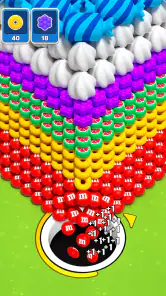
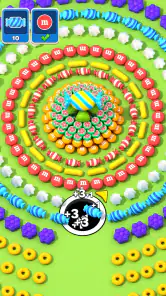
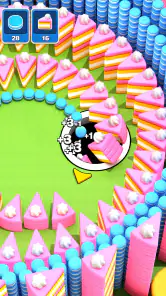

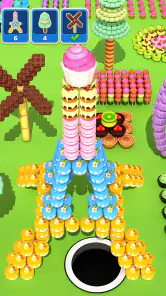
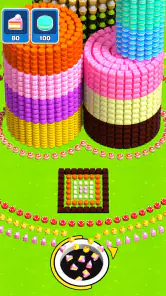
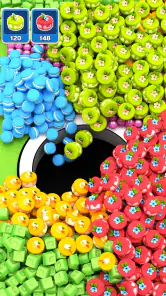
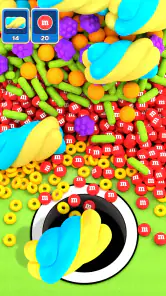
Analysis by Reviewed
I went into Hole Nom Master: Black Hole expecting a quick casual distraction, and that is exactly where it works best. The basic appeal is immediate: guide a black hole around a play area, absorb objects, and enjoy the satisfying sense that the opening is gradually becoming more powerful. It is easy to understand without a tutorial-heavy introduction, which makes it a natural choice for a short break rather than a game that demands a long first session.
What makes the experience more pleasant than a bare collection game is the way its presentation supports that simple idea. The visual language points toward playful destruction instead of danger or realism, while the short-session structure keeps the mood light. I never felt that I had to prepare for a complicated system before playing. I could pick it up, make progress through a few rounds, and put it down when something else needed my attention.
Yanxi Studios presents the game as a free casual title for everyone, and that positioning feels accurate in practice. It is currently on version 2.3, supports devices running Android 6.0 or later, and has passed the early curiosity stage with over 100 thousand installs. Its average rating sits at 4.7 from around 2 thousand ratings, with hundreds of written reviews behind that score. Those figures suggest that the straightforward formula has found an audience, but they do not change the central question: whether this particular kind of relaxing collection loop suits you.
A playful world built around one clear idea
The setting is not trying to tell an elaborate story. Instead, it uses the black hole as the entire visual premise. That focus is useful because every object in the environment has an obvious relationship to the player’s goal: if it can be swallowed, it becomes part of the immediate puzzle. The world therefore communicates through shape, movement, and placement rather than dialogue or complicated lore.
I like that the game’s identity does not depend on pretending to be a serious simulation. A real black hole would be terrifying and incomprehensible; here, the concept becomes a friendly arcade tool. The contrast gives the game its charm. You are not studying gravity or managing a scientific model. You are looking for the next useful cluster of objects and deciding how to move through the space without wasting time.
The art direction also helps keep the tone accessible. The game belongs to the lighter side of mobile entertainment, where the pleasure comes from watching a clean action produce an exaggerated result. That makes it suitable for players who want visual feedback without combat pressure, complicated menus, or a demanding narrative. Families can understand the premise quickly, and younger players can enjoy the swallowing mechanic without needing to follow a dense plot.
That simplicity has a trade-off. Players who need a strong sense of place, character development, or discovery may find the world thin. The environment exists mainly to support the collection action, so its value is practical rather than dramatic. I would not choose this as a replacement for a story-driven adventure or a carefully authored puzzle game. Its world is successful because it stays focused, not because it is deep.
A useful way to approach each stage is to read the layout before moving. Instead of immediately chasing the nearest object, I look for groups that can be gathered in a smooth route. This small habit makes the environment feel more purposeful. The same collection mechanic becomes less like random wandering and more like a quick spatial planning exercise, especially when I try to finish a section without unnecessary detours.
Why the visual mood works during short sessions
The game’s visual mood is strongest when I play it in brief bursts. The clean premise and readable action mean I do not need to remember a large amount of information between sessions. If I return after a few hours, I can understand what I am doing almost immediately. That is an important strength for a phone game, because casual play often happens while waiting for transport, taking a break, or winding down before sleep.
There is also a pleasant emotional rhythm in turning scattered objects into an empty space. The act of removal creates a sense of order, even though the subject is a destructive hole. That is a small but effective design choice: the player is not merely watching items disappear, but gradually making the area feel completed. For me, that gives the collection loop more satisfaction than a simple score counter would provide on its own.
Still, the mood depends heavily on whether you enjoy repetition. Once the novelty of swallowing objects fades, the presentation has to carry the experience between one objective and the next. Players looking for constant surprise may prefer a more varied casual game. This one is better for someone who finds comfort in a recognizable routine and likes improving their route rather than chasing a new mechanic every few minutes.
Sound, pacing, and the feel of each action
Sound is most valuable here when it reinforces the physicality of collection. The visual action already tells me what happened, but a well-timed audio response can make each successful swallow feel more complete. In a game built around repeated actions, that confirmation matters: it gives the player a small reward each time the black hole takes something in and helps the loop avoid feeling completely silent or mechanical.
The pacing follows the same principle. The game does not need long explanations to establish its rhythm. I move, collect, clear space, and continue. That short chain is easy to repeat, which is why the title fits casual play so naturally. It does not ask me to maintain a complicated strategy over a long period; it asks me to stay attentive long enough to make the next good movement.
I found the pacing more enjoyable when I treated it as a timing exercise rather than a race. Rushing toward the closest object can create a messy route, while a moment of observation often lets me collect several nearby targets more efficiently. This is one of the less obvious strengths of the design: the game looks mindless at first, but it rewards a little restraint. The best play is not always the fastest-looking play.
The same pacing can become a limitation for people who want a strong escalation curve. A casual black hole game is naturally repetitive because its main pleasure comes from repeating the same satisfying action in new arrangements. If you need complex boss encounters, layered objectives, or a dramatic soundtrack driving every moment, this will probably feel too modest. Its atmosphere is intentionally easygoing, and that means it rarely creates the intensity of a more competitive arcade alternative.
For everyday use, I would play it with the sound at a comfortable level rather than treating it like a full audio-focused experience. The game’s strongest sensory message comes from the combination of movement, visual disappearance, and the pace of clearing an area. It works well as something to play while taking a mental break, but I would not select it when I want a soundtrack or story to occupy my full attention.
How the mechanics fit the casual format
The central mechanic is immediately approachable: control the hole, position it beneath objects, and swallow them as the opening allows. That idea gives the player a clear short-term objective without demanding a long explanation. The appeal is tactile and visual. I can see the target, move toward it, and understand the result almost at once.
That clarity is a major reason the game is easy to recommend to someone who wants low-pressure entertainment. It does not require the commitment of a strategy game, the reflex intensity of a competitive action title, or the reading time of a narrative adventure. A player can learn the basic interaction quickly and then decide whether the satisfaction of clearing spaces is enough to keep going.
The mechanic also creates a natural progression in the way I think about movement. At first, I focus on individual objects. After a little practice, I start planning clusters and considering the order in which I approach them. That shift is important because it gives the simple control scheme some room to grow. The game does not need a dozen buttons to offer a small improvement challenge; route selection can provide that on its own.
My most useful tactic is to avoid spending the opening moments circling randomly. I first identify the densest nearby group, then choose a path that leaves the hole in a good position for the next collection. This reduces wasted movement and makes the stage feel more controlled. It is particularly helpful when I am playing one-handed or in a crowded place, where a calm, deliberate approach is easier than frantic corrections.
Another practical tip is to treat the edge of the play area as part of the route rather than as a boundary to fear. Moving along an outer section can help line up several targets, but it can also leave the hole pointed away from the most useful next group. I try to finish a collection movement facing toward the next cluster. That small adjustment makes the following action smoother and keeps the pacing from breaking into stop-and-start corrections.
The game is also a reasonable option for offline moments, which is part of its stated appeal. That makes it useful on a commute, during a flight, or in any situation where I want a casual activity without relying on a connection. The best use case is a short waiting period: long enough to complete a few rounds, but not so long that the repeated collection loop begins to feel like a chore.
There is an important financial consideration, however. The game is free to download, while optional in-app purchases range from $0.99 to $149.99 per item. That broad range means I would recommend approaching purchases carefully, especially if a child is using the device. The free entry point is attractive, but the presence of high-priced items makes it sensible to check purchase controls before handing the phone to someone else. Players who want a completely purchase-free experience should keep that in mind.
The Everyone content rating makes the game approachable for a broad audience, but age suitability does not automatically remove the need for spending awareness. In my view, the game is easiest to recommend when the player is comfortable enjoying the core loop without feeling pushed to buy extras. If optional purchases become part of the expected experience, the relaxed atmosphere can lose some of its appeal.
Who will enjoy it, and who should choose something else
I would suggest this game to someone who likes compact arcade loops, visual collecting, and a playful interpretation of a familiar scientific idea. It is especially well suited to people who want something they can start without preparation and pause without losing a complicated train of thought. The free price also makes it easy to try before deciding whether the repetition works for you.
It is less suitable for players who want deep customization, a substantial campaign, or a strong competitive component. Someone searching for a puzzle game with carefully layered logic may find the black hole mechanic too direct. Likewise, a player who prefers action games with rapid danger and constant pressure may see the relaxed pacing as a lack of excitement rather than a benefit.
Compared with typical match-style casual games, this title replaces pattern matching with movement and spatial routing. That makes it feel more physical and immediate, but it may offer less variety if you depend on changing combinations for freshness. Compared with endless runners, it is calmer and more deliberate, with less emphasis on reflex survival. Compared with idle collection games, it asks for more direct participation because the player must guide the hole rather than simply watch progress accumulate.
That comparison helps explain the game’s strongest niche. It is not trying to dominate every kind of casual play. It sits between a simple arcade toy and a light spatial challenge. If you enjoy the feeling of making a clean route through a cluttered area, it can be more engaging than a passive idle game. If you want a constant stream of new goals, another casual format may hold your attention longer.
My atmosphere verdict after spending time with it
Hole Nom Master: Black Hole succeeds because its art direction, sound, and pacing all support the same promise: a friendly, uncomplicated break built around swallowing objects. Nothing in the presentation needs to compete with the central action. The black hole is the visual hook, the collection is the rhythm, and the short sessions give the experience its practical value.
I appreciate that the game does not overcomplicate its identity. It knows that the pleasure comes from movement followed by immediate visual confirmation. When I plan a route instead of rushing, the mechanics reveal a little more depth than the store summary would suggest. The title is still simple, but simple does not have to mean completely thoughtless.
Its limitations are equally clear. The world is functional rather than expansive, the repeated loop will not suit everyone, and the range of optional purchase prices deserves attention. Players who want a rich narrative, demanding progression, or a completely different challenge should look elsewhere. Even among casual games, this is a focused choice rather than an all-purpose recommendation.
For me, it works best as a small, dependable time-filler: something to open when I have a few quiet minutes and want a satisfying action without mental clutter. I would install it for the offline-friendly collection loop, keep my expectations centered on casual play, and use the route-planning approach to get more from each session. If you enjoy relaxed spatial play and the simple satisfaction of clearing a space, this is an easy free game to try.
Pros
- Simple one-finger controls make it easy to play anywhere.
- Short levels are convenient for quick gaming sessions.
- Collecting objects into the hole feels satisfying and rewarding.
- Bright visuals make the gameplay easy to follow.
- Progression gives casual players a clear reason to continue playing.
Cons
- Gameplay can become repetitive after playing several similar levels.
- Difficulty may feel uneven
- with some stages being much easier than others.
- Frequent ads may interrupt the experience for free players.
- Limited strategic depth may disappoint experienced puzzle-game fans.
- Performance can vary on older devices during busier scenes.

- Category
- Casual
- Version
- 2.3