Happy Arrow Master
- 402.00
- 4.6
- Installs
- 500.00K
- Price
- Free

Screenshots
Analysis by Reviewed
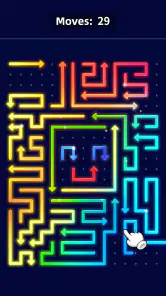
I spent time with Happy Arrow Master as a light, pick-up-and-play puzzle game, and its appeal became clear almost immediately: each level asks me to think about direction, order, and space before I tap. The basic goal is simple, but the best moments come from resisting the urge to make the obvious move. One careless tap can leave an arrow blocked, while a short pause to read the whole layout can turn a crowded board into a clean solution.
That makes this a good fit for short breaks rather than a game I would open only when I have a long session available. It belongs to the casual category, is free to install, and is suitable for Everyone. DRAGONVALE LIMITED presents it as a relaxed arrow-clearing experience, but I found that its strongest appeal is the small amount of planning hidden inside its friendly presentation.
How the first goals teach you to think before tapping
The opening experience works because it gives me an understandable objective without burying it under a long tutorial. I look at the arrows, identify which ones have a clear route, and try to remove them in an order that keeps the remaining paths open. The first goals feel less like tests of speed and more like lessons in observation. I quickly learn that an arrow pointing toward empty space is not automatically the best first choice if moving it exposes a more important blockage.
This early learning is valuable because the game’s central rule is easy to understand but not always easy to apply. The board communicates the immediate problem visually, so I do not need complicated instructions to begin. At the same time, the layout encourages me to scan beyond one arrow at a time. That combination gives the first stages a satisfying “I see it now” quality instead of making them feel like random tapping exercises.
My most useful early habit was to trace each arrow’s intended route before touching anything. I mentally followed the direction, checked what stood in its way, and then looked for a move that would create a second opening. This is more reliable than simply clearing whichever arrow looks closest to an exit. It also gives the game a gentle puzzle rhythm: inspect, predict, tap, and reassess.
For someone who wants immediate action, that pause may feel slower than expected. Happy Arrow Master is not at its best when played as a reflex game. The satisfaction comes from making a correct choice with limited information on the board, then watching the arrangement become more manageable. Players who enjoy compact spatial puzzles will understand the attraction quickly; players who want constant animation or rapid scoring may find the opening too quiet.
Why the visual progress matters
The clearest progress signal is the board itself. Every successful move reduces clutter and gives me more room to read what remains. That physical change is more effective than a collection of abstract rewards because I can see the solution taking shape. A difficult-looking arrangement becomes understandable one cleared path at a time, and that makes even a short session feel productive.
I also like that the game’s progress is tied directly to my decisions. I am not simply waiting for a meter to fill or repeating a task without understanding why it worked. When I finish a board, I know which early choice made the rest possible. That connection between action and outcome is one of the reasons the game can hold my attention beyond its first few levels.
There is a practical way to use this feedback when a board starts to feel confusing. Instead of trying to solve the entire layout in my head, I look for the arrow with the fewest possible obstructions and treat it as an anchor. After clearing it, I inspect the new shape of the board rather than following a fixed plan. This approach avoids overthinking and is especially helpful during a quick phone session when I do not want to restart repeatedly.
The game is also easy to understand for a younger or less experienced player because the objective remains visible. The Everyone rating fits that approachable design. However, “easy to start” should not be confused with “always effortless.” Once the layouts demand more careful sequencing, a player still needs patience and a willingness to undo a bad line of thought by starting again.
Difficulty grows through decision pressure, not noise
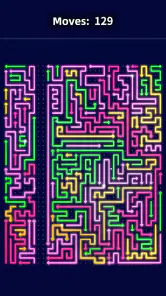
The most effective challenge comes from the way a crowded board limits safe choices. A move can look correct in isolation and still create a worse position for the arrows left behind. That is where the difficulty curve becomes meaningful. I am not merely tapping faster as I progress; I am learning to judge consequences several moves ahead.
This gradual change suits the casual format. The game can remain approachable while still asking for more attention later. Early boards teach recognition, while tougher arrangements test sequencing. The jump in difficulty is most noticeable when several arrows appear to have plausible routes, but only one order keeps the rest of the board workable. Those moments provide the game’s strongest puzzle identity.
My advice is to avoid committing to the first route that seems open. Look for dependencies: if one arrow is blocking another, ask whether clearing the blocker will create a useful opening or merely expose another dead end. I also found it helpful to separate “possible now” from “safe now.” That small distinction prevents many unnecessary mistakes and makes the challenge feel fairer.
The trade-off is that the game’s tension depends heavily on how much thought I am willing to give each board. If I am tired and only want to tap through a few levels, the same layouts can feel more demanding than relaxing. It is better suited to a player who enjoys a calm mental exercise than to someone looking for a completely passive time filler.
On the other hand, it does not require the commitment of a larger strategy game. I can stop after a single solved board without losing the thread of a complicated campaign. That makes it useful during a commute, while waiting for an appointment, or between household tasks. In an everyday situation, I could play a few rounds while waiting for coffee, put the phone away, and return later without needing to remember a story, a team setup, or a long-term build.
Unlocks and the feeling of moving forward
What keeps the experience moving is the expectation that each solved arrangement leads to another test of the same core idea. The game’s progress is strongest when a new board makes me rethink a habit I relied on earlier. Clearing arrows in a familiar way is comfortable, but discovering that the old instinct no longer works gives the next stage a reason to exist.
I would describe the progression as skill-led rather than collection-led. The important unlock is my own ability to read the board more accurately. I begin by searching for obvious exits; later, I pay more attention to the order in which paths become available. That kind of improvement is subtle, but it is more satisfying than receiving a reward that has little connection to the puzzle itself.
There is also a useful stopping point built into this style of progression. Because the game is divided into compact challenges, I do not feel pressured to reserve a large block of time. A player who enjoys completing small goals can use each solved board as a natural break. Someone who needs a stronger sense of long-term achievement may find the format less compelling than a broader puzzle game with a campaign, extensive customization, or a more elaborate reward structure.
The free entry point makes it easy to test that progression for yourself. The game includes in-app purchases ranging from $1.99 to $99.99 per item, so I would approach optional spending carefully. The sensible way to evaluate it is to play without assuming that every purchase is necessary. If the core arrow puzzles already provide enough enjoyment, there is no reason to spend simply because a later board requires more concentration.
Where the retention pressure helps and where it may not
Happy Arrow Master encourages return visits through unfinished curiosity. When I stop after a challenging board, I often remember the general shape of the problem and want to try a different order later. That is a healthier kind of retention than a game that depends only on noise or constant rewards. The board itself creates the reason to come back: I want to confirm whether my first approach was wrong or whether I missed a cleaner route.
That said, the same loop can become repetitive if the player does not enjoy incremental variations on one mechanic. The game’s identity is focused, and that focus is both its strength and its limit. I would recommend it to someone who likes refining a method, but not to a player who needs frequent changes of genre, story, or controls to stay interested.
The short-session structure also affects how I judge its pacing. A puzzle that feels pleasantly brief on a phone can feel underdeveloped to someone expecting a large adventure. I would not choose this as my main game if I wanted character progression, exploration, or a narrative destination. I would choose it as a compact mental reset, especially when I want something more engaging than scrolling but less demanding than a full strategy title.
One friction point is the possibility of frustration after a mistaken sequence. When several arrows depend on one another, a single poor decision can make the rest of the board feel impossible. My workaround is to stop tapping quickly and identify the first move that created the problem. Replaying the board with that one decision changed often teaches more than randomly trying new taps. This makes failure useful, although players who dislike restarting may find the process less enjoyable.
The current version is 1.0.20, and the game is available for devices running Android 8.0 or later. That makes checking device compatibility worthwhile before downloading, particularly if the phone is older. The practical attraction is that the game’s concept does not demand a complicated setup: install it, understand the arrow objective, and begin testing the board.
Who should play it and who should choose something else
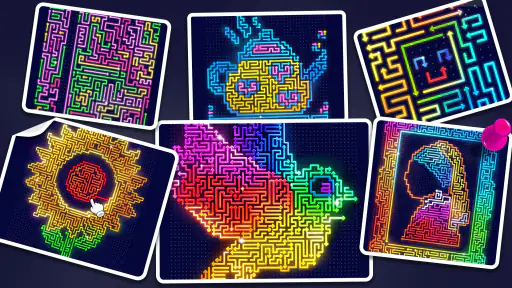
I think Happy Arrow Master is a good match for casual puzzle fans who like visual logic, compact goals, and a calm pace that still rewards careful thinking. It is especially suitable for players who enjoy spotting dependencies and improving through trial and observation. The Everyone rating also makes it approachable for a broad audience, provided the player is comfortable with puzzles that become more demanding as the layouts grow less obvious.
I would be more cautious about recommending it to someone who wants a relaxing game with almost no chance of getting stuck. The cheerful premise does not remove the need to plan. I would also point players toward a different type of game if they want rich narrative progression, competitive multiplayer, deep customization, or a large variety of mechanics. Happy Arrow Master is deliberately narrower, and its value depends on whether that narrow loop is exactly what you want.
Compared with a typical match-style casual game, this gives me more control over the outcome and less reliance on matching patterns quickly. Compared with a traditional logic puzzle, it feels more immediate because the arrows show the intended direction and the board changes visibly after each successful move. The result sits between a quick arcade interaction and a small spatial brainteaser, without needing the long-term planning of a full strategy game.
For a parent considering it for a shared device, the simple objective is a benefit, but I would still encourage taking turns rather than tapping on behalf of a child. The useful lesson is learning to inspect the whole board before acting. For an adult using it during short breaks, the same design works as a reset between tasks. The game asks for enough attention to interrupt passive scrolling, yet it does not demand a long uninterrupted session.
My progression verdict after playing
Happy Arrow Master succeeds when it lets the board teach me something. Its early goals are clear, its progress is visible through the gradual clearing of each arrangement, and its challenge develops from simple path recognition into careful sequencing. I appreciate that the central satisfaction comes from solving a problem rather than from needing a complicated system around it.
The limitations are equally clear. The focused mechanic may feel repetitive for players who need constant novelty, and a wrong order can create frustration when I am looking for effortless relaxation. The presence of in-app purchases also means I would keep spending optional and judge the game by the quality of its free play rather than by any pressure to buy.
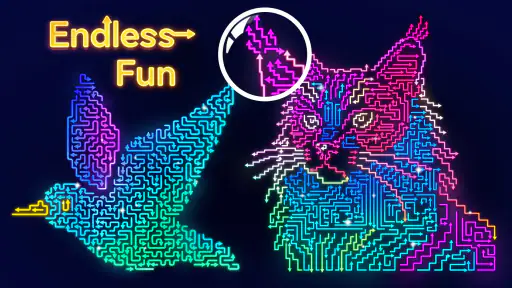
With an average rating of 4.6 from around thirteen thousand ratings and more than five hundred thousand installs, it has already attracted a substantial casual audience. Those figures do not replace personal taste, but they fit my impression that the game is easy to pick up and rewarding for people who enjoy short visual puzzles. Its free price makes trying it low-risk, while the Everyone rating broadens its appeal.
My final recommendation is straightforward: install it if you want a focused arrow puzzle that rewards looking ahead, especially for brief sessions during ordinary downtime. Give it a pass if you need a story, social competition, or a constantly changing set of mechanics. The best way to play is slowly enough to plan, but lightly enough to stop whenever the next board no longer feels fun. For the right player, that balance gives the game a pleasant rhythm and makes each successful escape feel earned.
Pros
- Simple controls make it easy for beginners to pick up.
- Short levels are convenient for quick gaming sessions.
- Progressive challenges keep the gameplay engaging.
- Bright visuals give the game a cheerful
- casual feel.
- Playable offline
- making it useful without an internet connection.
Cons
- Gameplay may feel repetitive after extended play.
- Difficulty can increase unevenly between some levels.
- Ads may interrupt the experience for free players.
- Limited customization reduces long-term personalization.
- Some stages rely more on trial and error than strategy.

- Category
- Casual
- Version
- 1.0.20