Glow Tales: Merge & Makeover
- 735.00
- 4.1
- Installs
- 500.00K
- Price
- Free

Screenshots



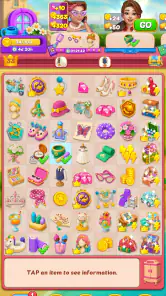
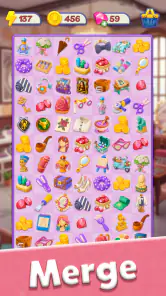
Analysis by Reviewed
I went into Glow Tales: Merge & Makeover expecting a light beauty-themed puzzle game, and that is exactly where it feels most comfortable: short, low-pressure sessions built around relaxing decisions rather than demanding reflexes. It comes from Paxie Games and sits in the casual game category, with a simple promise at its core: combine items, make visual choices, and gradually shape a personal style story.
That combination makes it easy to understand within a few minutes, but the real question is whether it gives you enough reason to keep returning. In my experience, the answer depends on what you want from a mobile game. If you enjoy gentle progression, makeover themes, and a steady stream of small choices, it is an appealing free download. If you are looking for deep strategy, fast action, or a puzzle system that constantly surprises you, its relaxed design may feel too limited.
The game is free to start and rated for Everyone, so it is approachable for a broad audience. Its current version is 1.3.3, and it requires Android 7.1 or later. With an average rating of 4.1 from around 16 thousand ratings and more than 500 thousand installs, it has already found a sizeable audience without feeling like a game aimed only at dedicated puzzle players.
How I Decided Whether Glow Tales Is Worth Your Time
The first test is how satisfying the basic loop feels
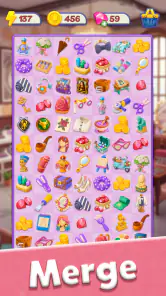
For me, the most important decision criterion is not the beauty theme by itself. It is whether the repeated merge action feels rewarding after the novelty wears off. Glow Tales works best when I want something I can pick up without preparation. I can make a few moves, look at the result, and stop without feeling that I have abandoned a complicated strategy.
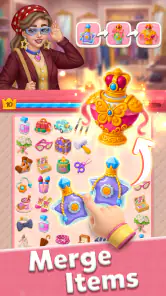
The appeal comes from turning small combinations into more polished results. That gives each move a visible purpose, which is important in a casual game. A merge should not feel like clearing space for its own sake; it should suggest that I am moving toward a better-looking outcome. The makeover framing gives those ordinary puzzle actions a little more personality than a completely abstract board.
I also paid attention to how much concentration the game asks for. This is not the kind of experience I would choose when I want to test my memory, speed, or tactical planning under pressure. Instead, it suits the moments when I am waiting for an appointment, winding down after work, or taking a short break from a more demanding game. Its strongest quality is the low mental entry cost.
The second test is whether progress feels manageable
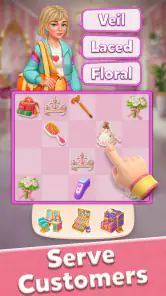
A good casual game lets me understand what matters now, not just what might matter much later. Glow Tales benefits from keeping its central idea readable: combine what you can, make a style-related choice, and continue building the experience. That clarity is useful for new players and for anyone who does not want to study a long tutorial before playing.
My practical advice is to avoid making every move immediately. Before combining items, I take a moment to look at the whole available space and consider whether a different pair could create a cleaner chain. This is a small habit, but it helps prevent the board from becoming cluttered by short-term decisions. In a game built around merging, the order of actions matters more than it first appears.
That does not turn the game into a serious strategy title. It simply gives the relaxed format a little more texture. Players who like organizing a board and planning one or two moves ahead will get more from it than players who tap randomly and expect the game to solve everything for them.
The third test is how well it fits real daily routines
I think Glow Tales is best judged as a companion for spare minutes rather than as a main gaming destination. Imagine finishing a commute, having ten minutes before a meeting, or sitting on the sofa while waiting for a show to begin. In those situations, the game’s gentle pace is an advantage because it does not demand a long uninterrupted session.
There is also a useful stopping point built into this style of play. I can complete a small set of actions and put the phone down without losing the thread of a complicated story. That makes it more practical than a game that expects me to remember a large map, a detailed quest, or a precise combat build.
On the other hand, the same convenience can make the experience feel insubstantial during a long session. After playing for an extended period, I may want more variety in the decisions themselves. This is the first important trade-off: Glow Tales is easy to fit into a day, but that does not automatically make it absorbing for hours.
The fourth test is how it handles spending
Because the game is free, the sensible approach is to try its basic loop before considering any purchase. In-app items range from $0.99 to $99.99 per item, which is a wide spread. I would not treat the presence of purchases as a reason to reject the game, but I would make a personal spending limit before getting invested in its progression.
For me, the best way to play a free casual game with optional purchases is to decide whether I am enjoying the decisions or merely trying to remove a delay. If a purchase would add convenience to a game I already like, that is one thing. If I feel pushed to pay simply to make the ordinary loop tolerable, that is a sign to step back.
Parents should also be aware that an Everyone rating describes the content, not a family spending plan. A younger player may understand the makeover theme perfectly well while still needing guidance around optional purchases. I would set device-level purchase protections before handing the game to a child.
The fifth test is whether the visual theme matters to you
The beauty and makeover focus is not just decoration; it determines the emotional tone of the whole experience. Players who enjoy styling, color, presentation, and gradual visual improvement will probably connect with it faster than players who prefer fantasy battles, racing, or purely mechanical puzzles.
I like that the theme gives the merging a clear identity. A plain merge board can become anonymous after a while, while a style-oriented setting gives me a reason to care about the result. Still, this is also a matter of taste. If makeover games do not appeal to you, the underlying actions may not be enough to carry the experience on their own.
Where the Game Wins, and Where Another Type May Fit Better
Its strongest advantage is approachable relaxation
Glow Tales wins when I want a game that explains itself through interaction. I do not need to learn a complicated control scheme or commit to a long campaign before I can decide whether I like it. The merge-and-style structure creates a friendly first impression, and the casual category is a good match for that accessible design.
It is also more personal than many generic matching games because the outcome is connected to a beauty style story. That framing gives the player a sense of authorship. Even when the underlying action is simple, I am not only removing pieces; I am helping shape a presentation. That small change in context makes the loop feel more expressive.
Another quiet strength is its usefulness as a transition game. I can play it when I am mentally tired but still want something interactive. It occupies the middle ground between doing nothing and starting a demanding game. For that role, its calm structure is more valuable than a large feature list would be.
It is not the best choice for deep puzzle fans
If your preferred alternatives are logic games with increasingly complex rules, Glow Tales may not provide enough intellectual pressure. Its appeal is in the combination of merging and makeover progression, not in presenting a constantly expanding set of difficult puzzle mechanics. A dedicated logic title will usually be the better choice when your main goal is to solve hard problems.
The same applies to players who want competitive tension. Glow Tales is not the game I would choose when I want leaderboards, rapid reactions, or a strong sense of winning against another person. A competitive puzzle or multiplayer game would fit that mood better, even if it were less relaxing.
Players seeking story depth should set expectations carefully
The style-story framing gives the game more character than a bare merge board, but I would not approach it expecting a long, dialogue-heavy adventure. Its primary pleasure comes from the playable routine and the visual direction of the makeover experience. If you want a game where narrative choices dominate, an interactive story or role-playing alternative may be a better match.
This distinction matters because the store summary can make the experience sound broader than the moment-to-moment play actually is. In practice, I would think of the story as motivation and atmosphere around the merge activity, not as a replacement for a full narrative game.
The cost of switching is low, but your habits matter
Trying Glow Tales is relatively easy because it is free and supports Android 7.1 or later. The real cost of switching from another casual game is not money at the beginning; it is attention. If you already have a favorite merge game, you need a reason to learn a new visual language and adjust to a different progression rhythm.
That reason may be the makeover theme. Someone tired of merging identical fantasy objects or managing a farm may enjoy the beauty-focused setting as a refreshing change. Someone who only cares about the most intricate board mechanics may gain little from moving over.
I would give it a fair trial by playing in short sessions rather than rushing through everything at once. That reveals whether the loop fits your routine. A game like this can seem charming for a few minutes and repetitive after an hour, so the best test is whether you still want to open it the next day for a small, self-contained session.
Three practical habits make the experience better
First, I recommend treating board space as a resource. Do not merge only because two matching items are available. Look for the move that leaves the most useful room and keeps future combinations possible. This is especially helpful when several small objects compete for the same area.
Second, I separate experimentation from progress. When I want to understand how a style choice changes the presentation, I try it without worrying about making the fastest possible advance. When I am short on time, I focus on clean combinations and avoid unnecessary rearranging. Switching between those two modes keeps the game from feeling like a chore.
Third, I use the game as a deliberate break instead of an endless scroll substitute. A short session works well when I decide in advance that I am playing for a few minutes. Without that boundary, free-to-play progression can encourage me to keep checking for the next small reward. The game is more enjoyable when I remain in control of the length of the session.
Who should download it
I would recommend Glow Tales to players who like casual merge mechanics but want a softer, beauty-centered presentation. It is a good fit for someone who enjoys arranging things, making visual choices, and seeing gradual improvement without needing fast reactions. It also suits families looking for an Everyone-rated game, provided an adult manages purchase settings where appropriate.
It is particularly suitable for short breaks, quiet evenings, and players who prefer progress that can be paused easily. The developer, Paxie Games, has positioned it in a space where accessibility matters more than technical mastery, and that is where the game makes the strongest impression.
Who should skip it
I would skip it if you need a game to provide demanding strategy from the first minute, a competitive opponent, or a substantial long-form story. I would also be cautious if you know that free-to-play progression makes you spend impulsively. The available purchase range means a little self-discipline is sensible, especially for younger players using a shared device.
Players who dislike makeover themes may find the central presentation uninteresting even if they normally enjoy merge games. In that case, choosing a merge title built around a setting you already care about would probably be a better use of your time.
My recommendation
After spending time with it, I see Glow Tales as a pleasant, focused casual game rather than an all-purpose mobile game. Its value comes from making small actions feel stylish and approachable. The merge system gives the hands something to do, while the makeover direction gives the results a reason to matter.
I would recommend downloading it if you want a free, low-pressure game for everyday gaps and you genuinely like beauty or styling themes. Start without spending, learn how the board rewards careful space management, and decide based on whether the short-session loop remains enjoyable. The rating of 4.1 reflects a generally positive reception, but it also feels consistent with the game’s position: appealing and polished enough for many casual players, while not necessarily broad or deep enough for everyone.
My final verdict is simple: Glow Tales is worth trying when relaxation and visual progress matter more than complexity. It wins over harsher puzzle alternatives through its friendly tone and personal style focus, but a dedicated logic, story, or competitive game will serve you better when you want challenge, narrative depth, or rivalry. For the right player, it is an easy game to return to; for the wrong player, its simplicity will become the main limitation.
Pros
- Relaxing merge gameplay that is easy to learn and play in short sessions.
- Makeover choices add a creative layer beyond the usual merge mechanics.
- Colorful visuals and character designs make the story enjoyable to follow.
- Progression provides clear goals and rewards for completing renovation tasks.
- Suitable for casual players who prefer low-pressure puzzle experiences.
Cons
- Energy limits can interrupt play when you want to complete several tasks.
- Some upgrades may require repeated merging or extended resource grinding.
- The makeover options can feel limited compared with dedicated design games.
- Progress may become slower without spending premium currency or watching ads.
- The storyline and gameplay loop may feel repetitive after extended play.

- Category
- Casual
- Version
- 1.3.3