Frost Valley™: Merge & Story
- 404.00
- 4.8
- Installs
- 10.00M
- Price
- Free

Screenshots


Analysis by Reviewed
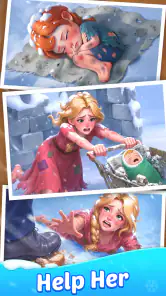
When I start a casual merging game, I want to understand what I’m doing quickly, but I also want a reason to care about the next task. Frost Valley™: Merge & Story pairs item merging with a story-led setting, so the appeal is not only tidying a board or chasing combinations. It is also seeing the valley take shape as I make progress. That combination gives the game a more purposeful feel than a bare merge puzzle, though it still suits players who enjoy gradual progress rather than a brisk, finish-in-one-sitting challenge.
What to expect from Frost Valley
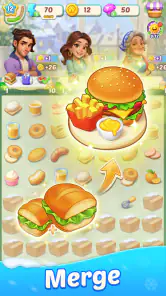
This is a free casual game from Tuyoo Games (HK) Limited, built around merging and meaningful stories in Frost Valley. The central promise is easy to grasp: combine items, use the results to move forward, and let those actions contribute to the setting and its narrative. I would approach it as a relaxed game to dip into, not as a demanding strategy title or a story game where every minute is spent reading.
The most useful expectation to set is that the satisfaction comes from a chain of small wins. A merge can clear room, produce something more useful, or help toward a larger objective. In games of this kind, it is tempting to treat every available combination as equally important. I recommend instead looking at what the current goal needs before using up items. That simple habit makes the board feel less chaotic and gives each action a clearer purpose.
The story element changes the mood more than the basic rhythm. If you like seeing a place gradually become more inviting, the setting can make routine tasks feel connected. If you mainly want a competitive puzzle, a high-speed match game, or a substantial narrative with little repetition, this is probably not the best fit. Its strength is the gentle overlap between making progress on a board and having a reason to continue in the valley.
Who is likely to enjoy it
I’d recommend it to someone who likes casual merge games but sometimes finds them too abstract. The story framing gives the activity a broader context, while the straightforward premise makes it approachable for a first-time player. It can also work well for short breaks: you can focus on one immediate objective, make a few deliberate moves, and stop without needing to master a complicated control scheme.
It is less suited to players who dislike waiting for gradual progress, managing limited board space, or repeating a basic action as part of a longer chain. The presence of story does not automatically make every moment dramatically different. If you need constant novelty or deep tactical choices, a more puzzle-focused alternative may hold your attention better. I see Frost Valley as a low-pressure routine with a narrative thread, rather than a game built around difficult tests.
Getting started without overthinking it
On a first session, I would resist the urge to merge everything just because two matching items are available. Start by reading the active objective and identifying which items appear relevant to it. Then make the combinations that directly support that goal, keeping some open room on the board if possible. This is a more reliable way to reach a first meaningful success than making moves at random and hoping the useful item appears later.
You May Like

Clash of Clans Is Won Between the Battles

Android Auto Makes the Case for Quieter Car Software

MobiOffice: Transforming Mobile Productivity with Seamless Integration

EA SPORTS FC™ Mobile Soccer: Redefining Mobile Sports Gaming

How Microsoft OneDrive Became a Mobile Productivity Giant

How Google Translate Breaks Language Barriers Effortlessly
That approach also helps answer a common early question: should I clear space or save items? There is no universal choice, because the useful move depends on the current task. If a combination is clearly needed, preserving its components is sensible; if the board is becoming difficult to work with, a merge that creates breathing room may be more valuable. I’d treat each move as a trade-off between immediate order and progress toward the objective.
For a calmer start, take a moment after each successful action to check what changed. Did the objective advance? Did the merge create a new item worth keeping? Has the board become easier or harder to use? That quick review prevents a common frustration in merge games: making several moves quickly and then realizing the useful pieces have been consumed or space has disappeared.
The first satisfying win is a small workflow
A practical first-session routine is simple: choose one visible goal, identify the matching items that can move it forward, merge only what helps, and check the result before continuing. The payoff is not necessarily a dramatic milestone. It is the moment when the board’s activity makes sense: a combination serves a purpose, the task responds, and the story setting feels connected to what you just did.
This is also where the game’s two parts can reinforce one another. In a plain merge puzzle, I might ask only whether a move is efficient. Here, I can also ask whether it contributes to the next piece of progress in Frost Valley. That extra context is a modest but useful motivation, especially when I want a relaxing game rather than a puzzle that demands full concentration.
One non-obvious tip is to avoid judging a session only by how many items you merged. A smaller number of purposeful actions can leave you in a better position than a flurry of combinations. Another is to stop when you have reached a natural pause, rather than continuing until the board becomes cluttered. A clean stopping point makes it easier to return later and remember what you were working toward.
Common points of confusion
The first potential confusion is assuming that merging is always progress. It may feel productive to combine anything that matches, but a merge is useful only if its result helps the current task or improves the board. When uncertain, check the goal first and preserve items that appear relevant. This is particularly helpful when several possible actions compete for the same space.
A second question is whether the game is mainly a story or mainly a puzzle. I’d describe it as a merge-centered casual game with story as an important reason to keep moving. If you arrive expecting a long, uninterrupted plot, the repeated board actions may feel like interruptions. If you expect only a puzzle board, the narrative framing may be a welcome change of pace.
Players may also wonder whether they can enjoy it without spending money. The game is free to start, with optional in-app purchases ranging from $0.99 to $99.99 per item. That broad range is worth keeping in mind: I would decide in advance whether I want to spend at all, and treat any purchase as optional rather than a requirement for enjoying the core loop. Anyone who prefers games with no in-app purchase offers may be more comfortable choosing a paid or purchase-free alternative.
There is a Teen content rating, so it is sensible to check that rating against the preferences of the person who will play. The game has an average rating of 4.8 from around 136,000 ratings, and more than 10 million installs. Those figures suggest broad interest, but they do not guarantee that its pace or merge-focused routine will suit you personally. I’d use them as context, then decide based on whether the actual style sounds relaxing rather than repetitive.
How it compares with familiar casual games
Compared with a conventional match-style puzzle, Frost Valley puts more emphasis on combining items and building progress over time than on making quick matches under pressure. That can make it a better choice when I want to pause and think about the next useful move. Compared with a merge game that offers little beyond its board, its story-led setting gives progress a clearer emotional frame.
The trade-off is that this style can feel slower than games where every round has a clear finish. If I have only a minute and want an immediate score or a self-contained puzzle, a short-round alternative is easier to pick up and put down. If I want a quieter activity that can stretch across repeated visits, the valley setting and linked goals are a better match. Neither approach is inherently superior; the right choice depends on whether I value a compact challenge or a continuing sense of progress.
Frost Valley is currently at version 1.10.10 and requires Android 7.0 or later. Those details make it easier to check basic compatibility before installing on an Android device. I would still make the decision based on the game’s style: it is best approached as a patient, casual experience, not as an action game or a demanding brain teaser.
A good next step after the first session
Once the basic loop feels comfortable, keep using the same deliberate method: follow the current objective, protect useful pieces, and make room when the board needs it. If you find yourself enjoying the small decisions and the sense of helping Frost Valley progress, there is a good chance the game will fit into your routine. If the repeated merging starts to feel like busywork, switch to a story game with less board management or a puzzle game with shorter, more varied rounds.
My overall view is that Frost Valley™ is an inviting option for players who want their merging to feel connected to a setting and a continuing story. Its free entry point makes it easy to try, while optional purchases and the gradual pace are worth considering before settling in. I’d suggest starting with one focused session, completing a goal through purposeful merges, and seeing whether that small sense of progress feels satisfying. If it does, the game has a clear place as a gentle, return-to-it casual pastime; if not, a faster or less repetitive alternative will be a better use of your time.
A realistic way to fit it into a day
I can see this working best as a small between-tasks ritual rather than something that needs a long uninterrupted evening. For example, after getting home, I might open the game while waiting for dinner, check the active goal, and make only the merges that clearly support it. Before putting the phone down, I’d note which useful pieces I chose to keep and where I left some working room. That gives the next visit a natural starting point without turning a casual break into a commitment.
This routine is especially helpful if you tend to reopen games and forget what you were doing. The goal itself becomes a bookmark: look at it first, then inspect the board before touching anything. I would not try to maximize every visit. A short session that leaves the board understandable can be more satisfying than squeezing in extra moves and returning to a confusing layout.
Small decisions that make returning easier
One trade-off worth watching is whether an item is valuable because it is immediately useful or because it may support a later chain. I’d avoid saving every potentially useful piece, since hoarding can make the board hard to read; equally, I wouldn’t clear space blindly if doing so consumes something tied to the current objective. A practical middle ground is to protect only the items that have a clear connection to the task in front of you, then reassess when the goal changes.
If you are deciding whether to install it on a shared device, the Teen rating is a useful prompt to consider who will be playing and whether the game’s tone suits them. For an adult looking for a low-pressure activity, the more important question is probably whether repeated merging feels calming or tedious. I’d give the basic loop a fair try before spending anything, since the appeal depends more on enjoying that rhythm than on buying into it.
The game has reached version 1.10.10, and the large number of player ratings and installs points to a sizable audience. I still wouldn’t treat popularity as a personal recommendation: someone who loves building progress gradually may click with it, while a player who wants a clear ending to every short session may prefer a round-based puzzle. That distinction is more useful than popularity alone when choosing what to keep on your phone.
Who should choose another kind of game
I would skip this one if I know I get impatient with boards that ask for repeated combinations before a goal feels complete. The story framing adds motivation, but it does not remove the merge routine or make every task a fresh type of challenge. A compact match puzzle is a better fit when I want quick, self-contained rounds; a story-focused game is better when I want character and plot to take center stage rather than accompany board work.
For someone who enjoys arranging a board and watching a setting develop over time, though, that slower pace is part of the point. I’d start with the free experience, keep purchases firmly optional, and judge the game by whether the first few purposeful merges feel rewarding. If they do, it offers a pleasant reason to return; if they don’t, there is little value in forcing a routine that does not suit your taste.
Frost Valley™: Merge & Story Frequently Asked Questions
What is Frost Valley™: Merge & Story about?
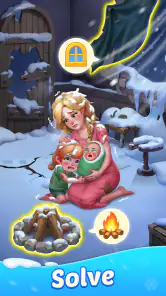
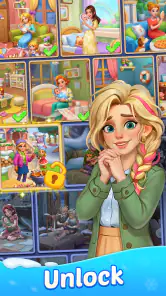
Frost Valley™: Merge & Story is a casual merge game set in a snowy valley. You combine matching items on a board to create upgraded objects, then use those items to complete requests and progress through the story. The game pairs this familiar puzzle loop with characters, locations, and restoration goals, so it may appeal to players who enjoy both organizing merge boards and following a light narrative.
How does the merging gameplay work?
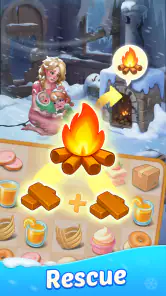
You drag matching pieces together on the game board to merge them into a higher-level item. New objects can then be combined again or used to fulfill tasks, which helps unlock further progress. As with many merge games, board space and available energy can shape how quickly you complete goals. Taking a moment to check task requirements before merging can help avoid using useful items on the wrong objective.
Is Frost Valley™: Merge & Story free to play?
The game can generally be downloaded and started without an upfront purchase, but free-to-play titles may offer optional in-app purchases. These can include resources, boosters, or other conveniences that help players progress. Purchases are not necessarily required to enjoy the core merging experience, though waiting for energy or other limits to replenish may affect the pace. Check the store listing and your device’s purchase settings for current details.
Does Frost Valley™: Merge & Story require an internet connection?
Some features or progress-saving functions may depend on an internet connection, while the availability of offline play can vary by version and device. For the most reliable experience, connect before launching the game, especially when downloading updates or syncing progress. If you plan to play offline, check the app’s current store information and test the game beforehand; avoid assuming that all events, purchases, or cloud-save features will work without connectivity.
Is Frost Valley™: Merge & Story suitable for children, and what should parents check?
The game’s colorful presentation and straightforward puzzle mechanics may be approachable for a broad audience, but parents should review the current age rating and content details on the relevant app store. It is also worth checking whether the game includes advertisements, optional purchases, social features, or timed events. To prevent accidental spending, use the device’s parental controls or require authentication for purchases, and discuss screen-time expectations with younger players.
Pros
- Combines merge puzzles with a story-driven setting.
- A relaxed pace suits casual play sessions.
- Progression gives each merge task a clear purpose.
- The winter-themed visuals create a cohesive atmosphere.
- Easy-to-understand mechanics make it approachable for newcomers.
Cons
- Energy limits can interrupt longer play sessions.
- Waiting for timers may slow down story progress.
- Merge boards can become crowded as items accumulate.
- Some objectives may require repeated item generation.
- Frequent prompts or offers may distract from gameplay.

- Category
- Casual
- Version
- 1.10.10