Freddy Playground Sandbox
- 1.00
- 3.5
- Installs
- 100.00K
- Price
- Free

Screenshots
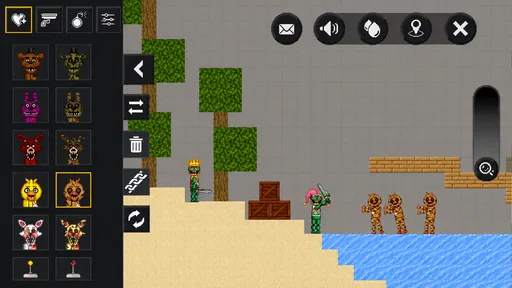
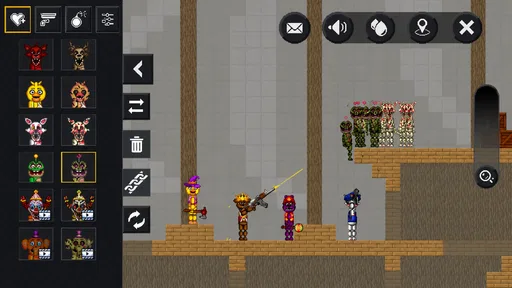
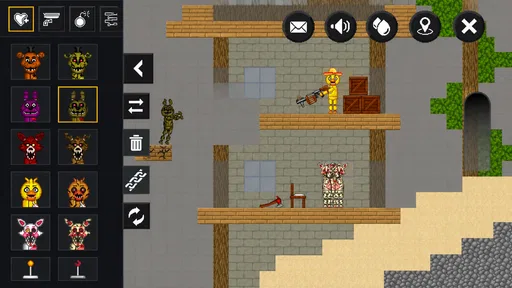
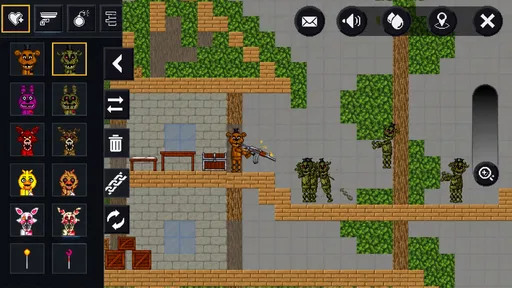
Analysis by Reviewed
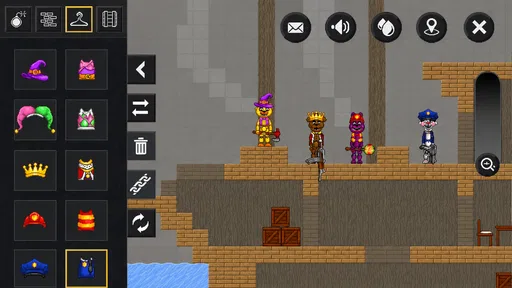
I would approach Freddy Playground Sandbox as a game for short bursts of curiosity, not as a simulation that asks me to build toward a long-term goal. Its appeal is the pleasure of trying things in a playful space: ragdoll movement, unexpected outcomes, and challenges that give a little direction to the messing around. That combination makes it an easy game to pick up when I have a few spare minutes, though it may feel thin if I want a detailed world, a sustained campaign, or precise control over every outcome.
That distinction is the first useful decision point. Before installing it, I would ask whether I want to experiment and laugh at the results, or whether I expect progression, realism, and a substantial set of systems to master. The game’s identity is firmly on the sandbox side of that choice. I found its most appealing promise in the freedom to play with physics and see what happens, with challenges serving as a nudge when I need a reason to try something specific.
What kind of play suits it best
Freddy Playground Sandbox is a free simulation game from Big Host Africa, and its premise is easiest to understand as a toy box with challenge-oriented moments rather than a conventional story game. The difference matters: a story usually tells me what to do next, while a sandbox asks me to invent a small objective for myself. Here, the physics-driven play is the central draw, and the challenges can help give that freedom a bit of shape.
I would judge it by three practical questions: do I enjoy unpredictable ragdoll behavior, am I happy making my own fun between challenges, and do I want something that can be sampled without paying upfront? If the answer to all three is yes, the game has a clear reason to try it. If I need a carefully explained tutorial, a deep progression loop, or a precise simulation, I would be more cautious.
The right mindset is to treat each session as an experiment. Rather than expecting a polished sequence of missions, I would pick one challenge or playful idea, see how the physics responds, then decide whether the result is worth repeating. That approach helps the game’s open-ended character feel like freedom rather than a lack of direction.
Why ragdoll physics can be the main attraction
Physics play is most entertaining when the outcome is not fully predictable. A character’s fall, wobble, or awkward reaction can turn a simple action into a small comedy moment, and that surprise is different from the satisfaction of beating a difficult level. It gives the game a casual, improvisational rhythm: try something, watch the result, and adjust your next attempt.
There is a trade-off, though. The same unpredictability that makes ragdolls amusing can make outcomes feel less controlled. Players who want precise platforming or a consistent competitive challenge may find that kind of looseness frustrating. I would see it as part of the appeal only if I was willing to enjoy the mishaps as well as the successful attempts.
More From Our News Desk
 Instagram
’s Power Comes From Its Place in Your Phone
A close look at how Instagram turns Meta’s reach, recommendation systems and everyday camera habits into durable platform power—and what that costs users.

 Gmail
Gmail in a Busy Inbox: Who Benefits Most?
From first account to crowded workday, Gmail earns its place through dependable search and flexible sorting—but its best fit depends on how much inbox maintenance you can tolerate.

 Prime Video
Switching to Prime Video: What Changes in Your Viewing Routine
Prime Video can make a compelling second home for streaming, but switching means learning a different catalog, rental layer, and route from browsing to playback.

 Universal TV Remote Control
 Works Best as a Reliable Backup
A phone remote earns its place through quick setup and reliable habits. Here is how to get more from Universal TV Remote Control—and where its limits show.

 Weather - By Xiaomi
Weather by Xiaomi Review: Clear at a Glance, Less Clear Up Close
Xiaomi’s weather app makes everyday forecasts quick to scan, but its calm surface can leave useful details and recovery paths harder to find than they should be.

 X
X Under Pressure: Can It Recover When Posting Goes Wrong?
A resilience-focused review of X, examining setup, mistaken posts, interruptions, weak connections, and the gaps that matter when recovery needs to be dependable.
Latest News



A useful way to keep the play fresh is to set a tiny personal goal before starting: complete a challenge cleanly, see whether a different approach changes the result, or simply try to produce a more entertaining sequence. These self-made goals do not require a long session, and they give the sandbox a purpose without pretending it is a structured campaign.
Challenges give experimentation a starting point
Open-ended play can sometimes leave me wondering what to do first. Challenges address that problem by offering a reason to interact with the game beyond aimless exploration. I would use them as prompts, not as proof that every session needs to become a checklist. If a challenge sparks a fun experiment, follow it; if it feels like a chore, the sandbox premise gives me room to switch back to casual play.
That balance also makes the game easier to share informally. One person can suggest an idea, another can try it, and the entertainment comes from seeing how the ragdoll physics handles the attempt. I would not assume that every challenge is suited to this kind of back-and-forth, but the game’s basic mix of physics and playful goals lends itself to brief, conversational sessions better than a serious simulation would.
For an everyday example, I might open it while waiting for a meal to finish, try one challenge, then spend a few extra minutes testing a different approach if the first attempt produces an amusing result. That is a better fit than starting it when I have only enough time for a single uninterrupted, high-stakes match or a lengthy story chapter.
Where it stands against other simulation games
Compared with management and building simulations, Freddy Playground Sandbox appears to prioritize immediate interaction over planning. Those alternatives are usually the better choice when I want to organize resources, develop a system over time, or watch a world respond to long-term decisions. This game makes more sense when the immediate question is simply, “What happens if I try this?”
It also occupies a different lane from realistic driving, flight, or equipment simulators. Those games earn their appeal through control, procedure, and the feeling of operating something accurately. A ragdoll sandbox is more about surprise and loose experimentation. If I am seeking authentic handling or a skill curve based on mastering controls, I would choose a simulation built around those goals instead.
Among physics playgrounds, the deciding factor is not just whether a game has ragdolls; it is whether I enjoy the way a particular playground turns that idea into repeatable fun. Here, challenges are a helpful counterweight to open-ended play. Still, I would not assume that a broad premise guarantees extensive content. Someone who quickly exhausts a game’s available prompts may prefer a sandbox with a larger emphasis on construction, customization, or persistent goals.
The game’s audience figures offer a little context without settling that personal question. It has passed 100,000 installs, while its 3.5 average from 34 ratings suggests a mixed rather than unanimous response. I take that as a reason to keep expectations measured: the concept may click for players who enjoy loose physics comedy, but the numbers do not make it an automatic recommendation for every simulation fan.
Who is likely to enjoy it—and who may not
I can see it suiting players who like casual experiments, enjoy slapstick physics, and do not need every session to advance a plot or unlock a long chain of rewards. It could also work for someone who wants a free game to sample in short intervals before deciding whether the premise holds their attention. The game is rated for Everyone, which makes its intended audience broad, though that label does not tell me whether its particular style will be engaging for each player.
I would steer away from it if I were looking for a polished narrative, realistic simulation, intricate building tools, or a strong competitive ladder. It is also a weaker choice for someone who dislikes trial and error: sandbox play often asks the player to supply the curiosity that a more guided game provides through missions and story beats.
Parents considering it for a younger player may appreciate that the content rating is Everyone, but I would still make the decision based on the child’s preferences and tolerance for unstructured play. A child who likes inventing silly scenarios may enjoy the freedom; one who wants clear instructions and a steady sequence of accomplishments could be happier with a more guided game.
Practical expectations before you start
The game is free, so trying it does not require an upfront purchase. That lowers the cost of experimentation, but free does not automatically mean it will be the best use of my time. I would give it a short, fair trial: try a challenge, explore the physics premise, and notice whether I am already thinking of another experiment. If I have to work hard to invent reasons to continue, another simulation style may suit me better.
The current release is version 1.0, and the stated minimum operating system is Android 7.0. Those details are useful when checking whether the game fits a device, but they do not tell me how it will perform on every handset. In practical terms, I would install it on a compatible device and judge responsiveness and comfort there rather than assume the same experience across different screens and hardware.
Because it is a free game, I would also separate the decision to install from the decision to make it a regular habit. First see whether the core physics play is fun for you. Then consider whether the challenges keep providing enough direction. That simple check prevents a common mistake with sandbox games: confusing an interesting first few minutes with a lasting reason to return.
Switching to another game is easy; switching expectations is harder
There is little commitment involved in moving on from this game, especially if I am only looking for a quick distraction. The more important “switching cost” is mental: a player who expects a management sim or a narrative adventure may judge the sandbox by standards it is not trying to meet. I would decide first whether I want improvisation or structured advancement, then choose accordingly.
If I do move to another game, I would look for a clear match to the reason I lost interest. Want more direction? Pick a mission-focused simulation. Want deeper creative control? Choose a builder-oriented sandbox. Want accurate handling? Look for a realistic simulator. That is more useful than searching for a generic alternative, because each option solves a different problem that this game may not be designed to solve.
For players who stay, a small session routine can help: start with a challenge, use it to learn how the physics behaves, then spend any remaining time experimenting without worrying about a perfect outcome. This keeps the challenge element from feeling like a rigid checklist and stops free play from becoming aimless. It is a modest strategy, but it suits the game’s blend of prompts and playful unpredictability.
My recommendation
I would recommend Freddy Playground Sandbox to a friend who wants a free, low-pressure physics playground and finds ragdoll chaos entertaining. Its strongest case is the contrast between open experimentation and challenge-based direction: I can begin with a prompt, then make the session my own. Big Host Africa has placed it in a familiar simulation space, but its appeal depends more on enjoying playful outcomes than on wanting a realistic or deeply structured experience.
I would not recommend it as a substitute for a substantial campaign, a detailed builder, or a serious simulator. The modest average rating is another reason to approach it as a taste test rather than a sure thing. Since the game is free and rated Everyone, trying it is a reasonable option for curious players, but the best test is whether the physics and challenges make you want to try one more idea.
My bottom line is simple: install it if you want a short, silly experiment and are comfortable making your own fun. Skip it if you need strong progression, precise control, or a carefully guided path. The best reason to play is the freedom to turn a small challenge into your own ragdoll experiment; the clearest reason to pass is that this kind of freedom can feel limited when what you really want is depth and direction.
Freddy Playground Sandbox Frequently Asked Questions
What is Freddy Playground Sandbox?
Freddy Playground Sandbox is a casual sandbox game focused on experimenting with characters, objects, and interactive environments rather than completing a traditional story campaign. Players can explore the available play area, place or use different items, and create their own situations. The exact content and features may vary by version, so check the store listing and screenshots to confirm what is included before downloading.
Is Freddy Playground Sandbox suitable for children?
The game’s playful presentation may appeal to younger players, but parents should review its content and age rating before installing it. Sandbox games can include cartoon violence, frightening characters, or user-facing advertisements, depending on the release. Since ratings and features can differ across platforms and updates, check the official store description and consider playing together with a child before deciding whether it is appropriate.
Can I play Freddy Playground Sandbox offline?
Some sandbox games allow their main activities to be played without an internet connection, but online access may still be needed for initial installation, updates, advertisements, or optional features. Offline availability can also depend on the specific version and device. If you need to play without Wi-Fi or mobile data, check the app’s store information and test its core features before relying on offline access.
Is Freddy Playground Sandbox free to download, and does it include ads or purchases?
Availability, pricing, advertisements, and in-app purchases can vary by platform, region, and version. A free download does not necessarily mean every feature is free, and some releases may show ads or offer optional purchases. Before installing, review the current Google Play or App Store listing for payment details, permissions, and any notes about advertising so you know what to expect.
What devices are compatible with Freddy Playground Sandbox?
Compatibility depends on the version available for your platform, your device’s operating system, and its hardware. Check the official store listing for supported Android or iOS versions, required storage, and any device restrictions. If the game runs slowly or fails to open, closing other apps, freeing storage, or installing the latest system update may help, though older devices may still have performance limitations.
Pros
- Open-ended sandbox play encourages creativity and experimentation.
- Simple controls make it easy to start exploring.
- A variety of objects and tools give players room to improvise.
- Physics-based interactions can make experiments entertaining.
- Suitable for short
- casual play sessions.
Cons
- The open-ended format may feel aimless without set objectives.
- Some interactions may become repetitive over time.
- Performance can vary depending on device capability.
- The sandbox may be less appealing to players seeking a story.
- Younger players may need guidance with in-app content and settings.