Food Stylist - Design Game
- 1.26K
- 4.4
- Installs
- 1.00M
- Price
- Free
Screenshots
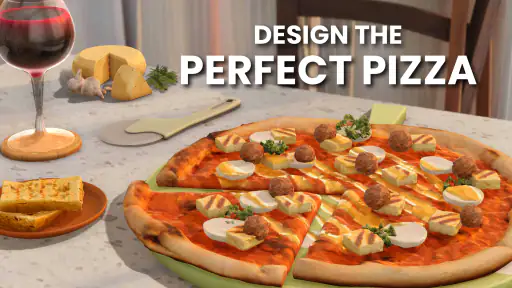
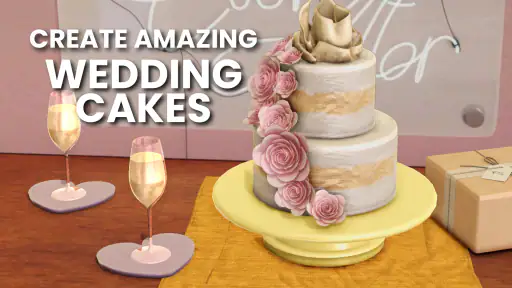
Analysis by Reviewed
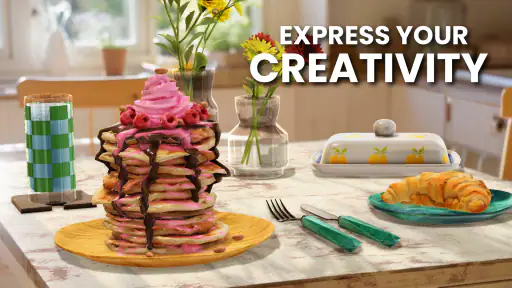
I went into Food Stylist - Design Game expecting a light creative distraction, and that is exactly where it works best. This casual game from zeste puts the focus on arranging food and building attractive tablescapes rather than racing, fighting, or solving difficult puzzles. I found myself judging the balance of a plate, the relationship between colors, and whether the finished table looked inviting. That makes it a comfortable choice for short sessions when I want something visual and low-pressure.
The important decision is whether you enjoy making things look good more than chasing a complicated challenge. Food Stylist is free to start, rated for Everyone 10+, and available for Android devices running Android 7.0 or later. It has built a sizable audience, with more than a million installs, a 4.4 average from roughly nineteen thousand ratings, and about one thousand three hundred written reviews. Those figures suggest a game people can pick up easily, but they do not change the central question: do you want a food-design activity, or are you looking for a deeper cooking simulation?
What makes Food Stylist worth choosing
The right criteria for judging a design game
I would not evaluate this game by the standards I use for a traditional restaurant-management title. There is no reason to approach it expecting demanding time management, recipe mastery, or a long strategic campaign. The better criteria are simpler: how enjoyable is the visual arrangement, how quickly can I make progress during a spare moment, and does the creative task feel satisfying after the initial novelty fades?
For me, the strongest test was whether the game encouraged a second attempt. A first arrangement can look acceptable, but small changes to placement, color balance, or the overall mood can make the result feel much more deliberate. That gives the game a pleasant creative loop. I am not merely tapping through a checklist; I am making choices about presentation and then looking at the finished composition.
This also makes the game suitable for people who enjoy decorating apps but prefer a more focused subject. Instead of designing an entire room or managing a large virtual space, I can concentrate on a plate, a table, and the atmosphere around a meal. That narrower scope keeps the experience approachable. It is easier to understand what I am trying to improve, even when I only have a few minutes available.
A relaxing alternative to competitive mobile games
Food Stylist’s biggest advantage is its gentle pace. I can open it after work, make a few design decisions, and stop without feeling that I have abandoned a team, lost a ranking position, or missed a timed opportunity. That difference matters in everyday use. On a crowded commute or during a short break, I would rather have a self-contained creative task than a game that demands constant attention.
One realistic use case is a quiet evening when I want to put my phone to work without committing to a full episode of a show. I can choose a food arrangement, try a warm and coordinated look, and then make a quick adjustment if the table feels too empty or visually busy. The activity gives me something to focus on while remaining easy to leave and return to.
It can also work as a small source of inspiration for people interested in food photography, party presentation, or home entertaining. I would not treat it as a cooking lesson, because its value is visual rather than instructional. Still, thinking about contrast, spacing, and the way a setting frames food can sharpen the eye. The game turns those ideas into a playful exercise instead of presenting them as formal design rules.
Where the creative loop feels strongest
The most enjoyable part is the relationship between the food and the table. A dish does not exist in isolation; the surrounding setting affects how it feels. A dramatic arrangement can make a simple plate seem more special, while too many competing elements can weaken the whole image. I found that the best results came from making one clear choice about the mood and then supporting it, rather than adding every attractive option at once.
That is a useful tip for new players: begin with a focal point. Decide what should catch the eye first, then use the rest of the arrangement to frame it. If the main dish is colorful, a calmer setting may help. If the food is visually simple, the table can provide more character. This approach makes the game feel less random and gives each decision a reason.
A second practical tip is to compare the complete scene rather than judging each item while selecting it. Individual pieces can look appealing in isolation but clash when placed together. I found it helpful to pause after the basic arrangement was complete, inspect the overall balance, and then remove or replace anything that distracted from the intended mood. That small pause improved the final result more than constantly changing one item at a time.
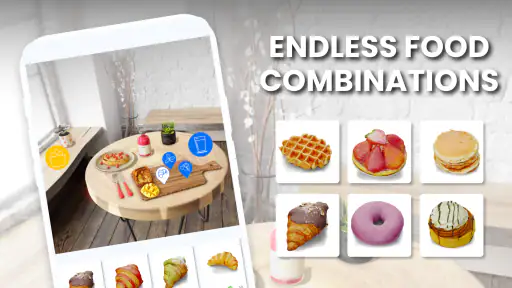
The game is also good at encouraging experimentation without making every attempt feel like a test of skill. I can try a style that I would not choose in real life simply because it looks interesting on screen. That freedom is one reason I see it as more than a static decorating tool. The pleasure comes from making a choice, seeing the composition, and deciding whether the result communicates what I intended.
How it compares with the usual alternatives
Compared with a cooking simulation, this game is much more concerned with presentation than preparation. If you want to combine ingredients, learn recipes, serve customers, or manage a kitchen, a restaurant-focused game will probably give you more depth. Food Stylist is better when the satisfying part for you is the final image: the plate, the setting, and the atmosphere.
Compared with a general home-decoration game, its subject is more focused and immediately readable. You are not asked to plan an entire house before seeing a result. The food gives each scene a clear center, which helps the creative process feel manageable. The trade-off is that players who enjoy large spaces, extensive customization, or long-term decorating projects may find this narrower format limiting.
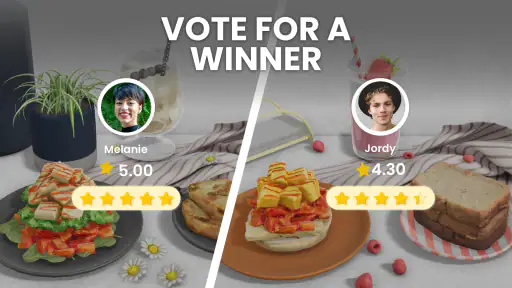
It also differs from competitive casual games. There is less emphasis on reflexes and more on taste. Someone who wants quick rounds with obvious wins and losses may not find the same excitement here. On the other hand, someone who likes visual choices and wants to improve through observation may appreciate the slower feedback. I would choose it over a match-based game when I want to relax rather than prove anything.
Small techniques that make sessions more satisfying
I recommend creating a mental theme before making the first selection. It could be bright and playful, calm and minimal, or rich and formal. The point is not to follow an official formula; it is to avoid making disconnected choices. Once I decide on a direction, I can judge new elements by whether they support that idea.
Another useful workflow is to build from large visual decisions toward small ones. I start with the main food presentation, establish the table’s general character, and only then think about finishing touches. This prevents details from taking over too early. It also makes it easier to identify what is actually missing: color, contrast, warmth, or simply more breathing room.
I would also suggest treating an imperfect result as information rather than failure. If the arrangement feels crowded, the solution may be subtraction. If it feels flat, contrast may help more than adding several new objects. This way of reviewing the scene turns each session into a short design exercise, and it is one of the less obvious reasons the game can remain enjoyable after the first few attempts.
Where another type of game may fit better
The relaxed approach is not ideal for everyone. Players who need a strong story, character progression, or a clear sense of unlocking increasingly complex systems may find the experience too light. The game’s appeal depends on enjoying the act of arranging and reviewing a visual result. If that process feels like work to you, the free entry point will not solve the problem.
I would also hesitate to recommend it as the main game for someone who wants a serious culinary experience. The title may appeal to food lovers, but its focus is styling rather than teaching. A recipe app or cooking simulator would be a better choice for practical kitchen guidance, ingredient knowledge, or step-by-step preparation.
There is another trade-off for players who dislike optional spending in free games. Food Stylist is free, but in-app purchases range from $0.99 to $99.99 per item. That does not automatically make the game poor value, yet it is worth keeping in mind before getting deeply invested. I would approach it as a free creative pastime and decide early whether the available experience is satisfying without purchases. If you know you are likely to buy frequently to expand or speed up your enjoyment, the eventual cost may matter more than the initial download price.
What to expect from the current release
The game was released on August 22, 2022, and its current version is 1.0.105. It supports Android 7.0 and newer, which makes it accessible to people using older compatible devices as well as recent phones. I would still judge the experience on the phone you actually plan to use, especially if you care about visual comfort during longer sessions. A design-focused game benefits from a screen where details are easy to distinguish.
The age rating of Everyone 10+ makes it a reasonable option for older children, teenagers, and adults who want a creative casual game. Parents should still remember that the presence of in-app purchases makes it sensible to review purchase settings before handing over a device. That is not unique to this title, but it is particularly relevant when a free game invites repeated, short sessions.
The developer, zeste, has kept the concept clear: food presentation is the core activity, not a side feature attached to another genre. That focus is helpful because I always know what kind of experience I am opening. It also means the game’s success depends heavily on whether its visual decisions feel rewarding to me. There is no unrelated system to carry the experience if I am not interested in styling.
The cost of switching from another casual game
Switching to Food Stylist is easy if your current casual game already serves as a way to unwind. You do not need to learn a complicated control scheme or understand a large fictional world before beginning. The mental cost is low: choose, arrange, inspect, and adjust. That makes it a comfortable addition rather than a demanding replacement.
The bigger cost is expectation. If you move from a puzzle game with clear solutions, you may initially wonder what counts as success. If you move from a decorating game with broad spaces, you may miss the freedom to redesign everything. I found that the experience becomes more rewarding once I stop looking for one correct answer and start treating each scene as a personal composition.
There is also a time-management advantage. Because the activity is easy to understand, it can fit into small gaps without requiring a long uninterrupted session. That makes it more practical than many story-heavy or management games for people who play in fragments. The compromise is that short, self-contained sessions may not provide the same feeling of long-term progression as a more structured alternative.
If you are moving from a game that already offers a deep collection system or extensive customization, I would not uninstall it immediately. Food Stylist works well beside those games as a change of pace. Use it when you want visual creativity, and return to the other title when you want strategy, competition, or a more involved objective. Its role is clearest as a calm design break.
My recommendation by player type
I recommend Food Stylist to players who enjoy arranging food, composing attractive scenes, and making small visual decisions without pressure. It is especially suitable for casual players who want something relaxing, for people curious about tablescapes, and for anyone who likes decoration but does not want to manage a whole virtual home. The free price makes it straightforward to try, while the broad Android compatibility lowers the barrier for many users.
I would recommend it less strongly to players who want cooking mechanics, a competitive ladder, resource management, or a substantial narrative. Those needs point toward different categories, and choosing this game for them would create disappointment. I would also advise caution if optional purchases tend to make free games feel uncomfortable for you. Enjoying the core activity without spending is the best way to judge whether it belongs on your phone.
My practical advice is to give it a few focused sessions rather than deciding after the first arrangement. Try one scene with a clear theme, build from the main dish outward, and review the complete table before making final changes. If you enjoy that process, the game has enough personality to become a pleasant regular break. If you find yourself wishing for recipes, larger rooms, or harder objectives, that reaction is useful: it means an alternative category will suit you better.
Overall, I see Food Stylist as a friendly, visually driven casual game with a clear purpose. It does not try to replace a cooking simulator or a full decorating sandbox, and that is part of its strength. Choose it when the pleasure is in making a meal look inviting, not in preparing the meal or competing against a timer. For me, that focused idea makes it an easy recommendation for relaxed creative sessions, provided you are comfortable with the optional purchase model and do not need heavy progression to stay interested.
Pros
- Relaxing gameplay suited to short
- casual sessions.
- Large variety of dishes
- ingredients
- and styling choices.
- Creative freedom lets you build unique food presentations.
- Simple controls make it accessible for most players.
- Satisfying visual feedback when a dish comes together.
Cons
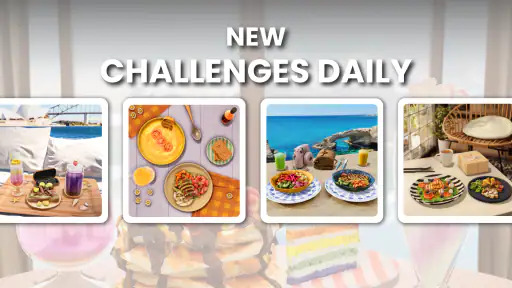
- Progress can feel repetitive after completing many similar challenges.
- Some customization options may require in-app purchases.
- Limited challenge for players looking for deep strategy.
- Frequent rewards and prompts can make the interface feel busy.
- Performance may vary on older phones or tablets.
- Category
- Casual
- Version
- 1.0.105