Fish Eater.io
- 1.34K
- 4.1
- Installs
- 10.00M
- Price
- Free

Screenshots



Analysis by Reviewed
I like the basic appeal of Fish Eater.io: it turns a simple food-chain idea into a casual game that’s easy to understand at a glance. The central loop is about steering a small fish, choosing what to approach, and avoiding creatures that can end a promising run. That makes it approachable when I have only a few minutes, though the same straightforward loop may feel limited if I want a story or a deep progression system.
What the free entry means
The game is free to download, so you can try its aquatic survival premise without paying upfront. It is made by Tap 2 Fun, and its store page lists in-app purchases ranging from $0.99 to $29.99 per item. I’d treat those as optional spending rather than assume they are needed: the useful question is whether the basic play is enjoyable before considering any purchase. If you are cautious about spending, check the purchase details on your device and set a limit before handing the game to a child.
Its Everyone age rating makes the presentation broadly accessible, but that is not a promise that every player will enjoy the pace or competition. The game has a 4.1 average from around 23,000 ratings, with roughly 1,300 written reviews, and has passed 10 million installs. Those figures suggest it has found a substantial audience, not that it will suit every taste. The current version is 1.9.2, and it supports Android 7.0 and later.
Where the value comes from
For me, the strongest value is the low barrier to starting a round. This is a casual fish-eating game rather than a demanding simulation, and its “grow by eating, survive by avoiding larger threats” structure gives each decision a clear purpose. I’d choose it over a more elaborate mobile game when I want immediate action and don’t want to spend the first session learning a pile of systems. Compared with other quick arcade-style games, the ocean setting gives the chase a distinctive visual theme, while the core risk-and-growth loop will still feel familiar to anyone who has played survival or arena games.
Small choices that make a run better
A useful way to approach the game is to value survival over chasing every possible meal. When a larger predator is nearby, taking a safer route can be smarter than risking a short burst of growth; a run that lasts longer gives you more chances to make progress. I also recommend treating the leaderboard as a personal benchmark rather than the main goal. Chasing rank can make a relaxed session feel like a chore, while comparing your own attempts keeps the competition optional and more enjoyable.
The main trade-off is that a simple premise can become repetitive if you want long-term variety or carefully planned strategy. The game’s appeal rests on moment-to-moment movement and decisions, so it is not my first pick for a player looking for a rich narrative, detailed fish-collection systems, or a slow, peaceful aquarium experience. Nor would I choose it as a substitute for a more tactical game: quick reactions and route choices matter more here than extended planning.
First Impressions
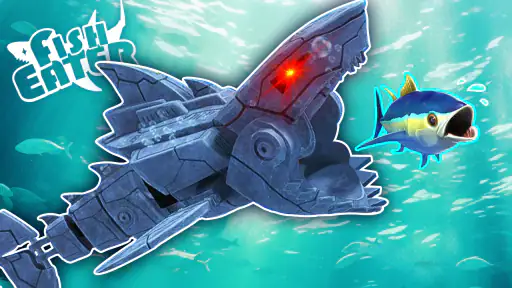
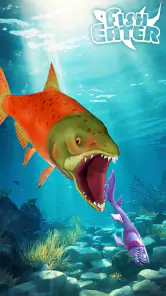
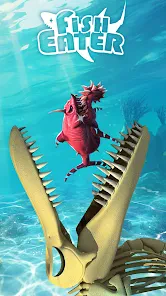
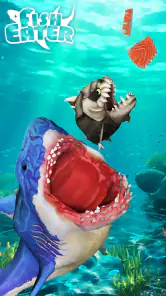
Upon launching the app, I was instantly greeted with vibrant graphics that brought the ocean to life. The colors are bright and engaging, making you feel like you’re swimming right alongside the fish. The premise of Fish Eater.io is simple yet addictive: you start as a tiny fish in a big ocean, and your goal is to eat your way to the top of the food chain. It's a classic "eat or be eaten" scenario, and trust me, it gets your adrenaline pumping.
More From Our News Desk

Clash of Clans Is Won Between the Battles

Android Auto Makes the Case for Quieter Car Software

MobiOffice: Transforming Mobile Productivity with Seamless Integration

EA SPORTS FC™ Mobile Soccer: Redefining Mobile Sports Gaming

How Microsoft OneDrive Became a Mobile Productivity Giant

How Google Translate Breaks Language Barriers Effortlessly
Gameplay and Controls
The gameplay is straightforward, which is a blessing if you’re like me and get lost in complex controls. You maneuver your fish using simple touch controls, dodging predators and hunting smaller fish. As you consume more, you grow larger and gain new abilities. It’s a satisfying progression that keeps you coming back for more. One thing I noticed is that the control responsiveness is top-notch. There’s nothing worse than laggy controls when you’re trying to escape a bigger fish, and luckily, Fish Eater.io delivers smooth and fluid movement.
Challenges and Levels
The game offers a variety of levels, each with its own unique challenges. From dodging jellyfish to outsmarting larger predators, there’s never a dull moment. The difficulty ramps up gradually, so you never feel overwhelmed. Plus, there are daily challenges that keep the gameplay fresh and exciting. It’s a great way to test your skills and see how you stack up against other players.
One feature I particularly enjoyed is the leaderboard. It adds a competitive edge to the game, pushing you to improve with each session. There’s nothing quite like the thrill of seeing your name climb up the ranks.
Sound and Music
Let’s talk about the audio. The sound effects are spot on, from the swish of the ocean currents to the crunch of consuming a smaller fish. It’s immersive and adds a layer of realism to the game. The background music is calming yet upbeat, striking a perfect balance that keeps you engaged without being distracting.
Making it fit a real day
I’d use it in the small gaps that are awkward for bigger games: waiting for a takeaway, sitting on a bus, or taking a short break between tasks. A practical tip is to decide before opening it whether you want a single quick attempt or a longer session. The leaderboard and daily challenges can tempt me to keep going, so setting that boundary helps the game stay a light diversion instead of turning a spare moment into an unplanned time sink.
It also works best when I treat each run as practice in reading the immediate situation, rather than as a test I must win. If I start by watching where the larger threats are moving, I can choose a route with more room to react instead of darting toward the nearest target. That small change makes a failed attempt feel less arbitrary: I can usually identify whether I took a risky line or stayed too long near danger. It is a useful approach for younger players too, because it encourages patience without adding complicated rules.
Choosing a session instead of chasing a streak
On an ordinary day, I might open it while waiting for a delayed bus, make one attempt, and then put my phone away when the ride arrives. If I have a longer break, I might try again and use the leaderboard as a way to compare my own results. The important distinction is that the game’s quick start does not necessarily mean every session will remain brief. Challenges and rankings can make “one more try” appealing, so I find it helpful to decide on a stopping point before I begin, especially when I’m meant to be doing something else.
That makes it a better fit for breaks where I can give the screen my attention than for moments when I need to keep looking up or listening closely to someone. The action depends on noticing nearby threats, and splitting attention can turn an otherwise manageable run into a frustrating one. I would not use it as background entertainment while working or walking. It is casual in its rules, not necessarily in the amount of attention a tense moment asks for.
What the familiar genre does—and does not—offer
Against a puzzle game, this is the more active choice: there is less room to pause and reason through a board, and more emphasis on steering and reacting. Compared with an aquarium game, it trades quiet collecting or decoration for the pressure of staying alive and growing. And beside a deeper survival game, it is easier to approach but offers less room for long-term planning. That is a sensible trade if I want an arcade-sized burst of action, but not if I am shopping for a game that will hold my attention through a substantial campaign or a complex set of systems.
The ocean theme gives familiar eat-and-grow play a clear identity, but it does not erase the limits of the format. Once I understand the basic choices, the challenge comes from making those choices under pressure, not from unlocking an elaborate strategy. Players who enjoy repeating a compact loop to improve their timing may find that satisfying. Players who need each session to introduce a fundamentally new activity may reach the point of repetition sooner.
Who should try it—and who should pass
I’d recommend giving it a try if you like colorful arcade action, quick decisions, and the satisfaction of growing from a vulnerable small fish into a stronger one. It also suits players who enjoy having a leaderboard or recurring challenge as an optional nudge. I’d skip it if repeated runs frustrate you, if you want a substantial story, or if you dislike being encouraged to compare your performance with others. The free download makes sampling the core loop straightforward, but it does not make optional purchases automatically worthwhile; I’d only spend if a specific item clearly improves your own enjoyment.
For a family, the Everyone rating and simple objective may make it approachable, but I would still check the purchase settings before letting a child play. That is not because the game needs a purchase to be tried; it is simply a sensible way to keep optional spending deliberate. For an adult who wants a casual game to pick up without a lengthy tutorial, the same simplicity is a strength. If you are looking for a calm game to unwind with after a demanding day, though, the predator-avoidance loop may keep you more alert than relaxed.
Questions worth settling before you play
Is it suitable for a short session? Yes: the simple controls and clear goal make it easy to start without a long setup. Does it suit someone who wants calm gameplay? Only partly; the bright ocean world may look inviting, but avoiding predators and chasing growth gives it an active, competitive edge. Do purchases define the experience? The game can be downloaded free, while optional items are priced from $0.99 to $29.99; decide based on what you actually want rather than assuming a purchase is needed. Can every phone run it? The listed Android requirement is version 7.0 or later, so check your device’s system version before installing.
One more practical question is whether it is a good choice if I want a game with a definite endpoint. I would not count on the appeal coming from finishing a story; the draw is the repeatable act of navigating, eating, and avoiding danger. If I enjoy improving at that loop, I can return to it. If I need a clear narrative finish or a collection of carefully staged missions to keep me moving forward, I would choose another kind of game instead.
My verdict on the value
Overall, Fish Eater.io is a delightful escape into an aquatic world. It’s perfect for those moments when you want a quick gaming fix or if you’re in the mood for a longer session. The game is fun, engaging, and offers enough variety to keep you hooked. Whether you’re a casual player or a hardcore gamer, there’s something here for everyone. So, dive in and see how big you can grow!
My recommendation is more specific: I’d try it if the free entry, colorful fish-eating action, and short-run decision-making sound appealing, then judge the basic experience on its own. I would not pay just because a purchase is offered, and I would not choose it in place of a story-heavy or genuinely relaxing game. Its value is in giving me a direct, easy-to-grasp arcade session; whether that is enough depends on how much I enjoy repeating the same central challenge.
Fish Eater.io Frequently Asked Questions
What should I check before installing Fish Eater.io on my Android device?
Before downloading, check that your Android device runs version 7.0 or later and has enough available storage for the game. Fish Eater.io is a casual game, so it may suit players looking for a straightforward mobile experience. It is free to download, though optional purchases are available, making it sensible to review purchase controls if children use your device.
Is Fish Eater.io suitable for younger players and family use?
Fish Eater.io has an Everyone content rating, making it suitable for a broad audience. Its casual premise of swallowing and evolving is easy to understand, which may appeal to younger players as well as adults looking for a light game. Parents should still consider their own preferences and check device settings for in-app purchases, since optional paid items are available.
Can I play Fish Eater.io without paying for upgrades?
Yes. Fish Eater.io is free to download, and optional purchases are not required to install the game. You can try its central fish-eating premise without paying upfront. If you choose to buy extras, individual in-app items range from $0.99 to $29.99. Consider setting purchase controls on your device, especially if a child may play.
Is Fish Eater.io free to download, and what should I know about optional spending?
Fish Eater.io is free to download, so you can try its casual fish-eating gameplay without paying upfront. It also offers optional in-app purchases, with items priced from $0.99 to $29.99 each. Consider checking purchase settings before handing your device to a child, and remember that buying extras is separate from downloading the game.
What kind of game is Fish Eater.io, and who developed it?
Fish Eater.io is a casual game developed by Tap 2 Fun. Its short store description is simply “Fish Eater.io,” while the summary captures the central idea as “Swallow and Evolve.” That gives prospective players a quick sense of its growth-focused premise, while the questions below cover the objective, availability, connectivity, purchases, and age suitability.
Pros
- Engaging multiplayer experience
- Simple and intuitive controls
- Vibrant graphics and animations
- Frequent updates with new features
- Low data usage
Cons
- Occasional connectivity issues
- Advertisements can be intrusive
- Limited offline play options
- In-app purchases can be pricey
- Requires stable internet connection
- Category
- Casual
- Version
- 1.9.2