Easy Go: Arrow Puzzle Games
- 23.00
- 5.0
- Installs
- 10.00K
- Price
- Free

Screenshots


Analysis by Reviewed
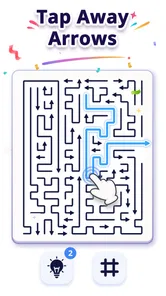
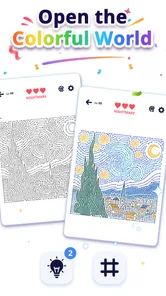
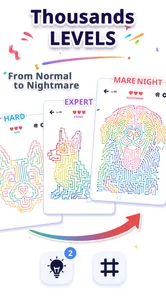
I find the appeal of Easy Go: Arrow Puzzle Games easiest to understand when I want a small, focused challenge rather than a full gaming session. It is a casual puzzle game built around clearing arrow pieces, so the central attraction is simple to grasp: look at the board, decide what to tap, and work through the puzzle. That makes it approachable, but the decisions can still ask for a little patience. I would reach for it during a quiet break, not when I am looking for a story or a sprawling set of game modes.
The game is free, rated for Everyone, and made by Wood Puzzle Sudoku Games. Its audience figures are encouraging for a newer, compact title: it has a 5.0 average from 296 ratings, with 23 written reviews and over 10,000 installs. Those numbers suggest a positive early reception, though I would treat them as a snapshot rather than proof that every player will enjoy its particular puzzle rhythm. My main question as a player is whether the arrow-clearing idea stays satisfying after the first few boards—and whether I enjoy thinking through moves more than I miss having a broader collection of activities.
How a puzzle session takes shape
I find that a good session starts with a quick read of the whole board, then one considered tap at a time. In this section, I focus on keeping that loop calm and useful even when a break is short or interrupted. The aim is not to plan every move in advance, but to notice what the current layout makes possible before choosing what to clear next.
Start with the whole board, not the first tempting arrow
The most useful habit for this kind of puzzle is to pause before tapping. An arrow may look like an obvious first move, but clearing a piece without considering the surrounding layout can make it harder to understand what remains. I recommend scanning the board for arrows that seem less constrained, then comparing them with pieces whose direction or position appears to depend on nearby ones. That small check turns a string of guesses into a deliberate sequence.
Because the game’s premise is about removing arrows, each tap is best treated as a decision rather than a reflex. I would look for a move that opens space or makes the next few choices easier to read. If two possible arrows seem equally promising, I would prefer the one that leaves a clearer board, not simply the one that is easiest to tap. This is a practical way to keep a puzzle legible as pieces disappear.
That approach also helps when I am interrupted. Before putting the phone down, I can take a moment to note which part of the layout is most blocked and which arrow looked like the safest next choice. When I return, I can re-check the board instead of blindly continuing a half-remembered plan. It is a modest routine, but it suits short sessions and reduces the feeling that I have to start over mentally after every distraction.
Use a repeatable rhythm for short breaks
Easy Go works best for me as a small, self-contained activity: open it, focus on one puzzle at a time, and stop when attention starts to wander. That makes it a reasonable choice while waiting for a ride or taking a brief pause between tasks. I would avoid playing while walking or doing anything that needs attention, because the point is to inspect the arrangement and think through a move, not to tap through it on autopilot.
More From Our News Desk

Weather by Xiaomi Review: Clear at a Glance, Less Clear Up Close

X Under Pressure: Can It Recover When Posting Goes Wrong?

Clash of Clans Is Won Between the Battles

Android Auto Makes the Case for Quieter Car Software

MobiOffice: Transforming Mobile Productivity with Seamless Integration

EA SPORTS FC™ Mobile Soccer: Redefining Mobile Sports Gaming
A useful personal rhythm is to scan, choose, tap, and scan again. The second scan matters: after a piece clears, the visual balance of the board may change, and an earlier assumption may no longer be useful. Repeating the same check after each move is more reliable than committing to a long sequence based on the starting layout. It also gives me a natural stopping point if I only have a minute or two.
If I find myself tapping quickly just to see what happens, I take that as a sign to slow down or put the game away. The puzzle’s value is in making a choice and seeing how the board changes. Rushing can turn that into trial and error, which is less satisfying for players who came looking for a calm brain-teaser. Conversely, anyone who enjoys brisk, low-stakes experimentation may be perfectly happy with a more casual approach.
Settings and version expectations
I would check the game’s available settings early, before settling into a routine, particularly if I prefer quieter play or need to adjust how a mobile game behaves on my device. I would not assume that a setting exists just because it is common in other puzzle apps; instead, I would use whatever options are actually presented in Easy Go and leave the rest alone. This is a sensible first-minute check, not a reason to expect a deep settings menu.
The current version is 0.0.6, so I would approach it as an early-stage release and keep expectations measured. That does not make the core puzzle idea unappealing, but it does mean I would avoid treating the present feature set as a mature, feature-packed package. Players who like trying compact games while they are still developing may be comfortable with that. Anyone who needs a long list of refined options before committing to a puzzle game may prefer a more established alternative.
The minimum operating-system requirement is Android 7.0. That is useful to know before deciding whether the game is a practical fit for an older device. Since the game is free, it is easy to consider as a low-commitment download, but I would still check that the device can run it and that the interface feels comfortable on my screen before building it into a daily routine.
Building better habits without overcomplicating it
I get more from the puzzle by turning a few simple checks into a repeatable routine, rather than looking for shortcuts the game may not offer. This section covers how I compare uncertain moves, reassess the board as it changes, and decide when to pause. Those habits help clarify what thoughtful play can achieve—and where the game’s focused design sets its limits.
Look for moves that make the next choice clearer
A simple improvement is to judge a move by what it reveals, not only by whether it clears an arrow. If one tap seems likely to make the remaining arrangement easier to inspect, that can be a better choice than an immediate move that leaves several ambiguous possibilities. This is not a special ability or hidden mechanic; it is a way of applying ordinary puzzle discipline to the arrow-clearing format.
I also try to separate certainty from curiosity. When I can see why an arrow is a sensible choice, I take it. When I cannot, I pause and compare the alternatives rather than tapping randomly. If I do make a speculative move, I pay attention to what changed so that the next decision is informed by the result. That habit keeps experimentation purposeful and prevents the same kind of guess from becoming a repeated mistake.
Another helpful check is to revisit the apparent bottleneck after each clear. The most crowded-looking area at the start may not remain the main problem. As the board changes, a different arrow can become the one that limits progress. Reassessing the bottleneck is more useful than following a fixed order, especially for someone who tends to plan several moves ahead and then forget to update the plan.
Where it sits among casual puzzle games
Compared with familiar match-style casual games, Easy Go asks for less attention to chaining actions and more attention to the geometry of the current puzzle. It also differs from Sudoku-style number grids: the challenge is not filling cells through number logic, but reasoning about arrows and the order in which they can be cleared. That gives it a narrower identity, which can be a strength when I want one clear task and a weakness when I want variety.
Compared with a large puzzle collection, the appeal here is the directness of its central idea. I do not need to switch between unrelated modes to understand what I am trying to do. The trade-off is that people who enjoy collecting different puzzle formats may tire of a single arrow-focused loop sooner. If I wanted broader variety, more elaborate progression, or a separate logic challenge for each mood, I would choose a game built around several distinct modes instead.
It is also worth distinguishing a light brain-teaser from a demanding strategy game. I would recommend Easy Go to someone who wants a manageable puzzle to think about casually, but not to a player seeking deep, layered systems or a competitive challenge. The game’s simple premise is accessible; whether that simplicity remains compelling depends on how much satisfaction the player gets from examining and clearing a board.
Who should try it—and who may be happier elsewhere
I would suggest it to casual players who enjoy visual puzzles, prefer learning a single rule quickly, and like taking a moment to reason before making a move. It may suit someone who usually skips games with lengthy tutorials or complex controls. The Everyone age rating also makes its intended audience broad, though individual households should still make their own choices about what suits a player.
It is less suitable if I want a narrative, character progression, social competition, or a wide catalogue of activities in one app. It may also frustrate anyone who dislikes pausing to inspect a board or who expects every casual game to reward rapid tapping. If the arrow layout does not hold my interest after a few sessions, there is little value in forcing it; a word puzzle, number puzzle, or match game may fit that person better.
For an everyday example, I can picture opening it during a short wait, taking one board at a time, and stopping as soon as the wait is over. I would not plan a long commute around it or assume it will keep me occupied for an evening. Its practical strength is that the idea is easy to return to: look again, find a promising arrow, and continue from the current state rather than needing to remember a story or manage a complicated setup.
Small routines that make a session smoother
One practical way to make the game fit a busy day is to decide on a stopping point before opening it. I might play until the wait ends or until I notice that I am no longer examining the board carefully. That boundary keeps a quick diversion from turning into aimless tapping, and it works especially well for a puzzle whose appeal comes from attention rather than speed. I would not treat a short session as an incomplete one; a single thoughtful board can be enough.
When I am stuck between two moves, I find it useful to describe the difference in plain terms: which choice seems to expose more of the layout, and which one might leave the same uncertainty in place? Even a brief mental comparison can prevent a move made only because it is nearby or visually prominent. If the choice still feels unclear, I can make a deliberate test and use the changed board as fresh evidence instead of repeating the same guess on the next turn.
This is also a game I would play with the screen held comfortably and the board fully in view, rather than trying to squeeze in a move while multitasking. The puzzle asks for visual inspection, so interruptions and rushed glances can make a simple decision feel needlessly confusing. A quiet minute at a desk, on a couch, or while seated in a waiting area is a better fit than a crowded moment when I need to divide my attention.
What to expect from the practical side
A natural question is whether this is a good choice for someone who wants a large amount of content or a complex progression path. I would not choose it on that basis. Its strength is the focused arrow puzzle, and the available description gives no reason to expect a broad set of modes. I would decide based on whether repeating that kind of visual reasoning sounds enjoyable, rather than downloading it in the hope that it will function like an all-purpose puzzle hub.
Another reasonable question is whether it can suit an older Android phone. The stated minimum is Android 7.0, which gives a useful compatibility threshold, but I would still check how the game feels on my own screen and device before relying on it as a regular time-filler. Comfortable visibility matters here: if I have to strain to distinguish the layout, the core act of planning becomes less relaxing.
There is also a difference between being free to try and being right for every routine. A no-cost download makes experimentation easy, but it does not remove the time cost of learning whether the puzzle loop holds my interest. I would give it a fair, unhurried try, then move on if I find myself wanting variety, a story, or a more demanding logic system. That is a more useful test than judging the game by its rating alone.
A measured recommendation
My recommendation is to try Easy Go: Arrow Puzzle Games if the thought of clearing an arrow puzzle sounds appealing on its own. Its free price lowers the barrier to giving the concept a fair test, and the 5.0 average rating gives a positive, though still limited, indication of how early players have responded. I would focus more on whether its puzzle rhythm suits me than on ratings alone.
The game’s strongest quality is its clear, focused premise. The most useful way to enjoy it is to scan before tapping, reassess after every clear, and treat short sessions as a feature rather than a limitation. Its main trade-off is equally clear: a single, straightforward puzzle concept may not offer enough variety for players who want a larger casual-game package. That is not a flaw for everyone, but it is a real reason to choose something else if breadth matters more than focus.
Overall, I see it as a modest option for quiet moments and light reasoning, not a replacement for a full puzzle collection. I would give it a try if I liked the idea of working through arrow layouts at my own pace, while keeping expectations sensible for version 0.0.6. For the right player, Easy Go: Arrow Puzzle Games can make a short break feel pleasantly more thoughtful; for someone who needs constant novelty, another kind of casual game will likely be a better match.
Easy Go: Arrow Puzzle Games Frequently Asked Questions
What is Easy Go: Arrow Puzzle Games?
Easy Go: Arrow Puzzle Games is a casual puzzle game built around clearing arrows from a crowded board. You examine the arrangement, work out which arrows can move without being blocked, and tap to remove them. The main challenge is planning the order of your moves: choosing an arrow too soon may leave other pieces trapped or make the puzzle harder to solve.
How do you play Easy Go: Arrow Puzzle Games?
Each level presents a layout of arrows that must be cleared from the screen. Tap an arrow to send it in the direction it points; whether it can move depends on having a clear path. Look for arrows that are not blocked first, then use the space they create to free other pieces. The exact layouts and difficulty can vary, so checking the whole board before making a move is useful.
Is Easy Go: Arrow Puzzle Games free to download and play?
The game may be available to download without an upfront purchase, but free access does not necessarily mean that every feature or play session is entirely free of interruptions. Mobile puzzle games commonly include advertisements and may offer optional in-app purchases, such as ways to get hints or other bonuses. Check the current store listing for the price, purchases, and ad details applicable to your device and region.
Does Easy Go: Arrow Puzzle Games require an internet connection?
Whether you can play offline may depend on the game version and which features you want to use. Basic puzzle levels may work without a connection, while advertisements, rewards, updates, or other online services can require internet access. If offline play matters to you, check the game’s current store description and try opening a level with your device disconnected before relying on it during travel.
Who is Easy Go: Arrow Puzzle Games suitable for, and what should I check before downloading?
Its simple tap controls and focus on visual problem-solving may appeal to players who enjoy bite-sized logic puzzles, including people looking for a casual game rather than an action-heavy experience. Before downloading, review the age rating, privacy information, permissions, device compatibility, and recent user reviews in your app store. Also check whether the listed ads or in-app purchases fit your preferences.
Pros
- Simple arrow-matching rules are easy to pick up.
- Short levels make it suitable for quick play sessions.
- Puzzle layouts offer a satisfying spatial-planning challenge.
- Helpful hints can ease progress through tougher stages.
- The calm presentation suits players looking for low-pressure gameplay.
Cons
- Later puzzles may feel repetitive if you play for long stretches.
- Hints can reduce the satisfaction of solving a level unaided.
- Some stages may require trial and error to find the right sequence.
- Ads may interrupt play
- depending on the version and settings.
- The gameplay may be too simple for players seeking deep strategy.