Domino Dot Counter
- 109.00
- 4.3
- Installs
- 10.00K
- Price
- $2.99

Screenshots

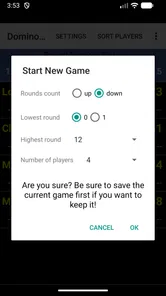
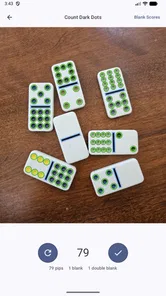
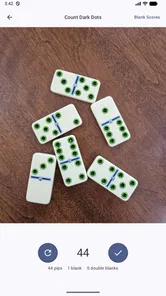
Analysis by Reviewed
I like the idea behind Domino Dot Counter: it takes one small, repetitive job during a domino game—adding up the pips—and lets a phone camera handle it. That makes this casual game more of a practical table companion than something you play on-screen. Its appeal is clearest when several people are keeping score and nobody wants to pause the conversation to count a pile of tiles by hand.
A focused tool, not a replacement for dominoes
The key distinction is that the app supports a physical domino session rather than supplying a virtual table or teaching a complete set of rules. You still need your tiles, players and chosen way of playing; the camera-based counting is the convenience. If you want digital opponents, online matches or a full game experience on your phone, this is the wrong kind of app. If your group already enjoys playing face to face, it addresses a narrower and more useful problem.
That focus also shapes how I would use it. For a quick round, manual counting may be just as easy. It becomes more worthwhile when tiles are spread across the table, scores need to be added repeatedly, or a lively group makes it easy to lose track. I’d treat the result as a helpful count, while keeping the dominoes visible so everyone can check the total if something looks off.
A small convenience with a specific job
What makes this concept appealing is its limited scope. It does not need to take over a whole game night to earn a place on the table; it only needs to make one recurring pause less tedious. That is a useful distinction when choosing casual apps. Some promise a broad collection of activities, while this one centers on a single physical-game task. I’d judge it by whether that task comes up often in your group, rather than by how much screen time it offers.
It also fits best when everyone at the table understands that a camera reading is assistance, not an unquestionable referee. If players use different house rules for deciding which tiles count at a particular moment, the app can help total the visible pips, but the group still needs to agree on what is being counted. Settling that before taking a picture avoids turning a quick tool into another source of debate.
What Makes Domino Dot Counter a Game-Changer?
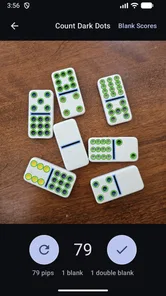
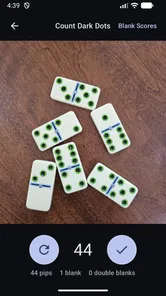
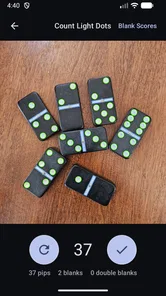
Let me tell you, the moment I installed Domino Dot Counter, my domino game nights transformed. Gone are the days of squinting at the tiles and counting dots like a human calculator. This app does all the heavy lifting for you. With just a snap of your camera, it instantly counts the dots on your dominoes, saving you time and effort. It's like having a personal assistant who never gets tired of counting.
Easy to Use Interface
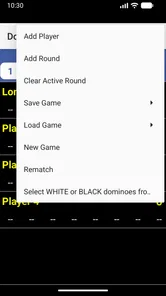
The interface is as straightforward as it gets. You open the app, point your camera at your dominoes, and voila—dot counting magic happens. The app's design is clean, without unnecessary clutter, allowing you to focus on what truly matters—beating your friends at dominoes. Plus, it supports multiple sets of dominoes, so whether you're into classic dominoes or the more complex Mexican Train, this app has got you covered.
More From Our News Desk

Weather by Xiaomi Review: Clear at a Glance, Less Clear Up Close

X Under Pressure: Can It Recover When Posting Goes Wrong?

Clash of Clans Is Won Between the Battles

Android Auto Makes the Case for Quieter Car Software

MobiOffice: Transforming Mobile Productivity with Seamless Integration

EA SPORTS FC™ Mobile Soccer: Redefining Mobile Sports Gaming
Making a camera count easier to trust
A practical habit is to prepare the tiles before opening the camera: spread them out, keep their faces turned upward, and leave enough separation that individual pips are easy to distinguish. That helps not only with visibility but also with the group’s confidence in the result. When the tiles are bunched together, a quick manual rearrangement can be more effective than taking repeated pictures from different angles.
For a close score or a round where the count matters a lot, I’d have another player glance at the total before it goes into the game’s score. That is not a criticism of the camera idea so much as a sensible way to use any counting aid. The app can remove much of the tedious arithmetic, while a second look catches a tile that was turned, covered, or left outside the frame.
Accuracy and Speed
One of the standout features of this app is its accuracy. I mean, we all know how frustrating it can be to miscount a tile and mess up the entire game. With Domino Dot Counter, those days are over. It offers precise dot counting every time. And let's not forget the speed—it's impressively fast, so you won't be left waiting around during a heated game.
In practice, camera-based counting works best when the domino faces are easy to see. I’d arrange the tiles so the pips aren’t covered, then frame the group clearly rather than trying to capture a crowded table at an awkward angle. That small bit of setup is a sensible trade-off: the app can reduce arithmetic, but it can’t make an obscured tile readable. If a total seems surprising, checking the arrangement is quicker than arguing over a score.
Perfect for All Ages
Whether you're a young domino enthusiast or someone who has been playing for decades, this app is designed for everyone. It's intuitive enough for kids to use, yet sophisticated enough to satisfy adult players. This inclusivity makes it a fantastic tool for family game nights.
Also, if you're teaching someone new to the game, the app doubles as an educational tool, helping newcomers get a better grasp of the game mechanics without overwhelming them.
Useful for teaching, with one important boundary
For a beginner, there is value in seeing how a group of tiles adds up without having to make arithmetic the main event. I’d use it as a prompt for learning: ask a new player to estimate the total first, then compare that estimate with the camera’s count. It keeps the focus on the physical tiles and makes practice feel like part of the game, rather than a separate worksheet.
That approach works best when the learner is ready to participate but does not yet count pips quickly. It is less helpful if the goal is to teach the rules of a particular domino variant, since counting dots and understanding when they score are different questions. I would explain the group’s scoring rule separately, then use the app only for the arithmetic it is meant to simplify.
Where it fits—and where it doesn’t
Picture a family game night after dinner: one person has just played, several tiles need counting, and the next player is ready to go. Passing the phone to whoever is keeping score can help the group move on without making one person do every addition in their head. It may also suit casual club or travel play when a set of physical dominoes is already part of the plan. For a quiet game with only a few tiles to total, though, pencil and paper may be faster and less distracting.
A different everyday use is a game with mixed levels of confidence: one person knows the arithmetic by heart, while another is still learning to spot the pips quickly. Letting the less experienced player handle the camera count can give them a useful role without asking them to settle every score unaided. The experienced player can confirm the result, and the group can continue. I like that division of labor because it makes the phone a shared aid, rather than a device that pulls one person away from the table.
Compared with a basic calculator, the camera approach can spare you from entering each value yourself; compared with a paper score sheet, it may make a quick count more convenient. Those familiar alternatives still have an advantage when you need a written record, want to track a longer match manually, or prefer not to bring a phone into the middle of the table. I see this as a helper for one recurring task, not a reason to change how your group plays.
Choosing the right scoring routine
If you already keep a paper score sheet, there is no need to abandon it. A workable routine is to use the camera to total the tiles, then write the agreed score on the sheet as usual. That keeps the useful recordkeeping of paper while avoiding some of the repeated addition. It is a better fit for groups that want a running match record than expecting a dot-counting tool to replace their whole scoring method.
By contrast, if only one or two tiles need a quick count, entering their values into a calculator—or simply counting by hand—may involve fewer steps than picking up a phone. The camera earns its place when there is a visible group of tiles and the same task comes around repeatedly. That threshold is personal: frequent players may appreciate the saved effort, while occasional players may find the setup itself unnecessary.
Who should spend the time—and money?
Made by Cyborg Kitten LLC, this paid casual title costs $2.99. It has a 4.4 average from around 180 ratings, with 5K+ installs, and is rated Everyone. Those details make it easier to place: it is a modestly priced utility for people who regularly play physical dominoes, not an essential download for everyone who enjoys games. The current version is 4.1, and it runs on iOS 7.0 or later.
The platform detail is worth checking before buying: the minimum operating system listed is iOS 7.0, so this is an iOS app rather than a general-purpose option for every phone. If you play with friends who use different devices, agree on who will bring a compatible phone before the tiles are laid out. The app is most convenient when the person keeping the count can reach it easily, instead of making the group stop to sort out device arrangements mid-game.
I’d consider it if your household plays often enough that scorekeeping interrupts the fun, especially if several people would rather keep their attention on the table than do repeated arithmetic. I’d skip it if you mainly want a digital domino game, play only occasionally, or already find manual scoring effortless. A camera tool is most useful when it saves a repeated bit of work; it offers less value when counting is not a problem in the first place.
When another option is the better choice
For players who want a complete game on a phone, a virtual domino app is the more direct choice: it can provide the digital play experience this tool is not designed to offer. For a group that values a lasting record of each round, paper remains more practical unless they already have a separate way to track scores. And if the main concern is simply avoiding arithmetic, a calculator is a familiar fallback that does not require arranging tiles for a camera.
I would also skip this purchase if your table has a strong no-phone habit or if the person who normally scores prefers to do it mentally. The convenience is real only when the group welcomes it. A phone placed in the middle can distract from conversation, so it helps to agree that it will come out for the count and go away again, rather than letting the scoring aid become the center of attention.
Final Thoughts
In a world where apps are a dime a dozen, Domino Dot Counter stands out by offering a simple but incredibly effective solution to a common problem. It's reliable, easy to use, and genuinely enhances the playing experience. So, if you're looking to up your domino game and make counting a breeze, this app is definitely worth a try. Trust me, once you start using it, you'll wonder how you ever played without it.
My verdict is positive, with a clear condition: this makes sense when you already play dominoes in person and want help with dot totals, not when you expect a full game or a detailed scorekeeping system. The small pause to position the tiles is worth it when a group is counting repeatedly, but a calculator or pencil remains perfectly reasonable for occasional rounds. For regular family players who value an uninterrupted table conversation, it is a focused little convenience; everyone else can comfortably pass.
A final check before you decide
Before buying, think about how your group actually handles scoring: how often you total a collection of tiles, whether the table is usually bright and uncluttered enough for a clear camera view, and whether players are comfortable using a phone during the game. If those answers point toward repeated counting and a willing scorekeeper, the app has a clear role. If they point toward occasional rounds, a handwritten tally, or no phones at the table, the simpler option is probably the better one.
That is why I see this as a practical niche purchase rather than a must-have game download. Its strongest case is not that it changes dominoes, but that it can take a small recurring chore out of a face-to-face session. For the right group, that is enough to make it worthwhile. For everyone else, knowing exactly what it does—and what it does not replace—makes passing an easy decision.
Domino Dot Counter Frequently Asked Questions
Who makes Domino Dot Counter, and what kind of app is it?
Domino Dot Counter is a casual game developed by Cyborg Kitten LLC. Its straightforward purpose is to help with domino scoring by using a phone’s camera to add up the dots on a group of dominoes. It is intended as a practical companion during a game, rather than a broad collection of unrelated features.
What device software do I need to run Domino Dot Counter?
Domino Dot Counter runs on Android devices using version 7.0 or later, and its current version is 4.1. Before downloading, check that your device meets that operating-system requirement. The game is rated Everyone, so it is suitable for a general audience. These details can help you decide whether it fits your device and household before installing it.
What is Domino Dot Counter and how does it work?
Domino Dot Counter is an innovative app designed to simplify the process of counting dots on dominoes. It uses your device's camera to scan and instantly calculate the total number of dots, allowing for quick and accurate results without manual counting. This can be particularly useful for players who want to focus more on strategy than on counting.
Is Domino Dot Counter available for both Android and iOS devices?
Yes, Domino Dot Counter is available for download on both Android and iOS platforms. Users can find it on the Google Play Store for Android devices and on the Apple App Store for iOS devices. The app is optimized for a wide range of smartphones and tablets, ensuring smooth performance across various devices.
Does Domino Dot Counter require an internet connection to function?
No, Domino Dot Counter does not require an internet connection to function. The app processes everything locally on your device, allowing you to use it anywhere, anytime, even without Wi-Fi or mobile data. This makes it a convenient tool for outdoor game sessions or places with limited connectivity.
Pros
- Accurate dot counting feature
- User-friendly interface
- Supports multiple domino sets
- Quick scan functionality
- Helpful for beginners
Cons
- Limited to dot counting only
- Requires camera access
- No offline mode
- Ads present in free version
- Limited customization options