Crush Crush - Idle Dating Sim
- 8.22K
- 4.5
- Installs
- 1.00M
- Price
- Free

Screenshots




Analysis by Reviewed
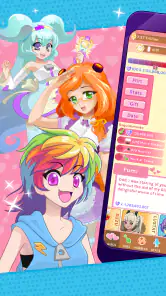
I approached Crush Crush - Idle Dating Sim as a light, character-focused casual game rather than a conventional dating simulator. Its central appeal is easy to understand: you meet anime-inspired characters, build relationships, and gradually move through a romance story while the game continues to make progress in the background. That combination makes it a natural fit for short sessions, but it also means the experience depends heavily on how comfortable you are with waiting, repeating tasks, and deciding when optional spending is worthwhile.
My overall impression is positive, with an important qualification. This is a relaxed game for people who enjoy collecting progress and checking in regularly, not a good choice if you want a fast, choice-heavy visual novel or a competitive game with deep strategy. The presentation is playful, the premise is approachable, and the idle structure suits a busy routine. At the same time, the slow rhythm can test your patience, especially when you want to advance a particular relationship immediately instead of letting the game build momentum over time.
How the romance loop feels in everyday play
The game comes from Sad Panda Studios Ltd and sits firmly in the casual category. It is free to start, which makes it simple to try without committing money first. The audience rating is Teen, so I would not treat it as a children’s game despite its bright, cartoon-like appearance. The tone is built around romance and anime-style characters, and that framing is more important than any single mechanic: you are here to watch relationships develop, not to defeat opponents or solve a demanding campaign.
In practice, I found the idle format most useful during small gaps in the day. A quick check while waiting for a bus, taking a break from work, or winding down before bed can be enough to collect progress and decide what to focus on next. It does not demand the uninterrupted attention of a match-based game. That is a genuine strength, because I could leave it alone and return later without feeling that I had missed a crucial real-time event.
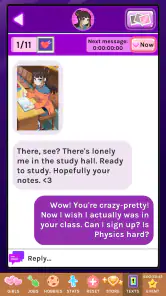
The trade-off is that the game’s relaxed structure can make active play feel less rewarding than expected. When I wanted a clear burst of story or a meaningful conversation, the idle pacing sometimes made the next step feel distant. This is where expectations matter. If you enjoy watching a long-term project grow, the delay becomes part of the appeal. If you prefer direct control and immediate narrative payoff, a traditional visual novel or story-driven dating game will probably suit you better.
The relationship theme also gives the progression a more personal shape than a generic idle counter. Instead of merely upgrading an abstract base or collecting anonymous resources, I had a cast of characters to keep in mind. That made my decisions feel more connected to the game’s premise. I was not simply asking, “What produces the biggest number?” I was also thinking about which relationship I wanted to move forward first.
What the free starting point really means
The free price is helpful because it lowers the risk of trying the game. You can discover whether the writing style, visual tone, and waiting-based structure work for you before spending anything. The in-app purchase range runs from $1.59 to $99.99 per item, so the game clearly includes optional purchases at very different levels. I would approach that range carefully and decide in advance whether I am treating the game as a free pastime or as something worth a small entertainment budget.
That purchase range does not, by itself, tell me how fair every part of progression feels. I would not assume that paying is required, nor would I promise that every player will find the free route equally comfortable. The sensible approach is to play long enough to understand the normal rhythm before buying anything. If the basic loop already feels too slow, a purchase may only hide the problem temporarily rather than make the game a better match for you.
One useful habit is to avoid spending during the first enthusiastic session. The early appeal comes from novelty, and novelty can make convenience purchases look more valuable than they really are. I prefer to see whether I still enjoy checking in after several ordinary days. That gives me a better sense of whether I like the ongoing routine or merely liked the first impression.
Progress feels best when I plan around it
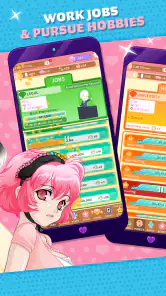
The most practical way to play is to treat each session as a small planning moment. I would collect what has accumulated, choose the relationship or activity that matters most to me, and then leave the game to work until the next check-in. This is more satisfying than opening it repeatedly without a goal. The idle design rewards patience, but it still benefits from a little personal organization.
A second useful tactic is to choose a stopping point before you begin. For example, I might decide to check progress once during a lunch break and once in the evening rather than constantly reopening the app. That keeps the game from turning into a distracting habit. It also makes the waiting feel intentional instead of frustrating. For a casual title, that balance is important: the game should fill spare moments, not take over every spare moment.
I also recommend focusing on one clear short-term objective rather than trying to push every character forward at once. Splitting attention can make the overall pace feel vague, while a single target gives each check-in a purpose. This is not about discovering a secret optimal route; it is simply a way to make the idle structure easier to read and more satisfying to follow.
Where the pressure can appear
The pressure in this kind of game is not competitive pressure from other players. It is the internal urge to speed up a process that was designed to take time. When a relationship is close to the next milestone, waiting can feel more irritating than it did at the beginning. That is the point where optional purchases may become tempting, especially for players who dislike unfinished tasks sitting in front of them.
I think the game is fairest for people who accept that progress is gradual. If you measure enjoyment by how much you accomplish in a short session, the idle format may feel stingy. If you measure it by whether returning later gives you something new to collect, improve, or pursue, the same design becomes much more comfortable. The distinction sounds small, but it determines whether the game feels calming or slow.
Another limitation is that the romance framing may not be enough to hold your attention if you need complex choices and substantial character drama. The premise suggests a dating adventure, but I would not install it expecting the same kind of authored experience as a full-length interactive romance story. Its strongest identity is the blend of relationship progression and idle routine, not a replacement for a choice-heavy narrative game.
Fairness when compared with other casual games
Compared with a standard idle game built around businesses, heroes, or production chains, this one has a more conversational and character-oriented reason to keep returning. That can make the numbers feel less sterile. The downside is that players who enjoy optimization for its own sake may find the romance wrapper less compelling than a game with clearer strategic layers and more direct control.
Compared with a traditional dating simulator, the difference is even more obvious. A conventional story game usually rewards reading, selecting dialogue, and following branching consequences in the moment. Here, the idle structure places more emphasis on accumulation and routine. I would choose this game when I want a low-pressure companion to dip into, and choose a traditional dating title when I want to become absorbed in a story for an uninterrupted evening.
It also differs from competitive casual games because there is no reason for me to compare my progress with another player’s performance. That is good news for anyone tired of leaderboards, timed contests, or pressure to keep up. The cost is that the motivation must come from my own interest in the characters and the satisfaction of gradual progress. Without that personal connection, the loop can lose its pull.
From a fairness perspective, the absence of competitive comparison matters. A purchase that accelerates personal progress may change how quickly I reach my own goals, but it does not automatically create the same kind of unfair match advantage found in a player-versus-player game. I still would not spend casually, but I see the spending question here mainly as one of personal value and pacing rather than direct competition.
What I would check before paying
Because individual purchases can range from a small amount to a much larger one, I would first identify what problem I am trying to solve. Am I enjoying the game and looking for a convenience, or am I frustrated by the basic pace and hoping money will make me like it more? Those are different situations. Spending can make sense when it supports a game I already enjoy; it is a poor test of whether the game itself is right for me.
I would also keep the free experience as my reference point. Before buying, I would ask whether I understand the normal progression and whether I am happy with the amount of attention the game asks from me. If I cannot answer those questions, I would keep playing without spending. This approach is especially useful for an idle game because the first session does not represent the full rhythm of returning over time.
Parents and younger players should pay attention to the Teen content rating and the presence of in-app purchases. The game’s colorful style may look harmless at a glance, but the rating is a reminder to consider whether its romantic themes suit the intended player. For anyone sharing a device, I would also make sure purchase controls are handled deliberately rather than assuming that a free download means there is no spending risk.
Version, longevity, and practical expectations
The current version is 0.448.1, and the game first appeared on October 29, 2019. Those details place it in the category of an established title rather than a brand-new experiment. It has reached over one million installs, with an average rating of 4.5 from around 71 thousand ratings and roughly 8.2 thousand written reviews. That level of activity suggests that the concept has found a substantial audience, although popularity alone cannot guarantee that its pacing will suit every player.
It runs on Android 7.0 or later, which makes it accessible to many older devices. I still would not assume that every phone will feel identical, particularly if the device is already struggling with other games or background processes. My practical advice is to treat the minimum operating-system requirement as a compatibility baseline, not as a promise of identical performance on every supported handset.
The long-running nature of the game is both reassuring and demanding. A title that has been around for years can be easier to approach because its identity is already clear, but an idle game also asks whether I am willing to maintain a routine. I would not download it expecting a short campaign that I finish in one sitting. Its value comes from returning, making small decisions, and seeing the romance-focused progression accumulate.
There are also important unknowns that I would keep in mind before forming a strong spending opinion. The purchase range tells me the possible price scale, but it does not explain every item’s exact value or how each purchase changes the experience. I would therefore read each purchase screen carefully and avoid assuming that the most expensive option is automatically the best value. That is not a criticism of this game alone; it is simply the responsible way to approach a free-to-start title with optional spending.
Who should play it, and who should skip it
I would recommend it to someone who likes anime-styled romance, gentle collection, and games that can be checked in short bursts. It is especially suitable for a player who enjoys seeing a long-term goal move forward without needing to react every second. If you like the idea of building a personal routine around several fictional relationships, the idle format gives the premise a distinctive shape.
I would be more cautious recommending it to someone who wants a tightly written romance with constant dialogue, major branching decisions, or a definite ending reached through active play. I would also steer competitive players elsewhere. The appeal here is not proving that you are faster or stronger than someone else; it is creating your own pace and deciding how much attention the relationships deserve.
For a busy player, a realistic routine might be to open the game in the morning, collect whatever progress is ready, select one priority, and close it. A second check in the evening can provide another small moment of interaction. If that sounds pleasant, the game may fit naturally into your day. If the idea of waiting between those check-ins already sounds annoying, a more active casual game will probably give you better value for your time.
My final verdict is that the game earns a recommendation as a low-pressure romance-themed idle title, provided you accept its gradual pace and keep spending deliberate. I like the way its character focus gives ordinary check-ins more personality than a purely abstract idle loop. I also appreciate that it can occupy a few minutes without demanding a full gaming session.
Still, I would not call it universally fair or universally satisfying without qualification. The free entry point is appealing, but the wide range of optional purchase prices means players should judge value for themselves rather than assume that paying is necessary or automatically worthwhile. The best experience comes from treating purchases as optional conveniences, not as a rescue plan for a progression system you already dislike.
With that mindset, Crush Crush - Idle Dating Sim is easy to recommend to the right person: someone who wants a casual, character-led game that rewards patience and regular visits. I would skip it if I were searching for a competitive challenge or a deeply interactive romance novel. For everyone in between, I would try the free version, establish a comfortable check-in routine, and decide only later whether the extra spending fits the enjoyment I am actually getting.
Pros
- Easy-to-learn idle gameplay with progress continuing while offline.
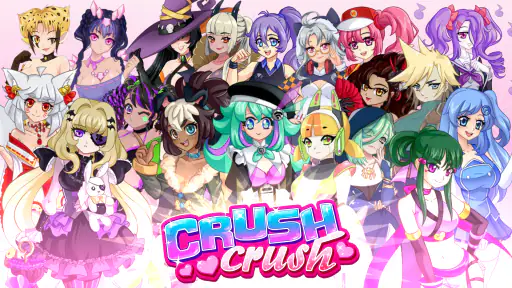
- Large cast of characters with distinct personalities and storylines.
- Many outfits
- gifts
- and activities provide plenty of customization.
- Regular events and updates add new content for returning players.
- Runs smoothly on most modern Android and iOS devices.
Cons
- Progress can feel slow without frequent play or in-app purchases.
- Some premium items and boosts are expensive for free players.
- The dating themes and humor may not appeal to every audience.
- Repeated tapping and resource management can become monotonous.
- Requires an internet connection for certain features and updates.

- Category
- Casual
- Version
- 0.448.1