Cat Game - The Cats Collector!
- 21.23K
- 4.6
- Installs
- 5.00M
- Price
- Free

Screenshots



Analysis by Reviewed
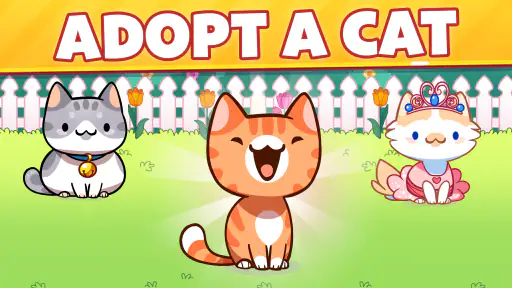
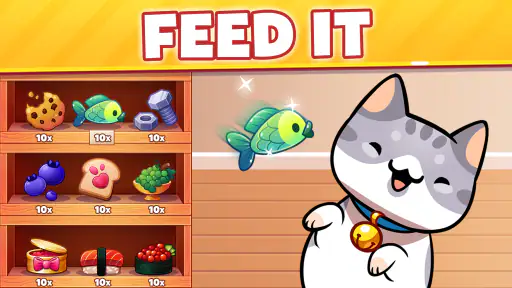
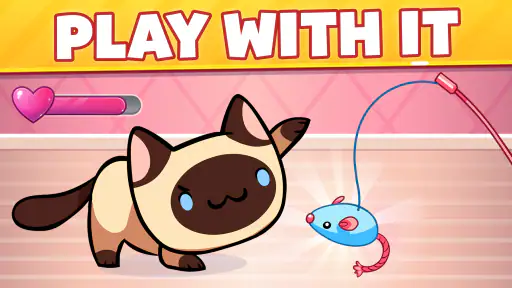
I picked up Cat Game - The Cats Collector! expecting a light distraction, and it quickly became the sort of game I opened in small gaps throughout the day. Its appeal is simple: I collect charming cats, improve the spaces around them, and return regularly to see what is available. That sounds modest, but the combination of collecting and short sessions gives it a comfortable rhythm for a casual player.
This is a free casual game from Mino Games, aimed at Everyone. It is available for devices running Android 5.0 or later, and the current version is 1.99.1788. The game has grown well beyond a niche curiosity, with over 5 million installs and a 4.6 average from around 92 thousand ratings. Those figures do not replace personal experience, but they do match my impression that this is designed for a broad audience rather than for a small group of dedicated players.
How Cat Game fits into a shared household
A game that works in short, shared moments
The most natural household scenario is a shared tablet or a phone that gets passed around during quiet moments. One person can check the cats while waiting for dinner, another can look through the collection later, and a child can enjoy the visual side without needing to understand a complicated combat system. I found the game particularly easy to fit around ordinary routines because it does not demand the kind of uninterrupted attention associated with action games.
That flexibility is also useful when several people enjoy different parts of the experience. I tend to care about completing collections and deciding what to work toward next, while another player may be more interested in the appearance of the cats and the feel of the rooms. Cat Game supports both approaches without forcing every player to treat it like a serious optimization project.
There is a small but important catch with shared use: a single game session is not automatically the same thing as separate personal play. If several people use one device and one in-game progress path, they need to agree on what to spend, what to collect, and which choices should be left for later. That is not a flaw unique to this title, but it matters more here because collecting creates a strong temptation to tap through decisions quickly.
Set expectations before handing over the device
Before I let someone else play on my device, I would explain that progress and purchases should be treated as belonging to the same play session unless the game is being used under a separate arrangement. The safest household rule is straightforward: do not spend anything without asking, and do not use a limited opportunity just because it appears on screen. This is especially sensible in a game that includes optional in-app purchases ranging from $0.99 to $99.99 per item.
The free entry point is generous enough to let someone decide whether the collecting loop suits them before paying. Still, the presence of optional purchases changes how I would set up a shared device. I would keep the store password or purchase approval process under the account holder’s control, and I would make sure younger players know that an attractive cat or event offer is not automatically a free reward.
This is one of the less obvious practical issues with a collection game: the value is emotional rather than competitive, so a purchase can feel harmless in the moment. A child may see a missing cat, while an adult sees a charge. A short conversation before play prevents that mismatch better than trying to explain it after the fact.
Coordinating a collection without turning it into homework
When more than one person uses the same progress, coordination works best when each player has a small role. One person can check current opportunities, another can decide which cats are worth prioritizing, and everyone can agree on a simple rule for spending. I would not try to create a detailed household spreadsheet for this game; that would drain the relaxed quality that makes it enjoyable.
A useful approach is to leave a quick note such as “check the event first” or “save the currency for the next decision.” That tiny pause can prevent a player from using resources on an impulse. It also makes the game feel like a shared collection rather than a sequence of disconnected taps.
Weekly events are central to the game’s returning appeal, but they can also create a timing issue in a household. If one person checks first, another may assume there is nothing new to discover. I found it better to treat events as a shared opportunity and agree who will make the first choice. That keeps the experience cooperative even when the game itself is being played by one person at a time.
Why the age rating matters, and what it does not solve
The Everyone rating makes Cat Game approachable for a wide age range, and its gentle presentation is much less intimidating than a competitive game with fighting, pressure, or complex controls. I can imagine it working well as a casual introduction to collecting games, especially for a child who enjoys animals and decoration more than fast reactions.
Even so, an age rating is not a substitute for supervision around purchases or screen habits. The game’s friendly appearance can make it easy to underestimate how persuasive collecting can be. A player may keep returning because one more cat feels close, or because a weekly activity seems worth checking before it changes. For younger users, I would set a clear stopping point and explain that missing one opportunity is not a disaster.
Trust also matters between adults. If a partner, sibling, or roommate uses the same device, the important question is not whether they can operate the game, but whether everyone understands the boundaries around progress and spending. I prefer shared play when the rules are visible: no purchases without permission, no deleting or resetting anything, and no assuming that a choice is reversible.
What the collecting loop feels like in everyday use
A gentle alternative to heavier casual games
Compared with match-three games, Cat Game feels less focused on solving a board under pressure. Compared with idle games, it feels more personal because the reward is tied to a growing group of cats rather than only to larger numbers. It also avoids the intensity of many competitive casual games, where the main motivation is beating another player or climbing a ranking.
That makes it a good choice for someone who wants a soft, low-pressure routine. I would recommend it to a player who likes checking progress, browsing a collection, and making small decisions without needing a dramatic payoff every minute. It is less suitable for someone who wants deep strategy, rapid action, or a clear campaign with a final ending.
The comparison with ordinary pet simulators is more nuanced. Cat Game gives the satisfaction of having a growing group of cats, but I would not approach it expecting the same kind of intimate responsibility as caring for one virtual pet. Its strength is variety and collection. If you prefer forming a strong bond with one character, a focused pet simulation may feel more rewarding.
The best way to play without overspending
My strongest practical tip is to decide what kind of collector you are before buying anything. If your goal is simply to enjoy the cats and return casually, the free experience is the sensible starting point. If your goal is to obtain every appealing item as soon as possible, the game can become much more expensive because optional purchases go up to $99.99 per item.
I also recommend delaying any purchase until after playing through several ordinary sessions. The first attractive offer can feel more important than it really is, especially when the collection is still small. Waiting helps reveal whether you enjoy the underlying routine or only the excitement of a new reward. That distinction is valuable in any collection game, but particularly so when the title is free to start.
A second useful habit is to check the game at a time that already exists in your day, such as after breakfast or during a commute break. I found that this keeps it relaxing. Opening it repeatedly whenever a thought about the collection appears can make a gentle game feel strangely demanding. The game works best as a small part of a routine, not as the routine itself.
Weekly events add freshness, with a trade-off
The weekly event structure gives the game a reason to come back after the initial novelty fades. It changes the feeling from “I have already seen the collection” to “there may be something worth checking this week.” For me, that recurring rhythm is more effective than a game that offers everything at once and then has little reason to revisit.
The trade-off is that event-driven play can create mild pressure. A player who dislikes limited-time activities may feel that the game is asking for attention at the wrong moment. I would not recommend making this your main game if you prefer experiences that can be completed entirely at your own pace. The events are a benefit for regular check-in players, but a possible source of friction for anyone who dislikes missing content.
In a household, events also create a coordination opportunity. A family can choose one evening to look at the new activity together, decide what is worth pursuing, and then leave the rest for whoever wants to continue. That turns the recurring schedule into a shared conversation rather than a reason for everyone to compete over the same device.
Where the game can feel repetitive
Collection games naturally repeat their basic pattern: check what is available, work toward another reward, and return for the next opportunity. Cat Game makes that repetition pleasant through its cats and presentation, but it cannot remove the repetition entirely. After the initial discovery period, players who need constant mechanical change may start to feel that they are performing the same routine.
This is where my opinion is divided. I like repetition when I am tired and want something predictable, and the game serves that purpose well. On a day when I want a challenge, however, I would rather play a puzzle game with a clear problem to solve or an action game with more immediate feedback. Cat Game is strongest as a companion to those experiences, not necessarily as a replacement for them.
Another limitation is that collecting can make the player focus on what is missing instead of what has already been earned. I found it more satisfying when I paused to look at the cats I had collected rather than treating the current collection as a checklist of failures. That small change in mindset makes the game feel more generous and reduces the urge to chase every available reward.
Who should install it, and who should skip it
I think Cat Game is a good fit for cat lovers, casual players, families sharing a device, and anyone who enjoys a calm collection loop. It is also a reasonable choice for a younger player who wants something visually friendly and easy to approach, provided an adult handles purchase boundaries and agrees on play limits.
I would hesitate to recommend it to someone who dislikes optional purchases on principle, even though the game is free to download. I would also steer away players who want a substantial narrative, demanding strategy, or a traditional win condition. The appeal is in gradually building a collection and returning to it, not in mastering a difficult system.
For a person choosing between this and another casual game, I would ask one question: do you enjoy checking a collection more than beating a level? If the answer is yes, this is likely the better match. If the answer is no, a puzzle game, arcade title, or one-time premium game may provide more satisfaction with less recurring temptation.
My household verdict
After spending time with it, I see Cat Game as a particularly approachable casual game for shared, low-pressure use. It is easy to understand, friendly for a broad age range, and structured around small returns rather than long sessions. The work of Mino Games is most convincing when the game lets the cats themselves carry the experience; the collection feels more inviting than an elaborate ruleset would.
The main household lesson is to separate fun from spending. Decide who can make purchases, agree on whether progress is shared, and avoid treating weekly events as obligations. Those boundaries preserve the relaxed mood and prevent a harmless cat-collecting session from becoming an argument about a purchase or a missed choice.
With a free price, an Everyone rating, and support for older devices beginning with Android 5.0, it is easy to try without demanding a modern phone or a major commitment at the start. I would still keep expectations realistic: the game relies on repetition, events, and the desire to complete a collection. Its real strength is not complexity but comfort.
My recommendation is therefore fairly specific. Install it if you want a cheerful game to check in short bursts, especially if cats and shared collecting sound more appealing than competition. Skip it if you need deep strategy or dislike recurring event rhythms. For the right player, it is a pleasant little corner of the phone; for the wrong one, the same gentle loop may soon feel like a chore.
Pros
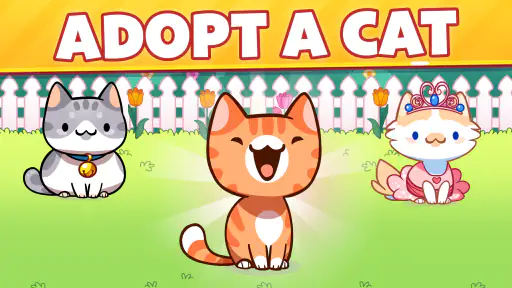
- Charming cat designs make collecting new characters feel rewarding.
- Simple tap-based gameplay is easy to understand for players of all ages.
- Frequent events provide extra goals beyond the regular collection system.
- Decorating rooms adds a creative element to the collection-focused experience.
- Offline-friendly moments make it convenient for short
- casual play sessions.
Cons
- Progress can feel slow without spending premium currency or waiting for timers.
- The large number of currencies and resources may confuse new players.
- Repeated tasks can become monotonous after the initial discovery phase.
- Energy and time limits interrupt longer play sessions.
- Ads and purchase offers may appear frequently during normal gameplay.

- Category
- Casual
- Version
- 1.99.1788