Bus Fever Party!
- 796.00
- 4.2
- Installs
- 10.00M
- Price
- Free

Screenshots
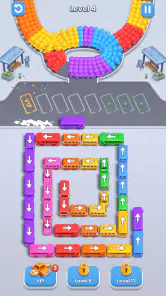
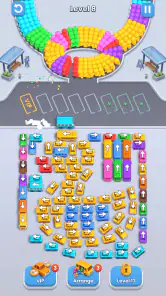
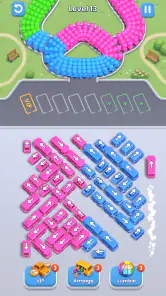
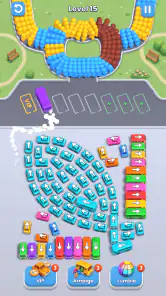
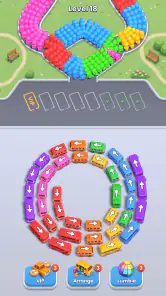
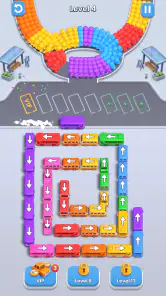
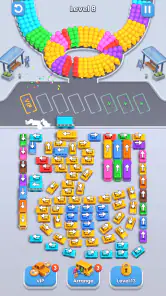
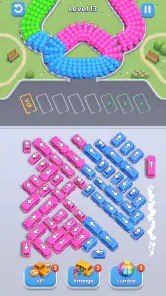
Analysis by Reviewed
I tend to judge a casual game by whether I can understand its appeal before a spare moment disappears. Bus Fever Party! makes a clear first impression: buses are hemmed in by traffic, and I have to work out how to open a route. The idea is easy to grasp, but the order of moves is where the thinking begins. I enjoy that contrast, especially when I want a focused puzzle rather than a driving game that asks me to react quickly.
A traffic jam you can read at a glance
This is a casual puzzle game from Lumi Games, centered on buses boxed in by other vehicles. The basic task is easy to grasp: work out which vehicle needs to move first, open a path, and get the bus out. That makes the game approachable even if you do not usually play puzzle games. There is no complicated setup to learn before the central problem makes sense.
What gives the puzzles their appeal is the gap between a clear goal and a constrained route. A move that looks helpful can leave another vehicle blocking the only useful lane, so I found myself scanning the layout before acting instead of simply tapping whatever was closest to the exit. The bus is the focus, but the surrounding traffic is what turns the task into a little exercise in planning.
That makes Bus Fever Party! a good fit for people who enjoy small logic problems without wanting a long story or a demanding control scheme. It is less suited to someone looking for open-road driving, realistic vehicle handling, or a deep strategy game. The satisfaction here is narrow and immediate: see the blockage, find a sequence, and clear it.
Why a quick puzzle can still hold attention
The strongest short-session quality is how quickly I can understand what I am trying to do. I do not need to remember a character’s backstory or a long chain of objectives before a level becomes meaningful. When I have a few spare minutes, I can focus on the traffic arrangement in front of me and decide whether I want to solve it now or come back later.
A useful approach is to look for the vehicles that have no room to move, then trace what would have to shift before they can clear the bus’s route. That backward check helps avoid aimless moves. I also try to distinguish a move that creates space from one that merely moves a vehicle somewhere else; in a tight layout, those are not always the same thing.
This kind of observation is a more interesting skill than it may sound. The puzzle rewards patience and sequence awareness, not fast reactions. If you tend to tap quickly when a screen looks busy, slowing down is likely to make the game feel fairer and more satisfying. The challenge is not just to find an empty spot, but to preserve enough room for the next move.
You May Like

Clash of Clans Is Won Between the Battles

Android Auto Makes the Case for Quieter Car Software

MobiOffice: Transforming Mobile Productivity with Seamless Integration

EA SPORTS FC™ Mobile Soccer: Redefining Mobile Sports Gaming

How Microsoft OneDrive Became a Mobile Productivity Giant

How Google Translate Breaks Language Barriers Effortlessly
Short turns and everyday interruptions
The format suits an ordinary in-between moment: waiting for a drink, sitting on a bus, or taking a short break between tasks. I can open a puzzle, make a few deliberate moves, and get a small burst of progress without needing to set aside a full evening. That is the kind of everyday use where a straightforward traffic puzzle can work better than a game that expects continuous attention.
There is a trade-off, though. A puzzle can be easy to understand and still require a little concentration once the arrangement becomes crowded. If you are likely to be interrupted every few seconds, you may lose track of which vehicle you intended to move next. My practical tip is to pause mentally before a move: identify the immediate purpose, such as clearing a lane or freeing a blocker. That makes it easier to resume the plan after a distraction.
I would not choose it as my first option while walking, doing something that needs frequent attention, or trying to fill a moment so brief that I cannot focus at all. The game’s appeal depends on noticing how the vehicles constrain one another. It can be casual without being entirely mindless, and that distinction matters for deciding when to play.
Returning after a pause
Because each challenge is centered on a visible arrangement and a direct objective, returning to the game does not ask for much context. I do not need to recall a plot or rebuild a complicated strategy from a previous session. If I leave after a puzzle, I can approach the next one as a fresh traffic problem rather than carrying a long chain of decisions in my head.
For a puzzle that I have already started, the most useful way to regain my bearings is to look again at the bus’s route and identify the main obstruction. Then I can reconsider the sequence from the current layout instead of blindly continuing the last idea I remember. This is a small habit, but it helps when an interruption has broken my concentration.
That said, interruption tolerance is not the same as being a perfect background game. A move changes the board, and a careless tap can make it harder to reason about what is left. I prefer to play when I can give the screen a little attention, even if the session itself is short. If you want something you can operate without looking, this is not the right kind of casual game.
Where the replay value comes from
The main reason to keep playing is the desire to solve another arrangement. Each traffic jam invites the same central question—what needs to move first?—but the positions can make that question feel different from one puzzle to the next. The familiar rule set is an advantage for quick play, although it can also make the experience feel repetitive if you expect a steady stream of new mechanics or a broader driving adventure.
For me, replay value depends on whether I enjoy improving my own process. I can treat a puzzle as a small planning challenge: pause, identify dependencies, and avoid moves that do not help open the route. That approach makes repeat play more engaging than simply tapping until something works. If you mainly want action, changing scenery, or competition, this narrow focus may wear thin sooner.
Compared with many casual games built around rapid matching or reflex taps, this one asks for more deliberate spatial thinking and less speed. Compared with a full-fledged traffic simulator, it removes the pressure of steering and road behavior in favor of compact, arranged puzzles. That middle ground is its clearest identity: it is calmer than an action game, but more mentally involved than a purely passive time-filler.
What to expect before installing
The game is free to download, with in-app purchases listed from $1.99 to $99.99 per item. I would go in expecting optional spending to be part of the experience, rather than assuming every item or convenience is included at no cost. If you prefer games with no purchases at all, that is a reasonable reason to choose another title. The purchase range is broad, so it is worth being mindful of any buying decisions, especially if a child will be playing.
Its Everyone age rating makes it broadly accessible, and the simple objective is easy to explain to a younger player. Still, I would not assume that an age rating means every child will enjoy the planning involved; a player who wants immediate motion may find the blocked routes frustrating. It is a better match for someone who likes rearranging objects and thinking a few moves ahead.
The game has a 4.2 average from around 42,000 ratings and more than 10 million installs, which suggests it has reached a wide casual audience. I treat that as useful context, not a guarantee that the puzzle style will suit me. Its current version is 1.2.6, and it requires Android 8.0 or later. Those details make it easier to judge basic compatibility before downloading, while the actual deciding factor is whether a traffic-clearing logic game sounds enjoyable.
Who I would recommend it to
I would recommend it to a friend who likes compact puzzles, wants a clear goal, and enjoys figuring out move order without racing a timer. It is especially appealing if you often have small pockets of free time and would rather solve a focused problem than follow a lengthy campaign. The best moments come when a board initially looks locked, then one carefully chosen move reveals a workable sequence.
I would suggest skipping it if you want realistic buses, continuous driving, extensive narrative, or a game that stays exciting through frequent changes in pace. The puzzle premise is the point, so its repeated focus on clearing blocked routes will either feel pleasantly consistent or too samey, depending on your tastes. Players who dislike planning several moves ahead may also find the traffic layout more irritating than relaxing.
A casual game with a clear lane
My overall impression is that Bus Fever Party! understands the value of a small, readable challenge. It does not need complicated controls to make a bus escape feel satisfying; the interesting part is working out how to free the space around it. I like it most as a brief thinking break, not as a substitute for a larger game or a source of nonstop action.
If that kind of focused puzzle sounds appealing, I think it is worth trying, particularly when you want something you can pick up without a long warm-up. Just bring a little patience, and do not expect every session to feel fresh if you are not fond of repeated traffic logic. For the right player, the simple pleasure is seeing a blocked route become clear one sensible move at a time.
Choosing the right moment to play
A realistic use for me is a quiet wait in a café: I can give the board a minute of attention, solve a small part of the traffic problem, and put my phone away when my order arrives. That works better than opening it during a conversation or while I am watching for a stop, because the puzzle asks me to track where each vehicle can go. The short-session appeal is strongest when the interruption is predictable rather than constant.
When a layout feels stuck, I would avoid moving every vehicle just to see what happens. Instead, I look for a vehicle that blocks the bus’s route and ask what space it needs; then I check whether another vehicle must move first. This simple dependency chain is a useful way to keep experimentation purposeful. It also makes an unsuccessful move easier to learn from, since I can see which part of my plan failed.
How it fits among casual games
If I want a quick reward with almost no planning, a match-style casual game is usually the easier choice. If I want to be absorbed in a world or feel progress across a longer session, a story-driven puzzle or driving game may be a better fit. This title sits between those options: its bus-and-traffic setup gives me a concrete visual problem, while the pleasure comes from arranging a route rather than steering through one.
That distinction also shapes who should skip it. Someone who finds blocked movement irritating, or who expects each session to introduce a new kind of activity, may prefer a more varied casual game. On the other hand, players who like familiar rules and want to get better at spotting dependencies may appreciate the consistency. The design’s restraint is both its strength and its limit.
Cost, audience, and practical fit
It is free to start, but the in-app purchase range is worth keeping in mind if you are choosing a game for a child or trying to avoid spending prompts in mobile games. I would decide ahead of time whether purchases are acceptable on the device and use the relevant device-level controls if needed. The Everyone rating helps describe its broad audience, but it does not tell you whether the pace or puzzle style will suit a particular player.
Lumi Games’ game was released on Apr 23, 2025, and its current version is 1.2.6. For Android, the minimum operating system is 8.0, so checking that requirement before installing can save time on an older device. The main question is less about technical complexity than personal taste: do you enjoy pausing to plan a few moves, or would you rather have a game that keeps changing what it asks of you?
My final call for a short-session player
For me, its strongest use is a small, self-contained thinking break when I can look at the screen and make a deliberate choice. I would keep it in mind for waiting rooms, a quiet commute while seated, or a low-key pause at home—not for moments when I need to split my attention. The game offers a clear kind of satisfaction, but it does not disguise that satisfaction as a broader adventure.
If you enjoy visual logic puzzles and are comfortable returning to a familiar central task, I think it is worth trying. If you need constant novelty, realistic driving, or truly hands-off play, another casual game will probably serve you better. Its appeal is simple but specific: a crowded layout becomes manageable once I stop tapping at random and start thinking about what must move first.
Bus Fever Party! Frequently Asked Questions
What is Bus Fever Party!?
Bus Fever Party! is a casual traffic-management game built around sorting passengers and moving buses through crowded stops. You tap or select buses and passengers to help match people with the right rides, while planning moves carefully to avoid traffic jams. Its rules are easy to understand, but later stages can require more attention and forward planning. The exact features and level design may vary between versions.
Is Bus Fever Party! free to download and play?
The game may be available to download for free, but check its store listing for current pricing and any in-app purchases before installing. Free-to-play titles commonly offer optional purchases, such as extra help or other game items, and may display advertisements. Availability, payment options, and purchase details can differ by country and platform, so review the Google Play or App Store page for the version you intend to use.
Does Bus Fever Party! work offline?
Some puzzle and traffic-management games allow core levels to be played without an internet connection, while features such as ads, rewards, updates, or account services may need connectivity. Offline access in Bus Fever Party! can depend on the current version and how it is distributed. If playing without data is important, check the store description and test the game offline after installation; do not assume every feature will remain available.
Is Bus Fever Party! suitable for children?
The game’s simple tap-based gameplay may be approachable for younger players, but suitability depends on the child and the content shown in the specific release. Before downloading, check the age rating, privacy information, and store listing for advertising or in-app purchases. Parents may also want to review device purchase controls and play alongside their child at first, particularly if the game includes ads or prompts to buy optional items.
Which devices support Bus Fever Party!, and how much storage does it need?
Compatibility depends on the version available in your region and whether you use Android or iOS. Check the game’s official Google Play or App Store listing for supported operating-system versions, device requirements, and the latest download size; these details can change with updates. Keep some additional free storage for installation and future updates, and download only from an official store or another trusted source.
Pros
- Colorful visuals make the busy city easy to read at a glance.
- Simple controls are quick to learn for new players.
- Short rounds suit quick play sessions.
- Traffic challenges reward planning and timing.
- The party-style presentation keeps the gameplay lighthearted.
Cons
- Later stages can feel hectic as traffic builds up.
- Repeatedly managing similar traffic patterns may become tiring.
- Small screen details can be harder to see on phones.
- Mistimed moves can quickly disrupt your progress.
- The experience may feel too casual for players seeking depth.

- Category
- Casual
- Version
- 1.2.6