Bubble Busters PvP
- 1.13K
- 4.7
- Installs
- 500.00K
- Price
- Free

Screenshots

Analysis by Reviewed
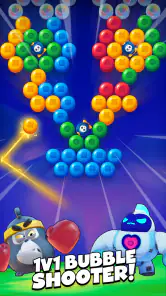
Bubble Busters PvP is the kind of casual game I reach for when I want a quick match rather than a long campaign. It keeps the familiar bubble-shooter idea, then places it in competitive matches against real people. That change matters: planning a shot is no longer only about clearing a board efficiently, because speed, pressure, and the other player’s progress all affect how I play.
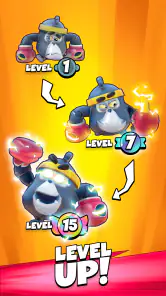
After spending time with it, I found a game that is easy to understand but not completely mindless. Its strongest appeal is the short-session format. I can play during a break, finish a few rounds, and put it away without needing to remember a complicated story or manage a large map. The RPG-style upgrades add a longer-term reason to return, although they also make progression more important than it is in a traditional offline bubble shooter.
Developed by PixelPie Games, this free casual game is suitable for Everyone and runs on Android 10 or later. It has built a sizeable audience, with over 500 thousand installs, a 4.7 average from around 20 thousand ratings, and roughly 1.1 thousand written reviews. Those figures suggest that the basic formula is connecting with many players, but they do not remove the need to look closely at how it feels in everyday use.
Getting into a match without unnecessary friction
The first thing I would tell a new player is not to treat the opening matches as a test of perfect aim. Bubble shooters look simple because the controls are familiar, but competitive play adds a different kind of pressure. A shot that would be acceptable against a fixed puzzle may be too slow or too conservative when another person is progressing at the same time.
The setup itself is straightforward on a compatible device. The current version is 1.25.48, and the minimum operating-system requirement is Android 10. Before blaming the game for a launch or update problem, I would check that the phone is actually running a supported version, that there is enough free storage for an update, and that the connection is stable. These are ordinary checks, but they prevent a lot of confusion when a multiplayer game behaves differently from an offline one.
I also recommend opening the game when the phone is not busy with several downloads or background updates. A crowded connection can make a competitive match feel unreliable even when the game itself is working normally. If a match takes longer to begin than expected, I would wait briefly, close other network-heavy apps, and try again rather than repeatedly tapping the start control.
The most useful setup habit is to test the controls before spending anything. I want to know how quickly the aiming line responds, how accurately I can release a shot, and whether the display feels comfortable in portrait or landscape use. Small differences in touch response become much more noticeable when the opponent is moving quickly.
The game is free to download and play, but it includes optional in-app purchases ranging from $0.99 to $99.99 per item. That is important for families and for anyone who prefers a completely no-spend experience. I would decide on a personal spending limit before beginning, especially because competitive progression can make upgrades feel tempting after a difficult loss. The age rating of Everyone makes it broadly approachable, but younger players may still need guidance around purchases and screen time.
What the first sessions teach you
My early matches were most enjoyable when I focused on learning the board rather than chasing an immediate win. Look for shots that create more than one useful result: opening a blocked route, setting up a larger cluster, or leaving a favorable color for the next turn. In a player-versus-player setting, a modest chain that arrives quickly can be more valuable than a beautiful combination that takes too long to prepare.
One practical technique is to pause for a short moment before each shot and identify the next two possible colors or targets. I do not mean planning an entire match, which is usually unrealistic. I mean avoiding the common mistake of firing at the most obvious group and then discovering that the resulting board gives no sensible follow-up.
Another useful adjustment is to separate “survival” shots from “pressure” shots. A survival shot clears the immediate problem and keeps the board manageable. A pressure shot aims to create a stronger sequence or improve the opponent-facing result. When I am behind, I am more willing to take a calculated risk; when I am ahead, I prefer reliable progress over a flashy attempt that could waste the turn.
This is where the game differs from the usual solo bubble-shooter alternatives. An offline puzzle generally lets me retry a board, study its layout, and optimize a solution at my own pace. Bubble Busters PvP asks me to make decisions under social and competitive pressure. That makes it more exciting for quick sessions, but less relaxing if I want a quiet puzzle with no consequence attached to a mistake.
Recovering when a match or session goes wrong
Multiplayer games can produce frustrating moments that are difficult to diagnose. If a match stops responding, my first step is to avoid repeatedly pressing buttons. I would note whether the rest of the phone still responds, leave the game only if necessary, and reopen it after checking the connection. Rapidly restarting the application while the network is unstable can make the situation feel more confusing rather than fixing it.
If the game opens but matchmaking or loading does not progress, I would try a simple sequence: confirm the device has a working connection, switch away from a congested network if that is available, close the game normally, and launch it again. I would also check whether the app is waiting for an update through the platform’s app store. These steps are intentionally basic, but they are the safest first response because they do not risk changing game data or making unsupported alterations to the device.
When a session resumes, I would not immediately spend currency or activate an upgrade. First, I would confirm that the board, progress, and controls are behaving normally. If the interruption caused a result I do not understand, taking a screenshot for personal reference and recording what happened is more useful than guessing. It also helps distinguish a one-time connection interruption from a repeatable problem.
A practical recovery workflow is especially valuable for players who use the game in short breaks. Suppose I open it during a commute or while waiting for an appointment and the match fails to start. I would switch to another activity instead of repeatedly retrying for several minutes. When I have a stable connection later, I can return and play with more attention. That approach protects the casual nature of the game instead of turning a small delay into the whole experience.
For upgrade decisions, recovery also means resisting the urge to compensate for a losing streak with a purchase. I prefer to play several matches after a frustrating session and ask whether the issue was aim, timing, board reading, or simply an interrupted connection. If the same weakness keeps appearing, practice is likely to help more than an impulsive upgrade.
Separating game difficulty from device and network problems
Not every uncomfortable match is caused by the game. Touchscreens can register a release differently when fingers are damp, the phone is hot, or the device is being used while charging. A protective film can also change how precise aiming feels. Before deciding that the controls are inaccurate, I would test them with a clean screen, a steady grip, and no other demanding process running in the background.
Network conditions can create a similar illusion. If the game feels smooth in one location but delayed in another, the difference may be the connection rather than the aiming system. I would compare a short session on a reliable network with one in the problem location. I would not treat a single slow match as proof of a permanent fault.
Battery-saving modes and aggressive background management may also affect how an online game feels, particularly if the phone is already limiting performance. I would check the device’s normal battery and app-management settings without making extreme changes. The goal is to remove obvious interference, not to install unofficial tools or modify the phone in ways that could create new problems.
There is also a human factor. Losing to a real person can make ordinary delays feel more severe because every second seems important. I have found it useful to play a few matches when I am not rushed, then compare that experience with a session during a busy day. If the game is enjoyable only when I am calm and focused, that is still useful information: it may be better as a deliberate short break than as background entertainment while multitasking.
The competitive format is not ideal for everyone. Players who dislike real-time pressure, who want a completely offline option, or who prefer a fixed set of levels may be happier with a conventional solo bubble shooter. This game is a better match for someone who enjoys the uncertainty of facing another person and likes having upgrades give repeated sessions a sense of direction.
Using upgrades without letting them control the experience
The RPG upgrade layer is one of the features that gives Bubble Busters PvP more staying power than a basic arcade shooter. It creates a reason to think beyond the current board and consider how progress might improve future matches. At the same time, upgrades can change the emotional balance of a free game: a loss may feel like a strategic lesson, or it may feel like evidence that I need to spend more.
My advice is to treat upgrades as a long-term experiment. Notice which improvements actually change the way you play, rather than choosing something simply because it is available. If an upgrade supports a style you already understand, it is easier to judge its value. If it encourages a strategy that makes you uncomfortable or forces you to take risks, it may not be the right priority even if it looks powerful.
I would also avoid making several upgrade decisions immediately after a defeat. Competitive games are good at making the next improvement feel urgent. Waiting until I have played with a clear head helps me distinguish a real weakness from a temporary run of poor shots. This is one of the less obvious trade-offs in the game: progression can make each session feel meaningful, but it can also make a casual loss feel heavier than it would in a standard puzzle game.
Because purchases are optional and the game is free, it is possible to approach it with a strict no-spend rule. That may mean accepting slower progress or choosing matches for practice rather than immediate results. For some players, that restriction makes the game more satisfying because every improvement comes from better decisions. Others may find the progression pace too demanding without spending. Neither approach is automatically correct, but deciding in advance prevents the store from becoming part of every match.
Who will enjoy it, and who should choose something else
I would recommend this game to someone who already likes bubble shooters but wants more tension than a solo level provides. It works well for short sessions, especially when I want a game that can be understood immediately yet still rewards better timing and board awareness. The real-person competition gives familiar mechanics a more unpredictable rhythm, while the upgrade system provides a reason to return after the first few matches.
It is also a good fit for players who enjoy improving through repetition. The most satisfying progress is not only a stronger upgrade; it is recognizing a pattern earlier, wasting fewer shots, and staying composed when the opponent gains ground. That kind of improvement is easy to miss if I focus only on wins, so I recommend judging sessions by decision quality as well.
I would skip it if my main requirement is a peaceful, interruption-free puzzle. Multiplayer dependence, competitive pressure, and optional purchases make it less suitable for someone who wants a purely self-contained experience. I would also choose a different casual game for a young child who may tap purchase prompts without supervision, even though the content rating is Everyone.
Compared with a typical match-three game, this title feels more focused on aiming and immediate spatial judgment. Compared with a standard bubble shooter, it adds the unpredictability of another player and the longer arc of upgrades. Compared with a large role-playing game, however, its progression is much lighter and its appeal depends more on the repeated match than on exploration or narrative. Knowing that distinction helps set the right expectation before installing it.
My practical verdict after regular use
Bubble Busters PvP succeeds because it does not overcomplicate the basic idea. I can understand what to do quickly, yet competitive play gives familiar shots more consequence. The best moments come when I read the board early, choose a practical chain, and adapt instead of stubbornly pursuing a perfect setup.
Its limitations are tied to the same design. A real-person format is less predictable than solo play, connection quality can affect the experience, and the upgrade system may not appeal to players who want a completely level playing field with no progression pressure. The optional purchase range also deserves attention from anyone sharing a device with children or trying to keep gaming strictly free.
For me, the right way to use it is in focused bursts: check the connection, play a few matches, review why difficult shots failed, and stop before frustration turns into an impulse purchase. That workflow brings out the game’s strengths while reducing the impact of its friction points. If you want a free casual bubble shooter with real-player competition and a light RPG progression layer, this is worth trying; if you want offline calm, choose the simpler alternative.
PixelPie Games has built a compact game for people who enjoy quick decisions and a little rivalry. I would not present it as a replacement for every bubble shooter, but I would recommend it to a friend who wants familiar popping gameplay with more urgency. Its free entry point makes testing easy, and the most important question is simple: do you enjoy improving under pressure? If the answer is yes, Bubble Busters PvP has enough competitive structure to keep those short sessions interesting.
Pros
- Quick PvP matches are easy to start and fit short play sessions.
- Simple bubble-shooting controls make the game accessible to beginners.
- Competitive battles add tension beyond standard offline puzzle modes.
- Colorful visuals and lively effects make matches enjoyable to watch.
- Progression and unlockable content provide goals after each session.
Cons
- Matchmaking may feel uneven when experienced players face newcomers.
- Winning can depend heavily on connection quality and reaction speed.
- Repeated bubble patterns may become predictable over time.
- Limited energy or rewards can slow progress between longer sessions.
- Frequent ads or optional purchases may interrupt the free-to-play experience.

- Category
- Casual
- Version
- 1.25.48